America’s infrastructure has been a political talking point for decades, but in the past few years it has finally become a national priority. Roads, bridges, airports, broadband, and clean energy systems desperately need modernization yet the country remains divided on how quickly (and effectively) these upgrades are happening.
Today, the question at the center of the debate is simple: Is the U.S. making real progress, or is political infighting slowing everything down?
Two factors shaping this national conversation are the struggles around federal funding and the ongoing tensions caused by bipartisan negotiations both of which continue to influence what gets built and what remains stuck on paper.
The Promise of Modernization: A New Era of Infrastructure
The push for infrastructure reform was meant to transform the United States into a more resilient, competitive, and forward-looking nation. Major goals include:
-
Repairing thousands of crumbling bridges
-
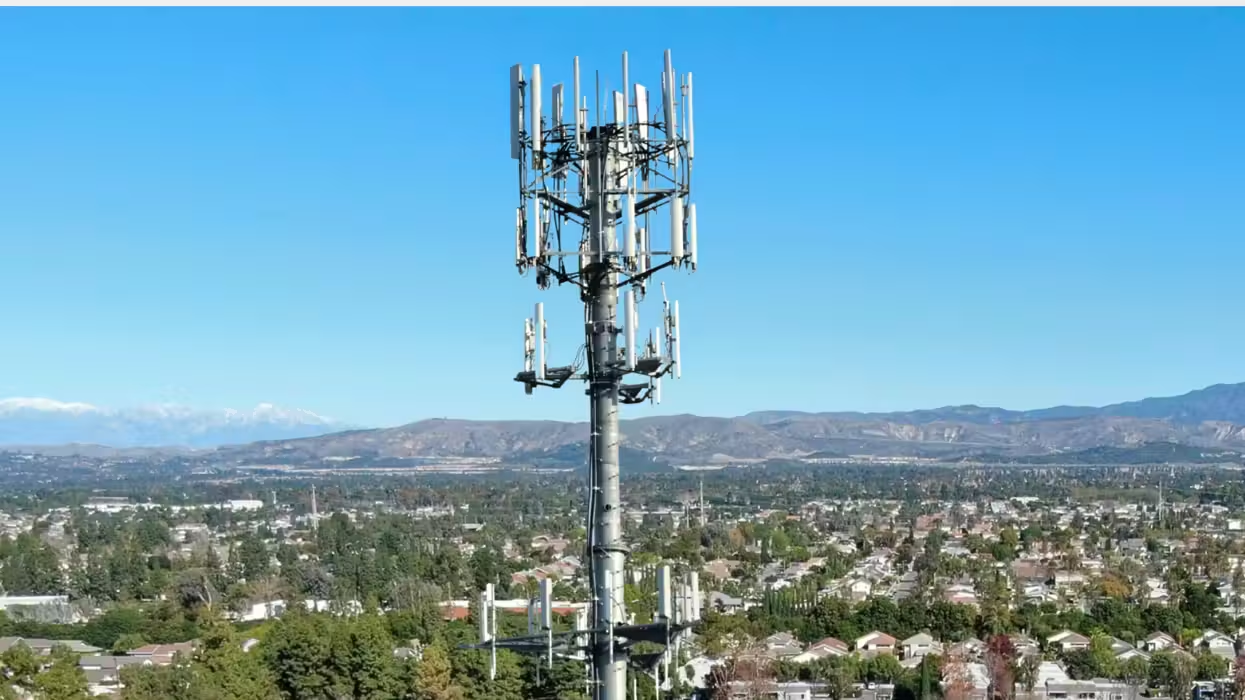
Expanding affordable, high-speed broadband
-
Strengthening public transit systems
-
Modernizing airports and freight networks
-
Investing in clean energy and climate-resilient infrastructure
These plans represent more than construction they are the foundation for future economic stability.
Federal Funding: Where the Real Power Lies
The first major challenge revolves around federal funding. While billions have been allocated through recent legislation, the distribution process has been slow, complicated, and layered with red tape.
Key Issues with Funding
-
States and cities compete for limited resources
-
Approval timelines can stretch for months or years
-
Complex requirements limit smaller communities
-
Costs continue rising due to inflation and supply chain delays
Funding exists but accessing it is an entirely different battle.
Political Gridlock: The Cost of Endless Negotiation
The second major barrier is the strain of bipartisan negotiations.
Even after passing landmark bills, Congress remains deeply divided over:
-
Which projects should be prioritized
-
How money should be spent
-
Environmental review requirements
-
How strictly federal agencies should monitor project execution
In many states, projects are announced with enthusiasm but delayed due to political disagreements at the local, state, or federal level.
Progress Is Happening But Slowly
Despite the challenges, progress is real. Thousands of infrastructure projects are currently underway, including:
-
Bridge renovation across major interstate corridors
-
New clean-energy grids
-
Expansion of EV-charging networks
-
Broadband installation in underserved rural regions
But even supporters acknowledge that implementation is slower than expected. Political friction continues to shape outcomes more than planning.
Public Opinion: Frustration Meets Hope
Americans overwhelmingly support stronger infrastructure but many are frustrated by the slow rollout.
Common Public Concerns
-
Why are projects taking so long?
-
Why does every upgrade cost billions?
-
Why does politics always get in the way of progress?
These questions shape voter sentiment, and infrastructure performance may influence election cycles more than expected.
The Future: Will the U.S. Overcome Its Gridlock?
America stands at a crossroads. The nation has the money, the plans, and the public support. What it needs now is:
-
Faster implementation
-
Reduced political obstruction
-
Clearer communication between federal and state governments
-
Modernized regulatory processes
If political leaders can work together, the U.S. has the potential to build a world-class infrastructure system that boosts jobs, competitiveness, and long-term national security.