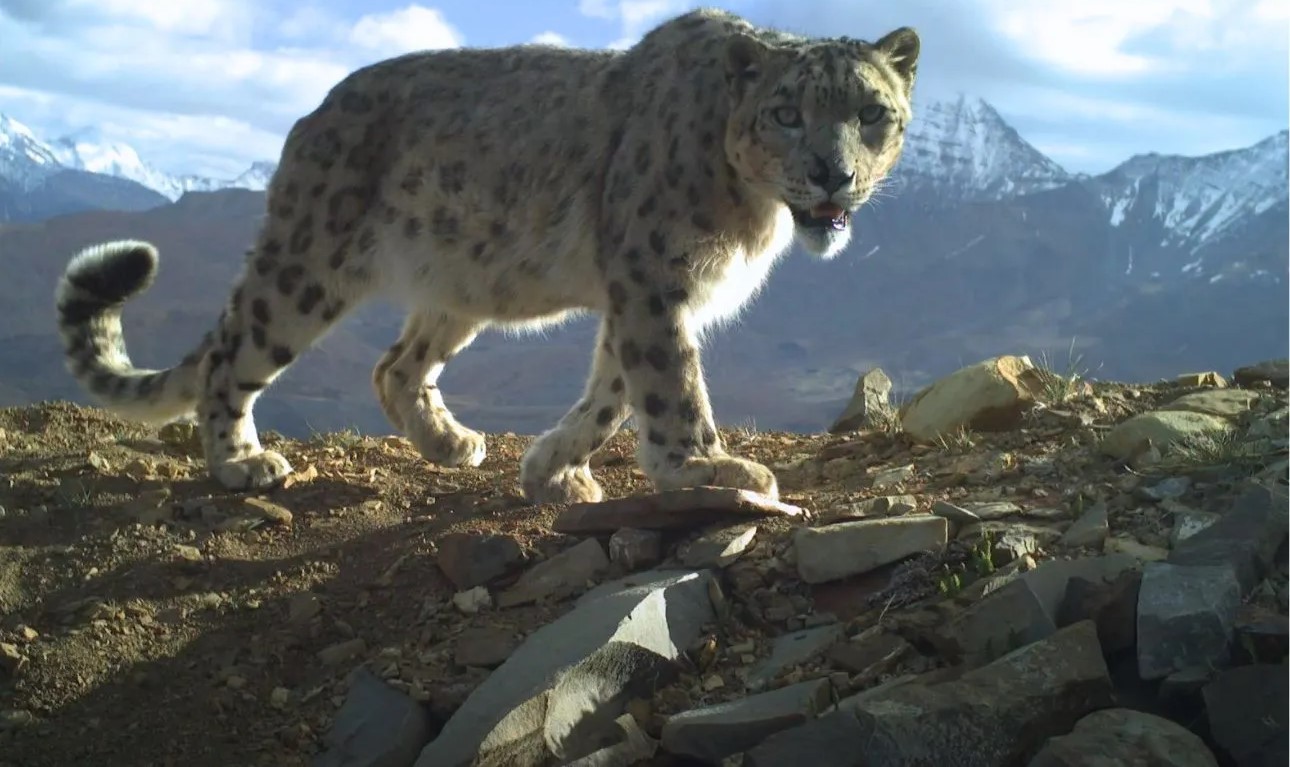
Imagine an animal that survives in -50°C temperatures at 20,000 feet above sea level
where oxygen levels drop to nearly half of what humans breathe at sea level.
Humans struggle to survive there for even a few minutes.
Yet this majestic predator thrives.
Meet the Snow Leopard, famously known as the Ghost of Mountains.
This rare big cat is not just a wildlife wonder it is a masterpiece of natural engineering.
Life at 20,000 Feet: Surviving the Extreme
The Snow Leopard lives in some of the harshest regions on Earth, including:
-
Himalayas
-
Nepal
-
India
-
Pakistan
-
Mongolia
At these elevations, freezing winds, thin air, and rugged cliffs create one of the most extreme habitats on the planet.
Still, this elusive predator hunts, climbs, and survives with remarkable efficiency.
Built for Survival: Nature’s Perfect Design
The Snow Leopard’s body is specially adapted for high-altitude life.
1. Natural Snowshoes
Its wide, fur-covered paws distribute body weight evenly, allowing it to walk across deep snow without sinking.
2. Built-in Air Heater
Its enlarged nasal cavity warms freezing air before it reaches the lungs, helping it breathe in sub-zero temperatures.
3. A Tail That Works Like a Blanket
Its long, thick tail helps maintain balance on steep cliffs. When resting, it wraps the tail around its body for warmth.
These adaptations make the Ghost of Mountains nearly invisible and unstoppable in its icy kingdom.
Why Are Only 3,500 Left?
Today, only around 3,500 Snow Leopards remain in the wild. This number raises serious concerns.
Major threats include:
-
Illegal poaching
-
Fur and body part trafficking
-
Habitat destruction
-
Climate change
-
Human-wildlife conflict
As human settlements expand into mountain regions, conflicts increase, and natural habitats shrink.
Without urgent action, this magnificent species could face extinction.
Can We Save the Snow Leopard?
Yes but global awareness and action matter.
Strong Wildlife conservation programs focus on:
-
Anti-poaching patrols
-
Community education initiatives
-
Protecting mountain ecosystems
-
Supporting sustainable livelihoods
When local communities benefit from conservation efforts, they protect wildlife instead of harming it.
Saving the Snow Leopard means protecting entire mountain ecosystems.
What the Ghost of Mountains Teaches Us
This rare predator reminds us that:
-
Adaptation ensures survival
-
Nature designs perfection
-
Every species plays a vital ecological role
The disappearance of the Snow Leopard would disrupt fragile high-altitude ecosystems.
Protecting it protects biodiversity.
Final Thoughts
The Snow Leopard truly earns its title as the Ghost of Mountains silent, powerful, and breathtakingly resilient.
But resilience alone cannot protect it from human greed.
The future of this incredible species depends on awareness, responsibility, and conservation efforts worldwide.
Will we allow greed to erase it?
Or will we protect one of nature’s greatest survivors?
The choice is ours.