Did you know that there is a creature on Earth that does not die of old age?
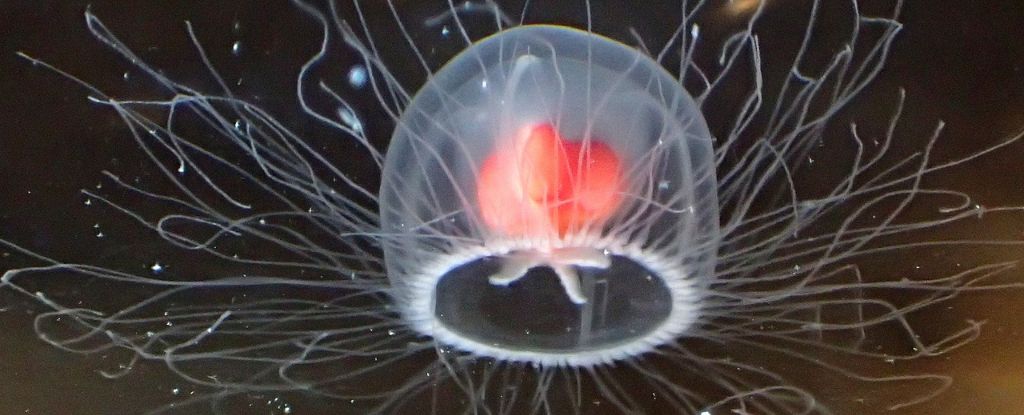
Its name is the Immortal Jellyfish, scientifically known as Turritopsis dohrnii.
When this tiny marine animal becomes old, stressed, or injured, it doesn’t follow the normal path toward death. Instead, it performs something extraordinary it reverses its life cycle and transforms back into a juvenile stage.
That’s why scientists often refer to it as the Immortal Jellyfish.
But here’s the question that fascinates millions:
Could humans ever reset their biological age the same way?
Let’s explore the science behind this remarkable species and what it might mean for the future of anti-aging research.
What Is the Immortal Jellyfish?
The Immortal Jellyfish (Turritopsis dohrnii) is a small, transparent species found in oceans around the world. Unlike most organisms, it possesses a rare biological ability called transdifferentiation.
Instead of dying after reaching maturity, this jellyfish can revert its cells back to an earlier developmental stage. In simple terms, it resets itself to a younger form essentially starting its life cycle over again.
This biological reset process is what makes it so unique in the animal kingdom.
How Does It Reverse Aging?
Normally, living organisms follow a predictable pattern:
-
Birth
-
Growth
-
Reproduction
-
Aging
-
Death
But the Immortal Jellyfish breaks this rule.
When threatened or damaged, its mature cells transform into immature cells. It returns to its polyp stage similar to a child form and begins life anew.
This ability doesn’t make it invincible. It can still be eaten by predators or die from disease. However, it does not die from natural aging.
That biological trait has sparked global curiosity in the field of reverse aging.
What Scientists Are Studying
Researchers are fascinated by how this jellyfish controls its cellular reprogramming. Understanding this mechanism could help scientists unlock secrets related to:
-
Tissue regeneration
-
Stem cell behavior
-
DNA repair
-
Longevity science
-
anti-aging research
Scientists are exploring whether similar biological pathways exist in humans and whether they can be safely activated.
Can Humans Reset Their Age?
Here’s where things get exciting and realistic.
Humans cannot currently reverse aging the way the Immortal Jellyfish does. However, scientific advancements in anti-aging research are progressing rapidly.
Some promising areas include:
1. Cellular Reprogramming
Scientists have discovered ways to partially reprogram cells in laboratory settings, restoring some youthful function.
2. Telomere Research
Telomeres protective caps on DNA shorten as we age. Research is ongoing to slow or repair this process.
3. Regenerative Medicine
Stem cell therapies aim to repair damaged tissues and organs.
While these innovations are promising, fully resetting human biological age remains theoretical not practical.
The Ethical Question
Even if humans could reverse aging in the future, would we want to?
Age reversal raises complex questions:
-
Population growth
-
Resource distribution
-
Economic impact
-
Social inequality
-
Psychological consequences
Immortality may sound appealing, but it would fundamentally reshape society.
Nature’s Reminder
The Immortal Jellyfish reminds us that nature still holds mysteries beyond our imagination. While humans may never replicate its exact biological reset mechanism, studying it expands our understanding of life, aging, and regeneration.
Science continues to evolve. What seems impossible today may become tomorrow’s breakthrough.
But for now, immortality remains in the ocean not in our DNA.
Final Thoughts
The Immortal Jellyfish challenges everything we thought we knew about aging. Its ability to reverse its life cycle inspires ongoing anti-aging research and fuels discussions about the future of human longevity.
Will humans ever master reverse aging?
Science is moving forward but true biological reset remains one of nature’s rarest gifts.
Tell us in the comments:
Would you reset your age if you could?