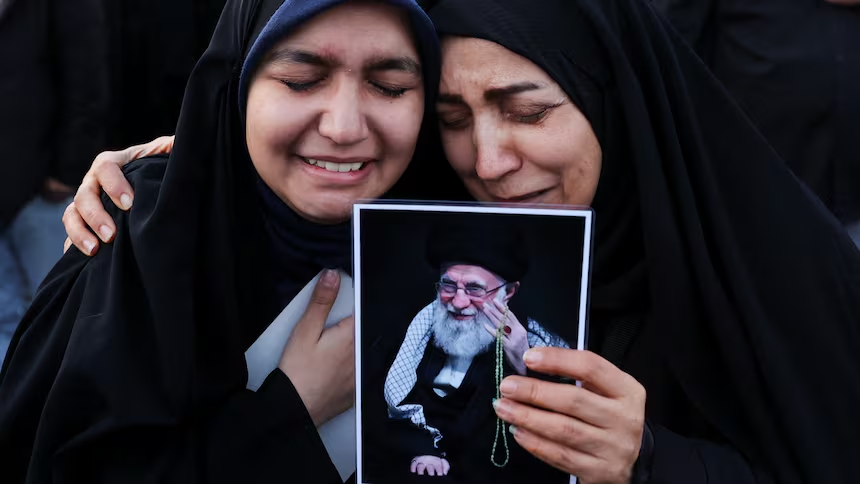
In recent days, widespread reports claimed that the Ali Khamenei, Iran’s Supreme Leader, had died. Panic rippled through social media platforms, international headlines broke, and misinformation spread rapidly until officials forcefully denied the death claims.
So what really happened? Was this disinformation? A misunderstanding? Or something more calculated?
In a world where viral “breaking news” can shift markets, influence elections, and impact foreign policy, this event offers a revealing look at modern media dynamics and political communication.
How the Rumors Started
Reports about the Supreme Leader’s alleged death appeared rapidly on social platforms, fueled by:
-
Anonymous accounts claiming insider information
-
Misinterpreted imagery or old videos
-
Sensationalist headlines with no verified sources
Before long, trending hashtags and viral clips made it appear “confirmed” even though no credible news organization had verified the claim.
This demonstrates how quickly online misinformation can shape public perception especially on sensitive geopolitical topics.
Official Denials and Strategic Messaging
Iranian state-run media and official spokespersons responded quickly to silence the rumors. Press outlets emphasized:
-
The Supreme Leader was alive and engaged in official duties
-
No credible evidence supported claims of his death
-
Misinformation campaigns were harmful and destabilizing
This unified denial backed by state TV footage and government statements helped calm immediate panic. Political analysts noted that the timing, repetition, and source coordination of the rumors suggested a possible attempt to sow confusion.
Why This Matters in Global Politics
Claims about the death of a major political figure have serious implications:
-
Markets can react unpredictably
-
Regional tensions may escalate
-
Foreign policy shifts might be anticipated
-
Diplomatic negotiations could be affected
For Iran, leadership reports often influence geopolitical strategy in the Middle East including relations with the United States, Gulf states, and Europe.
Whether intentional or accidental, false reports can strain international relations and fuel distrust between nations.
The Role of Digital Media in Spreading Rumors
In an age of smartphones and social apps, information moves instantly. But speed doesn’t guarantee accuracy.
Key challenges include:
-
Users sharing news without verifying sources
-
Algorithms prioritizing engagement over truth
-
Bad actors exploiting fear and uncertainty
This event highlights the importance of responsible digital citizenship and the need to critically evaluate what we read before sharing it.
The Power of Verification
Journalists and fact-checkers played a vital role in stopping the spread of the false death narrative. Reputable outlets emphasized:
-
Cross-checking official statements
-
Rejecting unverified sources
-
Waiting for confirmation from recognized authorities
In this case, officially denied death reports eventually outweighed viral rumors but only after significant spread.
What This Teaches Us About Information Consumption
In the digital age, misinformation can spread faster than truth.
This incident teaches us:
-
Verify before sharing
-
Trust established news outlets
-
Be wary of sensational claims
-
Understand geopolitical context
Rumors become “facts” when repeated without scrutiny even if untrue.
Final Thoughts
The Iranian Supreme Leader Alive, Death Denied situation highlights the fragile intersection of politics, media, and public perception. False reports about a leader’s death can have real-world consequences from financial markets to diplomatic negotiations.
As consumers of news, we must hold ourselves to higher standards of verification and skepticism. In a world where misinformation spreads quickly, accuracy matters more than ever.