Before satellites guided our cars. Before telescopes explored distant galaxies. Before computers calculated planetary motion.
A brilliant woman in 10th-century Syria was crafting complex astronomical tools by hand.
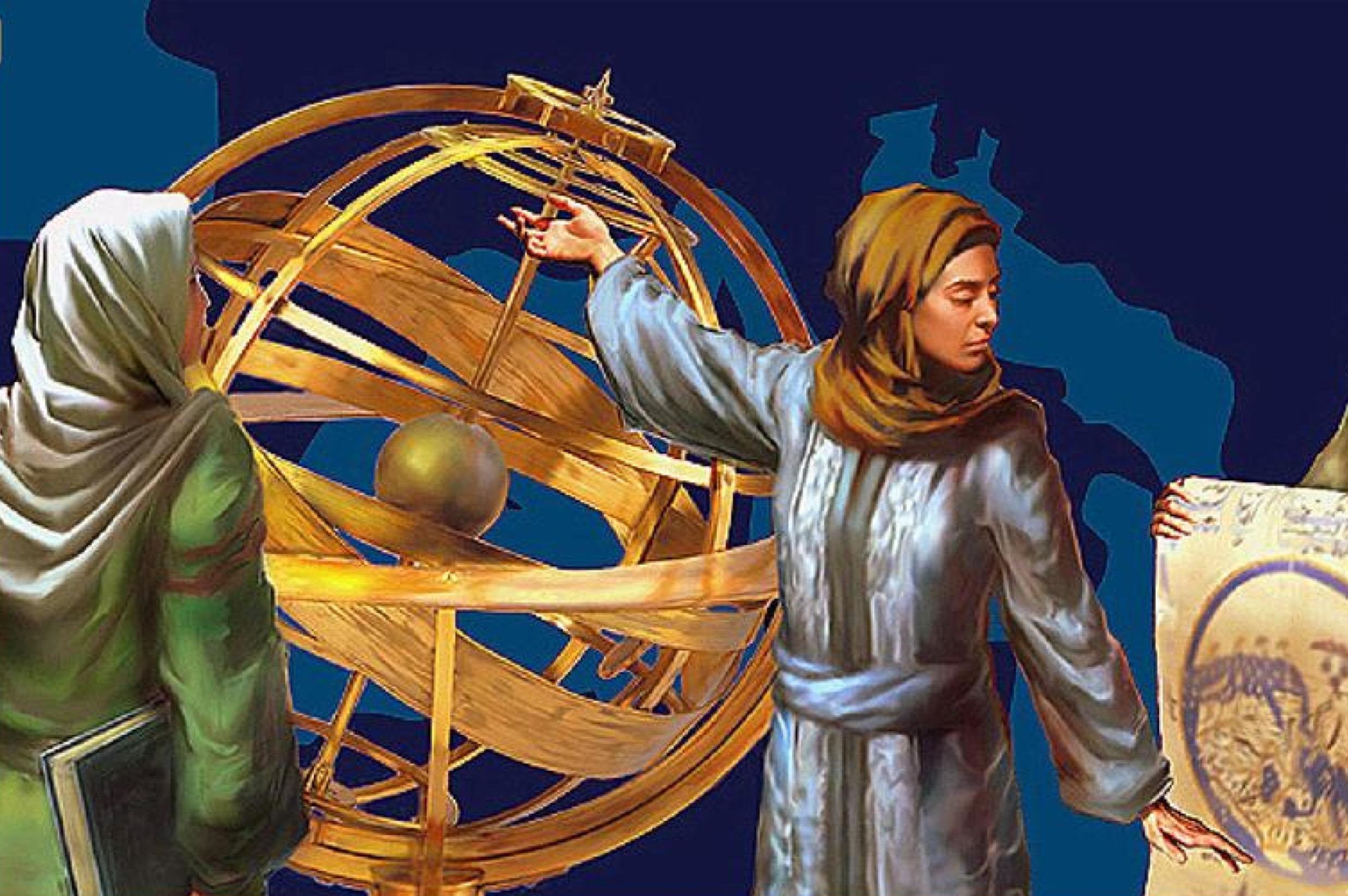
Her name was Maryam al-Ustrulabi.
So why don’t we learn about her in most school textbooks?
Who Was Maryam al-Ustrulabi?
Maryam al-Ustrulabi was a skilled astronomer and instrument maker in the 10th century. She lived in Aleppo, during a period of scientific flourishing known as the Islamic Golden Age.
She specialized in building and improving the astrolabe one of the most advanced scientific instruments of the medieval world.
Her work represents a powerful chapter in Islamic Golden Age astronomy, yet her name remains largely unknown in mainstream education.
What Is an Astrolabe?
An astrolabe was an intricate device used to:
-
Measure the position of stars
-
Determine time during day or night
-
Find latitude
-
Assist in navigation
-
Calculate prayer times
Long before GPS systems, the astrolabe allowed scholars and travelers to understand their position on Earth using the sky.
Maryam al-Ustrulabi refined and enhanced these instruments, contributing precision and craftsmanship that made them more reliable.
Why Was Her Work So Advanced?
During the Islamic Golden Age, cities like Aleppo became centers of knowledge. Scholars translated Greek, Persian, and Indian works into Arabic and expanded upon them.
In this environment, Maryam al-Ustrulabi trained under leading astronomers and became known for her expertise.
Her work in Islamic Golden Age astronomy supported:
-
Navigation across deserts and seas
-
Astronomical calculations
-
Religious timekeeping
-
Scientific research
At a time when many parts of the world limited women’s access to education, her achievements were extraordinary.
Why Isn’t She Widely Taught?
There are several reasons:
-
Historical records from the medieval period are limited.
-
Women’s contributions were often underdocumented.
-
Western-focused curricula sometimes overlook non-European scientists.
As a result, figures like Maryam al-Ustrulabi remain underrepresented in global history lessons.
However, renewed academic interest in Islamic Golden Age astronomy is helping bring these stories back into public awareness.
Why Her Legacy Matters Today
Her story challenges common assumptions about:
-
Women in science
-
The history of astronomy
-
The origins of scientific instruments
-
Cross-cultural knowledge exchange
Before modern navigation systems, scholars relied on mathematical precision and celestial observation. The work of Maryam al-Ustrulabi proves that innovation has always been global.
A Hidden Pioneer of Science
The development of astronomy did not happen in one place or culture. It evolved through centuries of shared learning.
By recognizing pioneers of Islamic Golden Age astronomy, we gain a more complete understanding of scientific history.
And perhaps the bigger question becomes not just who she was — but why we are only now rediscovering her.
Final Thoughts
Before modern GPS.
Before advanced telescopes.
Before digital computation.
Maryam al-Ustrulabi was building instruments that mapped the heavens.
Her story reminds us that knowledge has many roots. And history is far richer than what we sometimes learn in classrooms.