When people think of modern military aircraft, they often picture stealth fighters and futuristic jets. Yet one of the most feared aircraft in the world first flew in the 1950s and it still dominates global strategy today.
Meet the legendary B-52 Stratofortress, a symbol of unmatched long-range strike capability and enduring military power.
Even major powers like Russia and China carefully monitor its movements.
But why does this decades-old bomber still command global attention?
A Cold War Giant That Refuses to Retire
The B-52 Stratofortress, developed by Boeing for the United States Air Force, entered service in 1955.
Most aircraft retire after 25–30 years. The B-52 continues flying after nearly seven decades and modernization programs aim to keep it operational into the 2050s.
Longevity like this is rare in military aviation.
The Power of Long-Range Strike
The primary reason global powers respect the B-52 lies in its extraordinary long-range strike capability.
This bomber can:
-
Fly over 8,800 miles without refueling
-
Carry up to 70,000 pounds of weapons
-
Launch cruise missiles from standoff distances
-
Operate across continents without landing
With aerial refueling, its reach becomes nearly unlimited.
That global range allows it to project power anywhere in the world within hours.
A Key Player in Nuclear Deterrence
The B-52 remains a cornerstone of America’s nuclear deterrence strategy.
As part of the nuclear triad alongside submarines and land-based missiles it provides flexible response options in high-stakes geopolitical situations.
Unlike ballistic missiles, bombers can:
-
Be visibly deployed as a signal of strength
-
Be recalled mid-mission
-
Carry both conventional and nuclear payloads
This flexibility makes the B-52 a powerful strategic tool.
Modern Upgrades Keep It Relevant
Despite its age, the B-52 has undergone continuous modernization.
Upgrades include:
-
Advanced radar systems
-
Precision-guided munitions
-
New communication systems
-
Planned engine replacements
These improvements transform a Cold War aircraft into a modern combat platform capable of operating in today’s complex battlefield environment.
Why Russia and China Take It Seriously
Strategic bombers represent power projection on a global scale.
When B-52 bombers conduct exercises near international airspace, countries like Russia and China respond with their own aircraft to monitor movements.
The bomber’s ability to launch cruise missiles from far outside enemy air defenses increases its strategic value.
It does not need to enter heavily defended airspace to strike effectively.
That capability changes military calculations.
The Psychological Impact
Military strength depends not only on hardware but also on perception.
The sight of a B-52 flying in formation sends a clear message: sustained power, reach, and readiness.
Even though stealth aircraft like the B-2 Spirit exist, the B-52’s payload capacity and visibility give it a unique role in deterrence diplomacy.
Presence alone influences geopolitical stability.
The Future of the B-52
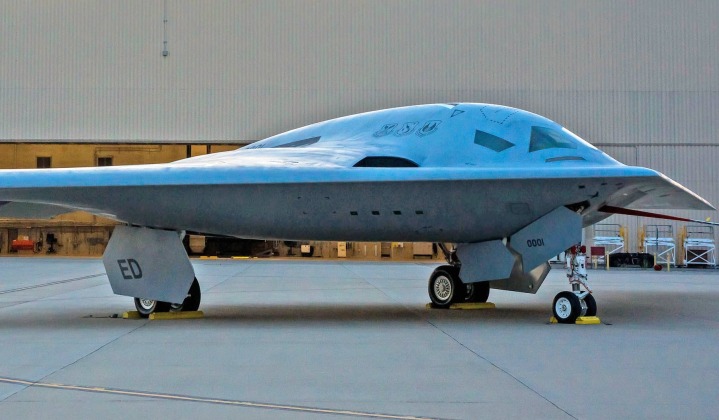
While newer bombers such as the B-21 Raider prepare to enter service, the B-52 remains central to long-term U.S. defense planning.
Engine modernization and avionics upgrades aim to extend its service life beyond 2050.
Few military platforms in history have demonstrated such adaptability.
Final Thoughts
The B-52 Stratofortress proves that age does not define power.
Its unmatched long-range strike capability, role in nuclear deterrence, and continuous modernization ensure it remains a dominant force in global strategy.
Even in an era of stealth jets and advanced drones, this iconic bomber continues to command respect and caution from the world’s strongest military powers.
Control of the skies shapes the balance of power. And the B-52 still plays a central role in that equation.