The question of how powerful the atom bomb was and why the United States decided to use it on Japan remains one of the most debated topics in modern history.
Indeed, in August 1945, the world changed forever.
Ultimately, toward the end of World War II, two atomic bombs were dropped on Japan, thereby introducing the era of nuclear weapons and, as a result, fundamentally redefining global warfare.
How Powerful Was the Atom Bomb?
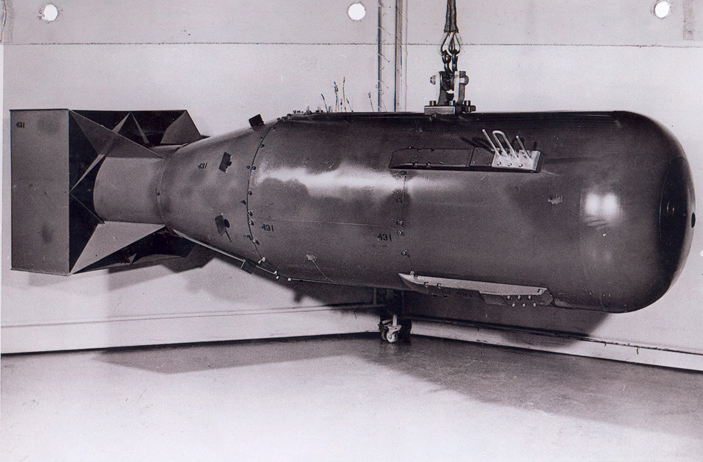
To begin with, the first atomic bomb used in war, dropped on Hiroshima, was known as “Little Boy.”
It was delivered by the Boeing B-29 Superfortress named Enola Gay on August 6, 1945.
Explosion Power
-
Estimated yield: about 15 kilotons of TNT
-
Immediate deaths: around 70,000–80,000 people
-
Total deaths by the end of 1945: over 140,000
Subsequently, three days later, on August 9, 1945, a second bomb, known as “Fat Man,” was dropped on Nagasaki, further escalating the scale of destruction.
Moreover, its explosive yield was even greater about 20 kilotons of TNT.
To better understand the magnitude, a single atomic bomb released more energy than thousands of tons of conventional explosives combined. As a result, the heat at ground zero rose dramatically, reaching temperatures hotter than the surface of the sun and causing immediate and catastrophic devastation.
Consequently, this marked the beginning of atomic warfare.
The Historical Context: World War II
At that time, the United States was fighting Japan in the Pacific during World War II.
Although Germany had surrendered in May 1945, Japan had not yet agreed to unconditional surrender. Therefore, the conflict in the Pacific continued with intense and deadly battles.
Because of this ongoing resistance, American leaders feared that invading mainland Japan would result in massive casualties on both sides.
In fact, estimates suggested that a land invasion could cost:
-
Hundreds of thousands of American soldiers
-
Millions of Japanese military and civilian lives
Why America Used Nuclear Weapons on Japan
Given these circumstances, there were several key reasons behind the decision.
1. Forcing a Quick Surrender
First and foremost, President Harry S. Truman believed the bomb would shock Japan into surrendering quickly.
As anticipated, on August 15, 1945, Japan announced its surrender. Shortly afterward, World War II officially ended on September 2, 1945.
2. Avoiding a Costly Invasion
In addition, military planners warned that Operation Downfall, the proposed invasion of Japan, would be extremely bloody.
Therefore, the atomic bomb was seen as a way to avoid prolonged fighting and further casualties.
3. Demonstrating Power
Furthermore, some historians argue the bomb also served as a strategic signal to the Soviet Union, demonstrating American military superiority at the beginning of the post-war era.
As a consequence, this event significantly shaped the coming Cold War.
The Human Cost
Nevertheless, the destruction of Hiroshima and Nagasaki was devastating.
Entire cities were flattened, and survivors suffered from radiation sickness, severe burns, and long-term health complications.
Even decades later, the bombings remain controversial because:
-
Civilians made up the majority of casualties
-
Long-term radiation effects persisted for generations
-
Ethical debates continue to this day
Ultimately, the use of nuclear weapons changed warfare forever and introduced the persistent threat of global annihilation.
Global Impact After 1945
Following the bombings, nations quickly rushed to develop their own atomic weapons.
As a result, this led to:
-
The nuclear arms race
-
The Cold War
-
The doctrine of deterrence
Today, nuclear weapons remain central to global security discussions, highlighting the lasting influence of those events in 1945.
How Much Power Compared to Modern Weapons?
While the Hiroshima and Nagasaki bombs were devastating, modern nuclear weapons are significantly more powerful.
For example, some modern warheads are:
-
10 to 50 times stronger
-
Designed with advanced delivery systems
-
Capable of destroying entire metropolitan regions
Therefore, this comparison clearly highlights how the original atom bombs were only the beginning of the nuclear age.
Final Thoughts
In conclusion, the power of the atom bomb was unlike anything humanity had ever seen before 1945.
Even today, the decision to use it remains one of the most controversial in history.
On one hand, supporters argue it ended World War II quickly and saved lives that would have been lost in a prolonged invasion. On the other hand, critics believe it caused unnecessary civilian suffering.
What remains undeniable, however, is this:
The introduction of atomic warfare permanently reshaped global politics, military strategy, and international relations for generations.