The search for extraterrestrial life has just received an intriguing new development. New research into Enceladus life 2026 suggests that Saturn’s small icy moon may be more suitable for certain forms of life than scientists previously thought.
Two studies published in Science Advances on September 25 examined different parts of the same mystery.
One study found that an Earth microorganism could continue growing and producing methane under laboratory conditions designed to resemble Enceladus’s underground ocean.
The other found that ice particles escaping from the moon’s ocean may naturally separate and concentrate different chemical ingredients, potentially making biological signatures easier for a future spacecraft to detect.
That does not mean scientists have discovered life on Enceladus.
Instead, the findings strengthen the scientific case for investigating whether its hidden ocean could provide conditions suitable for life.
Why Enceladus Is So Important
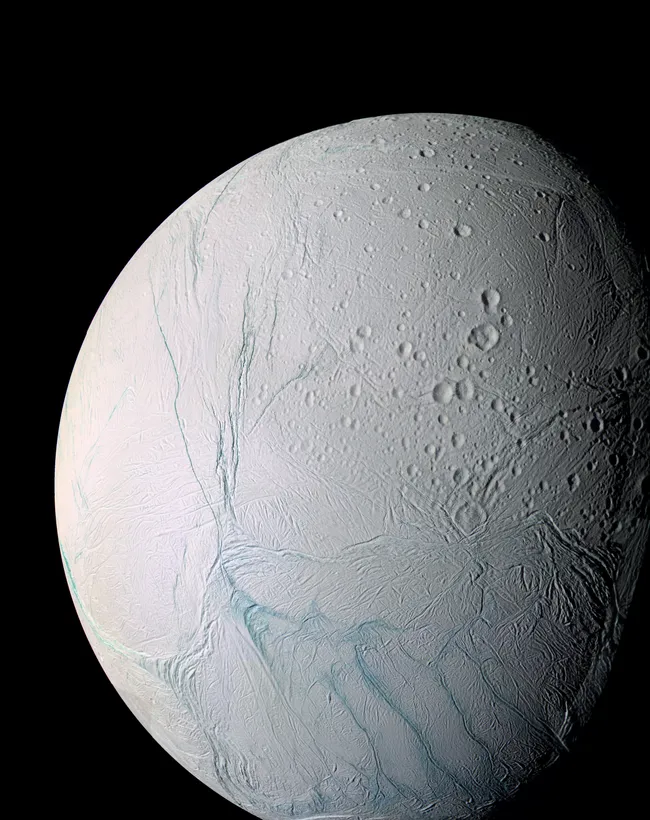
Enceladus is one of Saturn’s smaller moons, but it has become one of the most interesting destinations in planetary science.
Under its frozen outer crust, researchers believe the moon contains a global ocean of liquid water.
At its south pole, enormous plumes erupt through cracks in the icy surface and send water and ice particles hundreds of kilometres into space.
NASA’s Cassini spacecraft flew through those plumes during its mission and detected salts, organic compounds and other chemical ingredients associated with the subsurface ocean.
That makes Enceladus unusual.
Scientists do not necessarily have to drill through kilometres of ice to study material from its ocean.
The ocean is effectively spraying samples into space.
The New Enceladus Life 2026 Evidence
The latest research adds two important pieces to the puzzle.
First, scientists recreated aspects of Enceladus’s ocean in a laboratory.
The simulated environment was highly alkaline, with very little oxygen and limited carbon dioxide.
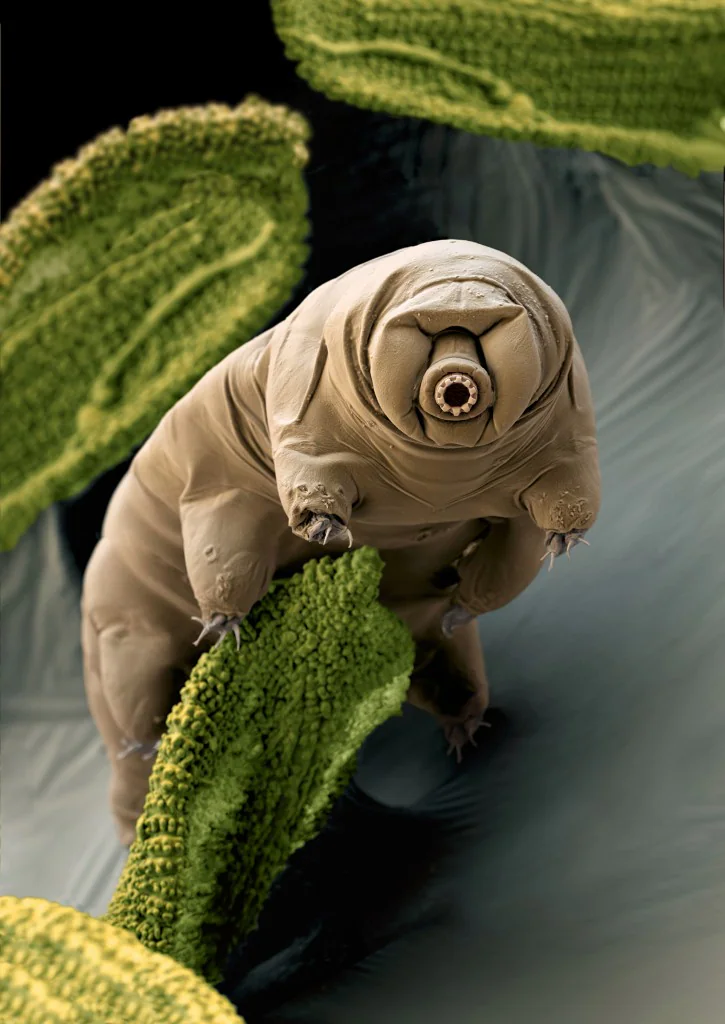
Researchers then introduced Methanothermococcus okinawensis, a methane-producing archaeon that lives near hydrothermal vents on Earth.
The organism does not require oxygen.
Instead, it can use hydrogen and carbon dioxide to produce methane.
Under the simulated Enceladus conditions, the microorganism continued growing and producing methane.
That result is important because it demonstrates that at least one known Earth metabolism can function under conditions resembling those scientists expect inside Enceladus.
The Experiment Produced a Surprise
Researchers did not initially expect the microorganism to perform so well under the simulated conditions.
In an optimal laboratory growth medium with similarly high alkalinity but insufficient dissolved carbon dioxide, the organism failed to grow.
However, when scientists recreated the chemistry of Enceladus more closely including hydrogen generated through water rock reactions the microorganism continued to grow.
It also adapted its metabolism to the low concentration of carbon dioxide.
That suggests the exact chemical environment matters enormously.
An environment that appears hostile when individual conditions are considered separately may become more biologically workable when water, minerals, hydrogen and other chemical processes interact.
Enceladus Has a Very Different Ocean
Enceladus is not simply a frozen version of Earth.
Its ocean is buried beneath an icy crust and exists far from the Sun.
The moon receives little sunlight compared with Earth.
However, Saturn’s gravitational influence generates tidal forces inside Enceladus.
Those forces produce internal heat and help maintain conditions that allow liquid water to exist beneath the ice.
Scientists also have evidence of interaction between the ocean and the rocky material below it.
That interaction could provide chemical energy that microorganisms might potentially use.
This is one reason Saturn moon habitability has become such an important area of research.
Water Alone Is Not Enough
Finding liquid water does not prove that a world can support life.
Scientists also look for energy sources and chemical ingredients.
Life as we know it requires more than water.
It needs suitable chemistry and an energy source that can drive metabolism.
Enceladus appears interesting because researchers have found evidence for several ingredients that could potentially contribute to a habitable environment.
The latest microbial experiment adds another piece by showing that a known biological metabolism can operate under a simulated version of that environment.
The Ice Particles Could Make the Search Easier
The second new study addresses another major challenge.
Suppose microorganisms really do exist inside Enceladus’s ocean.
How would a spacecraft find evidence of them?
Scientists cannot simply look through the moon’s ice from orbit.
Instead, they can analyze the material escaping through the plumes.
The new research suggests the process may naturally help scientists.
Researchers found that ocean droplets can freeze relatively slowly as they travel through cracks in Enceladus’s ice shell.
During freezing, salts and organic materials can separate into different regions of the droplets.
The droplets can then break apart into tiny ice particles as they accelerate through the cracks and escape into space.
Some individual particles could therefore contain highly concentrated versions of particular materials.
Enceladus May Be Preparing Its Own Samples
This is one of the most fascinating implications of the new research.
A laboratory normally has to separate and concentrate chemical compounds before scientists can analyze them.
Enceladus may be performing part of that process naturally.
As ocean droplets freeze and fragment, different chemical components become separated.
That could produce ice grains containing concentrated salts, organic compounds or potentially biological material.
For future spacecraft, that could make individual particles particularly valuable.
Researchers would still need to prove that any unusual material actually came from living organisms.
But concentrated particles could make the search more practical.
What Would Count as Evidence of Life?
Scientists would need much stronger evidence before announcing that life had been found.
A single organic molecule would not be enough.
Organic chemistry can occur without biology.
Researchers would instead look for combinations of chemical and physical signatures that are difficult to explain through non-biological processes.
Potential evidence could include complex organic compounds, biological structures or chemical patterns consistent with metabolism.
Even then, scientists would need to eliminate alternative explanations.
That is why the latest studies are best understood as habitability research, not a discovery of extraterrestrial organisms.
The Cassini Mission Left a Huge Scientific Legacy
Much of what scientists know about Enceladus comes from NASA’s Cassini mission.
Cassini orbited Saturn from 2004 until 2017 and repeatedly observed Enceladus.
The spacecraft passed through the moon’s plumes and collected measurements of their composition.
Those observations revealed that the plumes contain material originating from the subsurface ocean.
Cassini therefore transformed Enceladus from an ordinary icy moon into one of the most interesting locations in the search for life beyond Earth.
The latest research continues to extract new information from Cassini data years after the spacecraft’s mission ended.
Why Methane Matters
Methane is particularly interesting because some organisms on Earth produce it as part of their metabolism.
The microorganism used in the new experiment is a methanogen.
It converts hydrogen and carbon dioxide into methane.
Researchers wanted to know whether such a metabolism could work under conditions resembling Enceladus.
The laboratory results indicate that it can.
However, methane alone would not prove life exists on Enceladus.
Scientists would need to determine how the methane formed and whether biological processes provide the best explanation.
Could Enceladus Actually Have Life?
The answer remains unknown.
Scientists have not detected living organisms on Enceladus.
They have, however, identified several characteristics that make the moon scientifically interesting:
- A subsurface ocean
- Water-rich plumes
- Organic compounds
- Salts
- Evidence of water-rock interaction
- Chemical energy sources
- Conditions that can support certain Earth microorganisms in laboratory simulations
Together, these findings justify further investigation.
They do not establish that Enceladus is inhabited.
The Meaning of Saturn Moon Habitability
The term Saturn moon habitability describes whether an environment around Saturn could provide conditions suitable for life.
That does not necessarily mean life resembling humans, plants or animals.
Scientists are primarily considering microbial life.
On Earth, microorganisms survive in environments that once seemed impossible.
Some live around deep-sea hydrothermal vents.
Others tolerate intense acidity, extreme cold or high temperatures.
The Enceladus experiments ask whether similar metabolic systems could function in an alien ocean.
A Future Spacecraft Could Search the Plumes
One major advantage of Enceladus is accessibility.
A spacecraft could potentially fly through the plume and analyze individual ice particles without landing and drilling through the entire ice shell.
The new findings make this strategy even more interesting.
If the plume naturally concentrates some chemical components into individual grains, instruments could potentially identify particularly informative particles.
Researchers at Freie Universität Berlin said future spacecraft could have a good chance of detecting traces of life if they analyze individual ice grains from the plume, assuming life is actually present.
Europe Is Also Looking Toward Enceladus
The scientific community is already considering future missions dedicated to icy moons.
Researchers have discussed advanced spacecraft concepts that could investigate Enceladus’s surface, plumes and subsurface environment.
ESA researchers have previously outlined potential instruments for future Enceladus exploration, including technologies designed to search for chemical and biological signatures.
Such missions remain a long-term prospect rather than an immediate search for life.
But the latest findings could help scientists determine which instruments would be most valuable.
The Biggest Question Is Still Unanswered
The new studies make Enceladus more scientifically interesting.
They do not answer the biggest question.
Is anything alive inside that ocean?
At the moment, nobody knows.
Scientists have demonstrated that an Earth microorganism can function under simulated Enceladus conditions.
They have also found that the moon’s natural plume processes may make certain chemical signatures easier to detect.
Those are important advances.
But habitability and inhabited are two very different things.
Why This Discovery Matters Beyond Saturn
The research could influence how scientists search for life throughout the solar system.
If life can potentially exist in a dark ocean beneath an icy crust, then sunlight may not be essential for every habitable environment.
That would broaden the range of places scientists consider when searching for extraterrestrial biology.
Other icy moons, including Europa around Jupiter, could also become important targets.
The lesson is significant:
A world does not need an Earth-like surface to potentially support life.
What Scientists Will Watch Next
Future researchers will focus on several questions.
Can microorganisms survive even longer under Enceladus-like conditions?
What other Earth metabolisms could function in the simulated ocean?
Which organic compounds are produced naturally inside Enceladus?
Can spacecraft reliably identify biological material in individual ice grains?
And most importantly, can future observations distinguish biological signatures from chemistry produced without life?
Each answer could move scientists closer to resolving the mystery.
Conclusion
The latest Enceladus life 2026 research has made Saturn’s icy moon even more intriguing.
Two new studies published in Science Advances provide complementary evidence.
One showed that a methane producing Earth microorganism could grow and produce methane under laboratory conditions designed to resemble Enceladus’s alkaline, oxygen poor ocean.
The other showed that freezing and fragmentation of ocean droplets could naturally separate and concentrate chemical ingredients into individual ice grains, potentially making future searches for biological signatures easier.
None of this proves that life exists on Enceladus.
But it changes the scientific question.
Researchers are no longer asking only whether the moon contains water.
They are increasingly asking whether its water, chemistry, energy sources and geological processes could create an environment where life might survive.
That makes Saturn moon habitability one of the most fascinating questions in modern planetary science.
And if a future spacecraft finds a single ice grain containing convincing evidence of biological activity, humanity could suddenly have an answer to one of its oldest questions:
Are we alone?
Frequently Asked Questions
What is the latest Enceladus life 2026 discovery?
Two September 2026 studies found that an Earth microorganism could function under simulated Enceladus ocean conditions and that ice grains from the moon’s plumes may naturally concentrate chemical components, potentially helping future searches for life.
Has scientists found life on Enceladus?
No. Scientists have not confirmed life on Enceladus. The new research provides evidence that certain biological processes could potentially operate under simulated conditions resembling the moon’s ocean.
Why is Enceladus considered potentially habitable?
Researchers have evidence for a subsurface ocean, organic compounds, salts and water rock interactions that could provide chemical energy. These characteristics make Enceladus an important target for astrobiology.
What microorganism survived the Enceladus experiment?
Researchers used Methanothermococcus okinawensis, a methane producing archaeon associated with deep sea hydrothermal environments on Earth.
Why are Enceladus ice particles important?
The latest research suggests freezing droplets can separate their chemical components before breaking into smaller particles. Some grains could therefore contain concentrated chemical material that future spacecraft might analyze for potential biosignatures.
Could a future spacecraft find life on Enceladus?
Potentially, but that remains uncertain. Because the moon’s ocean material naturally escapes through plumes, spacecraft may be able to analyze those particles without drilling through the entire ice crust.