To understand why this discovery matters, scientists first need to examine the region where the evidence originated.
The Kuiper Belt is an enormous region of space beyond Neptune’s orbit. It contains countless icy objects, rocky bodies and frozen remnants left over from the formation of the solar system approximately 4.6 billion years ago.
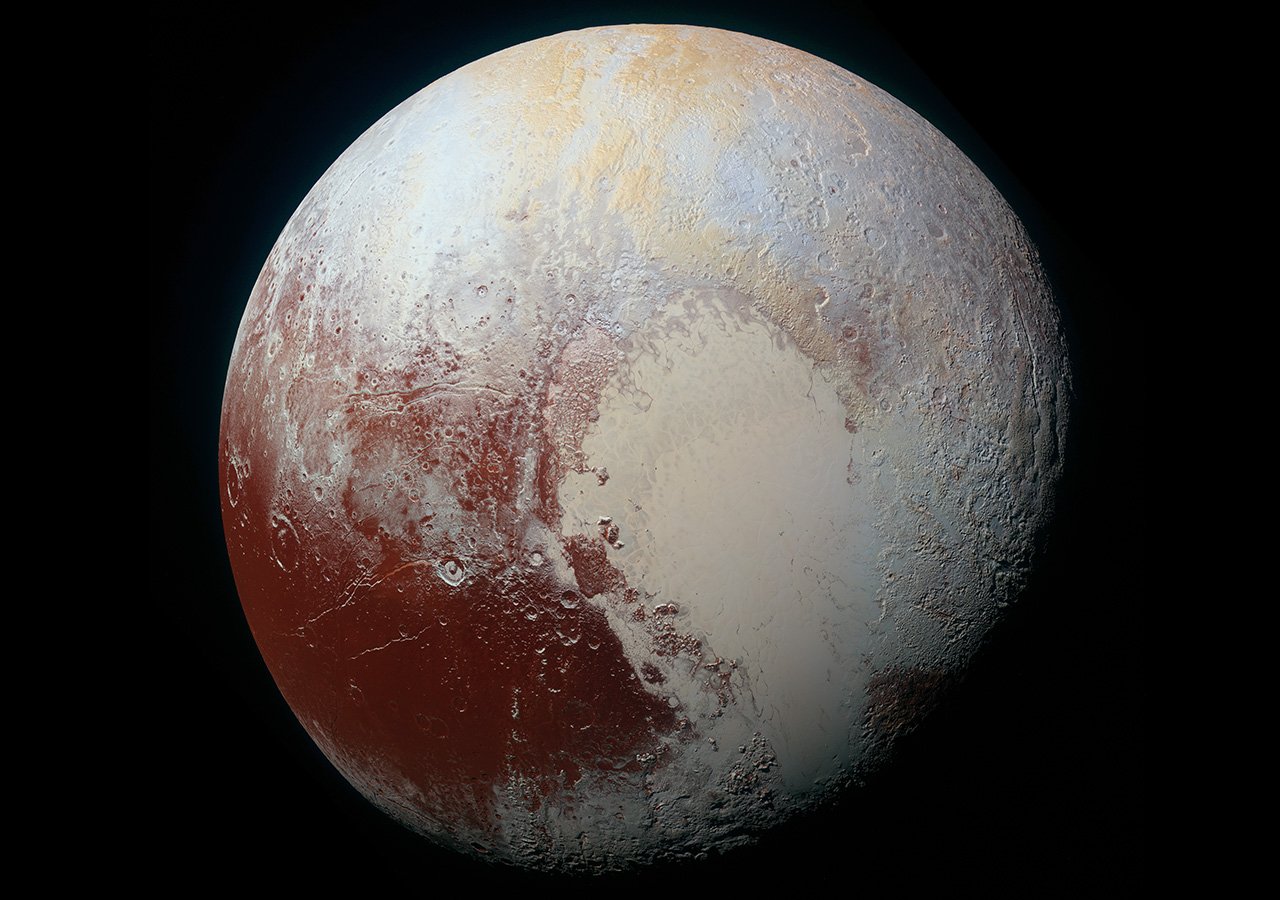
Some of its most familiar residents include Pluto and other dwarf planets.
Unlike the inner solar system, where heat from the Sun has transformed many materials, the distant Kuiper Belt preserves objects that have experienced relatively little heating.
This makes the region particularly valuable for planetary scientists.
Its icy bodies may preserve chemical evidence from the earliest stages of planetary formation. By studying their composition, researchers can investigate what materials existed when the planets were developing.
The NASA discovery adds an important piece to this picture by suggesting that the outer solar system contained a reservoir of water enriched with heavier oxygen isotopes.
According to NASA, this type of ancient water had been predicted for decades, but scientists previously lacked convincing evidence from material associated with the distant region.
How NASA Found Ancient Ice Without Travelling Beyond Neptune
Perhaps the most remarkable aspect of this research is that scientists did not need to send a spacecraft to the Kuiper Belt to investigate its ancient materials.
Instead, they studied microscopic particles that had already travelled through space and entered Earth’s atmosphere.
Researchers at NASA’s Johnson Space Center examined 12 tiny interplanetary dust particles collected from Earth’s stratosphere.
These particles were gathered using NASA’s ER-2 high-altitude research aircraft, which can operate at extremely high altitudes.
Although the grains were incredibly small, they contained valuable information about their origins.
Scientists used several advanced scientific techniques to investigate them.
1. Collecting Ancient Space Dust
The research team selected dust particles containing unusually high concentrations of microscopic tracks produced by energetic particles from the Sun.
These tracks are important because they provide clues about how long the material was exposed to radiation in space.
Their characteristics helped researchers associate the particles with the distant Kuiper Belt region.
2. Examining Minerals With Electron Microscopy
The researchers used advanced electron microscopy at NASA to examine the particles’ internal mineral structures.
They identified hydrated minerals, including clay-like materials, that formed when water interacted with dust and rock.
These minerals provided evidence that water had existed inside the particles’ original parent bodies.
3. Measuring Oxygen Isotopes
The next step involved examining the chemical composition of the particles.
Working with researchers at the University of California, Los Angeles (UCLA), the team used an ion microprobe to measure oxygen isotope ratios.
These measurements revealed an unusual chemical signature associated with water enriched in heavier oxygen isotopes.
The combined evidence provided strong support for an ancient water reservoir in the outer solar system.
NASA’s study was published in November 2026, offering a new way to investigate distant planetary materials without directly collecting samples from beyond Neptune.
What Are Heavy Oxygen Isotopes and Why Do They Matter?
One of the most scientifically interesting aspects of this discovery involves oxygen isotopes.
Oxygen exists in several stable isotopic forms, including oxygen-16, oxygen-17 and oxygen-18.
All three contain eight protons, but they have different numbers of neutrons.
Oxygen-16 contains eight neutrons, oxygen-17 contains nine, and oxygen-18 contains ten.
These differences affect the chemical signatures scientists observe in water and minerals.
By measuring the relative amounts of different oxygen isotopes, researchers can investigate where materials originated and how they changed over time.
For example, water formed in different regions of the early solar system may contain different proportions of oxygen isotopes.
The NASA research identified evidence suggesting that the ancient water associated with the Kuiper Belt particles contained a greater proportion of heavier oxygen isotopes than familiar water found on Earth.
According to the study’s calculations, the original water’s oxygen-18-to-oxygen-16 ratio may have been approximately 15% higher than the standard measured in Earth’s ocean water.
This is a model-based estimate rather than a direct measurement of an ancient ice sample.
Nevertheless, it provides an important clue about the chemical differences between the inner and outer solar system.
How This Discovery Could Explain the Formation of the Solar System
The early solar system was a very different environment from the planetary system we see today.
Approximately 4.6 billion years ago, the Sun formed within a massive cloud of gas and dust.
Material surrounding the young star gradually formed a rotating disk known as the protoplanetary disk.
Over time, small dust grains collided and combined into larger structures. These eventually developed into planetesimals, the building blocks from which planets and smaller celestial bodies formed.
However, the materials inside this disk were not distributed uniformly.
Temperature, radiation, chemical reactions and gravitational interactions influenced how different materials developed.
The new evidence from the Kuiper Belt suggests that water-rich material in the outer solar system had a distinct chemical history.
This could help scientists understand why distant icy bodies have different compositions from objects closer to the Sun.
It also offers new information about the movement of water and other materials during the earliest stages of planetary development.
For researchers studying the origins of Earth, these findings are particularly interesting because they help explain the chemical diversity of the material from which planets formed.
Did Jupiter, Saturn, Uranus and Neptune Keep the Solar System Divided?
Another important question raised by the research involves the influence of giant planets.
Scientists have long investigated how Jupiter, Saturn, Uranus and Neptune shaped the early solar system.
These enormous planets exerted powerful gravitational influences on surrounding material.
According to the new research, the scarcity of similar heavy-oxygen signatures in meteorites suggests that material from the distant outer solar system did not mix extensively with material closer to the Sun.
One possible explanation involves Saturn.
The researchers suggest that Saturn, potentially working together with Uranus and Neptune, may have helped restrict the inward movement of dust and other materials.
Their gravitational influence could have created conditions that limited the mixing of material between different regions of the early planetary disk.
This possibility is important because it provides another way to investigate how the giant planets influenced the development of the solar system.
However, the discovery does not establish that the planets completely separated the solar system into isolated regions. It provides chemical evidence supporting limited mixing and a possible explanation for that pattern.
What NASA’s Discovery Means for the Search for Water in Space
Water is one of the most important substances in planetary science.
It plays a major role in geological processes, planetary evolution and the search for potentially habitable environments.
Scientists have discovered water ice in several locations throughout the solar system, including Mars, the Moon, comets and the icy moons of giant planets.
The new Kuiper Belt findings expand scientific understanding of the chemical history of water in the distant solar system.
They also demonstrate that ancient space dust can preserve information about environments that existed billions of years ago.
This approach could support future investigations into the origins of water and the distribution of different chemical materials across planetary systems.
However, the discovery does not demonstrate that liquid water or life exists in the Kuiper Belt.
Its importance lies in understanding the history and composition of ancient water-rich materials.
How Future Space Missions Could Build on This Discovery
NASA’s research creates new opportunities for future planetary exploration.
One particularly important mission is New Horizons, which became the first spacecraft to explore Pluto up close in 2015.
In January 2019, it also flew past Arrokoth, a distant Kuiper Belt object.
Arrokoth is particularly interesting because it preserves characteristics of primitive material from the early solar system.
Its unusual two-lobed shape and relatively undisturbed appearance provide clues about how small planetary building blocks formed.
Although the 2026 dust particles have not been identified as originating from Arrokoth, the New Horizons mission demonstrates how direct spacecraft observations can complement laboratory analysis.
Future missions could investigate additional Kuiper Belt objects, study their surface chemistry and potentially return samples to Earth.
Such research could help scientists compare the composition of distant icy bodies with the microscopic dust particles examined in NASA laboratories.
Combining spacecraft observations, laboratory measurements and computer modelling may eventually provide a much clearer picture of the solar system’s earliest history.
Could This Research Help Scientists Understand Other Planetary Systems?
The implications of the discovery may extend beyond our own solar system.
Astronomers have discovered thousands of planets orbiting stars beyond the Sun.
These exoplanetary systems contain different arrangements of rocky planets, giant planets and smaller icy bodies.
Understanding how material moves through our solar system can help researchers develop models for planetary formation elsewhere.
For example, scientists can investigate whether giant planets influence the distribution of water-rich material in other planetary systems.
They can also study how the chemical composition of icy bodies changes depending on their distance from their parent stars.
The Kuiper Belt findings provide another important reference point for these investigations.
Although our solar system is only one example, its history can help scientists understand the processes that may operate throughout the galaxy.
Conclusion: Ancient Ice Beyond Neptune Holds Clues to Our Cosmic Past
The discovery of Ancient Ice Beyond Neptune offers an exciting new perspective on the history of our solar system.
By studying just 12 microscopic particles collected from Earth’s upper atmosphere, NASA scientists identified mineral and chemical evidence pointing toward an ancient reservoir of water enriched in heavier oxygen isotopes.
The findings suggest that the distant Kuiper Belt preserved water-rich materials with a chemical history different from that of material found closer to the Sun.
They also provide clues about how giant planets may have influenced the movement and mixing of materials during planetary formation.
Although scientists have not directly collected an ice sample from the suspected reservoir, the evidence represents an important advance in understanding the distant outer solar system.
As future spacecraft and laboratory investigations continue, researchers may discover even more about the ancient materials that helped build the planets.
The most remarkable lesson is that tiny grains of dust can preserve information about events that occurred billions of years ago.
The Kuiper Belt Discovery reminds us that the origins of Earth and its neighbouring planets may be hidden in the smallest surviving pieces of the solar system’s ancient history.