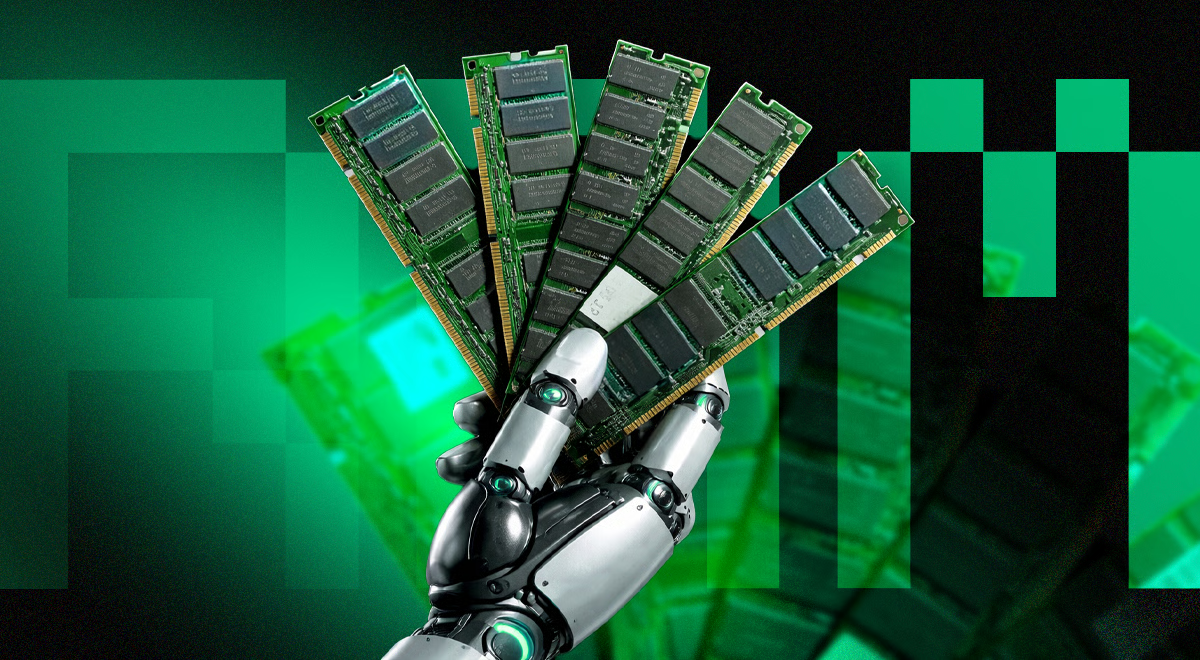
The Computer Memory Price Increase is becoming an important issue for the global technology industry. While consumers often associate artificial intelligence with powerful graphics cards and advanced processors, another component is quietly becoming one of the most expensive parts of the AI revolution: computer memory.
The rapid expansion of AI data centers has created enormous demand for specialized memory chips. Companies building advanced AI systems need large quantities of high-performance memory to train models, process information and deliver responses. As a result, semiconductor manufacturers are directing more production capacity toward these profitable products.
This shift is putting pressure on the wider memory market. Traditional computer RAM, server memory and storage products are all experiencing changing supply and pricing conditions. However, the impact is not identical across every product category.
The situation reveals an important reality: the AI revolution is increasing the cost of the technology infrastructure that powers modern computing, and ordinary consumers may eventually feel some of that pressure when purchasing computers, smartphones and storage devices.
1. Why AI Companies Need So Much Computer Memory
Artificial intelligence requires enormous computing resources. Training a large language model involves processing vast amounts of information, while operating that model requires computers to access and move data continuously.
Memory plays a central role in this process.
A processor can perform calculations extremely quickly, but it needs fast access to the information required for those calculations. Without sufficient memory bandwidth and capacity, even an advanced AI processor cannot operate at its full potential.
AI data centers therefore use several types of memory, including:
- High-Bandwidth Memory (HBM): Specialized memory placed close to powerful processors to deliver extremely high data-transfer speeds.
- DRAM: Working memory used by servers, computers and many electronic devices.
- NAND Flash: Technology used in SSDs, smartphones, memory cards and other storage products.
Each type serves a different purpose. HBM is particularly important for advanced AI accelerators, while conventional DRAM supports servers and computers. NAND flash provides the storage capacity required for enormous datasets and AI infrastructure.
As technology companies expand their AI operations, demand for these components continues to reshape the semiconductor industry.
2. The Hidden Connection Between AI Chips and RAM Prices
One of the biggest reasons behind the Computer Memory Price Increase is the competition for manufacturing capacity.
The world’s leading memory manufacturers include Samsung Electronics, SK hynix and Micron Technology. These companies produce several categories of memory, but the economics of the market encourage them to prioritize products that generate stronger returns.
HBM has become particularly important because advanced AI accelerators require it to move large volumes of data quickly. Manufacturers are investing heavily in production technologies, packaging and capacity to meet demand from AI chipmakers and cloud companies.
However, shifting resources toward advanced memory can reduce the flexibility available for other products.
S&P Global reported in January 2026 that manufacturers were directing production capacity toward high-bandwidth memory, tightening supplies of conventional DRAM used in servers, PCs and consumer electronics.
This creates a chain reaction:
- AI companies order more advanced memory.
- Manufacturers prioritize higher-value AI-related products.
- Production resources become tighter for some conventional memory categories.
- Computer and electronics manufacturers face higher component costs.
- Some of those costs may eventually reach consumers.
The important point is that AI does not simply increase demand for one specialized chip. It can influence the supply and pricing of several connected memory products.
3. How Much Are Memory Prices Increasing?
Market research from TrendForce illustrates how strongly AI infrastructure investment is affecting memory prices.
In its September 30, 2026 forecast, TrendForce projected that conventional DRAM contract prices would increase by approximately 10–15% quarter over quarter in the fourth quarter of 2026. It also forecast a 15–20% increase in NAND Flash contract prices over the same period.
Enterprise SSDs were expected to experience even stronger pressure, with TrendForce projecting a 23–28% quarterly increase.
These figures refer to industry contract-price forecasts, not guaranteed increases in the retail prices of every RAM module or SSD. Retail prices can move differently depending on inventories, distributors, product specifications and local market conditions.
There is also an important development to watch. A November 19 report from South Korea’s MoneyToday described falling spot prices for some consumer NAND products, even as memory used in AI data centers remained in strong demand.
This shows that the market is becoming increasingly divided. AI-focused products can remain tight while weaker consumer demand puts pressure on other categories.
For buyers, the result may be an uneven market rather than a universal increase in every memory product.
4. Why AI Data Centers Are Changing the Memory Industry
Large technology companies are investing billions of dollars in data centers designed to support AI services.
These facilities require much more than processors. They need high-capacity memory, fast storage, advanced networking equipment, cooling systems and reliable electricity supplies.
Cloud service providers are also expanding their infrastructure to support AI assistants, business automation, image generation, video tools and other computing-intensive services.
TrendForce reported in August 2026 that major cloud service providers were expected to increase capital expenditure significantly. Its analysis projected that DRAM and NAND Flash together could account for 47% of major cloud providers’ capital expenditure in 2026, rising to 68% in 2027.
That projection highlights how important memory has become to AI infrastructure spending.
In the past, discussions about AI hardware often focused primarily on graphics processing units. Today, memory is becoming another major factor in the cost and availability of advanced computing systems.
5. Will RAM Prices Increase for Ordinary Computer Users?
Consumers may experience the impact through higher prices, reduced specifications or fewer affordable upgrade options.
When manufacturers face higher memory costs, they have several choices. They can absorb some of the increase, raise retail prices or redesign products to use less memory.
For example, a laptop manufacturer might offer a model with less RAM at the same starting price. A smartphone company could limit storage options in an entry-level device. Desktop computer buyers may also discover that upgrading to higher-capacity memory costs more than expected.
However, the effect will depend on the product category and the timing of purchases.
Gaming computers, professional workstations and high-performance laptops may face different pricing pressures from basic office computers. Enterprise equipment also follows different purchasing agreements from consumer products.
For people planning to upgrade their computers, it is worth comparing prices across several retailers rather than assuming every memory product will continue rising.
6. SSD Storage Is Also Part of the AI Cost Problem
RAM is not the only component affected by changing demand.
AI systems need to store enormous datasets, model files, application information and other digital resources. This makes storage infrastructure increasingly important.
NAND Flash is the underlying technology used in many SSDs. As cloud providers expand their data centers, they purchase enterprise storage devices designed for high capacity, performance and reliability.
TrendForce’s September 2026 forecast identified enterprise SSDs as a particularly strong area of demand. It projected quarterly contract-price growth of 23–28% in the fourth quarter.
Nevertheless, consumer and enterprise storage markets do not always move together. The November 19 report about falling spot prices for some NAND products demonstrates that weaker consumer demand can create price declines even when enterprise demand remains strong.
Therefore, consumers should distinguish between enterprise SSD pricing and the prices of ordinary desktop or laptop storage drives.
7. Why Building More Memory Factories Will Not Solve the Problem Immediately
A natural solution to rising prices is to manufacture more memory chips. However, semiconductor production cannot expand overnight.
Building a modern fabrication facility requires substantial investment, specialized equipment, advanced manufacturing processes and highly trained workers.
Even after construction finishes, manufacturers must qualify production processes and gradually increase output. Advanced memory also requires sophisticated packaging and testing capabilities.
TrendForce’s October 2026 market outlook indicated that manufacturers were increasing investment in new facilities and production technologies, but meaningful additional output from new capacity was expected to take time.
This creates a difficult situation for the industry. Demand can increase quickly when cloud companies accelerate AI investment, but the supply of advanced memory cannot respond at the same speed.
Manufacturers must also decide how much capacity to allocate to HBM, conventional DRAM and NAND products. Expanding one category does not automatically eliminate shortages in another.
As a result, supply conditions could remain tight in important memory segments even as companies invest in additional manufacturing capacity.
8. Samsung, SK hynix and Micron Could Benefit From the AI Boom
The changing market creates significant opportunities for major memory manufacturers.
Samsung Electronics is investing in advanced memory technologies and competing for a larger share of the AI supply chain.
SK hynix has become an important supplier of high-bandwidth memory, a critical component in advanced AI computing systems.
Micron Technology is also expanding its memory capabilities and investing in products designed for data centers and AI applications.
These companies could benefit from stronger demand, improved pricing power and long-term supply agreements with major technology customers.
However, the opportunity comes with challenges. Manufacturers must invest heavily, maintain high production yields and compete to deliver increasingly advanced memory products.
They also face the risk that technology changes, weaker consumer demand or excessive investment could eventually alter the balance between supply and demand.
The current market therefore represents both a major growth opportunity and a significant manufacturing challenge.
9. Could Expensive Memory Slow Down the AI Revolution?
Higher memory costs could influence how technology companies design and operate AI systems.
Companies may respond by developing more efficient models, reducing unnecessary data movement and improving memory management. They could also explore new processor architectures that reduce dependence on expensive components.
For example, software developers are already working on techniques that allow AI models to operate with fewer computing resources. Quantization, model compression and optimized inference can reduce the memory requirements of certain applications.
These improvements could help companies control infrastructure costs.
However, efficiency does not necessarily mean that total memory demand will decline. Cheaper and more efficient AI services could encourage businesses to use AI more frequently, creating additional demand for computing infrastructure.
This is one of the biggest uncertainties facing the semiconductor industry over the next few years.
10. What Could Happen to Computer Memory Prices in 2027?
The outlook for 2027 will depend on three major factors: AI investment, manufacturing capacity and consumer demand.
If major cloud companies continue expanding their AI infrastructure, demand for HBM and server DRAM could remain strong. This would support continued investment in advanced memory manufacturing.
At the same time, new factories and production improvements could gradually increase supply. That may reduce pressure in some categories, although the timing will differ between DRAM and NAND.
Consumer demand will also matter. If high prices discourage people from purchasing new computers and smartphones, manufacturers may reduce orders or negotiate more aggressively with memory suppliers.
The NAND market could follow a different path from DRAM. TrendForce has previously indicated that NAND supply conditions may become more comfortable in the second half of 2027 as additional capacity and production improvements take effect.
Consequently, it would be misleading to predict that every memory product will become more expensive throughout 2027.
The more likely challenge is a market with different price trends across AI memory, conventional RAM and consumer storage.
Conclusion: The AI Boom Has a Hidden Cost
The Computer Memory Price Increase reveals an important side of the global artificial intelligence boom. While consumers see smarter applications, faster services and increasingly powerful computers, the infrastructure behind those products requires enormous quantities of specialized hardware.
The growing AI Semiconductor Demand is encouraging manufacturers to prioritize advanced memory and data-center products. This is changing production decisions, tightening supply in some categories and putting pressure on the cost of computers and storage devices.
However, the market is not moving in one direction everywhere. AI-focused memory remains strategically important, while certain consumer NAND products have already shown signs of price weakness.
For consumers, businesses and technology manufacturers, understanding these differences will become increasingly important.
The next major technology battle may not be fought only over faster processors or more powerful AI models. It may also depend on who can manufacture enough affordable memory to keep the world’s growing digital infrastructure running.