Science traditionally defines life through biology. Textbooks say life needs water, oxygen, and DNA. These rules guide how researchers search for life on Earth and beyond. However, history shows that big breakthroughs often begin when someone asks a bold question. This concept connects closely with universal life theory discussions.
One curious mind asked something different:
Can life exist by one universal rule instead of many biological conditions?
From that question emerged a fresh perspective sometimes described as a universal life model. This idea suggests that life depends not only on biology but also on energy and fuel compatibility.
Rethinking the Definition of Life
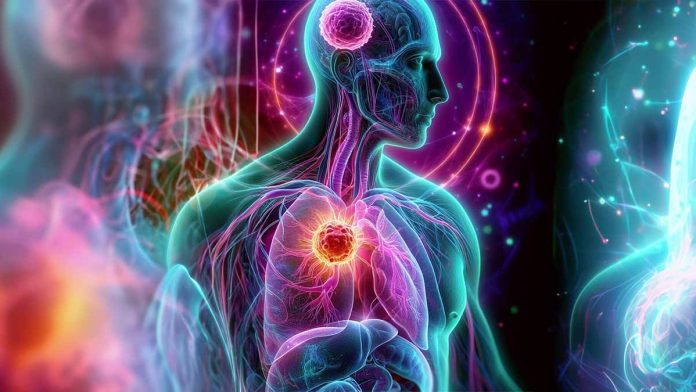
Cells, animals, and even ecosystems all rely on energy. Without energy, no organism survives. The same logic applies across nature. Stars burn fuel. Planets absorb energy. Living systems also run on energy flow.
So the idea proposes:
Life may exist wherever energy flows and usable fuel supports stable processes.
This approach does not reject biology. Instead, it expands the frame.
The Core Equation
The theory expresses life potential through a formula:
L = Σ(Ei × Fi)
Where:
-
Ei = available energy type
-
Fi = fuel compatibility factor (0–1)
-
Ei × Fi = usable energy portion
-
Σ = sum of all usable energy sources
-
L = life potential
In simple words, life potential grows when usable energy increases.
This idea aligns with concepts in astrobiology life potential research.
Why Scientists Care About Energy
Astrobiology already studies how energy supports life in extreme places:
-
Deep-sea vents use chemical energy
-
Microbes survive on sulfur
-
Some organisms live without sunlight
These examples show that life adapts to available energy sources.
Therefore, scientists often search for energy signatures when exploring other planets.
A Logical Interpretation
The formula does not replace biology. Instead, it offers a simplified model:
-
No usable energy – no life
-
Higher usable energy – greater life potential
Thermodynamics already tells us that living systems require constant energy exchange. In that sense, the theory fits known science, though it remains a conceptual model, not a proven law.
A Philosophical Shift
The idea also carries a philosophical message:
Life may not be rare it may be misunderstood.
If life only needs usable energy and compatible fuel, then possibilities across the universe expand. Scientists still require evidence, but open thinking drives discovery.
Balanced Scientific View
Important note for readers:
This theory remains a hypothesis. It inspires discussion but does not yet hold experimental proof. Science advances through testing, observation, and peer review.
Curiosity starts the journey. Evidence completes it.
Conclusion
Every scientific revolution begins with a question. The idea that life depends on energy and fuel compatibility invites fresh thinking in biology and astrobiology.
Whether this universal life theory gains support or not, it reminds us of something powerful: asking new questions often leads to new discoveries.
Life, in many ways, remains one of the universe’s greatest mysteries.