Global energy markets are facing growing panic as experts warn that crude oil prices could surge toward $200 per barrel if the Strait of Hormuz remains closed for an extended period. Financial analysts, governments, and central banks now fear that such a disruption could trigger massive inflation spikes, economic instability, and major pressure on global CPI indicators.
The world economy depends heavily on stable oil supplies flowing through the Middle East, and any disruption in this strategic shipping route immediately creates uncertainty across international markets.
Energy traders now closely monitor every development involving regional tensions because the consequences could affect transportation, manufacturing, food prices, and consumer spending worldwide.
Why the Strait of Hormuz Matters to Global Oil Markets
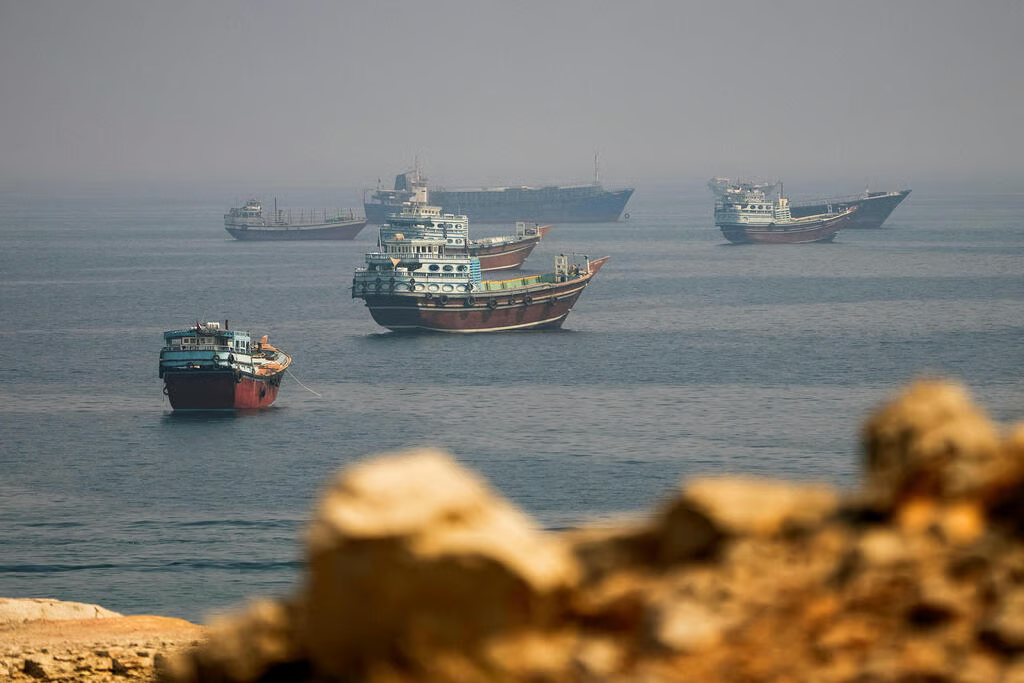
The Strait of Hormuz remains one of the world’s most important energy transportation routes.
A large percentage of global crude oil exports move through this narrow waterway connecting Gulf oil producers to international markets.
Countries depending heavily on oil shipments through the route include:
- Saudi Arabia
- United Arab Emirates
- Kuwait
- Iraq
If the Strait of Hormuz remains blocked, global oil supply chains could experience severe disruption almost immediately.
Oil Prices Could Reach Historic Levels
Several market analysts believe crude oil prices may skyrocket if shipping operations remain restricted.
Potential consequences include:
- Sharp increases in gasoline prices
- Higher transportation costs
- Rising industrial production expenses
- Inflation across consumer goods
Some experts now estimate oil could approach or exceed $200 per barrel under worst-case conditions.
CPI Inflation Risks Continue Growing
One of the biggest concerns surrounding rising energy prices involves the impact on global CPI inflation data.
The Consumer Price Index tracks changes in prices for goods and services purchased by consumers.
When oil prices rise sharply, inflation often spreads across sectors including:
- Transportation
- Food production
- Manufacturing
- Retail supply chains
Higher fuel costs eventually affect nearly every part of the economy.
Global Economies Face Massive Financial Pressure
A prolonged closure of the Strait of Hormuz could create serious economic challenges for countries worldwide.
Economic risks include:
- Slower economic growth
- Rising inflation
- Reduced consumer spending
- Higher borrowing costs
Governments and financial institutions continue preparing for possible market instability.
Energy Markets React Quickly to Middle East Tensions
Global energy markets remain extremely sensitive to geopolitical developments involving the Middle East.
Even rumors involving the Strait of Hormuz can immediately influence:
- Crude oil futures
- Shipping insurance costs
- Currency markets
- Commodity prices
Traders often react aggressively because energy supply disruptions can escalate rapidly during geopolitical crises.
Consumers May Experience Rising Costs Everywhere
If crude oil prices continue increasing, ordinary consumers may soon feel direct economic consequences.
Higher oil prices could increase:
- Gasoline costs
- Airline ticket prices
- Food delivery expenses
- Public transportation fares
- Utility bills
Because energy supports almost every economic sector, inflation may spread quickly across household spending categories.
Central Banks Monitor CPI Data Closely
Global central banks closely track CPI inflation because rising prices influence interest rate policy and financial stability.
If inflation rises significantly:
- Interest rates may increase
- Borrowing costs may rise
- Mortgage payments could become more expensive
- Economic growth may slow
Central banks now face growing pressure to balance inflation control with economic stability.
Shipping and Logistics Industries Face New Challenges
The shipping industry depends heavily on safe maritime access through major trade routes.
A closure involving the Strait of Hormuz could disrupt:
- Global fuel transportation
- International supply chains
- Commercial shipping schedules
- Industrial production timelines
Shipping companies may also face higher insurance costs and security risks.
Developing Economies Could Face the Hardest Impact
Emerging economies often suffer more heavily during oil price shocks because they rely heavily on imported energy.
Countries dependent on imported crude may experience:
- Currency weakness
- Inflation spikes
- Trade deficits
- Reduced economic growth
Several Asian and African economies remain especially vulnerable to energy market instability.
Stock Markets May Experience More Volatility
Financial markets often react negatively during major energy crises because investors fear slower economic activity.
Sectors likely affected include:
- Airlines
- Transportation companies
- Manufacturing industries
- Consumer retail businesses
Energy company stocks, however, may benefit from rising oil prices.
Alternative Energy Discussions Intensify
The crisis has also renewed global discussion surrounding renewable energy and energy independence.
Many governments now emphasize investment in:
- Solar power
- Electric vehicles
- Wind energy
- Alternative fuel systems
Reducing dependence on imported oil remains a major strategic goal for many countries.
Military Tensions Continue Influencing Markets
Regional military tensions remain one of the biggest drivers behind current market uncertainty.
International governments continue monitoring developments involving:
- Naval security operations
- Regional alliances
- Oil infrastructure protection
- Maritime shipping routes
Any escalation could quickly worsen market fears and energy supply concerns.
Could Diplomacy Prevent an Economic Shock?
World leaders continue pushing for diplomatic solutions to reduce tensions and stabilize energy markets.
Possible diplomatic priorities include:
- Maritime security agreements
- Ceasefire negotiations
- Energy export guarantees
- International shipping protection
Markets may calm significantly if regional stability improves.
Conclusion: The World Watches the Strait of Hormuz Closely
The possibility that crude oil could surge toward $200 per barrel demonstrates how critical the Strait of Hormuz remains to the global economy.
As fears surrounding energy supply disruptions continue growing, rising oil prices may create enormous pressure on worldwide CPI inflation, consumer spending, and economic stability.
Whether tensions ease through diplomacy or escalate further could determine the future direction of energy markets and the broader global economy in the coming months.