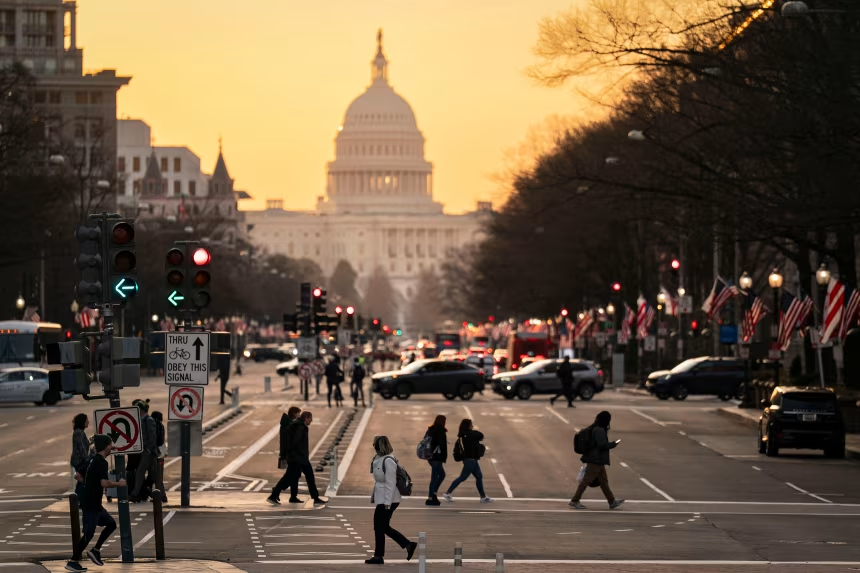
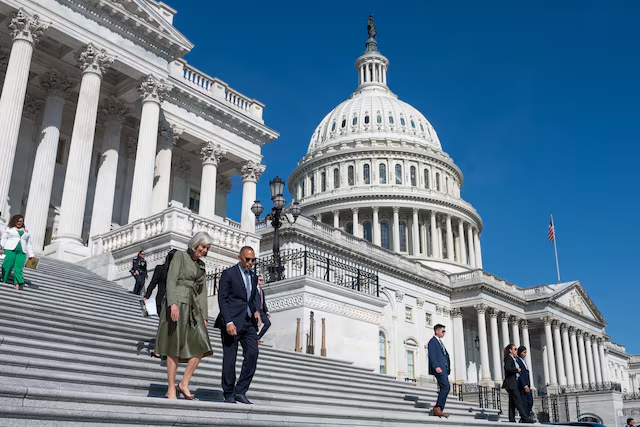
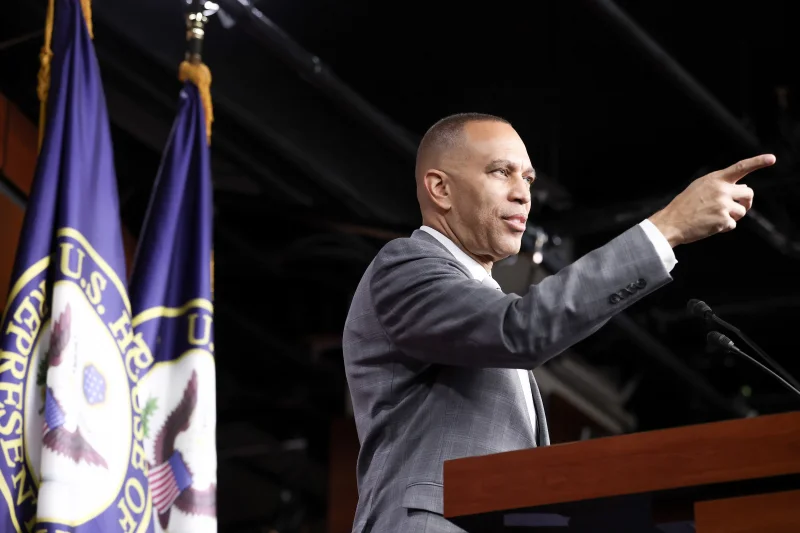
The US Government Shutdown 2026 debate is intensifying as Congress approaches a critical federal funding deadline on December 11. President Donald Trump’s request for an additional $350 billion in Pentagon spending has created disagreements among Republicans and Democrats, making negotiations over government funding more complicated.
The money is intended to support America’s military requirements, including weapons, aircraft, missiles, ships and other defence capabilities. However, several Republican lawmakers are questioning whether the entire amount should be approved through a party-line budget package that could increase federal borrowing.
Democrats have raised a different concern. They want restrictions on funding that could support offensive military operations against Iran, while Republicans argue that the Pentagon needs sufficient resources to maintain American military capabilities.
The disagreement comes just weeks before Democrats are scheduled to take control of both chambers of Congress in January 2027.
Although lawmakers are discussing a temporary funding extension, no final agreement has been reached. The coming negotiations will determine whether Washington avoids another shutdown or faces a new federal funding crisis during the holiday season.
Why Is the US Government Facing Another Shutdown Risk?
The current federal funding arrangement is scheduled to expire on December 11, 2026.
Congress previously approved a continuing resolution to keep federal agencies operating through that date. A continuing resolution, commonly called a CR, temporarily maintains government funding while lawmakers negotiate longer-term spending legislation.
Without another funding law before the deadline, affected federal agencies could face a funding gap beginning December 12.
That situation could trigger a partial or wider government shutdown, depending on which agencies and programmes have approved funding.
The difficulty is that Congress has not completed all 12 regular appropriations bills for the 2027 fiscal year.
Republicans and Democrats disagree over spending priorities, military funding and the conditions that should accompany government financing.
The Pentagon request has added another complicated issue to negotiations that were already difficult.
What Is Trump’s $350 Billion Pentagon Spending Demand?
The Trump Pentagon Spending Demand is part of a much larger defence budget proposal for fiscal year 2027.
The Trump administration has requested approximately $1.5 trillion in total defence spending, including around $1.15 trillion in discretionary funding and an additional $350 billion that the administration wanted to pursue through budget reconciliation.
The proposed additional funding is intended to support a range of military priorities.
These include:
- Replenishing ammunition and missile stockpiles.
- Purchasing advanced military aircraft.
- Expanding naval capabilities and shipbuilding.
- Developing missile defence systems.
- Supporting satellite and military technology programmes.
- Strengthening weapons production and military readiness.
The administration argues that the United States needs additional resources to address military requirements and replace equipment consumed or affected by operations abroad.
The ongoing Iran conflict has become an important part of the discussion because it has increased attention on ammunition supplies, military equipment and operational costs.
However, the $350 billion proposal has encountered resistance within Trump’s own party.
Why Are Republicans Divided Over the Pentagon Budget?
Republicans control Congress until the new Democratic majority takes office in January 2027. Nevertheless, they have struggled to agree on how to deliver the additional defence funding.
Some Republicans support Trump’s request because they believe military readiness requires additional investment.
Others are concerned about the financial consequences of approving another major spending package without identifying how to pay for it.
1. Concerns About Federal Debt
The United States already carries a federal debt measured in tens of trillions of dollars.
Adding another $350 billion in spending without corresponding savings or revenue could increase borrowing requirements.
Some conservative lawmakers argue that defence spending should not automatically receive approval without considering its effect on the national debt.
House Budget Committee Chairman Jodey Arrington has raised concerns about approving the entire amount without spending offsets.
This disagreement reflects a wider Republican debate about balancing military priorities with fiscal responsibility.
2. Disagreement Over Budget Reconciliation
Republicans initially considered using budget reconciliation to approve the additional Pentagon funding.
This process allows certain budget-related legislation to pass the Senate with a simple majority rather than the 60 votes generally needed to overcome a filibuster.
It can therefore allow the majority party to advance selected spending and tax measures without Democratic support.
However, reconciliation has strict procedural requirements.
Republicans would need agreement on the budget resolution, sufficient votes in both chambers and compliance with Senate reconciliation rules.
The process also requires political unity, something that has become difficult within the Republican conference.
3. Republicans Are Considering a Smaller Package
The full $350 billion proposal has encountered substantial resistance.
On November 18, Republican Representative Mike Rogers, chairman of the House Armed Services Committee, said that the full amount was unlikely to move forward but suggested that a smaller package of approximately $100 billion could still be possible.
Meanwhile, Senate Republicans have discussed alternative ways to provide defence funding through the regular appropriations process.
These developments show that the debate is shifting from whether the full request should pass to how much additional funding Congress might approve and through which legislative route.
Why Are Democrats Linking Government Funding to the Iran War?
Democrats have raised concerns about using federal spending legislation to finance military operations against Iran.
Several Democratic lawmakers want restrictions that would prevent money from being used for certain offensive military operations without specific congressional authorisation.
Their argument centres on Congress’s constitutional responsibilities over military funding and decisions involving war.
They also point to the financial costs of the conflict and its potential effects on American households.
Higher military expenses can increase pressure on federal budgets, while instability in the Middle East can affect international oil markets and fuel prices.
However, Democrats are not completely united on whether they should risk a government shutdown to secure restrictions on the war.
Some lawmakers favour using spending negotiations to pressure the administration. Others want to avoid disrupting federal services and would prefer a temporary funding extension.
This difference creates another challenge for Democratic leaders as they prepare to take control of Congress.
Will the Government Actually Shut Down on December 12?
A shutdown remains possible, but it is not inevitable.
Recent reporting suggests that lawmakers from both parties have little appetite for another prolonged shutdown.
One option under discussion is a clean continuing resolution that would extend federal funding at approximately existing levels.
Such an arrangement could keep government agencies operating while giving the incoming Democratic Congress more time to negotiate the full-year budget.
The length of the extension remains an important question.
Lawmakers could approve a short extension lasting several weeks or a longer measure covering a larger part of the fiscal year.
However, the unresolved dispute over Pentagon spending and restrictions on the Iran conflict could complicate the final agreement.
The government shutdown risk therefore depends on whether congressional leaders can separate the immediate funding deadline from their wider disagreements over military policy.
What Happens If the US Government Shuts Down?
A federal government shutdown occurs when agencies lack the legal authority to spend money on affected activities because Congress and the president have not approved the necessary funding.
The effects depend on which departments have funding and which services are legally allowed to continue.
Federal Employees Could Face Disruption
Some federal employees may be required to work without receiving their regular pay until funding resumes.
Other employees whose work is not considered essential may be temporarily furloughed.
Federal workers generally receive back pay after a shutdown ends under existing federal law, but missed paydays can still create financial difficulties for families.
Government Services Could Slow Down
A shutdown could affect certain federal services, including administrative processing, public information services and some agency operations.
The exact impact would depend on each department’s funding status and contingency plans.
National Parks and Public Facilities Could Be Affected
National parks, museums and other federally operated facilities may face reduced services or temporary closures, depending on available funding and staffing arrangements.
Federal Contractors Could Face Financial Pressure
Government contractors may experience delayed payments or suspended projects.
Smaller businesses that depend heavily on federal contracts could face cash-flow problems if government operations are interrupted.
Economic Confidence Could Suffer
A prolonged shutdown can create uncertainty for businesses, workers and financial markets.
Government employees may reduce spending, while companies that rely on federal payments could delay hiring and investment.
The economic consequences would depend on the duration and scale of the shutdown.
How Could the Shutdown Fight Affect the US Economy?
The US Government Shutdown 2026 debate comes at a sensitive time for the American economy.
Federal spending supports a wide range of economic activities, from defence manufacturing and infrastructure to research, public services and government contracts.
A prolonged funding disruption could affect businesses that rely on federal programmes.
The Pentagon funding dispute also raises questions about how the United States finances its military commitments.
If Congress approves the full additional $350 billion without offsetting measures, federal borrowing requirements could increase.
Higher government borrowing can contribute to pressure on interest rates, although the effect depends on wider economic conditions, financial markets and Federal Reserve policy.
The Iran conflict adds another layer of uncertainty.
If military tensions disrupt oil supplies or shipping routes, energy prices could rise, potentially increasing transportation and production costs.
American consumers could feel the effects through higher petrol prices and more expensive goods.
However, a shutdown would not automatically cause a recession. Its economic impact would depend on how long it lasts, which services are affected and whether financial markets experience wider instability.
Why Is the January 2027 Congressional Transition Important?
The timing of the funding negotiations is especially significant because Democrats are preparing to take control of both the House and Senate in January.
Republicans therefore have only a limited period to advance their remaining legislative priorities before the new Congress begins.
This has created pressure within the Republican Party to address defence spending and other outstanding bills before the transition.
However, some Republican lawmakers are questioning whether rushing through a large spending package is financially responsible.
Democrats, meanwhile, want to influence the next round of federal spending negotiations after taking control.
A short-term continuing resolution could provide a way to avoid a shutdown while allowing the incoming Congress to negotiate longer-term funding arrangements.
The transition also raises questions about whether the Trump administration will need to work more closely with Democratic lawmakers on future budget legislation.
What Happens Next in Washington?
Several developments will determine the direction of the budget dispute.
1. A temporary funding extension: Congressional leaders could approve a continuing resolution to keep agencies operating beyond December 11.
2. A revised Pentagon funding package: Republicans may pursue a smaller defence spending measure instead of the full $350 billion request.
3. Bipartisan negotiations: Senate leaders may attempt to reach an agreement with Democrats through the regular appropriations process.
4. Iran war funding restrictions: Democrats could continue pushing for conditions on how military funds may be used.
5. Defence authorisation legislation: Congress also needs to address the annual National Defense Authorization Act, which establishes defence policy and authorises military programmes.
These developments are connected, but they involve different legislative procedures. Approval of a defence authorisation bill does not automatically provide all the money required for military programmes.
The immediate priority remains preventing a funding gap when the current continuing resolution expires.
Final Thoughts: A Budget Battle With Consequences Beyond Washington
The US Government Shutdown 2026 dispute has become a test of Republican unity, Democratic negotiating power and the Trump administration’s ability to secure additional military funding.
Trump’s $350 billion Pentagon request has exposed disagreements over federal borrowing, military priorities and the financial consequences of the Iran conflict.
Republicans are divided over whether to approve the full package through a partisan process, while Democrats want restrictions on military spending and a temporary extension of government funding.
The emerging discussion of a smaller defence package and bipartisan negotiations shows that the original proposal may change before Congress reaches a final decision.
For ordinary Americans, the most immediate concern is whether federal services and employee payments will be disrupted after December 11.
For Washington, the bigger question is how to balance military requirements, national debt and government spending during a major political transition.
The next few weeks will determine whether lawmakers can reach a temporary agreement or allow another shutdown confrontation to develop.