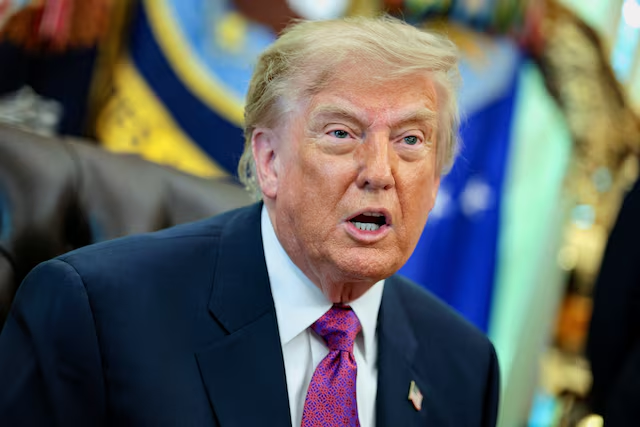
The Iran war oil prices shock is becoming a growing economic problem for the United States and countries around the world as the conflict continues to disrupt major energy routes. On September 12, President Donald Trump said he expected the war with Iran to end after the U.S. midterm elections and predicted that oil prices would fall once the conflict was over.
But markets are facing a very different reality in the short term. Crude oil prices had climbed above $100 a barrel as the conflict continued to threaten energy shipments through the Strait of Hormuz and other strategic waterways. The disruption has raised fresh fears of a global energy crisis 2026, with higher fuel costs beginning to spread through transportation, manufacturing and household budgets.
Trump Says Oil Prices Will Fall After the War
Trump spoke about the conflict during his visit to Ireland on September 12.
The U.S. president said he believed the war could end “very soon,” although he suggested that Iran could continue resisting until after the November midterm elections. He also predicted that oil prices would fall significantly when the fighting ends.
The comments came at a difficult moment for the American economy.
Energy prices have become an increasingly important political issue as consumers face higher gasoline and diesel costs. The continuing conflict has also complicated the Federal Reserve’s fight against inflation.
If oil remains above $100 a barrel for an extended period, the pressure could become much harder for the U.S. economy to absorb.
Oil Prices Rise as Middle East Supply Risks Increase
The biggest immediate concern is the growing disruption to global oil supplies.
The Strait of Hormuz remains one of the world’s most important energy chokepoints. The conflict has severely reduced shipping through the waterway, forcing energy companies and governments to search for alternative routes.
At the same time, instability around the Red Sea and Bab el-Mandeb has created additional risks.
Reuters reported that crude prices had moved above $100 a barrel as the U.S.-Iran conflict intensified and threats to major shipping routes increased.
This means the world is dealing with several energy risks at the same time rather than a single isolated disruption.
Why the Strait of Hormuz Matters
The Strait of Hormuz is critical to the global energy system because it connects the Persian Gulf with the Gulf of Oman and the wider international shipping network.
Any serious disruption can affect oil exports from major producers.
During the current conflict, shipping activity through the strait has fallen dramatically compared with normal levels. That reduction has created uncertainty for energy traders and importing countries.
Even countries that do not buy oil directly from the Persian Gulf can feel the impact.
Oil is traded in a global market, meaning a supply disruption in one region can increase prices in markets thousands of miles away.
The Energy Crisis Is Spreading Beyond Oil
The current global energy crisis 2026 is not limited to crude oil.
Higher oil prices can affect almost every part of the economy.
Transportation companies face higher fuel bills. Airlines pay more for jet fuel. Trucking companies face increased diesel costs. Manufacturers have to deal with higher transportation and production expenses.
Eventually, some of those costs can reach consumers.
That can mean more expensive food deliveries, higher travel costs and increased prices for manufactured products.
American Drivers Are Feeling the Pressure
The energy shock is particularly important for the United States because gasoline and diesel prices have risen sharply during the conflict.
The higher prices create a political problem for the Trump administration.
American consumers generally notice changes at the gasoline pump quickly. A prolonged period of expensive fuel could therefore increase public pressure on the White House.
The issue is especially sensitive ahead of the November midterm elections.
Trump has repeatedly argued that ending the conflict would bring down energy prices. However, the longer the war continues, the more difficult it becomes to guarantee when prices will return to earlier levels.
Inflation Could Become a Bigger Problem
Higher oil prices can also complicate monetary policy.
When energy becomes more expensive, companies face higher operating costs. Some businesses pass those costs to consumers, contributing to broader inflation.
That creates a difficult situation for central banks.
The Federal Reserve wants inflation to move toward its target, but an energy shock can push prices higher even when policymakers have limited control over the original cause.
Recent reporting has already highlighted the connection between higher energy prices from the Iran conflict and renewed U.S. inflation concerns.
The Pressure on Diesel Is Particularly Serious
Diesel prices deserve special attention because diesel is essential to global transportation.
Trucks, ships, construction equipment and agricultural machinery depend heavily on diesel.
When diesel becomes more expensive, the cost of moving goods increases.
That can eventually affect supermarkets, factories and online retailers.
The United States is therefore not simply dealing with a gasoline problem. The wider energy shock could influence the cost of moving goods throughout the economy.
Global Markets Are Watching the Conflict Closely
Financial markets are increasingly treating the Iran conflict as a major economic risk.
Oil prices have become one of the most important indicators for investors trying to determine where inflation and interest rates could go next.
A prolonged period of expensive energy could weaken economic growth while simultaneously increasing inflation.
That combination is particularly difficult for policymakers because fighting inflation through higher interest rates can also slow economic activity.
Europe and Asia Face Their Own Risks
The consequences are not limited to America.
European and Asian economies are heavily dependent on international energy markets.
Countries that import large quantities of oil and gas could face higher energy bills if prices remain elevated.
Manufacturers in Asia and Europe may also face higher shipping and production costs.
For developing economies, the impact could be even more severe because higher fuel prices can quickly increase the cost of transportation and essential goods.
Why the Red Sea Matters Too
The energy crisis has become more complicated because the Red Sea is also facing security problems.
Houthi forces in Yemen have increased pressure around important maritime routes. At the same time, attacks involving regional actors have created additional risks for shipping companies.
The result is a dangerous combination:
Hormuz disruption + Red Sea insecurity + high oil prices = greater global energy risk.
The more shipping routes become difficult to use, the more expensive and complicated global energy transportation becomes.
Saudi Arabia Faces Additional Pressure
Saudi Arabia is another important part of the story.
The kingdom has traditionally relied on multiple routes to move its oil to international customers.
However, the conflict has increased pressure on Saudi energy infrastructure and alternative export routes.
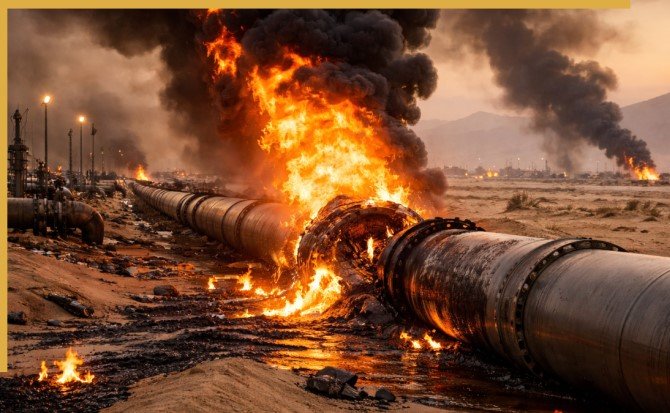
On September 12, Trump said Iran was probably responsible for an aerial attack on Saudi Arabia’s East-West oil pipeline, although the pipeline attack was separately reported as involving drones believed to have originated from Iraq.
The incident demonstrates how regional conflict can threaten energy infrastructure far beyond the original battlefield.
Can Oil Prices Fall Quickly?
Trump believes oil prices will fall once the war ends.
That is possible, but the recovery may not happen immediately.
Markets will need to see whether shipping routes reopen, whether oil production returns to normal and whether companies can safely move energy supplies.
Even after a ceasefire, insurance costs, damaged infrastructure and shipping disruptions could continue affecting prices.
A political agreement therefore does not automatically mean an immediate return to cheap oil.
What Happens If the War Continues?
The biggest risk is that the conflict continues for several more months.
A prolonged war could keep oil prices elevated and increase pressure on governments around the world.
It could also force countries to release strategic fuel reserves, seek alternative suppliers and increase cooperation over energy security.
For consumers, the biggest concern would be persistent inflation.
For businesses, it would mean higher operating costs.
For governments, it could mean difficult decisions over subsidies, taxes and strategic reserves.
The U.S. Economy Faces a Difficult Balancing Act
The Trump administration now faces a complicated economic challenge.
Washington wants to maintain pressure on Iran while preventing the conflict from creating an even larger economic shock.
Those objectives can become difficult to balance.
More military pressure could increase geopolitical risks, while a diplomatic settlement could potentially reduce energy-market uncertainty.
The timing is also politically important because the U.S. midterm elections are approaching.
What Could Bring Relief to Global Energy Markets?
Several developments could help stabilize oil markets.
The most important would be a durable ceasefire or peace agreement between the United States and Iran.
The reopening of the Strait of Hormuz would also provide major relief.
Improved security around the Red Sea could further reduce shipping costs.
Finally, increased production from other oil-producing countries could help compensate for disrupted supplies.
Until those developments occur, markets are likely to remain highly sensitive to every military and diplomatic announcement.
The Bigger Economic Picture
The current Iran war oil prices crisis shows how quickly a regional conflict can become a global economic problem.
Energy markets connect countries that may have little direct involvement in the conflict.
A disruption in the Middle East can increase fuel prices in America, raise transportation costs in Europe and increase manufacturing expenses in Asia.
That interconnectedness makes energy security one of the most important economic issues of 2026.
Final Takeaway
Trump says the Iran war could end after the U.S. midterm elections and expects oil prices to fall once the conflict is over. But until that happens, global energy markets remain under severe pressure.
Oil above $100 a barrel, reduced shipping through the Strait of Hormuz and growing risks around other regional waterways have created a serious challenge for governments and consumers.
The global energy crisis 2026 could therefore become a major economic story in the months ahead.
If diplomacy succeeds, oil markets could quickly move toward stability. If the conflict continues, however, higher energy costs could put additional pressure on inflation, businesses and household budgets around the world.
For now, the biggest question is not simply when the Iran war will end it is how much economic damage the world will experience before it does.