President Donald Trump has once again put Canada at the center of a trade dispute after linking the country’s wildfire smoke to the possibility of new tariffs on Canadian goods.
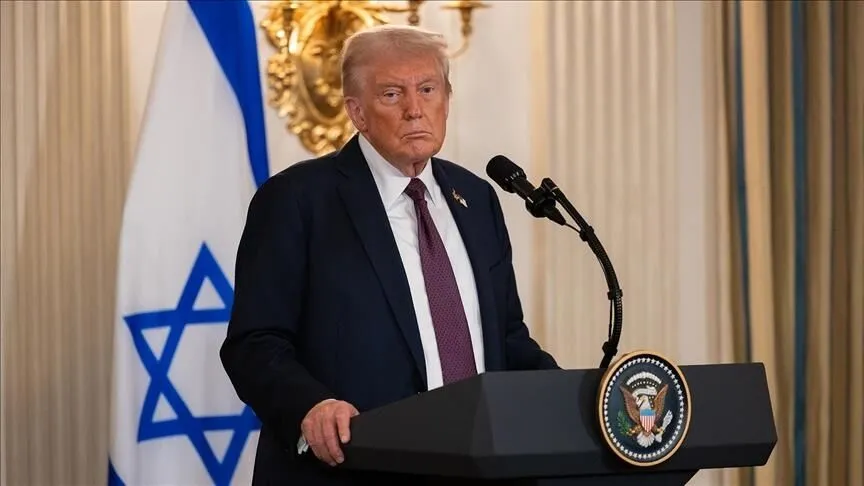
During remarks at the White House, Trump said his administration would impose a “big tariff on Canada because of the smoke,” referring to wildfire smoke that had moved south across the U.S.-Canada border. His comments immediately attracted attention because tariffs are normally associated with trade disputes, economic policy or national-security concerns rather than naturally occurring wildfire smoke.
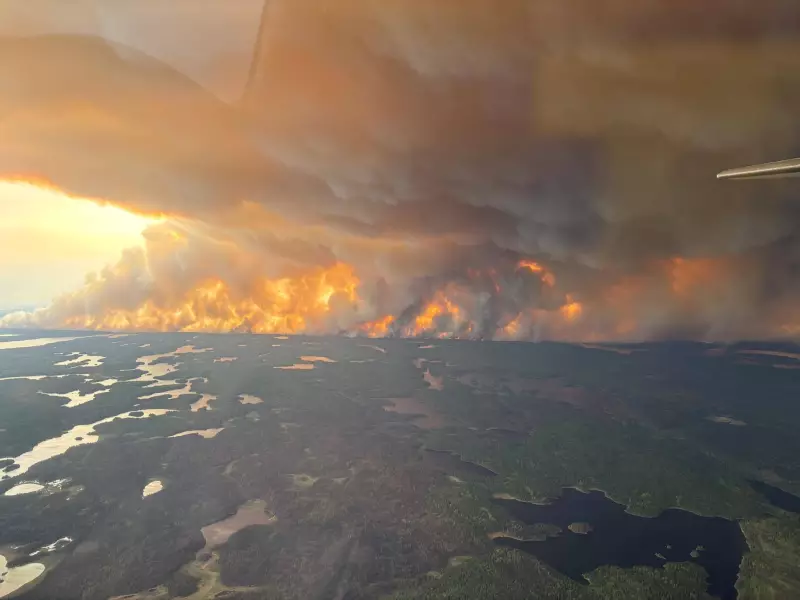
The comments came during a period when smoke from hundreds of Canadian wildfires was affecting air quality across several U.S. states. Air-quality alerts had been issued across parts of the Midwest and Northeast as smoke moved southward.
Trump’s latest comments have therefore created a debate that goes beyond tariffs. They raise questions about how governments should respond when environmental disasters cross international borders and whether trade penalties can realistically address a problem driven by weather, geography and wildfire conditions.
What Did Trump Say About Canada?
Trump made the comments while responding to questions about a separate food-safety issue involving lettuce imported from Mexico.
During the exchange, he said the United States would impose a major tariff on Mexico because of the lettuce issue. He then turned to Canada and said the U.S. would put a “big tariff on Canada because of the smoke.”
Trump also argued that the smoke had affected large parts of the United States and said he had told Canada that it needed to do something about the problem.
The remarks reflected Trump’s broader willingness to use tariffs as a tool for applying pressure to trading partners.
Why Canadian Wildfire Smoke Reached the U.S.
Wildfire smoke does not stop at national borders.
Canada’s vast forests and northern geography make large wildfires a recurring environmental challenge. When fires burn across northern and western regions, winds can carry smoke hundreds or even thousands of miles.
In July, smoke from Canadian wildfires affected numerous U.S. states, including areas of the Midwest, Great Lakes and Northeast. Air-quality alerts were issued across a wide region as conditions deteriorated.
For Americans living in affected areas, the smoke was more than an inconvenience.
It reduced visibility, created unpleasant outdoor conditions and raised concerns about air quality.
Why the Tariff Threat Is Controversial
The phrase “Canada because of the smoke” has become controversial because tariffs are traditionally used to influence economic behavior.
A tariff is essentially a tax imposed on imported goods. Depending on how it is designed, the cost can be absorbed by importers, businesses or consumers.
The central question is therefore whether imposing tariffs on Canadian products would actually reduce wildfire smoke in the United States.
Critics argue that the connection is difficult to establish.
Wildfires are influenced by multiple factors, including drought, temperature, vegetation, wind and land conditions.
A tariff on Canadian imports does not directly extinguish a wildfire or change the wind patterns that carry smoke across the border.
Canada Faces a Complex Wildfire Problem
Canada has experienced increasingly difficult wildfire seasons in recent years.
Large fires can spread across remote areas that are difficult for firefighters to access. Extreme heat, dry conditions and changing weather patterns can make firefighting even more challenging.
Canadian officials have emphasized the complexity of the situation.
Prime Minister Mark Carney has defended Canada’s wildfire response while highlighting the country’s enormous forested territory and difficult environmental conditions.
The situation therefore cannot easily be reduced to a question of whether Canada is simply “doing enough.”
Smoke Does Create Real Problems for Americans
Although the debate over Trump’s tariff threat is political, the underlying problem is real.
Canadian wildfire smoke can travel into the United States and affect communities far from the fires themselves.
Fine particles contained in wildfire smoke can reduce air quality and create health concerns, particularly for vulnerable populations.
During periods of heavy smoke, authorities may advise residents to reduce outdoor activity, close windows and monitor local air-quality conditions.
The environmental impact therefore extends beyond Canada’s borders.
Could Tariffs Solve the Smoke Problem?
This is one of the biggest questions surrounding Trump’s comments.
Tariffs are designed to influence trade.
They can make imported products more expensive and may encourage changes in business behavior or government policy.
But wildfire smoke presents a different type of challenge.
Even if Canada dramatically increased firefighting efforts, weather conditions could continue spreading smoke across the border.
Fires can also start in remote regions where immediate intervention is difficult.
For that reason, experts and critics have questioned whether tariffs are an effective tool for addressing the problem.
Trump’s Broader Use of Tariffs
The comments fit into Trump’s broader approach to international trade.
Since returning to the White House, Trump has repeatedly used tariffs or threatened tariffs as leverage in negotiations with other countries.
His administration has argued that tariffs can protect American industries, address trade imbalances and pressure foreign governments.
Supporters see tariffs as an important negotiating tool.
Critics argue that repeated tariff threats can create uncertainty for businesses and increase tensions with important trading partners.
The Canada smoke controversy adds another unusual dimension to that debate.
The U.S.-Canada Relationship
Canada is one of America’s closest economic partners.
The two countries share one of the world’s longest international borders and maintain extensive trade relationships.
Millions of dollars in goods cross the border every day, supporting industries ranging from energy and agriculture to manufacturing and technology.
That means any new tariff imposed on Canadian products could have consequences for American companies and consumers as well.
A dispute over wildfire smoke could therefore become another source of tension in an already complicated economic relationship.
Environmental Problems Require Cooperation
Wildfire smoke is a problem that does not respect political boundaries.
When smoke crosses from one country into another, cooperation may be more effective than confrontation.
The two countries could potentially work together on:
- Wildfire monitoring
- Emergency response
- Firefighter cooperation
- Satellite tracking
- Air-quality forecasting
- Forest management
- Disaster preparedness
- Public health warnings
Such cooperation could address the problem more directly than trade restrictions.
The Politics Behind the Smoke Debate
The controversy also demonstrates how environmental problems can become political issues.
Wildfires naturally generate public anger when they affect people’s homes, health, businesses or daily activities.
Politicians may face pressure to demonstrate that they are taking action.
Trump’s tariff comments can therefore be viewed within a larger political strategy of demanding accountability from foreign governments.
However, political pressure does not necessarily guarantee that the proposed solution will address the underlying cause.
Canada Could Face Economic Pressure
If additional tariffs are imposed, Canadian exporters could face higher costs when selling products in the American market.
Industries that rely heavily on cross-border trade could be particularly affected.
Canadian businesses may respond by raising prices, reducing production or seeking alternative markets.
American companies that depend on Canadian imports could also feel the impact.
This illustrates why tariff decisions can have consequences far beyond the governments announcing them.
American Consumers Could Also Be Affected
Tariffs are often described as taxes on foreign countries, but the economic reality can be more complicated.
Importers may pay the tariff when goods enter the United States.
Businesses can then decide whether to absorb the additional cost or pass some of it on to customers.
If tariffs increase the cost of Canadian products, American consumers could ultimately pay more for certain goods.
That makes the debate relevant not only to governments but also to households and businesses.
A Different Path Forward
Instead of escalating the trade dispute, the United States and Canada could focus on practical wildfire cooperation.
Joint firefighting programs already demonstrate that the two countries can work together during emergencies.
The U.S. and Canada have a long history of cooperation on disaster response, particularly when wildfires threaten communities near the border.
Expanding that cooperation could help both countries prepare for future wildfire seasons.
What Happens Next?
The immediate question is whether Trump’s threat will result in an actual new tariff policy.
A presidential statement does not necessarily mean that a tariff will immediately take effect.
Any new trade measures could require additional administrative action, negotiations and policy decisions.
Canada will also have to determine how it responds if Washington moves forward.
Possible responses could include diplomatic negotiations, economic countermeasures or efforts to strengthen cooperation on wildfire management.
Why This Story Matters
The dispute illustrates how interconnected modern environmental and economic issues have become.
A wildfire begins in one country, smoke crosses a border and suddenly the issue becomes part of an international trade dispute.
That chain of events would have seemed unusual in traditional trade diplomacy.
But today’s political environment increasingly combines economics, environmental policy and national security.
The Canada smoke controversy is therefore bigger than a single tariff threat.
It raises questions about how countries should respond when natural disasters have cross-border consequences.
Conclusion
Trump’s statement about imposing a big tariff on Canada because of the smoke has generated a new controversy in the already complicated U.S.-Canada relationship.
The wildfire smoke affecting parts of the United States is a genuine environmental and public-health concern. However, whether tariffs can effectively address that problem remains highly debatable.
The fires themselves are driven by complex environmental conditions, while smoke can travel long distances depending on weather patterns.
A trade penalty may create economic pressure, but it cannot directly control wind, weather or wildfire behavior.
The more practical response may involve greater cooperation between the United States and Canada on firefighting, forest management, emergency response and air-quality monitoring.
For businesses and consumers, the bigger concern will be whether Trump’s latest threat develops into a concrete tariff policy.
The episode once again demonstrates Trump’s willingness to use tariffs as a political and negotiating tool and why every new tariff threat can have consequences for America’s closest trading partners.
As the wildfire season continues, both countries will face pressure to address the environmental problem while avoiding unnecessary escalation in their economic relationship.