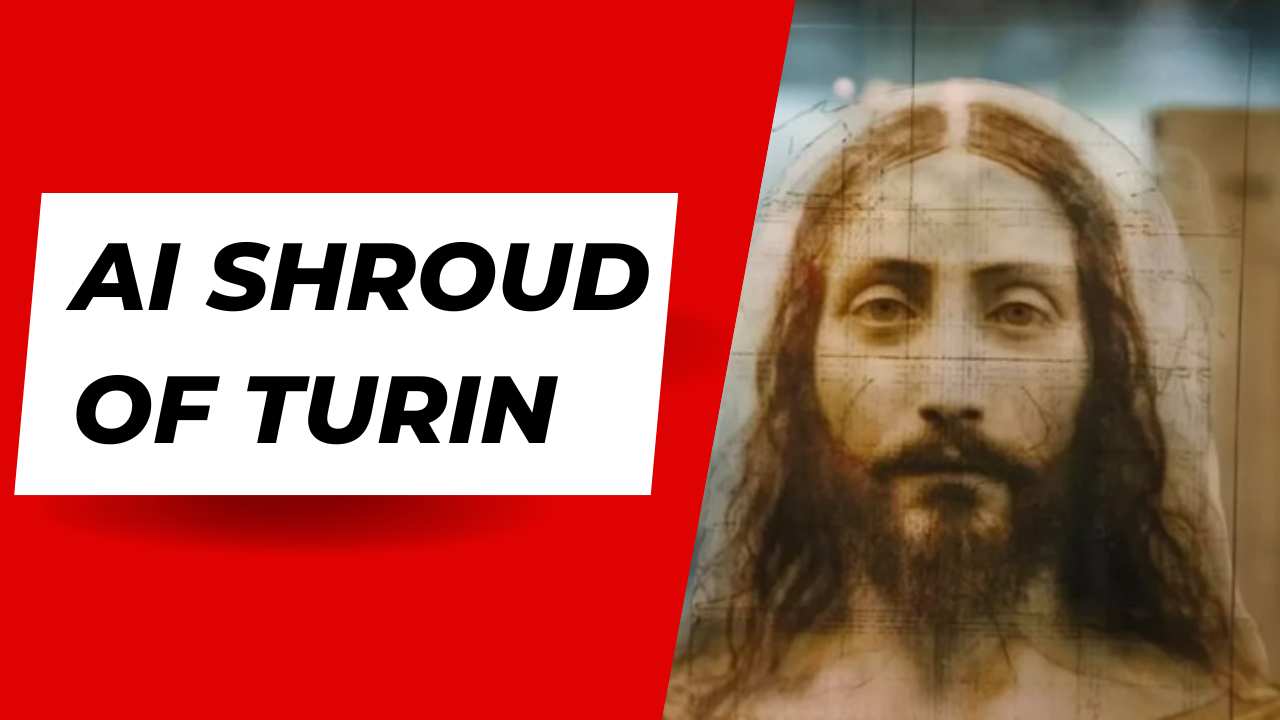
Modern technology continues to explore ancient mysteries. Artificial intelligence now helps researchers analyze historical artifacts, texts, and images. One subject that often attracts attention is the famous Shroud of Turin mystery a cloth many believers associate with Jesus.
Recently, AI tools have generated visual reconstructions inspired by the Shroud’s image. These digital creations sparked fresh curiosity about history, faith, and science.
This discussion often appears in debates around the Shroud of Turin mystery.
What Is the Shroud of Turin?
The Shroud of Turin is a linen cloth kept in Turin, Italy. It shows the faint image of a man who appears to have suffered physical trauma. Some Christians believe it is the burial cloth of Jesus Christ.
Historians and scientists have studied it for decades. Carbon dating tests in 1988 suggested a medieval origin, but some researchers question those results. Therefore, the debate continues.
How AI Enters the Conversation
Artificial intelligence does not prove religious claims. Instead, it analyzes patterns, enhances images, and creates visual interpretations. When AI processes the Shroud’s image, it can generate clearer or more lifelike renderings of the face.
These reconstructions attract interest because they help people visualize history. However, they remain digital interpretations, not historical proof.
Such projects fall under AI religious reconstruction efforts.
Was Jesus Buried According to History?
Historical and biblical sources state that Jesus was buried after crucifixion. The New Testament describes Joseph of Arimathea placing Jesus in a tomb. This account forms a central part of Christian belief.
Most historians agree that crucifixion victims in Roman times were sometimes buried, especially when families or followers requested it. Therefore, the burial story fits historical context.
However, physical proof from that exact event remains limited, as with many ancient histories.
Science vs Faith
Science asks for measurable evidence. Faith relies on belief and spiritual meaning. The Shroud of Turin sits at the intersection of both. Some see it as a sacred relic, while others treat it as a historical artifact.
AI adds another layer by offering digital exploration, but it does not settle religious questions.
Why This Topic Fascinates People
People feel drawn to stories that connect technology with ancient history. When modern tools examine religious artifacts, curiosity grows. Social media also spreads these stories quickly, which increases public discussion.
Still, careful interpretation protects against misinformation.
A Balanced View
AI can support research, but it cannot confirm miracles or religious truths. The Shroud remains a meaningful symbol for many believers and a subject of study for scientists.
Respectful discussion helps people explore both perspectives.
Conclusion
AI reconstructions of the Shroud of Turin show how technology meets history. While digital tools create new visuals, they do not replace historical evidence or faith.
The question of Jesus’ burial comes mainly from religious texts and historical context. AI can illustrate possibilities, but belief remains personal.
Curiosity and respect allow meaningful exploration of such topics.