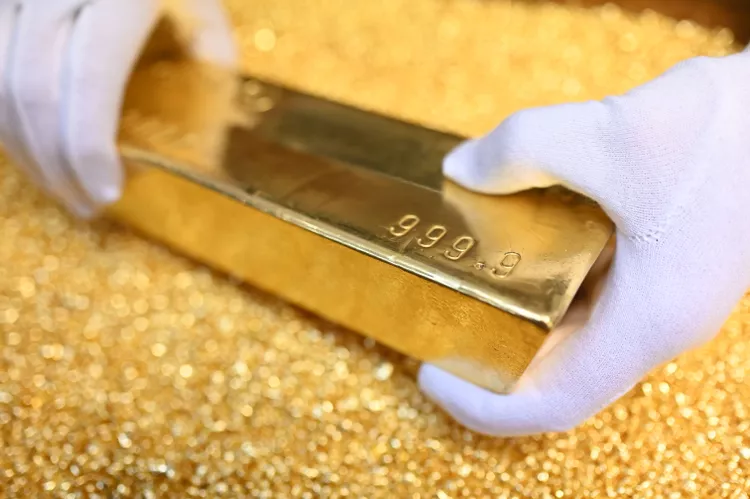
Gold has always attracted investors and traders, but recent market movements have made the precious metal even more difficult to ignore. For someone searching for Gold trading for beginners, the biggest mistake is usually focusing on how much money can be made before learning how much can be lost.
That is exactly why the goal should not be to become rich quickly.
The first goal should be staying in the game.
In this guide, we explain how beginners can approach gold trading more carefully, understand the major risks, control position sizes and avoid the mistakes that can destroy a small trading account.
This is educational information, not a personal investment recommendation. Gold prices can move sharply, and leveraged products can magnify both profits and losses.
Why Gold Attracts So Many Traders
Gold is traded globally and is influenced by several major economic and geopolitical factors.
The metal is often viewed as a store of value and safe-haven asset, but that does not mean its price always rises when markets become uncertain.
Recent market conditions demonstrate that clearly.
Reuters reported on August 20 that spot gold reached about $4,525.79 per ounce, its highest level since June 2, before retreating as traders took profits. The move followed a strong rally associated with lower U.S. Treasury yields and a weaker dollar.
This type of movement creates opportunities, but it also creates danger.
A trader who enters after a large rally without a plan can quickly find themselves on the wrong side of a correction.
What Gold Trading Actually Means
Gold trading can take several forms.
Someone might trade:
- Spot gold
- Gold futures
- Gold options
- Gold-related exchange-traded products
- Shares of gold-mining companies
- Other derivatives linked to gold prices
These products do not all carry the same risks.
Spot and leveraged contracts can expose traders to rapid price movements, while futures and options involve additional complexity.
Beginners should understand exactly what they are trading before risking real money.
Start With Education, Not Money
One of the biggest mistakes in Gold trading for beginners is opening an account and immediately placing a large trade.
A better approach is to learn the fundamentals first.
A beginner should understand:
What moves gold?
How are spreads calculated?
What is leverage?
What is a stop-loss?
What is position size?
How do overnight costs work?
When are major economic announcements released?
Without understanding these basics, even a good market prediction can become a bad trade.
Understand What Moves Gold
Gold does not move randomly.
Several forces can influence its price, including interest rates, Treasury yields, the U.S. dollar, inflation expectations, geopolitical uncertainty and investor demand.
Recent Reuters reporting shows how these factors can interact. Gold’s August rally was supported by lower Treasury yields and a weaker U.S. dollar, while inflation concerns and expectations surrounding Federal Reserve policy remained important market considerations.
This does not mean every gold move can be predicted.
It means traders should understand the broader environment before entering a position.
The U.S. Dollar Matters
Gold is generally priced in U.S. dollars internationally.
When the dollar weakens, gold can become relatively more attractive to buyers using other currencies.
When the dollar strengthens, gold can face additional pressure.
This relationship is not perfect, but it is an important factor for traders to monitor.
For beginners, watching both a gold chart and the dollar index can provide useful context.
Interest Rates Matter Too
Interest rates are another important factor.
Gold does not pay interest like a bond or savings account.
When interest rates and bond yields are high, investors may find interest-bearing assets more attractive.
When yields decline, the opportunity cost of holding gold can become smaller.
Recent market movements demonstrate why gold traders pay close attention to Treasury yields and Federal Reserve expectations.
However, markets are complicated, and gold can move higher or lower even when traditional relationships appear to suggest the opposite.
Don’t Confuse Investing With Trading
A major beginner mistake is treating a short-term trade like a long-term investment.
A trader may enter a position expecting a move within hours or days.
An investor may hold gold exposure for years.
The risk-management rules can therefore be very different.
Before opening a position, decide what type of market participant you are trying to be.
Mixing the two approaches can create confusion.
For example, turning a losing short-term trade into a “long-term investment” simply because the price moved against you is not necessarily a strategy.
The Most Important Rule: Protect Your Capital
The goal of Without Blowing Up is simple: preserve enough capital to continue learning.
No trading strategy wins every time.
Even experienced traders have losing positions.
The difference between a disciplined trader and an undisciplined one is often how losses are controlled.
A beginner should determine the maximum amount they are willing to lose before opening a position.
That decision should be made before entering the market not after the trade begins moving against them.
Use Position Sizing
Position sizing is one of the most powerful risk-management tools available.
Imagine two beginners.
Trader A risks a very large portion of their account on each trade.
Trader B uses much smaller positions and accepts that some trades will lose.
Even if both traders have the same winning percentage, Trader B has a much greater chance of surviving a series of losing trades.
The objective is not to maximize every trade.
It is to prevent one bad trade from causing irreversible damage.
Be Careful With Leverage
Leverage can make a relatively small price movement produce a much larger gain or loss on your trading capital.
That can make gold trading look extremely attractive.
It can also destroy an account quickly.
Beginners often focus on the amount they could make with leverage while ignoring the amount they could lose.
That is dangerous.
Using lower leverage or avoiding leverage while learning can make it easier to understand how the market actually behaves.
The exact leverage available depends on the product, broker and jurisdiction.
Always Know Where You Will Exit
A trading plan should answer one simple question:
What will make me admit that this trade is wrong?
A stop-loss can help establish that boundary.
For example, a trader may decide before entering that they will exit if gold moves beyond a particular technical level.
The specific level should come from the trader’s strategy and risk tolerance rather than an arbitrary number.
A stop-loss does not guarantee the exact exit price during extreme market conditions, but it can provide an important risk-control mechanism.
Don’t Chase a Fast Rally
Gold’s recent market behavior provides an excellent lesson.
On August 20, Reuters reported that gold reached a more-than-two-month high before retreating as traders took profits. The metal had advanced more than 4% during the previous session.
A beginner seeing a sharp rally may think:
“I have to buy now before it goes higher.”
That emotional reaction is known as chasing the market.
Sometimes the price continues rising.
Sometimes the market reverses.
A better approach is to wait for your trading setup rather than allowing fear of missing out to make the decision.
Don’t Trade Every Day
More trades do not automatically mean more money.
Trading too frequently can increase:
- Transaction costs
- Emotional stress
- Mistakes
- Overconfidence
- Revenge trading
A beginner should focus on quality rather than quantity.
If there is no clear setup, staying out of the market is also a decision.
Keep a Trading Journal
A trading journal can be more valuable than another indicator.
Record:
Entry price
Exit price
Position size
Reason for entering
Stop-loss
Target
Market conditions
Emotional state
After twenty or thirty trades, review the results.
You may discover that your biggest problem is not your strategy.
Perhaps you trade too frequently.
Perhaps you enter after large price movements.
Perhaps you move your stop-loss when a trade goes against you.
A journal can reveal patterns that are difficult to notice in real time.
Avoid Revenge Trading
One of the fastest ways to violate the principle of Without Blowing Up is revenge trading.
Imagine losing $100.
Instead of accepting the loss, a trader immediately opens a much larger position hoping to recover the money.
If that trade also loses, the trader may double the position again.
This can create a downward spiral.
A losing trade should remain a losing trade.
Do not turn it into a personal battle with the market.
Don’t Rely on One Indicator
Technical indicators can be useful, but no indicator can predict every gold move.
Moving averages, support and resistance, momentum indicators and trend tools can all provide information.
The problem begins when traders treat one indicator as a guaranteed signal.
A better approach is to combine technical analysis with market context.
For example, a technical setup may look attractive, but a major central-bank announcement could dramatically change market conditions.
Watch Economic Events
Gold traders should be aware of major economic events.
These can include:
- Federal Reserve decisions
- U.S. inflation data
- Employment reports
- Treasury-yield movements
- Major geopolitical developments
- Central-bank announcements
Such events can cause rapid price movements.
Trading immediately before major announcements can therefore be much riskier than trading in quieter conditions.
Demo Trading Can Help
A demo account allows beginners to practice without immediately risking real money.
It can help you learn:
- Order placement
- Stop-losses
- Position sizing
- Chart analysis
- Platform navigation
However, demo trading has one major limitation.
There is no real financial loss.
A trader can therefore behave differently when real money is involved.
That means demo practice should eventually be combined with extremely small real positions if the person decides to trade live.
A Simple Beginner Framework
Someone starting Gold trading for beginners could use a simple process.
Step 1: Learn the market
Understand what moves gold and how your chosen trading product works.
Step 2: Choose one strategy
Don’t jump between five different systems.
Step 3: Practice
Use historical charts and, where appropriate, a demo account.
Step 4: Define risk
Know your maximum acceptable loss before entering.
Step 5: Start small
Keep the position size manageable.
Step 6: Record every trade
Use a trading journal.
Step 7: Review performance
Look for repeated mistakes.
Step 8: Scale slowly
Increase exposure only if the strategy and risk management remain consistent.
The Goal Is Survival, Not Excitement
Gold trading can look exciting because prices can move quickly.
But successful trading is usually much less dramatic than social media makes it appear.
Professional traders often spend more time managing risk than searching for spectacular trades.
A boring trading plan can be better than an exciting one.
The objective is to create a process that you can follow repeatedly.
Final Thoughts
Gold trading for beginners should begin with education, risk management and realistic expectations not a search for instant profits.
Gold can offer trading opportunities, but the same volatility that attracts traders can produce substantial losses.
Recent market action illustrates the point. Gold climbed above $4,500 per ounce before retreating as traders took profits, showing how quickly sentiment can change even during a strong rally.
The best way to approach Without Blowing Up your account is to think about risk before reward.
Learn how the market works.
Use sensible position sizes.
Understand leverage.
Plan exits.
Keep a journal.
Avoid emotional decisions.
Most importantly, never risk money that you cannot afford to lose.
Trading is not a guaranteed path to wealth. It is a high-risk activity in which losses are possible, sometimes substantial, and the objective of good risk management is to keep any individual mistake from becoming financially devastating.
For a beginner, the first victory is not making a huge profit.
It is developing enough discipline to stay in the market long enough to learn.
Frequently Asked Questions
Is gold trading suitable for beginners?
Gold trading can be learned by beginners, but it involves substantial risk. Understanding the product, leverage, fees and risk controls should come before using significant real money.
How much money do I need to start gold trading?
There is no universal amount. The required capital depends on the product, broker, minimum position size and leverage. A beginner should focus on affordable risk rather than choosing an account size simply because a broker permits it.
How can I trade gold without blowing up my account?
Use small positions, define your maximum loss before entering, avoid excessive leverage, use appropriate risk controls and never attempt to recover losses by rapidly increasing position size.
What moves the price of gold?
Important influences include interest rates, Treasury yields, the U.S. dollar, inflation expectations, geopolitical risk, investor demand and central-bank activity.
Is gold guaranteed to rise during a crisis?
No. Gold can rise during periods of uncertainty, but it can also fall sharply. Recent market history demonstrates that gold can experience significant moves in both directions.