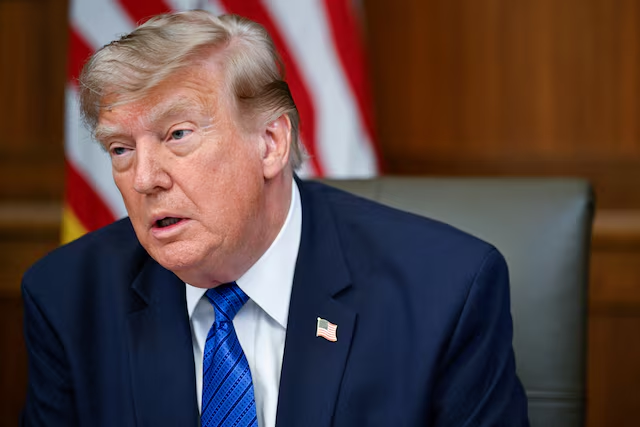
U.S. President Donald Trump has ordered the Pentagon to substantially reduce joint military exercises with South Korea, creating fresh questions about Washington’s military strategy in East Asia and its commitment to one of its most important regional alliances.
The decision came just as the annual South Korea military drills, known as Ulchi Freedom Shield, were scheduled to begin. The exercises started as planned on August 17, despite Trump’s directive to reduce their scale. Around 18,000 South Korean troops are participating in the drills, which are designed to strengthen preparedness against potential threats from North Korea.
Trump said the exercises were costly and argued that they sent an inappropriate and hostile signal to North Korea. He also pointed to his relationship with North Korean leader Kim Jong Un as part of his reasoning.
The move has generated debate over whether reducing the exercises could create an opportunity for diplomacy or instead weaken military deterrence on the Korean Peninsula.
Trump Orders Cut as Exercises Begin
Trump’s decision was announced shortly before the annual military exercises were scheduled to begin.
The president instructed Defense Secretary Pete Hegseth to substantially reduce the U.S. role in the exercises. However, the Pentagon did not immediately provide detailed information about which specific elements would be reduced.
South Korea proceeded with the exercise as scheduled.
That means the announcement did not result in the immediate cancellation of the drills. Instead, the precise impact of the U.S. reduction is expected to become clearer as the exercise progresses.
The timing was significant because the exercises are normally regarded as an important demonstration of the military partnership between Washington and Seoul.
What Are the South Korea Military Drills?
The Ulchi Freedom Shield exercises are annual joint training activities involving U.S. and South Korean forces.
The drills are designed to improve the allies’ ability to respond to a range of military and security scenarios involving the Korean Peninsula.
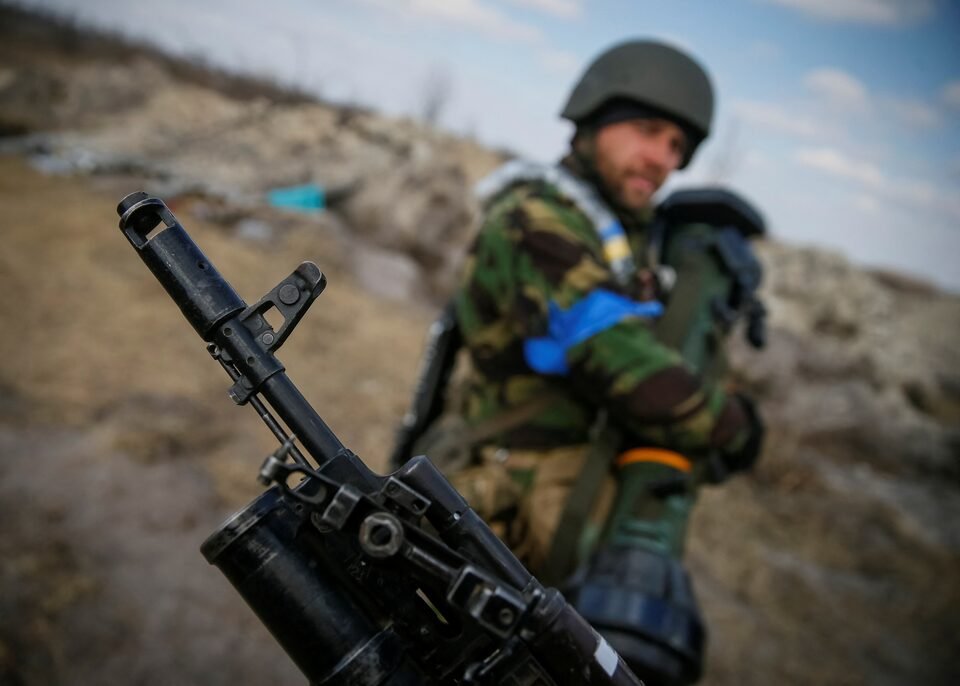
The 2026 exercise includes training involving drones, cyber threats, GPS disruption and other modern battlefield challenges. Around 18,000 South Korean troops are taking part, alongside U.S. personnel and members of the wider United Nations Command.
The exercises combine command-post simulations with field-based training.
Supporters argue that this type of training is necessary because military readiness depends on forces being able to operate together effectively before a real crisis occurs.
Why Did Trump Want the Exercises Reduced?
Trump gave several reasons for his decision.
One was the financial cost of the exercises.
He has repeatedly criticized the expense associated with U.S. military commitments overseas and has argued that allies should contribute more toward their own defense.
Trump also cited his relationship with Kim Jong Un.
He argued that the drills send an unnecessarily hostile message to North Korea and suggested that reducing them could support his broader diplomatic approach toward Pyongyang.
A third factor involved South Korea’s position on the conflict involving Iran.
Trump expressed dissatisfaction with Seoul’s refusal to participate in U.S. actions related to Iran.
This has introduced another dimension into the U.S.-South Korea security relationship.
North Korea Has Long Opposed the Drills
North Korea has consistently criticized U.S.-South Korea military exercises.
Pyongyang typically describes the drills as preparations for an invasion, while Washington and Seoul characterize them as defensive exercises.
North Korea recently condemned the latest drills and warned that it would strengthen its nuclear deterrent.
The country has also continued developing its missile capabilities. Reuters reported that North Korea had launched ballistic missiles in the days before the exercises.
This makes the timing of Trump’s decision particularly significant.
The reduction comes at a moment when North Korea’s military capabilities remain a major concern for South Korea, Japan and the United States.
Concerns About Military Readiness
Critics of the reduction argue that military exercises are not simply symbolic events.
They provide an opportunity for troops to practice communication, logistics and coordinated operations.
Modern warfare increasingly involves cyberattacks, drones, electronic warfare and disruption of satellite navigation systems.
The 2026 drills specifically address some of these challenges.
Reducing training could therefore affect the ability of allied forces to coordinate effectively during an emergency.
The concern is not necessarily that a reduction would immediately weaken South Korea’s military.
Instead, analysts are questioning whether repeated reductions over time could gradually affect readiness.
South Korea’s Position
South Korea has continued with the exercises despite Trump’s announcement.
Its defense authorities indicated that the exercise would proceed according to the previously announced schedule.
This demonstrates that Seoul continues to view the drills as important to national security.
South Korea has its own large and capable military, but its defense relationship with the United States remains a central part of its security strategy.
Approximately 28,500 U.S. troops are stationed in South Korea under the broader alliance structure, making military coordination particularly important.
The Kim Jong Un Factor
Trump’s reference to his relationship with Kim Jong Un is one of the most closely watched elements of the decision.
Trump and Kim previously held historic meetings during Trump’s first presidency.
Their meetings created hopes for progress on North Korea’s nuclear program, although those efforts ultimately failed to produce a lasting agreement.
Trump has continued to emphasize his personal relationship with the North Korean leader.
His latest decision suggests that personal diplomacy could once again play a role in his approach to Pyongyang.
However, North Korea’s military development has continued during the years since the earlier diplomatic meetings.
North Korea’s Military Capabilities Are Changing
North Korea’s military has undergone significant development.
The country has expanded its ballistic missile program and continued advancing its nuclear weapons capabilities.
It has also developed systems designed to complicate missile defense and improve its ability to strike targets at different ranges.
North Korea’s growing cooperation with Russia has also attracted international attention.
The experience gained through its support for Russia’s war in Ukraine could provide North Korean forces with additional knowledge about modern combat conditions.
These developments have led some military experts to argue that maintaining strong training between U.S. and South Korean forces is more important than ever.
Could the Decision Improve Diplomacy?
Supporters of Trump’s decision could argue that reducing the drills may lower tensions.
North Korea has repeatedly described U.S.-South Korea military exercises as threatening.
Reducing their scale could therefore remove one source of friction and potentially create space for diplomatic engagement.
The logic is similar to Trump’s earlier approach of using military exercises as a negotiating tool.
If Pyongyang responds positively, Washington could potentially use the reduction as part of a broader diplomatic strategy.
However, there is no guarantee that North Korea will respond with concessions.
Could It Weaken Deterrence?
The opposite argument is that reducing military exercises could encourage North Korea to become more aggressive.
Military deterrence depends partly on the ability of potential adversaries to believe that an attack would face a strong and coordinated response.
Regular exercises demonstrate that U.S. and South Korean forces can operate together.
If those exercises become smaller or less frequent, critics fear that North Korea could interpret the move as a sign of weakening U.S. commitment.
That could create additional uncertainty on the Korean Peninsula.
Japan Is Also Watching
Japan has a major interest in developments on the Korean Peninsula.
North Korean missiles have previously flown over or near Japanese territory, creating security concerns in Tokyo.
Japan also maintains close security cooperation with the United States and South Korea.
Any significant change in U.S. military policy toward South Korea could therefore influence broader security planning in East Asia.
The issue is not limited to Washington, Seoul and Pyongyang.
It is part of a wider regional security system involving Japan, China and other countries.
The Iran Connection
One unusual aspect of Trump’s decision is its connection to Iran.
Trump criticized South Korea for refusing to participate in U.S. efforts related to the Iranian conflict.
That suggests Washington’s expectations of its allies may increasingly extend beyond their immediate geographic regions.
For Seoul, however, involvement in a Middle Eastern conflict could create significant political and strategic complications.
South Korea’s primary security concern remains the Korean Peninsula.
The disagreement could therefore test how far the alliance can be expected to support U.S. military priorities outside East Asia.
What Does This Mean for the U.S.-South Korea Alliance?
The alliance remains in place, but Trump’s announcement raises questions about its future direction.
The United States and South Korea continue to cooperate militarily, and the current exercises are still taking place.
However, the decision to reduce them represents a notable change in Washington’s approach.
South Korean officials and military planners will likely pay close attention to future U.S. decisions.
The central question will be whether this is a temporary adjustment or the beginning of a broader reduction in joint military activities.
A Delicate Balance Between Diplomacy and Deterrence
The debate ultimately comes down to two competing approaches.
One approach emphasizes diplomacy.
Reducing military exercises could lower tensions and potentially make North Korea more willing to return to negotiations.
The other approach emphasizes deterrence.
Maintaining large-scale exercises demonstrates military preparedness and assures South Korea that the United States remains committed to defending its ally.
Both arguments have supporters.
The challenge for Washington will be finding a balance between avoiding unnecessary escalation and maintaining credible defense capabilities.
What Happens Next?
The immediate focus will be on how the Pentagon implements Trump’s order.
The U.S. administration has not publicly detailed exactly which components of the exercise will be reduced.
Observers will also watch North Korea’s response.
Pyongyang could welcome the decision, use it as an opportunity for diplomacy or continue its missile and nuclear activities.
South Korea’s government will also have to assess what the decision means for future military cooperation.
The outcome could influence U.S. policy toward North Korea for months or even years.
Conclusion
Trump’s decision to Trump orders cut to the scale of joint South Korea military drills has created a significant debate over the future of security on the Korean Peninsula.
The annual Ulchi Freedom Shield exercises have begun as scheduled, but the U.S. role is expected to be reduced following Trump’s directive.
Trump has cited the cost of the exercises, his relationship with Kim Jong Un and his belief that the drills send an unnecessarily hostile message to North Korea.
He has also expressed frustration with South Korea’s decision not to support U.S. actions related to Iran.
For supporters, reducing the drills could provide an opening for diplomacy.
For critics, it could weaken deterrence at a time when North Korea continues to develop missiles, nuclear weapons and other military capabilities.
The decision therefore goes beyond one military exercise.
It raises a broader question about how the United States intends to balance diplomacy, deterrence and alliance commitments in Asia.
The coming months will reveal whether Trump’s strategy encourages North Korea to engage diplomatically or whether it creates new concerns about military readiness and regional stability.
For now, the U.S.-South Korea alliance remains active, but Trump’s order has undoubtedly placed its military cooperation under a new spotlight.