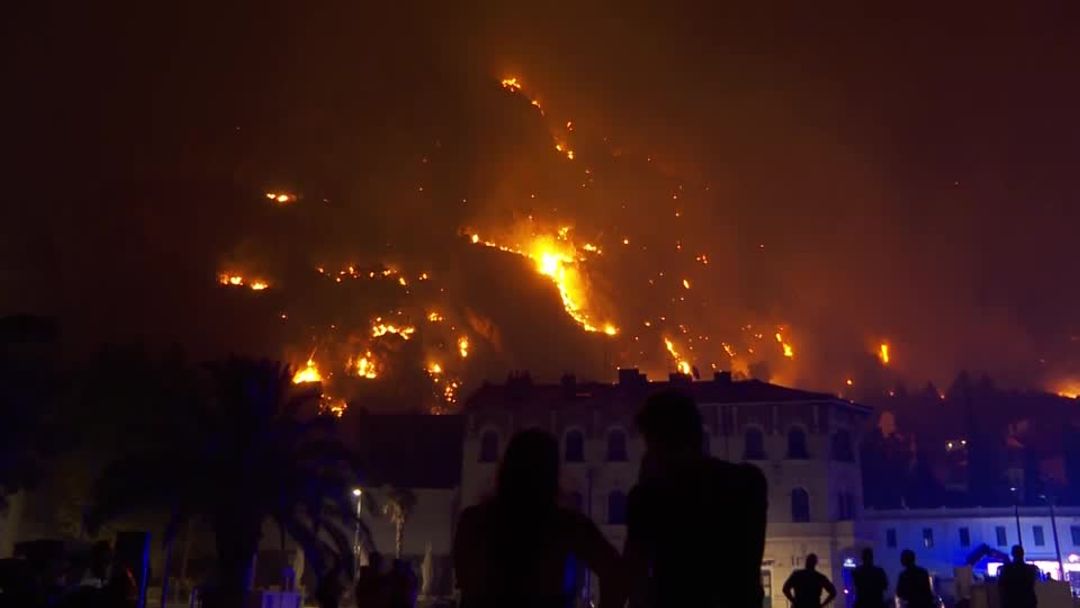
A fast-moving wildfire along Croatia’s Adriatic coast has forced about 1,200 residents and tourists to evacuate as flames swept through areas near the popular coastal town of Omiš. The blaze, which began near Lokva Rogoznica, spread rapidly through dry vegetation and woodland, threatening homes and holiday properties and creating a major emergency during the peak summer tourism season.
The Croatia Wildfires have caused significant damage and left at least one person dead, while dozens of others were injured. Authorities said the fire spread exceptionally quickly, with strong winds helping push flames toward populated areas.
The emergency has placed enormous pressure on firefighters and rescue teams while forcing holidaymakers and local residents to leave areas that are normally among Croatia’s most popular summer destinations.
Wildfire Spreads Rapidly Near Omiš
The major blaze broke out near Lokva Rogoznica, a coastal settlement close to Omiš, on August 13. Strong winds helped drive the flames toward residential areas, making the situation increasingly dangerous.
Firefighters worked through difficult conditions to prevent the fire from reaching more homes and other buildings.
Reports said the flames burned through more than 1,000 hectares of land, including woodland and areas close to residential properties.
The speed of the fire left residents and visitors with limited time to prepare.
Officials responded by ordering evacuations as the flames moved closer to populated areas.
Tourists Caught in Blaze
The incident has been particularly concerning because it occurred during Croatia’s busy summer tourist season.
Thousands of visitors travel to the country’s Adriatic coast every year for its beaches, islands and historic towns. Omiš and the surrounding areas are popular destinations for both domestic and international tourists.
When the fire approached populated areas, tourists staying in hotels, holiday apartments and other accommodations were among those forced to leave.
The evacuation demonstrated how quickly a natural disaster can disrupt a holiday destination.
People who had arrived expecting sunny weather and relaxing beach vacations suddenly found themselves dealing with smoke, flames, road closures and emergency instructions.
Reports indicate that around 1,200 people, including residents and tourists, were evacuated from the affected area.
One Person Dies and Dozens Are Injured
The wildfire has had a tragic human cost.
At least one person died in connection with the Croatian blaze, while dozens of people were injured.
Reuters reported that 36 people were injured, with several requiring hospital treatment and some suffering life-threatening injuries. Other later reports put the injury total at around 40 or more.
The injuries demonstrate how dangerous rapidly advancing wildfires can become, particularly when flames reach populated areas.
Smoke inhalation, burns, falls and traffic accidents during emergency evacuations can all contribute to casualties.
Firefighters Battle Extreme Conditions
Hundreds of firefighters were deployed to fight the flames.
Reuters reported that approximately 286 firefighters, 90 vehicles and four aircraft were involved in the response around Omiš.
Firefighters faced a difficult combination of dry vegetation, high temperatures and strong winds.
Such conditions can allow flames to jump quickly from one area to another.
Aircraft can help by dropping water or fire retardant on areas that are difficult for ground crews to reach.
However, aerial firefighting is affected by visibility, wind and the availability of suitable aircraft.
Ground crews therefore remain essential for protecting homes and containing the edges of a fire.
Homes and Vehicles Damaged
The wildfire reached areas containing homes and other structures.
Several properties and vehicles were reportedly damaged as flames moved through the affected communities.
The combination of burning vegetation and strong winds created a particularly dangerous environment.
Residents attempting to leave may also have encountered smoke-covered roads and reduced visibility.
Officials had to balance the need to evacuate people quickly with the dangers of moving through areas affected by fire.
Roads and Transportation Disrupted
Wildfires can create major transportation problems, especially along narrow coastal roads.
Authorities closed roads in areas threatened by the flames to protect drivers and allow emergency vehicles to move more easily.
For tourists, road closures created additional difficulties.
Visitors unfamiliar with the local area may not know alternative routes, while rental vehicles and crowded roads can make evacuation more complicated.
Emergency services therefore played an important role in directing people toward safer locations.
Emergency Shelters Opened
Temporary shelters were established for people forced to leave their homes and holiday accommodations.
These facilities provided an immediate safe location for evacuees while firefighters continued battling the flames.
For tourists, emergency shelters can be especially important because they may have limited access to local contacts, transportation or alternative accommodation.
Local authorities and communities often work together during such emergencies to provide food, water and basic assistance.
Why Croatia Is Vulnerable to Wildfires
Croatia’s Adriatic coastline contains large areas of dry vegetation, woodland and rugged terrain.
During the summer, high temperatures can dry vegetation and make it easier for fires to spread.
Strong winds can make the situation significantly worse.
The combination creates conditions in which a relatively small fire can rapidly become a major emergency.
The country’s popularity as a tourist destination also means that many people may be present in coastal communities during the hottest months of the year.
That increases the number of people who could potentially be affected by an evacuation.
Extreme Heat Raises Fire Risks
The Croatian fire occurred during a broader period of extreme heat across Europe.
Wildfires have also affected several other European countries, including Greece, France, Spain, Germany and the United Kingdom.
Reuters reported that record-breaking heat and drought conditions were contributing to unusually dangerous fire conditions across the continent.
Dry landscapes provide more fuel for fires, while extreme heat can make firefighting more difficult.
Scientists have also linked the increasing intensity of some extreme weather conditions to climate change.
Croatia’s Tourism Industry Faces Disruption
Tourism is extremely important to Croatia’s economy.
The Adriatic coastline attracts millions of visitors during the summer.
Wildfires can therefore have an immediate economic impact.
Hotels and holiday rentals may have to evacuate guests.
Restaurants and shops can lose customers when roads are closed.
Boat operators and tour companies may also suspend activities in affected areas.
Even after the fire is contained, tourists may avoid damaged locations because of concerns about safety and air quality.
The Psychological Impact on Tourists
Being caught in a wildfire can be frightening, especially for people who are unfamiliar with the area.
Tourists may suddenly have to leave their accommodation without knowing whether they will be able to return.
Some may have to abandon vehicles or personal belongings while escaping.
The sight of flames approaching homes and hotels can create significant anxiety.
For families traveling with children or elderly relatives, evacuation can be particularly stressful.
Clear communication from authorities is therefore essential.
Evacuation Orders Save Lives
The evacuation of around 1,200 people demonstrates the importance of acting quickly when a wildfire threatens populated areas.
Authorities do not always have much time to make decisions.
Fire behavior can change rapidly when wind conditions shift.
An evacuation order may therefore be issued before flames actually reach a particular neighborhood.
Residents and tourists who receive such instructions are generally expected to leave immediately rather than wait until the fire becomes visible.
Delaying evacuation can create dangerous traffic congestion and make emergency response more difficult.
Firefighters Continue the Fight
Even after a wildfire appears to be under control, firefighters must remain vigilant.
Hot spots can continue burning beneath vegetation or within damaged structures.
Strong winds can also reignite flames and push them into areas that were previously considered safe.
Fire crews therefore conduct monitoring and containment operations after the main fire front has been brought under control.
The Croatian authorities continued assessing the situation around Omiš while crews worked to prevent further spread.
A Broader European Wildfire Crisis
Croatia’s emergency is part of a much wider wildfire crisis affecting Europe.
France, Greece, Spain, Germany and the United Kingdom have all faced significant fires during the current period of extreme summer weather.
The European Union’s Copernicus Climate Change Service has warned of very extreme wildfire conditions in parts of the continent.
The simultaneous occurrence of fires in several countries can put additional pressure on firefighting resources.
Aircraft and specialized equipment may need to be moved between regions depending on where the most serious fires are occurring.
Climate Change and Wildfire Risk
Climate change is an increasingly important part of discussions surrounding Europe’s wildfire risk.
Scientists have linked rising temperatures and changing weather patterns to conditions that can make vegetation drier and increase the potential for extreme fires.
That does not mean every individual wildfire can be directly attributed to climate change.
However, prolonged heat and drought can create an environment in which fires spread more easily and become harder to control.
For Mediterranean countries such as Croatia, wildfire preparedness is therefore becoming an increasingly important issue.
What Happens After the Fire?
Once the immediate emergency ends, attention will shift toward recovery.
Authorities will assess damage to homes, roads, forests and other infrastructure.
Residents will want to know when they can safely return.
Tourists whose accommodations were damaged or evacuated will need alternative arrangements.
Insurance companies and local authorities will also have to assess financial losses.
Environmental recovery could take much longer.
Burned forests and vegetation may require years to recover, particularly if repeated fires affect the same areas.
Lessons for Future Emergencies
The Croatia wildfire offers important lessons about emergency preparedness.
Coastal communities need effective evacuation plans, reliable communication systems and accessible emergency routes.
Tourists should also pay attention to local weather and wildfire warnings when visiting fire-prone regions during summer.
Hotels and holiday accommodations can help by providing guests with clear emergency instructions.
Local authorities can strengthen preparedness through improved monitoring, firebreaks and rapid-response resources.
Conclusion
The Croatia Wildfires near Omiš have created a major emergency during one of the country’s busiest tourism periods.
Around 1,200 residents and tourists were evacuated, while at least one person died and dozens were injured. Firefighters used hundreds of personnel, vehicles and aircraft to battle a rapidly spreading blaze fueled by dry conditions and strong winds.
The phrase Tourists Caught in Blaze captures the human dimension of the disaster. Visitors who had traveled to Croatia for summer holidays suddenly found themselves facing evacuation orders, smoke, road closures and dangerous flames.
The incident also highlights the growing challenge posed by extreme heat and wildfires across Europe.
For Croatia, protecting its communities and tourism industry will require continued investment in firefighting resources, early-warning systems and emergency planning.
As recovery begins, the focus will remain on helping displaced residents and tourists, assessing the damage and understanding how communities can better prepare for future wildfire emergencies.
Frequently Asked Questions
Where did the Croatia wildfire happen?
The major wildfire affected the area around Lokva Rogoznica and Omiš along Croatia’s Adriatic coast.
How many people were evacuated?
Reports said approximately 1,200 residents and tourists were evacuated from affected areas.
Were tourists affected by the fire?
Yes. Tourists staying in the affected coastal area were among those evacuated as flames approached populated areas.
Were there casualties?
Yes. At least one person died, while dozens of others were injured.
What caused the wildfire?
The exact cause requires investigation. However, strong winds, dry vegetation, high temperatures and drought conditions contributed to the rapid spread and severity of the fire.