The North Korea China bridge 2026 development could reshape cross-border commerce and strengthen the strategic relationship between Pyongyang and Beijing. The newly opened New Yalu River Bridge connects Dandong in northeastern China with Sinuiju in North Korea, creating a modern four-lane route for trucks and other road traffic. Its opening comes as North Korean leader Kim Jong Un seeks stronger economic cooperation with China while maintaining close ties with Russia.
The bridge officially opened on October 15, 2026, after more than a decade of delays. On October 24, Kim crossed the new bridge during a visit to the Chinese border city of Dandong. These developments signal renewed interest in bilateral trade, although sanctions and political considerations could limit the economic benefits. Reuters reporting and Yonhap News Agency covered the opening and its political significance.
What Is the New North Korea China Bridge?
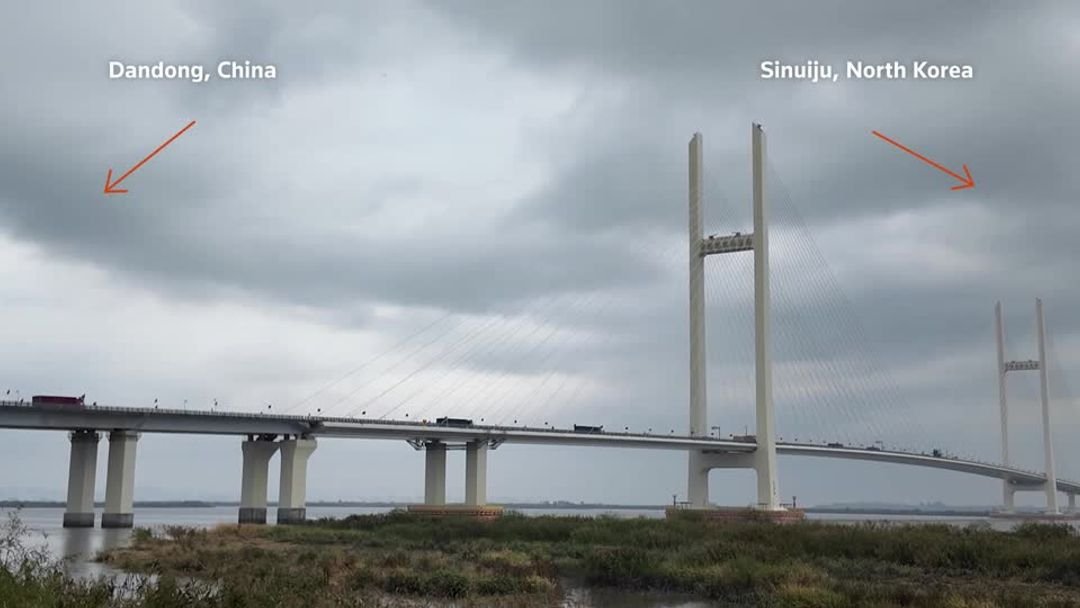
The New Yalu River Bridge crosses the river known as the Yalu in China and the Amnok in North Korea. It links Dandong, an important Chinese border-trade centre, with Sinuiju, one of North Korea’s main gateways for international commerce.
The bridge stretches approximately 3 kilometres and provides four lanes for road traffic. Its design can accommodate larger cargo movements than the ageing Sino-Korean Friendship Bridge, which has long served as a key route between the two countries.
Construction began in 2011, and workers completed the bridge in 2014. However, the crossing remained unused for years because North Korea had not completed the necessary connecting roads and customs facilities on its side.
The October 2026 opening finally turned the long-delayed infrastructure project into a functioning transport link.
For businesses, the new route could reduce congestion and improve the movement of goods between the two countries. For their governments, it also provides a visible symbol of renewed cooperation.
How Could the Bridge Increase North Korea’s Trade With China?
The North Korea China bridge 2026 project could improve trade by allowing trucks to move goods through a newer, higher-capacity crossing.
North Korea depends heavily on China for imported products, industrial materials and other supplies. Better transport connections could make it easier to move machinery, raw materials, consumer goods and energy-related products across the border.
The bridge could offer several potential benefits:
- Faster cargo movement: A dedicated road crossing could reduce congestion around the older bridge.
- Improved logistics: Larger shipments could move through more modern border facilities.
- More predictable deliveries: Better transport capacity could help businesses plan their shipments.
- Greater commercial contact: Easier movement could support additional exchanges between approved businesses and organisations.
However, a larger bridge does not automatically produce a major trade boom. Customs procedures, demand, payment arrangements, international sanctions and government decisions will determine how much additional commerce actually takes place.
The most important evidence will come from future trade statistics and confirmed increases in cross-border cargo traffic.
Why Kim Jong Un’s Visit to China Matters
Kim’s October 24 visit added political significance to the bridge opening.
According to Reuters, Kim crossed the new bridge to visit Dandong, where he met senior Chinese official Wang Huning. The visit included a stop at a Korean War memorial and a tour of a local automobile factory.
The timing matters because China and North Korea have recently expressed interest in strengthening their relationship. Their leaders also pledged to deepen cooperation during a June 2026 summit in Pyongyang.
The visit therefore connected a practical infrastructure project with a broader diplomatic message.
For Kim, closer relations with China could provide access to an important trading partner and a source of diplomatic support. For Beijing, stronger engagement could reinforce its influence over developments on the Korean Peninsula.
Nevertheless, a ceremonial visit cannot establish how much trade will increase or whether the two governments have reached new agreements on sensitive security issues.
China Remains North Korea’s Most Important Economic Partner
China has long served as North Korea’s principal economic partner. Its geographical proximity and large industrial economy make it a major source of goods and a crucial channel for North Korean trade.
North Korea’s international isolation and sanctions have also narrowed its economic options. As a result, changes in trade with China can have an outsized effect on North Korean businesses and the availability of imported supplies.
The new crossing could make that relationship even more important if it produces a sustained increase in commercial traffic.
However, deeper economic links also carry a strategic consequence. Greater reliance on Chinese goods and transport networks could increase Beijing’s economic influence over Pyongyang.
Kim’s government may welcome additional trade while continuing to protect its political independence. North Korea has historically tried to avoid excessive dependence on any single foreign power, even when it relies heavily on outside support.
Could the Bridge Change China’s Influence Compared With Russia?
The opening comes at a time when North Korea has also expanded its relationship with Russia.
Pyongyang and Moscow have strengthened military cooperation since Russia launched its full-scale invasion of Ukraine in 2022. Their relationship has included military support and a mutual defence treaty signed in 2024.
These developments have raised questions about whether Russia could reduce North Korea’s dependence on China.
The two relationships, however, serve different purposes. Russia has become an important strategic and military partner, while China remains central to North Korea’s civilian trade and access to a broad range of goods.
The new bridge could help Beijing reinforce its position by improving the infrastructure needed for everyday commerce.
It may also give Kim more room to balance his relationships with both countries. Stronger Chinese trade links could complement his ties with Moscow rather than replace them.
The longer-term outcome will depend on the scale of actual trade, the terms of future cooperation and the priorities of all three governments.
Will International Sanctions Limit the Bridge’s Economic Benefits?
International sanctions remain a major obstacle to North Korea’s economic development.
Restrictions related to North Korea’s nuclear and missile programmes affect various forms of trade, financing and international cooperation. The opening of a bridge does not remove those restrictions or make prohibited transactions lawful.
The distinction matters because transport infrastructure can improve the movement of goods, but it cannot resolve the legal and political barriers surrounding many international business activities.
Analysts quoted by Al Jazeera on October 16 cautioned that the bridge might not produce a dramatic increase in trade without broader political and economic changes. Their assessment highlights the difference between building transport capacity and creating the conditions for sustained commercial growth.
Future trade will depend on the goods involved, applicable restrictions, customs enforcement and the willingness of companies to participate in permitted transactions.
For that reason, observers should avoid assuming that the new bridge will automatically deliver a major economic recovery for North Korea.
What Could the Bridge Mean for Regional Security?
Economic infrastructure can influence regional politics even when it serves a commercial purpose.
A stronger China–North Korea relationship could affect how Washington, Seoul and Tokyo assess developments on the Korean Peninsula. These governments closely monitor North Korea’s military programmes, its relationships with neighbouring powers and the possibility of changes in regional security arrangements.
At the same time, improved transport links do not necessarily indicate a new military agreement. The bridge primarily provides a road connection, and its direct economic impact will depend on how authorities use it.
Regional governments will likely monitor cross-border traffic, diplomatic meetings and any new agreements that accompany the expansion of trade.
The bridge could therefore become a useful indicator of the relationship between Beijing and Pyongyang. Rising cargo volumes and more frequent official exchanges would suggest deeper practical cooperation, while limited traffic could point to continuing economic or political constraints.
What Should the World Watch Next?
The opening ceremony marked the start of a new phase, but the bridge’s real significance will emerge over time.
Several developments deserve attention:
- Trade data: Future figures will show whether cross-border commerce grows substantially.
- Cargo traffic: The number and type of vehicles using the crossing will reveal how businesses use the new route.
- Customs operations: Efficient border procedures will influence the speed and cost of deliveries.
- Diplomatic agreements: New announcements could clarify the direction of bilateral economic cooperation.
- Sanctions enforcement: International restrictions will continue to shape which transactions companies can legally undertake.
These indicators will help distinguish the political symbolism of the bridge from its measurable economic effects.
Conclusion: A Bridge With Economic and Strategic Significance
The North Korea China bridge 2026 project represents more than a new road connection. It offers China and North Korea an opportunity to improve cargo movement, strengthen commercial ties and demonstrate closer diplomatic engagement.
Kim Jong Un’s October 24 visit reinforced the political message behind the opening. However, the scale of any economic transformation remains uncertain. Sanctions, customs procedures, domestic priorities and North Korea’s relationship with Russia will all influence the outcome.
The bridge may ultimately strengthen Beijing’s economic influence over Pyongyang, but trade statistics and developments over the coming months will provide a clearer picture and Kim Jong Un China trade ties
For now, the opening marks a significant infrastructure milestone and a fresh test of how economic connectivity can shape relationships between countries with shared borders and competing strategic interests.
Follow TopTenDose for more international politics, world economy, security developments and major news from around the globe.