The Serbia election 2026 has delivered a dramatic political turning point, as a student-backed movement defeated the alliance led by longtime political heavyweight Aleksandar Vučić in the parliamentary vote held on October 25. The result followed nearly two years of demonstrations against alleged corruption, government negligence and concerns about accountability. According to a UK House of Commons Library briefing published on October 30, the victory ended 14 years of dominance by the Serbian Progressive Party (SNS).
The outcome is significant because the movement did not begin as a conventional political party. It grew from student protests into a broader campaign that attracted support from people across Serbian society. Its success now raises a new question: can a movement that united people against the establishment deliver effective government once it enters parliament?
What Triggered Serbia’s Student Protest Movement?
The roots of the Serbia student protest movement can be traced to November 1, 2024, when a concrete canopy collapsed at the railway station in Novi Sad, killing 16 people.
The disaster prompted public anger and demands for accountability. Protesters questioned the quality of the station’s renovation, called for greater transparency over public infrastructure projects and demanded answers about responsibility for the tragedy.
For many demonstrators, the disaster became a symbol of wider concerns about public institutions and alleged corruption. Students organised demonstrations and university blockades, while their campaign gradually expanded beyond campuses.
Teachers, farmers, workers, academics and other citizens joined the protests. The movement increasingly focused on accountability, the rule of law and demands for early parliamentary elections.
The protests also continued despite political pressure and disagreements over how the government handled demonstrations. What began as a response to one tragedy became a wider challenge to Serbia’s political leadership.
How Did Students Turn Street Protests Into Electoral Power?
Public demonstrations can attract attention, but turning that attention into election victories requires organisation, candidates and a clear route to political change.
The movement’s major breakthrough came when it backed an electoral list known as the Student List. Rather than relying on a traditional party structure, the list included professionals and public figures from outside established party politics.
Candidates included academics, doctors, lawyers and other citizens. Cardiologist and professor Ilija Srdanović emerged as a prominent figure associated with the list.
Interestingly, current students did not stand as candidates themselves. Instead, the movement selected people it believed could represent its demands inside parliament.
This strategy helped the campaign present itself as a wider civic effort rather than a political project limited to university students.
The movement also had a clear central message: public institutions should serve citizens, corruption should face accountability and government decisions should be more transparent.
That message gave supporters from different backgrounds a common objective, even though they did not necessarily share the same views on every economic or foreign-policy question.
What Happened in Serbia’s 2026 Election?
The parliamentary election on October 25 became a decisive test of whether the protest movement could convert its public support into political power.
The UK House of Commons Library reported that the Student List received approximately 53.7% of the vote and won 141 of the National Assembly’s 250 seats. The SNS-led electoral alliance received approximately 39.5% and secured 103 seats, with the remaining seats going to minority parties.
The result marked a major setback for a political party that had dominated Serbian government for more than a decade.
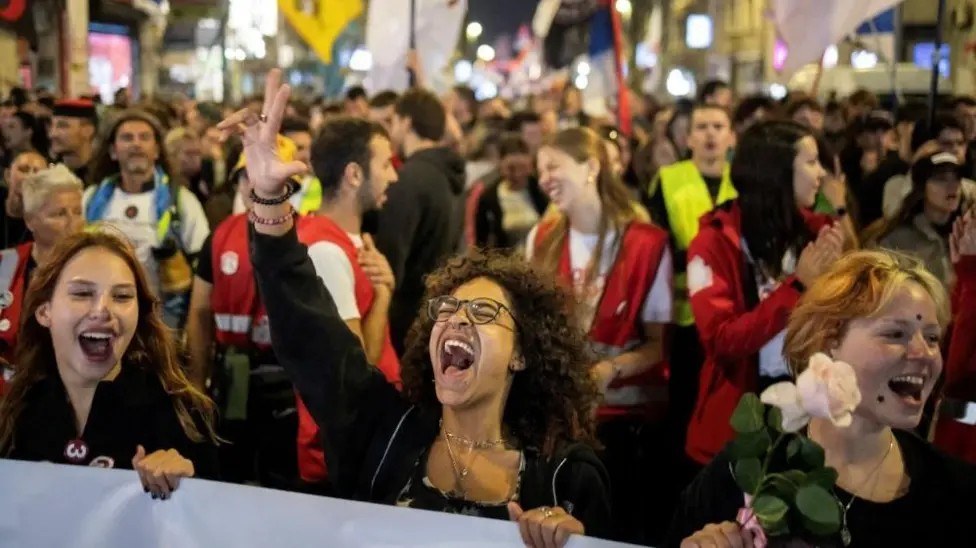
Vučić conceded defeat, according to Reuters, after the student-backed list secured its victory. Celebrations followed in Belgrade and other parts of the country.
However, the result does not mean every Serbian voter supports every proposal associated with the movement. Elections bring together different motivations, including dissatisfaction with incumbents, demands for reform and hopes for better public services.
The scale of the victory nevertheless gives the new parliamentary majority a significant opportunity to pursue institutional change.
Why Did the Movement Challenge Vučić’s Political Dominance?
Aleksandar Vučić has been a central figure in Serbian politics for years. His Serbian Progressive Party maintained a strong position in national politics, while his leadership attracted criticism from opposition groups and international observers over media freedom, corruption concerns and the treatment of critics.
The student movement challenged this political structure by building a campaign around issues that reached beyond traditional party loyalties.
Instead of focusing only on ideological divisions, protesters emphasised accountability, public safety, institutional independence and the need for answers after the Novi Sad disaster.
This approach gave citizens who disagreed on other political questions a shared reason to participate.
The movement also benefited from sustained public mobilisation. Demonstrations, university blockades and local organising helped maintain pressure after the initial shock of the railway-station collapse faded from the headlines.
Still, it is important to distinguish allegations from established legal findings. Vučić and the SNS have denied accusations of corruption and repression. The new government will need credible investigations, transparent procedures and due process if it wants to demonstrate that its promises extend beyond political rhetoric.
What Does the Election Mean for Serbia’s Future?
The election has created an opportunity for significant changes in Serbia’s public institutions. Yet replacing political leaders is only the first step.
The student-backed movement has promised to tackle corruption, improve accountability and strengthen the rule of law. Delivering those commitments will require more than speeches or symbolic decisions.
A new government may need to review public procurement, strengthen oversight, improve the independence of institutions and ensure that investigations follow transparent legal procedures.
It will also face pressure to improve public services and respond to citizens who expect practical results from the political transition.
At the same time, the outgoing ruling party will remain an important political force. Its parliamentary presence means the new majority will face opposition as it attempts to implement reforms.
The movement must therefore demonstrate that it can build effective institutions rather than simply replace one group of political decision-makers with another.
Can a Protest Movement Actually Govern?
This is one of the biggest questions following the Serbia election 2026 result.
Protest movements often succeed by uniting people around a clear grievance. Governing, however, requires decisions on budgets, taxes, employment, healthcare, education, infrastructure and international relations.
Those questions can divide even a movement with a common purpose.
The Student List brings together candidates with different professional backgrounds, but many lack extensive experience in national government. Reuters reported after the election that uncertainty remained over who would become prime minister and whether the movement’s representatives could maintain a unified approach to governing.
The movement must also turn broad anti-corruption promises into specific policies. That includes defining priorities, setting deadlines, identifying responsible officials and explaining how reforms will be measured.
Its supporters will likely expect visible progress. If investigations stall or living conditions fail to improve, the movement could face the same public frustration that helped it rise.
On the other hand, transparent decision-making and measurable improvements could strengthen public confidence in the new political leadership.
How Could Serbia’s Election Affect Relations With the EU, Russia and China?
Serbia’s political transition matters beyond its borders because the country maintains important relationships with the European Union, Russia and China.
The EU is Serbia’s largest trading partner and a major source of financial assistance. Progress toward EU membership depends partly on reforms involving the rule of law, democratic institutions and relations with Kosovo.
Russia remains an important historical partner and a major supplier of natural gas. China has also developed substantial economic ties with Serbia and plays a significant role in investment and infrastructure projects.
The new parliamentary majority will need to balance these relationships while deciding how to approach foreign policy.
The student-backed movement has concentrated heavily on domestic reform, and its victory does not automatically mean Serbia will immediately change its position on Russia, China, the EU or Kosovo.
Nevertheless, progress on institutional reform could influence Serbia’s relationship with European partners. A more transparent political system could improve confidence among investors and strengthen the country’s prospects for closer European integration.
The key question is whether the new government can maintain a consistent foreign policy while addressing the domestic demands that brought it to power.
What Happens Next After Serbia’s Political Earthquake?
Several developments will determine whether the election produces lasting change.
First, government formation: The parliamentary majority must establish a functioning administration and agree on leadership and priorities.
Second, anti-corruption reforms: Citizens will look for transparent investigations, stronger oversight and fair legal procedures rather than promises alone.
Third, economic management: The new government must address employment, public spending, investment and household concerns while maintaining confidence in Serbia’s economy.
Fourth, institutional independence: Changes to the justice system, media environment and public administration will provide important tests of the government’s commitment to reform.
Finally, foreign policy: Serbia’s approach to EU membership, relations with Russia and China, and the unresolved Kosovo issue will shape its international position.
These challenges mean that the election is not the end of Serbia’s political transformation. It is the beginning of a demanding test of whether the movement can turn public expectations into practical results.
Conclusion: Serbia’s Students Changed the Political Conversation
The Serbia election 2026 has demonstrated how a protest movement can challenge an established political system when public anger develops into sustained organisation and electoral participation.
The campaign emerged after a deadly infrastructure disaster and grew into a national demand for accountability. Its parliamentary victory ended the long dominance of the ruling Serbian Progressive Party and created an opportunity for institutional reform.
However, winning an election is not the same as governing successfully. The movement must now build a capable administration, deliver credible anti-corruption measures and address the economic and political concerns of Serbian citizens.
Its future success will depend on whether it can preserve the unity that brought it to power while making difficult decisions in government.
For Serbia, the next chapter will be measured not only by the political establishment it challenged, but also by the institutions, public services and standards of accountability it manages to build.
Follow TopTenDose for more international politics, election news, world affairs and major developments shaping the future.