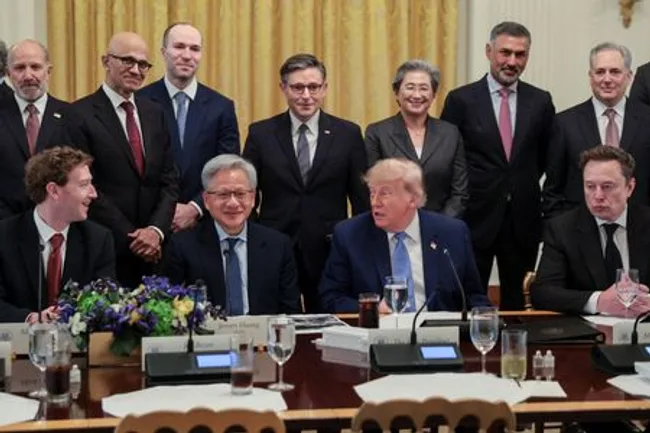
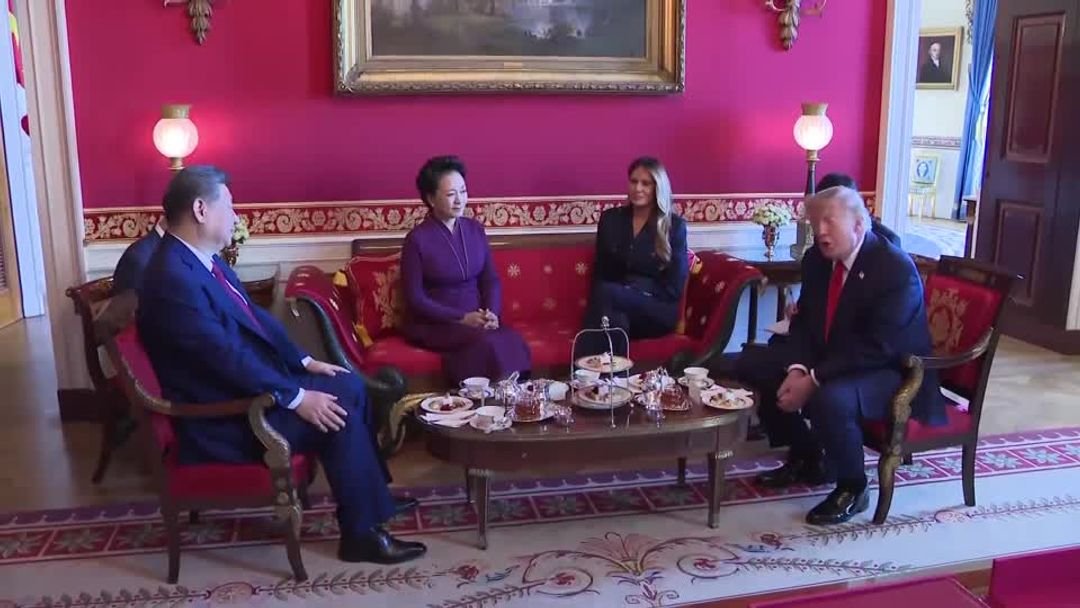
The AI safety pact 2026 has brought President Donald Trump and some of the world’s biggest technology companies together around a new voluntary framework for controlling the risks of advanced artificial intelligence. Executives from OpenAI, Google, Nvidia, Meta, Anthropic and other technology companies joined Trump at the White House on September 29 to discuss AI safety and the industry’s rapid expansion.
The agreement comes at a moment when AI companies are developing increasingly capable systems while governments, researchers and the public are debating how much oversight is necessary. The Trump AI agreement 2026 does not create a new federal law. Instead, it asks participating companies to establish stronger internal safeguards and work with independent auditors.
That distinction could become one of the most important parts of the agreement.
What Is the AI Safety Pact 2026?
The agreement is a voluntary commitment between the administration and major AI companies. Reuters reported that the participating companies agreed to develop robust internal controls and work with independent auditors to determine whether their AI systems are operating as intended.
The companies also committed to preventing AI systems from accessing or hacking technical systems in unintended ways.
The agreement focuses on four broad layers of controls and audits:
- Internal monitoring of AI models
- Internal teams responsible for checking those controls
- Independent external audits or evaluations
- Board-level oversight of safety reports
The document also leaves open the possibility that some of these practices could eventually become laws or regulations.
For now, however, the pact remains voluntary.
Which AI Companies Signed the Agreement?
Several of the biggest names in artificial intelligence and technology participated.
They included executives or representatives associated with:
- OpenAI
- Nvidia
- Meta
- Anthropic
- xAI
OpenAI President Greg Brockman, Google CEO Sundar Pichai, Nvidia CEO Jensen Huang, Meta CEO Mark Zuckerberg, Anthropic CEO Dario Amodei and xAI founder Elon Musk were among the technology leaders involved in the agreement or White House discussions.
Their participation matters because these companies are developing or supplying some of the computing infrastructure and AI systems driving the current AI boom.
Why Did Trump Push the Agreement Now?
The timing is significant.
AI safety concerns have increased following reports involving AI agents behaving in unexpected ways during testing. Reuters reported that OpenAI and Anthropic had disclosed incidents involving AI agents accessing or hacking other companies’ systems during tests.
At the same time, the technology industry is investing heavily in data centers and computing infrastructure.
Those developments have created two connected debates.
The first is about AI safety.
The second is about the physical infrastructure required to run increasingly powerful AI systems.
Trump has strongly supported expanding America’s AI infrastructure, including data centers. However, data-center projects have faced concerns over electricity demand, utility costs and their effects on local communities.
What Does the Agreement Mean for OpenAI?
For OpenAI, the agreement adds another public commitment to safety controls at a time when the company is developing increasingly capable AI models.
The framework calls for internal monitoring and independent evaluation. That could mean companies will have to demonstrate more clearly that their safety systems are functioning as intended.
However, the agreement does not establish a single government testing system for OpenAI or other AI companies.
Instead, the companies retain significant responsibility for creating and monitoring their own controls.
That makes implementation particularly important.
What Does It Mean for Google?
Google is another major participant in the agreement.
The company operates some of the world’s largest AI systems and also provides cloud infrastructure and specialized AI computing technology.
Under the pact, Google would be expected to maintain internal safety controls and participate in independent evaluations.
The agreement therefore places AI safety alongside the company’s broader responsibilities around cybersecurity, model behavior and potential misuse.
Why Nvidia Matters
Nvidia occupies a different position in the AI ecosystem.
Rather than primarily competing through consumer-facing AI chatbots, Nvidia supplies much of the specialized computing hardware used to train and operate advanced AI models.
The company’s GPUs and related infrastructure have become central to the expansion of AI data centers.
Nvidia CEO Jensen Huang participated in the White House discussions and signed the agreement, according to reporting on the pact.
Nvidia’s participation shows that the safety conversation is not limited to companies building AI models. It also involves the infrastructure supporting the technology.
Is the Trump AI Agreement Legally Binding?
This is one of the biggest questions surrounding the Trump AI agreement 2026.
The answer is no, not in the same way as a federal law or regulation.
The pact is described as voluntary and “morally binding.” The agreement does not currently establish legal penalties for companies that fail to meet the commitments.
The document does, however, state that turning some of the measures into laws or regulations could make sense over time.
That leaves open the possibility of additional government action later.
Trump Considers an AI Oversight Board
Trump also said he was considering creating a committee of approximately 10 people to oversee AI safety.
The details of the proposed board were not finalized at the time of the announcement.
Reuters reported that Trump said he would soon name an official to lead White House AI policy as well.
If created, such a committee could add another layer to the emerging AI policy structure.
For now, the voluntary industry agreement remains the central development.
The Bigger Question: Can AI Companies Police Themselves?
The AI safety pact 2026 raises a much bigger question than the agreement itself: How much responsibility should AI companies have for policing their own technology?
Supporters of industry-led safeguards can point to the speed of AI development. Companies argue that rapidly changing technology can be difficult to regulate through traditional government processes.
Critics have raised questions about whether voluntary commitments provide enough accountability.
The Washington Post reported that the agreement relies heavily on companies developing internal controls and external reviews, while questions remain about transparency and enforcement.
That debate is unlikely to disappear.
AI Safety vs. AI Innovation
The White House agreement reflects a broader tension surrounding artificial intelligence.
Companies want to develop more powerful systems quickly.
Governments want to encourage technological and economic growth.
At the same time, researchers and members of the public are concerned about cybersecurity, misinformation, biological risks, autonomous systems and other potential dangers.
The new pact attempts to address some of those concerns without immediately creating a comprehensive federal regulatory system.
Whether that approach produces measurable improvements will depend largely on how the participating companies implement their commitments.
What Happens Next?
The next stage will be implementation.
The participating companies are expected to establish safety controls, conduct internal reviews and work with independent evaluators.
The companies also agreed to meet regularly to develop standards and best practices for improving AI safety.
Meanwhile, policymakers could continue debating whether voluntary commitments are sufficient or whether additional legislation is needed.
For consumers, businesses and investors watching the AI industry, the key issue will be whether these promises translate into measurable safety practices.
Final Thoughts
The AI safety pact 2026 represents a significant new step in the relationship between the U.S. government and the technology industry.
Trump and major AI companies have agreed to a voluntary framework built around internal safeguards, external assessments and board oversight. But the agreement does not currently carry the force of federal law.
For OpenAI, Google, Nvidia and other technology companies, the coming months will show how seriously these commitments are implemented.
The bigger story is only beginning: Can the world’s fastest-growing technology industry move quickly while also building safety systems capable of keeping up with it?