The Russia Ukraine War remains one of the most serious international security challenges in 2026, despite renewed diplomatic efforts to end the fighting. After years of military operations, economic pressure and international negotiations, the United States, European governments and other diplomatic partners are searching for a framework that could bring lasting peace. However, major disagreements over territory, security guarantees and Ukraine’s future relationship with NATO continue to complicate the process.
A fresh diplomatic effort took place in Abu Dhabi in November 2026, where Russian, Ukrainian and American representatives held the first trilateral negotiations since February. The discussions produced an agreement in principle on a large prisoner exchange involving more than 1,000 people, but negotiators did not announce a breakthrough on a wider ceasefire or peace settlement.
On November 14, Ukrainian President Volodymyr Zelenskyy said Washington had raised the possibility of Ukraine withdrawing from parts of the Donbas region in connection with NATO membership. He reiterated that Ukraine would not surrender its territory. Meanwhile, US officials said further discussions were being prepared, including direct engagement between Russia and European representatives.
These developments have renewed international attention on Ukraine Peace Talks and raised an important question: can diplomacy finally end the war, or will disagreements continue to prevent a lasting settlement?
Why Is the Russia-Ukraine War So Difficult to End?
The conflict has continued for years because Russia and Ukraine have fundamentally different positions on territory, national sovereignty and European security.
Russia launched its full-scale invasion of Ukraine on February 24, 2022. The invasion followed years of conflict that began in 2014, when Russia annexed Crimea and fighting erupted in eastern Ukraine.
Since then, the war has caused widespread destruction, displacement and loss of life. It has also affected international energy markets, agricultural exports, defence spending and diplomatic relations.
The difficulty of reaching peace is not simply about stopping military operations. Both countries want an agreement that protects their long-term interests.
Ukraine insists that any settlement must respect its sovereignty and provide credible protection against another invasion. Russia continues to demand major territorial and security concessions.
These positions create a difficult negotiating environment. Even when both sides agree to meet, they still face fundamental disagreements about what a final settlement should contain.
November 2026 Peace Talks: What Happened in Abu Dhabi?
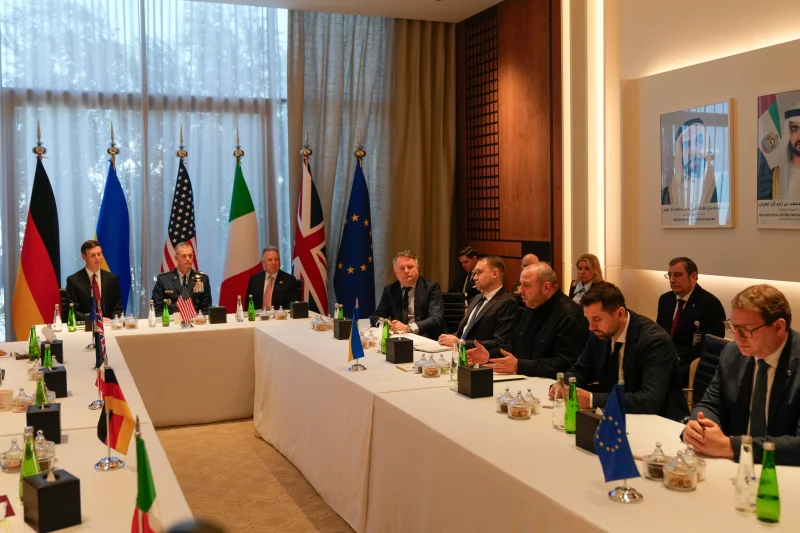
The latest major diplomatic development came during two days of US-mediated negotiations in Abu Dhabi on November 10 and 11.
Representatives from Russia, Ukraine and the United States discussed possible steps toward ending the war. The talks marked the first trilateral negotiations since February 2026.
Although the discussions did not produce a comprehensive peace agreement, they resulted in an important humanitarian development: an agreement in principle on a large prisoner exchange.
The negotiators also discussed security guarantees, European security arrangements and the conditions needed for further negotiations.
However, the central disagreements remained unresolved.
Russia continued to seek territorial and military concessions from Ukraine. Kyiv rejected demands that would require it to surrender land or accept restrictions that could weaken its ability to defend itself.
The discussions also brought Europe’s future security arrangements into the negotiations, creating additional questions about NATO, military deployments and the role of European governments.
The Abu Dhabi meeting therefore produced diplomatic movement without resolving the most difficult issues.
Donald Trump’s Role in the Latest Peace Initiative
The United States has played a central role in the latest diplomatic effort.
President Donald Trump has repeatedly expressed his desire to end the Russia-Ukraine War. His administration has used direct negotiations, diplomatic meetings and pressure on both sides to encourage a settlement.
US special envoy Steve Witkoff and Jared Kushner have participated in discussions with Russian and Ukrainian representatives.
During the latest diplomatic push, the American representatives also met Russian President Vladimir Putin in Moscow and Ukrainian President Volodymyr Zelenskyy during discussions involving European partners.
On November 14, Kushner said Washington was working to facilitate direct engagement between Moscow and European governments. He also stressed that a lasting settlement would require security guarantees for Ukraine and practical arrangements designed to prevent another conflict.
However, diplomatic involvement does not guarantee an agreement. Washington must address the different expectations of Moscow, Kyiv and European governments while maintaining confidence among its partners.
The United States also faces the challenge of ensuring that any proposed settlement can be implemented rather than simply announced.
The Territorial Dispute: The Biggest Obstacle to Peace
Territory remains one of the most difficult issues in the negotiations.
Russia claims control over Crimea and four Ukrainian regions: Donetsk, Luhansk, Zaporizhzhia and Kherson. However, its claims do not mean that it controls every part of those territories.
Ukraine rejects Russia’s annexation claims and maintains that its internationally recognised borders must be respected.
During the November negotiations, the question of Ukraine’s position in the Donbas region became particularly important.
Zelenskyy said US negotiators had raised the possibility of Ukraine withdrawing from parts of Donbas in connection with a broader security arrangement. He rejected the idea of surrendering Ukrainian territory.
This disagreement creates a serious diplomatic challenge.
For Moscow, territorial demands remain central to its negotiating position. For Kyiv, accepting territorial losses under military pressure could create a precedent that threatens its sovereignty and future security.
A peace agreement would therefore need to address territorial control without assuming that both governments can easily abandon their stated positions.
NATO Membership and Security Guarantees: Can Both Sides Agree?
Ukraine’s future security relationship with NATO is another major obstacle.
Since Russia’s full-scale invasion, Ukraine has sought stronger international security commitments to reduce the risk of another attack.
Kyiv argues that a peace agreement without credible guarantees could leave the country vulnerable after the fighting stops.
Russia, however, opposes Ukraine joining NATO and has repeatedly raised concerns about the alliance’s military presence near Russian territory.
The November negotiations brought these differences into sharper focus.
US officials discussed possible security arrangements for Ukraine, including mechanisms that could provide protection similar to NATO’s collective-defence framework.
Zelenskyy has also discussed a wider package involving security guarantees, a strong Ukrainian military, financial assistance and reconstruction support.
However, the exact structure of any future arrangement remains unresolved.
A lasting settlement would need to answer several questions:
- Who would guarantee Ukraine’s security?
- What would happen if another attack occurred?
- Would European or NATO countries provide military support?
- Could Ukraine maintain a strong armed force after the war?
- What role would Russia have in wider European security discussions?
Without clear answers, even a signed agreement could leave serious security concerns unresolved.
Why Does Europe Want a Greater Role in Ukraine Peace Talks?
European governments have become increasingly concerned about their position in the negotiations.
The war directly affects European security, defence planning, energy markets and relations with Russia. Consequently, European leaders argue that they must participate in decisions that could reshape the continent’s security arrangements.
During the latest diplomatic discussions, European representatives were involved in separate consultations, but they were not initially included in the main trilateral negotiations with Russia.
European leaders have expressed concern that agreements affecting NATO’s future or military arrangements could be discussed without sufficient European participation.
The issue became especially important during a November 12 summit in Dublin, where European governments discussed how to coordinate their position.
According to reporting from Vatican News, European leaders were considering how Britain, France, Germany, Italy, Poland and the European Union could participate in future negotiations.
Europe’s role matters because any settlement could require long-term financial assistance, reconstruction funding, security commitments and monitoring arrangements.
A peace agreement that lacks meaningful European support could face serious implementation difficulties.
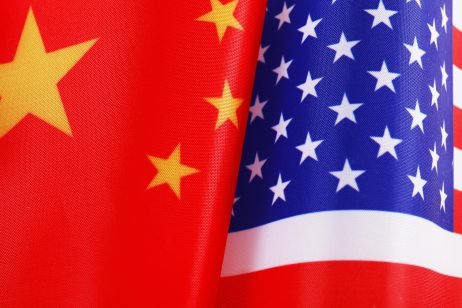
Can China Help Bring Russia and Ukraine Closer to Peace?
China has maintained diplomatic and economic relations with Russia while also presenting itself as a supporter of political negotiations.
Beijing has called for a political settlement and promoted principles of sovereignty and territorial integrity in its public statements.
However, China’s relationship with Moscow complicates its position as a potential mediator.
Russia and China maintain extensive economic and diplomatic ties. At the same time, China has important commercial relationships with European countries and other international markets that have been affected by the war.
Beijing could potentially support diplomatic communication and encourage negotiations. However, its influence should not be confused with an ability to make Russia and Ukraine accept an agreement.
Any meaningful mediation effort would need the participation and consent of the countries directly involved.
China’s role may therefore be more useful as part of broader international diplomacy than as a replacement for direct negotiations.
What Would a Real Peace Agreement Need to Include?
A temporary pause in fighting could reduce immediate suffering, but a lasting settlement would require a much broader framework.
Several issues would need attention.
1. A credible ceasefire: Both sides would need clear rules for stopping military operations and responding to violations.
2. Territorial arrangements: Negotiators would need to address disputed areas and the question of occupied Ukrainian territory.
3. Security guarantees: Ukraine would need credible arrangements to reduce the risk of another invasion.
4. Prisoner exchanges: Further exchanges could help families reunite and build confidence between negotiating parties.
5. Humanitarian access: Civilians in affected areas would need access to food, healthcare, electricity and essential services.
6. Reconstruction funding: Ukraine would require substantial international investment to rebuild damaged homes, roads, power facilities and public infrastructure.
7. International monitoring: A settlement would need a credible mechanism to verify compliance and investigate alleged violations.
8. Sanctions and economic relations: Governments would need to determine whether sanctions could be adjusted, maintained or removed under specific conditions.
These issues demonstrate why negotiations are complicated. A ceasefire may be easier to arrange than an agreement that addresses the political and security causes of the conflict.
How Is the War Affecting the Global Economy?
The Russia-Ukraine War has had consequences far beyond Europe.
Energy markets have experienced major disruptions, particularly because Russia is an important producer and exporter of oil, natural gas and other commodities.
The conflict has also affected agricultural trade. Ukraine is a major exporter of grains and vegetable oils, while Russia is an important supplier of wheat and fertilisers.
Disruptions to production, transportation and international trade can increase costs for importing countries.
The economic effects include:
Energy prices: Uncertainty over Russian exports and international sanctions can influence oil and gas markets.
Food security: Disruptions to grain and fertiliser supplies can create additional pressure on agricultural markets.
Defence spending: European governments have increased attention to military readiness and security investment.
International trade: Companies must consider sanctions, transportation risks and changing supplier relationships.
Investment confidence: Prolonged geopolitical uncertainty can make businesses more cautious about long-term projects.
A credible peace agreement could improve economic confidence and create opportunities for reconstruction and trade recovery. However, economic normalisation would take time, especially if sanctions and security restrictions remain in place.
What Could Happen Next? Three Possible Diplomatic Scenarios
The future of the conflict remains uncertain. The latest negotiations provide a basis for further discussions, but they do not guarantee that the fighting will end soon.
Three broad scenarios help explain what could happen next.
Scenario 1: A Negotiated Ceasefire
Russia and Ukraine could agree to a ceasefire supported by international monitoring and security arrangements.
Such an agreement could reduce civilian casualties, create space for further negotiations and allow humanitarian assistance to reach affected communities.
However, a ceasefire would not automatically resolve territorial disputes or determine Ukraine’s future security arrangements.
Scenario 2: A Long-Term Negotiation Process
The countries could continue diplomatic meetings without reaching an immediate settlement.
Negotiators might make gradual progress on prisoner exchanges, humanitarian access, energy infrastructure and local ceasefires while leaving major political disputes for later discussions.
This approach could produce limited improvements without ending the war.
Scenario 3: Continued Fighting and Diplomatic Deadlock
If Russia and Ukraine remain unable to agree on territory and security guarantees, negotiations could stall.
Military operations could continue even as diplomatic meetings take place.
This scenario would prolong the humanitarian crisis and maintain pressure on international energy markets, government budgets and European security.
These are possible developments, not predictions. The direction of the conflict will depend on decisions made by the governments involved and the conditions on the battlefield.
Conclusion: Can International Diplomacy Finally Deliver Peace?
The Russia Ukraine War has demonstrated how difficult it can be to end a major international conflict when both sides have fundamentally different security and territorial objectives.
The November 2026 negotiations in Abu Dhabi have created another opportunity for diplomacy. The proposed prisoner exchange represents a meaningful humanitarian step, while discussions about security guarantees and European involvement could help shape future negotiations.
However, the central disagreements remain unresolved. Ukraine rejects territorial concessions, Russia maintains demands involving territory and security, and European governments want a meaningful role in decisions affecting their continent.
The future of Ukraine Peace Talks will therefore depend on whether negotiators can turn diplomatic discussions into practical commitments that both sides are willing to accept and implement.
A lasting peace will require more than a temporary ceasefire or a political announcement. It will need credible security guarantees, workable territorial arrangements, international support and mechanisms to prevent another war.
For millions of people affected by the conflict, the most important measure of diplomatic success will be whether negotiations finally bring lasting security and an opportunity to rebuild their lives.
Follow TopTenDose for more international politics, global security developments, diplomatic updates and important world news.