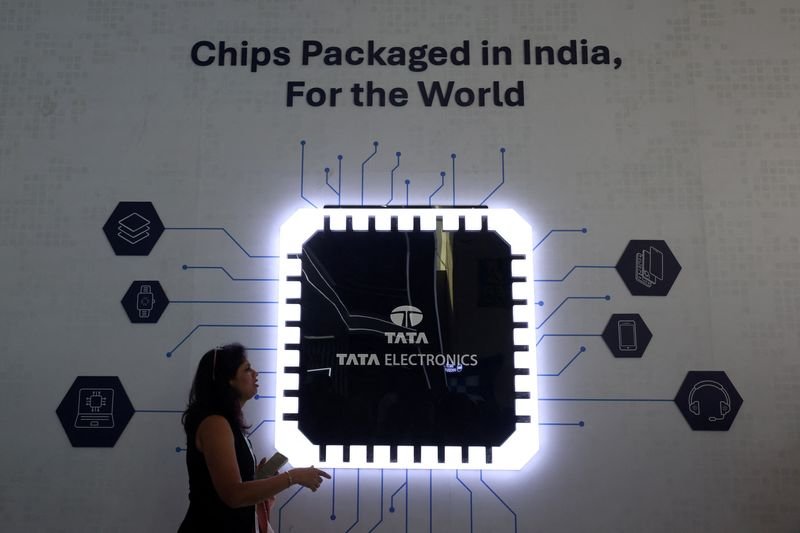
The Nexperia Tata partnership is putting India deeper into the global semiconductor spotlight as chip companies and major industrial groups reshape where electronic components are manufactured. The development comes as governments and businesses increasingly look beyond traditional semiconductor hubs and seek more diversified supply chains.
For India, the move could strengthen its ambitions to become a major player in the global chip industry. For China and the wider Asian electronics market, it highlights a much bigger trend: semiconductor manufacturing and packaging are spreading across new locations as companies try to reduce supply-chain risks.
Why the Nexperia Tata Partnership Matters
The Nexperia Tata partnership is significant because it connects an established semiconductor company with one of India’s largest industrial groups.
Nexperia has long been involved in producing semiconductor components used across automotive, industrial, consumer electronics and other applications. Tata, meanwhile, has expanded its technology and electronics ambitions, including investments designed to build a broader semiconductor ecosystem in India.
The partnership therefore represents more than a commercial relationship. It fits into a wider effort to establish semiconductor capabilities inside India.
India has traditionally been a major technology and software center, but it has had a much smaller role in semiconductor manufacturing compared with countries such as Taiwan, South Korea and China.
That is changing.
India Wants a Bigger Role in Semiconductors
The India semiconductor industry has received increasing attention from the Indian government and international technology companies.
New investments are targeting different parts of the semiconductor supply chain, including fabrication, assembly, testing and packaging.
This distinction matters.
Building an advanced chip fabrication plant requires enormous investment, sophisticated equipment and highly specialized expertise. Semiconductor assembly and testing can provide another route for a country to establish a position in the industry.
India is pursuing both manufacturing and supporting capabilities as it tries to build a more complete electronics ecosystem.
The goal is not simply to manufacture chips domestically. A successful semiconductor sector can also attract suppliers, equipment manufacturers, electronics companies, engineers and research organizations.
What Nexperia Brings to the Equation
Nexperia specializes heavily in semiconductor components rather than competing directly with the world’s largest advanced processor manufacturers.
Its products are important because many electronic devices require large numbers of relatively specialized semiconductor components.
Automobiles are a major example.
Modern vehicles contain semiconductor components for power management, protection, sensing and other functions. Industrial equipment, smartphones, appliances and communications hardware also depend on semiconductor components.
That means semiconductor supply chains are not only about the most advanced processors used in artificial intelligence systems.
There is also a huge market for mature and specialized chips.
This is where developments involving Nexperia can become strategically important for India.
China’s Semiconductor Position Is Still Enormous
The headline that China’s chip industry is “moving to India” needs some qualification.
China remains one of the world’s most important electronics manufacturing centers and has a massive semiconductor ecosystem.
A partnership or investment involving India does not mean China’s semiconductor industry is abandoning China.
Instead, the development reflects a broader trend toward supply-chain diversification.
Companies increasingly want production networks spread across multiple countries rather than depending overwhelmingly on one manufacturing location.
India is attempting to position itself as one of those alternative locations.
Why Global Companies Are Looking at India
Several factors are attracting semiconductor investment toward India.
1. Large Domestic Market
India has one of the world’s largest populations and a rapidly expanding consumer electronics market.
Smartphones, automobiles, telecommunications equipment, computers and industrial electronics all require semiconductor components.
A larger domestic market gives manufacturers an opportunity to produce closer to customers.
2. Government Incentives
India has introduced substantial incentives aimed at encouraging semiconductor manufacturing and related industries.
These programs are designed to reduce the enormous upfront cost of establishing semiconductor facilities.
3. Growing Technology Workforce
India already has a large pool of engineers and technology professionals.
Although semiconductor manufacturing requires specialized skills that cannot simply be transferred from software development, the existing engineering ecosystem gives companies a foundation for developing semiconductor expertise.
4. Supply-Chain Diversification
Global companies have become increasingly concerned about concentrated supply chains.
The pandemic, geopolitical tensions and trade restrictions demonstrated how quickly disruptions can affect electronics production.
India therefore has an opportunity to present itself as an additional manufacturing and supply-chain hub.
Tata’s Semiconductor Ambitions
Tata has become an important part of India’s semiconductor strategy.
The group has pursued investments across electronics and semiconductor-related manufacturing, reflecting a broader transformation in India’s industrial landscape.
Its involvement matters because semiconductor development requires more than a single factory.
A sustainable ecosystem needs logistics, utilities, suppliers, skilled workers, testing facilities and customers.
Large industrial groups can help connect those pieces.
The Nexperia Tata partnership therefore sits within a much larger semiconductor story involving manufacturing, packaging, electronics production and global supply chains.
Could India Challenge China?
India is unlikely to replace China’s enormous electronics manufacturing ecosystem quickly.
China has spent decades developing semiconductor-related infrastructure and remains deeply integrated into global electronics production.
Instead, India could become an increasingly important second manufacturing hub.
That distinction is important.
The future semiconductor industry may not be dominated by one country performing every stage of production.
Instead, different countries could specialize in different parts of the supply chain.
Taiwan remains central to advanced chip manufacturing. South Korea is a major semiconductor powerhouse. Japan is important for materials and equipment. The United States remains critical to chip design, equipment and technology. China has enormous manufacturing and electronics capabilities.
India wants to add another major node to this network.
The Packaging and Testing Opportunity
One of India’s most interesting opportunities is semiconductor assembly, testing and packaging.
These stages occur after semiconductor wafers are manufactured.
Packaging protects the chip and connects it to the outside world, while testing ensures that components meet required specifications.
These activities are technically demanding but can provide an entry point into semiconductor manufacturing.
Over time, experience gained through packaging and testing can help develop engineering talent and supplier networks.
That could make it easier for India to move toward more advanced semiconductor activities.
What This Means for China
China is not simply watching other countries build semiconductor capacity.
Chinese companies and policymakers have also been investing heavily in domestic semiconductor capabilities.
The competition is therefore likely to continue.
However, international companies may increasingly operate across several Asian countries.
Instead of choosing between China and India, some businesses could maintain operations in both.
This could create a more complicated but potentially more resilient Asian electronics supply chain.
The Bigger Semiconductor Shift
The India semiconductor industry is part of a global restructuring that goes beyond the Nexperia-Tata relationship.
The semiconductor sector has become strategically important because chips are essential for almost every modern technology.
Artificial intelligence, electric vehicles, smartphones, defense systems, industrial machinery, data centers and telecommunications infrastructure all depend on semiconductors.
As demand grows, governments increasingly view domestic chip capabilities as an economic and strategic priority.
That is why countries are offering incentives to attract semiconductor investments.
What Could Happen Next?
The real test will be execution.
Announcing semiconductor investments is relatively easy compared with building facilities, training workers, establishing suppliers and reaching commercial production.
India will need reliable infrastructure, specialized talent, efficient logistics and a strong supplier ecosystem to compete internationally.
The country will also need to maintain long-term investment rather than relying only on government incentives.
If those pieces come together, India could gradually become a more important part of the global semiconductor supply chain.
Final Thoughts
The Nexperia Tata partnership is another sign that India’s semiconductor ambitions are moving beyond government plans and into commercial partnerships.
It does not mean China is losing its position as a global electronics powerhouse. Instead, it demonstrates how semiconductor production is becoming increasingly distributed across Asia.
For the India semiconductor industry, partnerships with established global companies could provide technology, expertise and access to international supply chains.
The biggest story may therefore not be China moving out or India replacing China.
It may be the creation of a more geographically diverse semiconductor industry, with India emerging as an increasingly important manufacturing and technology destination.
As competition for semiconductor investment intensifies, developments involving Nexperia, Tata and other companies could help determine how the next generation of global chip supply chains is built.