The United States has publicly acknowledged that it operates weapons in Earth’s orbit, marking a significant change in how Washington talks about military capabilities in space. The disclosure has immediately intensified discussion about the space arms race 2026, with Russia and China warning about the consequences of turning orbit into another military battleground.
The announcement is particularly significant because U.S. officials had previously been much more cautious about openly describing American counter-space capabilities as weapons.
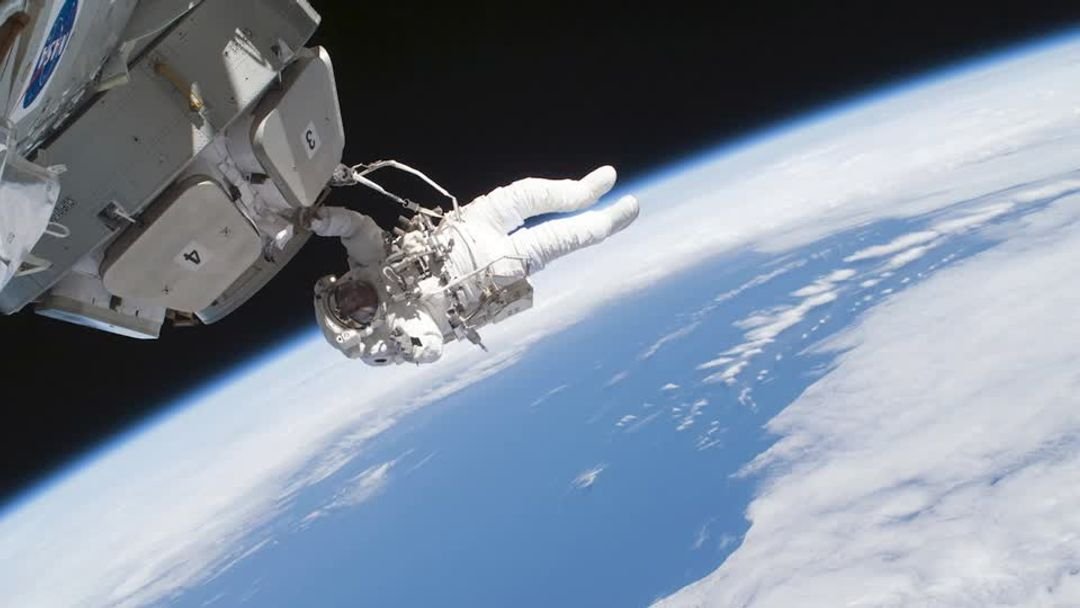
Now, senior U.S. Space Force and Air Force officials have directly acknowledged that America possesses US orbital weapons capable of defending military forces against hostile actions in space.
The disclosure does not mean a space war has begun.
However, it confirms that military competition above Earth has entered a more openly acknowledged phase.
What Did America Actually Admit?
The clearest statement came from U.S. Air Force Secretary Troy Meink.
He said the United States has “on-orbit space control weapons” capable of defending the Joint Force against hostile adversary action.
A day later, U.S. Space Force chief Douglas Schiess went further, saying members of the Space Force operate weapons in orbit that can defend against space enabled attacks.
But there is an important detail.
The Pentagon has not publicly explained exactly what weapons are being discussed.
Meink and Schiess declined to provide specific details when questioned by reporters.
Therefore, the announcement confirms the existence of orbital weapons capabilities without giving the public a complete inventory.
Why Is This Announcement So Important?
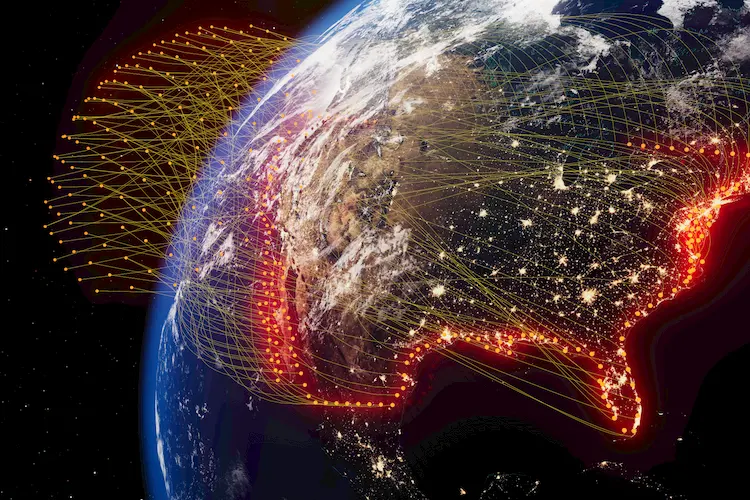
Military satellites already play an enormous role in modern warfare.
They support:
- Communications
- Navigation
- Intelligence gathering
- Missile warning
- Targeting
- Reconnaissance
- Battlefield coordination
- Early warning systems
That makes satellites extremely valuable military assets.
It also makes them potential targets.
The United States, China and Russia have spent years developing spacecraft and technologies that can potentially interfere with, disable or attack other satellites.
Reuters described the three countries as the world’s leading space powers and reported that their military programs increasingly include spacecraft capable of maneuvering around other objects in orbit.
The latest American disclosure therefore makes something that was largely discussed behind closed doors much more public.
The Space Arms Race 2026 Is Already Underway
The phrase space arms race 2026 may sound futuristic, but competition in military space technology has been developing for years.
The United States, China and Russia have all invested in technologies designed to protect their satellites and potentially interfere with an adversary’s space infrastructure.
That includes technologies involving:
- Electronic warfare
- Jamming
- Cyber operations
- Satellite maneuvering
- Counter-space systems
- Surveillance spacecraft
- Anti-satellite capabilities
Reuters reported earlier this month that the U.S. and China are developing increasingly sophisticated spacecraft and satellite systems designed for possible conflict extending into space.
The difference now is that Washington is openly acknowledging some of its capabilities.
China Says It Opposes an Arms Race in Space
China reacted quickly to the American announcement.
Chinese Foreign Ministry spokesperson Guo Jiakun said Beijing supports the peaceful use of outer space and opposes an arms race or attempts to turn space into a battlefield.
China’s position comes as Beijing continues expanding its own military and space capabilities.
That creates a complicated strategic situation.
Washington says it needs stronger capabilities because of potential threats from China and Russia.
Beijing says American military expansion threatens the peaceful use of space.
Both sides therefore present their capabilities as responses to the other.
That is a familiar pattern from previous arms races on Earth.
Russia Wants a Treaty
Russia has also responded to the American announcement.
Russian Deputy Foreign Minister Sergei Ryabkov said on September 16 that there was still time to prevent an arms race in space.
Moscow called for a legally binding international treaty banning offensive weapons deployed in space.
Ryabkov also said Russia had not been notified about the U.S. capability, although he said the announcement itself was not unexpected.
Russia’s Foreign Ministry separately argued that orbital weapons could threaten long-term stability and create risks for economic and social systems on Earth that depend on satellites.
However, Russia and the United States have sharply different views about existing space-security arrangements and each country’s activities.
What Exactly Counts as a Space Weapon?
This is where the issue becomes complicated.
A “space weapon” does not necessarily mean a giant laser or a missile flying between planets.
Military space systems can involve many different technologies.
Some systems could interfere with communications.
Others could disrupt satellite signals.
Some spacecraft can maneuver close to another satellite.
There are also ground-based anti-satellite systems capable of attacking objects in orbit.
The U.S. government’s recent statements specifically refer to on-orbit space control weapons, but officials have not publicly disclosed their exact design or capabilities.
That uncertainty makes it difficult for outside observers to determine exactly how much the new announcement changes the military balance.
Hunter Satellites Are Changing the Game
One of the most interesting developments involves spacecraft capable of approaching or maneuvering around other satellites.
These systems are sometimes described as “hunter satellites.”
A spacecraft that can move close to another satellite could potentially inspect it, interfere with it or demonstrate the ability to attack it.
Reuters reported that a secretive Chinese spaceplane recently released a small satellite hundreds of miles above Earth. The satellite maneuvered around another Chinese spacecraft before returning toward the spaceplane.
The United States also operates a classified reusable spaceplane.
These developments are important because future space conflicts may not resemble traditional missile warfare.
Instead, spacecraft could potentially maneuver around each other in orbit.
A Space War Could Begin Without a Missile Launch
One of the most worrying aspects of the emerging space arms race 2026 is that conflict might begin without a conventional explosion.
A country could potentially disrupt an opponent’s satellite communications.
Interfere with navigation signals.
It could attack an intelligence satellite.
It could use cyber or electronic warfare against space infrastructure.
The consequences could then reach the ground.
Modern economies depend heavily on satellites.
Aircraft use satellite navigation.
Ships use satellite communications and positioning.
Financial systems rely on precise timing signals.
Weather forecasting depends on satellites.
Military operations depend on space-based intelligence and communications.
A serious disruption could therefore affect far more than armies.
Why Satellites Have Become Military Targets
The war in Ukraine has demonstrated how important commercial and military satellites can become during conflict.
Satellite communications have helped forces maintain connectivity across large battlefields.
Satellite imagery can reveal military movements and infrastructure.
Navigation systems support aircraft, ships, missiles and ground forces.
As modern militaries become increasingly dependent on space, the value of disabling an opponent’s satellites also increases.
That creates a strategic dilemma.
The more useful satellites become, the more attractive they become as targets.
The Biggest Risk May Be Debris
A major concern is what happens if a satellite is physically destroyed.
An explosion in orbit can create thousands of pieces of debris.
Those fragments continue traveling at extremely high speeds.
They can then collide with other spacecraft.
One collision can produce additional debris, potentially creating a chain reaction.
This is sometimes called the Kessler syndrome.
A sufficiently severe debris environment could make certain orbital regions increasingly dangerous for satellites and spacecraft.
That would affect military systems, commercial satellites and potentially future human spaceflight.
This is one reason countries have strong incentives to avoid uncontrolled physical destruction of spacecraft in orbit.
Space Is Becoming a Battlefield Without Becoming a War Zone
The current situation is unusual.
The United States has confirmed US orbital weapons.
China is expanding its military space capabilities.
Russia is calling for new international restrictions.
Yet the three countries continue operating satellites and conducting ordinary scientific and commercial space activities.
That means space is simultaneously becoming more militarized and more economically important.
Thousands of satellites now support communications, navigation, weather forecasting, internet services and commercial operations.
The military competition therefore exists alongside an enormous civilian space economy.
The Legal Problem Is Growing
International space law was developed before today’s satellite technology existed.
The 1967 Outer Space Treaty established important principles, including prohibiting countries from placing nuclear weapons or other weapons of mass destruction in orbit.
But the treaty does not create a comprehensive ban on every type of conventional military capability in space.
That creates a difficult legal question.
If a spacecraft can inspect another satellite, interfere with it or potentially disable it, when does that become a weapon?
And if a country says its system is defensive, how can another country determine whether it can also be used offensively?
Those questions are becoming increasingly important.
Why the US Says It Needs Orbital Weapons
From Washington’s perspective, the announcement is closely connected to deterrence.
U.S. officials have repeatedly pointed to Chinese and Russian military space capabilities as potential threats.
The argument is straightforward: if American satellites and military systems can be attacked, the United States needs capabilities capable of defending them and potentially deterring attacks.
The Pentagon therefore describes the newly acknowledged systems as part of protecting the Joint Force.
That does not mean the United States has announced an intention to attack foreign satellites.
The exact capabilities and rules governing their use remain largely classified.
Why China and Russia See It Differently
China and Russia interpret the same development differently.
Their governments argue that openly deploying weapons in orbit risks encouraging other countries to build similar systems.
That could produce a cycle:
1. Country A develops a defensive system.
2. Country B sees a threat and develops its own system.
3. Country A responds with additional capabilities.
The cycle can continue even when each side publicly describes its actions as defensive.
This is one of the classic problems associated with arms races.
Could the Space Arms Race Spread?
Potentially.
The United States, China and Russia are currently the central players, but other countries have growing space capabilities.
India, Japan and European countries are also developing increasingly sophisticated military and civilian space systems.
The more important satellites become to national security, the more countries may seek the ability to protect their own systems.
That could turn space security into a much broader international issue.
What Happens If Satellites Become Targets?
The consequences could extend far beyond military operations.
Consider a world where several major navigation satellites suddenly stop functioning.
Airlines could face navigation problems.
Shipping companies could experience disruptions.
Emergency services could lose certain communications capabilities.
Financial systems could be affected by timing disruptions.
Internet connectivity could become less reliable in some regions.
The effects would vary depending on which satellites were targeted and what backup systems existed.
But the broader lesson is clear: modern society is deeply connected to space infrastructure.
The New Race Is About Control, Not Just Destruction
The future of military space competition may therefore be less about destroying satellites and more about controlling access to the space environment.
Countries want spacecraft that can:
- Protect their own satellites
- Monitor potential threats
- Maneuver rapidly
- Detect suspicious spacecraft
- Maintain communications during attacks
- Continue operating after disruption
That makes space increasingly similar to other military domains.
The difference is that actions in orbit can have consequences that spread globally.
Is a New Space Arms Race Starting?
The evidence suggests that a military competition in space is already underway, but whether it becomes a full-scale arms race depends on what countries do next.
The recent American disclosure is significant because it makes the competition more explicit.
China has rejected an arms race.
Russia is calling for a treaty.
The United States says it needs capabilities to defend its forces.
Meanwhile, all three countries continue developing increasingly sophisticated space technologies.
The next stage could therefore involve two competing paths.
One path is greater military investment and increasingly capable orbital systems.
The other is stronger international agreements designed to prevent those systems from becoming weapons used in conflict.
Conclusion
The confirmation of US orbital weapons is more than a surprising military announcement.
It represents a major change in how openly the United States discusses the militarization of Earth’s orbit.
American officials say the systems are designed to defend U.S. forces against hostile actions.
China says it opposes an arms race in outer space.
Russia is calling for a legally binding treaty to prevent offensive weapons from being deployed in orbit.
Meanwhile, the world’s major space powers are developing spacecraft that can maneuver, monitor and potentially interfere with other satellites.
That makes the space arms race 2026 an issue worth watching closely.
For ordinary people, the most important point is that space is no longer simply about astronauts, rockets and scientific discoveries.
It has become critical infrastructure.
Communications, navigation, weather forecasting, financial systems and national defense all depend on satellites.
A major conflict in orbit could therefore affect life on Earth even if no battlefield exists on the ground.
The challenge now is to determine whether nations can develop enough defensive capability to protect their space infrastructure without creating an uncontrolled cycle of escalation.
The next space race may not be about who reaches the Moon first.
It may be about who controls the orbital environment and whether countries can prevent that competition from turning into a war above Earth.
Frequently Asked Questions
What are US orbital weapons?
US orbital weapons refers to space control capabilities that the United States says it has deployed in orbit to defend military forces against hostile actions. U.S. officials have not publicly disclosed the exact weapons involved.
Has the United States confirmed weapons are in space?
Yes. U.S. Air Force Secretary Troy Meink and Space Force chief Douglas Schiess publicly acknowledged that the United States operates weapons in orbit.
Is the space arms race 2026 already happening?
Military competition in space has been developing for years. The latest U.S. disclosure makes that competition more openly acknowledged, while China and Russia continue developing their own space and counter-space capabilities.
What does Russia want?
Russia has called for a legally binding international treaty banning offensive weapons deployed in outer space and says there is still time to prevent a wider arms race.
What does China say about US orbital weapons?
China says it supports peaceful use of outer space and opposes an arms race or the weaponization of space.
Could a space war affect people on Earth?
Yes. Satellites support communications, navigation, weather services, financial systems and military operations. Disrupting major satellite networks could therefore create consequences far beyond space.