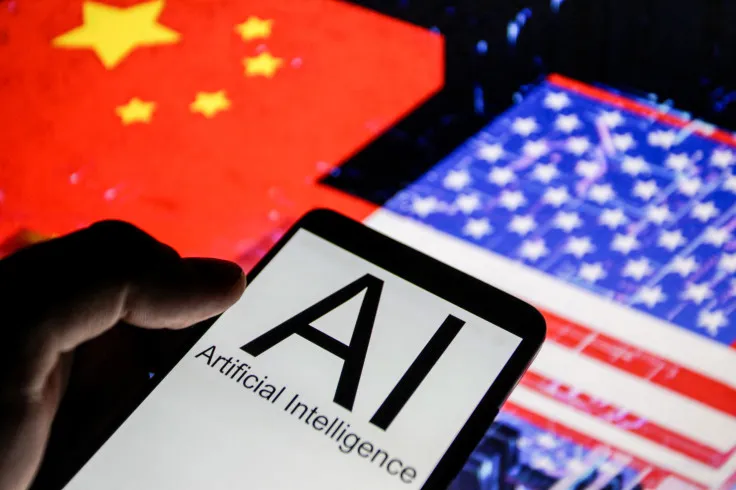
The US China AI war is entering a more dangerous phase after the U.S. government accused several Chinese artificial intelligence companies of aggressively copying capabilities from American AI models. Washington says the alleged activity involves a technique called “distillation,” which can allow smaller AI systems to learn from the outputs of much larger and more expensive models.
The accusations target six Chinese companies, including DeepSeek, Moonshot AI and Alibaba. U.S. officials claim the companies used variants of American AI models to accelerate the development of their own systems. Washington also alleged that the activity may have occurred with Chinese government awareness.
The allegations arrive at an especially sensitive moment.
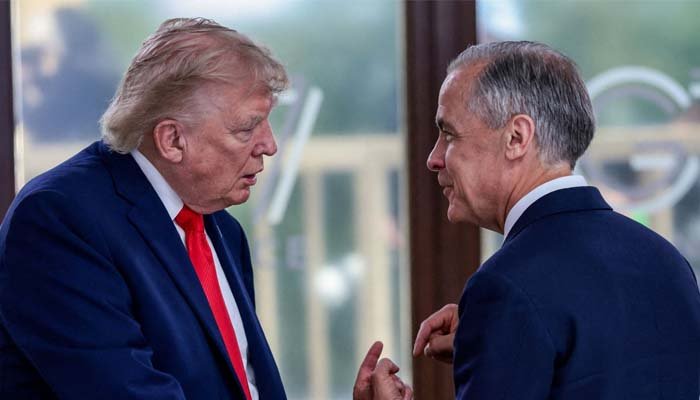
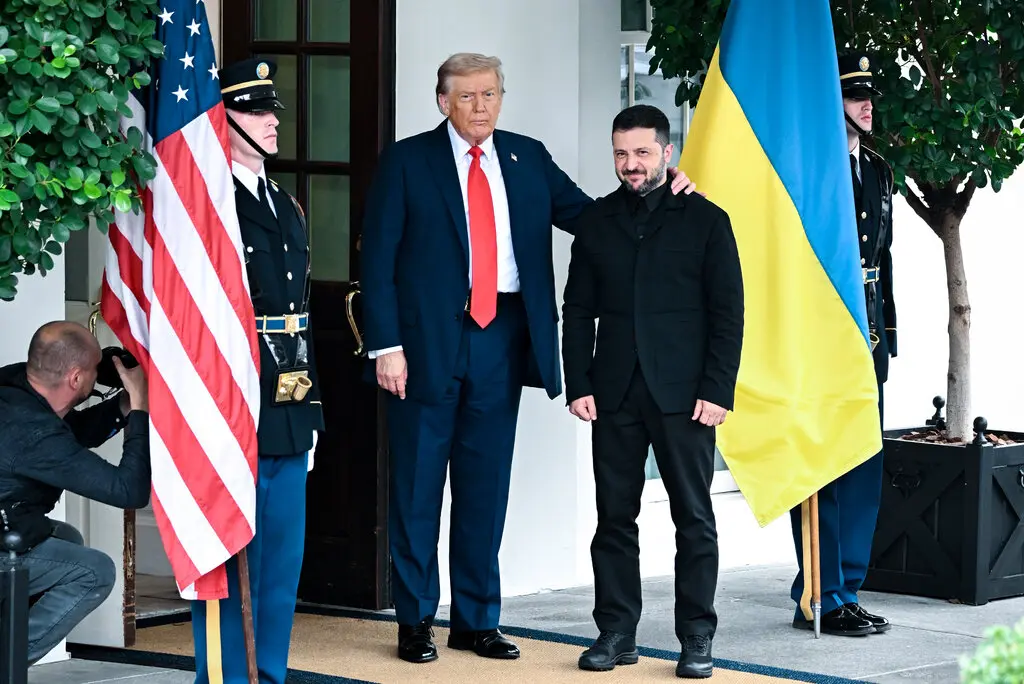
U.S. President Donald Trump and Chinese President Xi Jinping are expected to meet later in September, while Washington and Beijing are also preparing discussions focused on AI safety.
That means the latest accusations could affect not only the technology industry but also the broader relationship between the world’s two largest economies.
What Is the US China AI War?
The US China AI war is not a traditional military conflict.
Instead, it is a rapidly developing competition over artificial intelligence, computer chips, data, research talent, intellectual property and national security.
The United States currently hosts many of the world’s most influential AI companies and research organizations.
China, however, has developed a powerful AI ecosystem of its own.
Companies such as DeepSeek, Alibaba and Moonshot AI have become increasingly important players in the global AI race.
Both governments understand that advanced AI could influence everything from economic productivity and scientific research to cybersecurity and military technology.
As a result, AI has become part of the broader strategic competition between Washington and Beijing.
Washington’s Latest Accusations
U.S. officials say Chinese companies have been using distillation to extract capabilities from advanced American AI systems.
Reuters reported that U.S. officials accused six Chinese companies of using variants of models associated with American companies including Anthropic, OpenAI, Google and SpaceX.
Washington described the alleged activity as aggressive and industrial-scale.
The U.S. government also claimed that the practice could reduce the research and development costs of Chinese companies while improving China’s military and cyber capabilities.
These are serious allegations.
However, they should not be confused with a judicial finding that the companies committed wrongdoing. The claims have been made by U.S. officials, and the Chinese government had not immediately responded to Reuters’ request for comment when the report was published.
What Is AI Distillation?
Understanding distillation is important to understanding the new US China AI war.
AI distillation is not automatically illegal.
It is a legitimate technical method that can be used to create smaller and more efficient AI models.
Imagine a very large AI model as a highly experienced teacher.
A smaller model can learn from the teacher’s responses and use that information to become more capable.
The smaller model may then provide similar types of answers while requiring less computing power.
This can make AI cheaper and easier to deploy.
The controversy begins when companies allegedly use restricted or proprietary AI systems to extract capabilities in ways that violate access rules, licensing agreements or other protections.
That is the central issue behind Washington’s latest accusations.
Why Distillation Matters in the AI Race
Training frontier AI models can require enormous amounts of computing power, specialized chips, electricity and engineering talent.
That makes the cost of developing cutting-edge AI extremely high.
If a company can significantly reduce those costs by learning from an existing advanced model, it could potentially move faster.
This is why Washington is concerned about Chinese AI technology copying.
U.S. officials argue that Chinese companies could potentially accelerate their AI development by extracting capabilities from American systems rather than building every capability independently.
That could alter the competitive balance between the two countries.
DeepSeek Is Back at the Center of the Dispute
DeepSeek has already become one of the most recognizable names in the global AI competition.
The Chinese company attracted worldwide attention with AI models that demonstrated how powerful systems could potentially be developed at lower cost.
DeepSeek has previously faced accusations from U.S. technology companies over model distillation.
In February, OpenAI told U.S. lawmakers that it had observed activity associated with DeepSeek that it said was designed to obtain outputs from American AI systems for distillation.
The latest U.S. accusations therefore represent another escalation rather than an entirely new concern.
Why Alibaba and Moonshot AI Matter
The latest allegations extend beyond DeepSeek.
U.S. officials also named Alibaba and Moonshot AI.
That matters because it demonstrates that Washington’s concerns are increasingly focused on China’s broader AI ecosystem rather than a single company.
Alibaba has substantial cloud computing and AI operations.
Moonshot AI is another prominent Chinese AI developer.
If Washington concludes that multiple companies are using similar methods, the issue could become part of a much broader U.S. policy toward Chinese AI.
America Is Worried About More Than Competition
The U.S. government’s concern extends beyond commercial competition.
Washington argues that advanced AI can have national-security applications.
AI systems can potentially assist with cyber operations, intelligence analysis, military planning, autonomous systems and other sensitive activities.
U.S. officials therefore say that technology obtained from American AI companies could potentially contribute to China’s military and cyber capabilities.
Reuters reported that U.S. officials specifically connected the alleged distillation activity with potential military and cyber applications.
That is why the issue has moved beyond Silicon Valley.
It is now part of national-security policy.
China Has Rejected Similar Accusations Before
The United States and China have already clashed over allegations involving AI technology.
In April, the White House accused China of industrial-scale efforts to distill U.S. frontier AI systems.
Chinese officials rejected those accusations.
Reuters reported at the time that China’s embassy described the allegations as baseless and said Beijing supported the protection of intellectual property.
That history suggests the latest accusations are unlikely to disappear quickly.
Instead, they could become another recurring source of tension between Washington and Beijing.
The AI Chip Problem
The US China AI war is not only about software.
It is also about the chips required to run advanced AI.
Powerful AI models require enormous computing resources.
That has made advanced semiconductor technology one of the most important strategic assets in the U.S.-China relationship.
Washington has introduced restrictions designed to limit China’s access to some advanced semiconductor technologies.
Beijing, meanwhile, has invested heavily in developing domestic alternatives.
The result is a competition covering the entire AI supply chain.
That includes chips, data centers, cloud computing, algorithms, models and applications.
Why Washington Is Watching Chinese AI Closely
The United States has invested enormous resources in maintaining its lead in advanced AI.
American companies have built some of the world’s most powerful models.
If Chinese companies can rapidly reproduce or approximate those capabilities at significantly lower cost, the competitive advantage of U.S. firms could shrink.
This is especially important because AI development is moving extremely quickly.
A lead of several months can matter.
A lead of several years can matter even more.
That explains why Washington is treating allegations of Chinese AI technology copying as a strategic issue rather than merely a corporate dispute.
The Coming Trump-Xi Meeting
Timing is one of the most important aspects of the latest development.
Trump and Xi are expected to meet in Washington later this month.
The two governments are already attempting to manage several major disagreements, including trade, technology, semiconductors and national security.
The new AI accusations could make those discussions more difficult.
At the same time, the two countries are preparing an AI safety dialogue for September.
Reuters reported that Washington and Beijing are preparing their first official bilateral discussions focused specifically on AI safety.
That creates an unusual situation.
The two countries are simultaneously accusing each other of problematic technology practices while preparing to discuss how AI risks should be managed.
AI Safety Could Become a Diplomatic Issue
AI safety is becoming increasingly important internationally.
Advanced models can create cybersecurity risks, misinformation, dangerous automation and other problems.
The United States and China have a shared interest in preventing some of these risks.
However, cooperation becomes more difficult when both governments suspect the other of gaining strategic advantages from AI technology.
The latest accusations therefore create a diplomatic dilemma.
Washington wants to protect American technology.
Beijing wants to continue developing its domestic AI industry.
Both sides also have reasons to avoid an uncontrolled technological confrontation.
Could the AI War Lead to New Restrictions?
That is one of the biggest questions facing the industry.
If the U.S. government determines that existing controls are insufficient, Washington could consider additional restrictions on Chinese access to American AI technology.
Possible measures could include stronger export controls, tighter restrictions on access to advanced models or increased scrutiny of Chinese companies operating in the United States.
The White House has previously said it would explore measures to hold foreign actors accountable for alleged AI technology extraction.
Any major new restrictions could trigger retaliation from Beijing.
What This Means for American AI Companies
American AI companies could benefit from stronger protection of their technology.
OpenAI, Anthropic and other U.S. companies have invested billions of dollars into developing advanced models.
Protecting those investments could become a major government priority.
However, greater restrictions could also create challenges.
AI development depends heavily on international markets, researchers and supply chains.
If technological separation becomes too extreme, American companies could lose access to important markets.
That could increase the cost of AI development worldwide.
What This Means for Chinese AI Companies
Chinese AI companies face a different challenge.
They are trying to compete with some of the most heavily funded technology companies in the world while dealing with restrictions on access to advanced American chips and technology.
That creates strong incentives for China to develop domestic alternatives.
Chinese companies have already invested heavily in local AI chips, cloud computing and open-weight models.
If U.S. restrictions increase, that development could accelerate.
Ironically, stronger American restrictions could therefore encourage China to become more technologically independent.
The Risk of an AI Technology Split
One of the biggest long-term risks is the creation of two separate AI ecosystems.
One could be led primarily by the United States and its allies.
The other could be centered around China and its technology partners.
Companies around the world could then be forced to choose which technological ecosystem they want to use.
That could affect software, cloud computing, AI chips, data centers and even international standards.
A divided AI industry would likely be more expensive and less efficient.
But from a national-security perspective, governments may consider that separation necessary.
Could China Catch the United States?
That question is becoming increasingly difficult to answer.
The United States still has major advantages in advanced AI research, semiconductor design, venture capital and leading AI companies.
China, however, has enormous engineering talent, a huge technology market and strong government support for strategic industries.
Chinese companies have also demonstrated that they can innovate under restrictions.
The future may therefore depend less on who has the most powerful single AI model and more on who can build the most efficient AI ecosystem.
The Real Battle May Be About Cost
The AI race could ultimately become a competition over efficiency.
Training the biggest possible model is expensive.
Developing models that deliver strong performance using fewer computing resources could be just as important.
That is why distillation has become so controversial.
If smaller models can learn valuable capabilities from larger systems, companies could potentially achieve useful performance without spending the same amount on training.
This could reshape the economics of artificial intelligence.
AI Is Becoming a Strategic Weapon
Artificial intelligence is increasingly being treated like other strategic technologies.
Semiconductors, telecommunications equipment, satellites and advanced computing have all become national-security concerns.
AI is now joining that list.
The US China AI war therefore represents something larger than competition between technology companies.
It is part of a struggle over who will control the infrastructure and knowledge that could define the next generation of the global economy.
What Happens Next?
Several developments will be important to watch.
First, the Chinese government and the companies named by Washington could respond to the latest accusations.
Second, the Trump administration could announce additional restrictions on Chinese AI companies.
Third, the upcoming Trump-Xi meeting could determine whether the AI dispute becomes part of a wider diplomatic confrontation.
Finally, the planned U.S.-China AI safety dialogue could reveal whether Washington and Beijing are capable of cooperation despite their growing technological rivalry.
The next few weeks could therefore be extremely important.
Conclusion
The latest accusations mark a significant escalation in the US China AI war.
Washington says six Chinese AI companies, including DeepSeek, Moonshot AI and Alibaba, have engaged in aggressive distillation of American AI technology.
The U.S. government argues that the alleged activity could reduce Chinese AI development costs and potentially strengthen military and cyber capabilities.
China has previously rejected similar accusations, making it unlikely that the dispute will be resolved quickly.
The bigger issue is the future of global artificial intelligence.
If Washington and Beijing move toward greater technological separation, the consequences could extend far beyond the companies involved.
AI chips, software, cloud computing, research, investment and international technology standards could all become part of the competition.
At the same time, both countries have an interest in preventing AI from becoming an uncontrolled source of global instability.
That creates a paradox.
The United States and China may be entering a more intense technological competition while simultaneously needing each other to establish rules for the technology they are racing to develop.
The Chinese AI technology copying allegations could therefore become one of the most important tests of the relationship between Washington and Beijing.
The question is no longer simply who can build the smartest AI.
It is increasingly about who controls the technology, who sets the rules and who wins the economic and strategic race that follows.
Frequently Asked Questions
What is the US China AI war?
The US China AI war refers to the growing technological competition between the United States and China over artificial intelligence, advanced computing, semiconductors, research and national security.
What is Chinese AI technology copying?
The phrase Chinese AI technology copying refers in this context to U.S. allegations that Chinese companies have extracted capabilities from American AI models through techniques such as distillation. These remain allegations rather than established court findings.
What is AI distillation?
AI distillation is a technique in which a smaller model learns from the outputs of a larger model. It can be a legitimate method for developing more efficient AI, but governments and companies may object when proprietary models are allegedly accessed or used improperly.
Which Chinese AI companies did the U.S. accuse?
U.S. officials accused six Chinese AI companies, including DeepSeek, Moonshot AI and Alibaba, of engaging in what Washington described as aggressive, industrial-scale distillation activity.
Why does the U.S. consider AI a national-security issue?
Advanced AI can potentially be used for cybersecurity, intelligence, military applications and other sensitive purposes. U.S. officials therefore argue that protecting advanced AI capabilities has strategic importance.
Could the AI conflict affect ordinary people?
Yes. A prolonged technology conflict could affect AI prices, access to AI services, smartphones, cloud computing, software development, semiconductor availability and the speed at which new AI products reach consumers.
Could the U.S. and China still cooperate on AI?
Potentially. Despite their rivalry, the two countries are preparing bilateral discussions on AI safety in September.