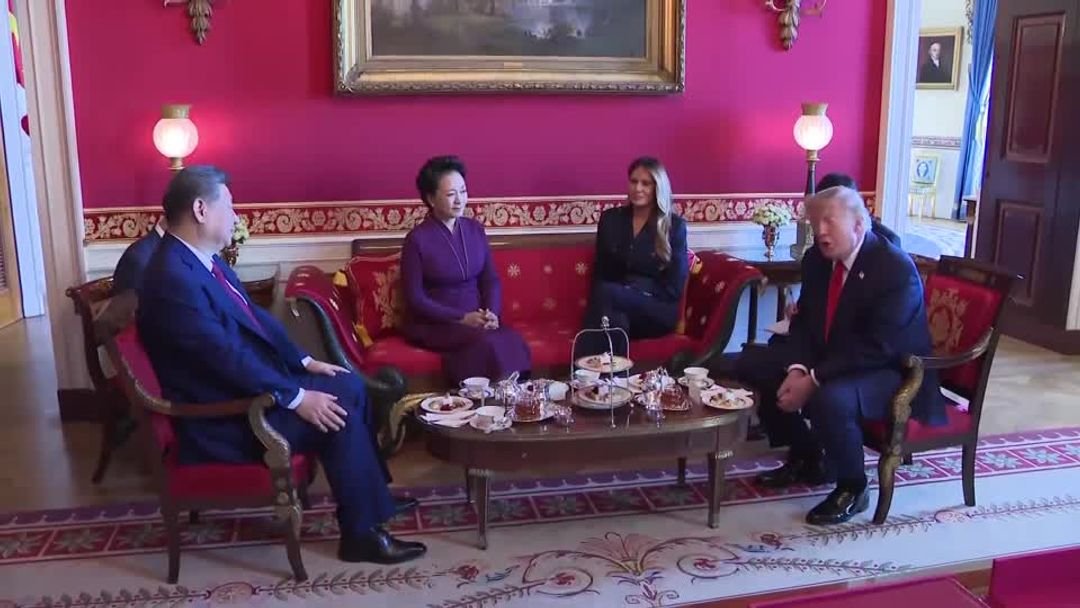
The US China tariff cuts 2026 agreement has created one of the biggest changes in the trade relationship between Washington and Beijing this year.
Following Chinese President Xi Jinping’s September state visit to Washington, the United States and China agreed on more favorable tariff treatment covering $30 billion of non sensitive goods in each direction, according to statements from both governments.
The agreement does not end the broader U.S. China trade dispute.
However, it changes the immediate direction of negotiations.
The two countries also agreed to establish a trade council, continue earlier economic arrangements and begin a formal dialogue on artificial intelligence risks and benefits.
For businesses, farmers, manufacturers and consumers, the important question is what these changes will actually mean.
What Happened at the Trump-Xi Summit?
President Donald Trump hosted Xi Jinping for a state visit in Washington that concluded on September 25.
The meeting produced several economic and diplomatic announcements.
The most immediate trade-related development was the agreement on more favorable tariff treatment for $30 billion of non-sensitive goods in each direction.
The White House said the arrangement covers selected American exports entering China and selected Chinese products entering the United States.
The two governments also agreed to operationalize the U.S. China Board of Trade.
That body is intended to provide a continuing mechanism for discussing trade issues rather than relying only on occasional high-level summits.
What Goods Are Covered?
The agreement does not cover every product traded between the two economies.
Instead, it focuses on selected categories.
For U.S. exporters, the announced areas include:
- Agricultural products
- Fish and seafood
- Logs and wood products
- Cosmetics
- Medical devices
For Chinese goods entering the United States, the White House identified categories including:
- Small appliances
- Toys
- Holiday decorations
- Children’s car seats
The exact tariff rates and complete product lists remain important details for companies waiting to understand the practical effect of the agreement. Reuters reported that the two sides had reached consensus on the recommendations rather than announcing a complete settlement of all tariff disputes.
What Does $30 Billion Actually Mean?
The $30 billion figure refers to the value of goods receiving more favorable tariff treatment in each direction.
That distinction matters.
It does not mean that the United States and China have eliminated $30 billion worth of tariffs across their entire bilateral trade relationship.
Instead, specific categories of goods will receive improved treatment.
For exporters, even targeted tariff reductions can matter because tariffs increase the cost of imported products.
A lower tariff can potentially improve the economics of selling a product in the other country’s market.
However, the final impact will depend on the actual tariff rates, product eligibility, implementation dates and market demand.
Why the Agreement Matters to American Farmers
Agriculture is one of the areas specifically mentioned in the agreement.
American farmers have long relied on China as an important overseas market for commodities.
The latest arrangement includes agricultural products among the U.S. exports receiving more favorable treatment in China.
That could create opportunities for exporters if the new arrangements translate into increased purchases.
However, tariffs are only one factor influencing agricultural trade.
Commodity prices, currency movements, transportation costs, Chinese demand and domestic production also affect export volumes.
Therefore, the tariff announcement should not automatically be interpreted as a guarantee of increased agricultural sales.
What About American Consumers?
The other side of the relationship involves Chinese products entering the U.S. market.
The White House identified products such as small appliances, toys, holiday decorations and children’s car seats as categories receiving more favorable tariff treatment.
Lower tariffs can reduce one component of the cost of importing goods.
Whether consumers actually see lower retail prices depends on what companies do with those savings.
Businesses could reduce prices, increase margins, invest in supply chains or use the savings to offset other costs.
That means the effect on household prices will not necessarily be immediate.
This Is Not the End of the Trade War
Despite the announcement, the broader U.S.-China trade relationship remains complicated.
The two governments continue to disagree over technology, critical minerals, market access, industrial policy and national security.
The latest agreement should therefore be viewed as a targeted trade arrangement rather than a comprehensive peace treaty.
The two sides have also agreed to extend outcomes from earlier talks in Kuala Lumpur, while the broader trade truce has been extended by two months.
That gives negotiators additional time to work on unresolved issues.
Rare Earths Remain a Major Question
One of the biggest unresolved issues is the supply of rare earth minerals and other critical materials.
These resources are essential for industries ranging from electronics and electric vehicles to advanced manufacturing and defense.
The latest White House fact sheet said Washington and Beijing would continue working on concerns involving supply-chain shortages related to rare earths and other critical minerals.
The fact that these issues remain under discussion shows that the trade dispute is broader than tariffs alone.
The New U.S. China Trade Council
The new trade council could become an important part of future negotiations.
Instead of waiting for presidential meetings to resolve every disagreement, officials can use a dedicated mechanism to discuss market access and trade barriers.
The two governments said the council would build on earlier agreements.
That could make future negotiations more structured.
However, the effectiveness of the council will depend on whether Washington and Beijing can resolve disagreements that extend beyond ordinary commercial disputes.
The Trade War Has Already Changed Global Supply Chains
The U.S.-China trade dispute has affected companies around the world.
Businesses have spent years examining alternative manufacturing locations, supplier networks and shipping routes.
Some companies have expanded production in countries such as Vietnam, India and Mexico.
Others have maintained significant Chinese production because China’s industrial infrastructure remains deeply integrated into global supply chains.
A sustained reduction in tariffs could therefore influence corporate decisions about where to manufacture and source products.
China and the United States Still Have Major Economic Links
Even during periods of intense political disagreement, the two economies remain deeply connected.
American companies sell agricultural goods, energy, technology and other products to Chinese customers.
Chinese manufacturers supply enormous quantities of consumer and industrial goods to the U.S. market.
That interdependence creates economic incentives for both sides to keep trade channels functioning.
At the same time, national-security concerns have increasingly influenced economic policy.
That combination makes the relationship more complicated than a conventional trade dispute.
AI Has Entered the Trade Conversation
The Trump-Xi meeting also produced an agreement to begin a bilateral dialogue on artificial intelligence.
The two countries said they would discuss the risks and benefits of advanced AI and establish a communication channel for AI-related incidents.
The next round of discussions is scheduled for November, according to Reuters.
This is significant because technology has become one of the most sensitive areas of U.S.-China competition.
However, the AI dialogue should not be confused with a broad technology agreement.
Both governments continue to protect strategic technologies and compete for leadership in advanced computing.
A Two-Track Relationship
The latest developments illustrate how Washington and Beijing are increasingly managing cooperation and competition at the same time.
Trade, they are reducing tariffs on selected products.
On AI, they are establishing a communication channel.
On critical minerals, however, important disagreements remain.
This creates a two-track relationship.
The countries can cooperate in areas where both see economic or practical benefits while continuing to compete in strategically sensitive sectors.
What Businesses Should Watch Next
Companies will be watching the implementation details closely.
The most important questions include:
- Which products qualify?
- What tariff rates will apply?
- When will the changes take effect?
- How long will the preferential treatment last?
- Will additional products be added?
- How will rare-earth supply issues be resolved?
- Will the trade truce be extended again?
These details will determine whether the latest agreement becomes a limited adjustment or the beginning of a much broader trade settlement.
Could More Tariff Cuts Follow?
The possibility remains open.
The establishment of the trade council gives both governments a formal mechanism for continuing negotiations.
The two sides have already demonstrated that selected tariffs can be adjusted through negotiation.
However, future reductions are not guaranteed.
Issues involving technology, critical minerals, market access and national security remain difficult.
The next stage will depend on how successfully officials implement the current agreement and resolve those outstanding disputes.
Why the Global Economy Is Watching
The United States and China are two of the world’s largest economies.
Changes in their trade relationship can influence global manufacturing, shipping, commodity markets and corporate investment.
A prolonged tariff reduction could encourage companies to reconsider supply-chain strategies.
A renewed escalation, by contrast, could push businesses toward further diversification.
For global markets, predictability can be almost as important as the tariff rate itself.
What the $30 Billion Deal Really Signals
The US China tariff cuts 2026 agreement is important because it demonstrates that the two governments can still reach targeted economic compromises despite major strategic disagreements.
The Trump Xi trade deal does not resolve the entire trade war.
Instead, it establishes a narrower area of cooperation while leaving major questions for future negotiations.
The next few months will reveal whether the agreement expands into additional tariff reductions or remains a limited arrangement.
Conclusion
The US China tariff cuts 2026 agreement marks a significant development in the economic relationship between Washington and Beijing.
The two countries have agreed on more favorable tariff treatment covering $30 billion of non-sensitive goods in each direction, including selected agricultural, consumer, wood, cosmetics and medical-device products.
They have also established a trade council and agreed to continue discussions on unresolved economic issues.
For American exporters, the agricultural provisions could create additional opportunities in China.
For U.S. importers, lower tariffs on selected Chinese products could reduce some trade costs.
But the larger trade dispute remains unresolved.
Rare earths, technology, market access and national-security concerns continue to shape the relationship.
The emerging picture is therefore not one of complete separation or complete cooperation.
Instead, the United States and China appear to be creating mechanisms for cooperation in selected areas while continuing to manage major strategic disagreements.
The Trump Xi trade deal may ultimately be remembered not as the end of the trade war, but as another stage in the difficult process of managing economic competition between the world’s two largest economies.
Frequently Asked Questions
What are the US China tariff cuts 2026?
The US China tariff cuts 2026 refer to an agreement for more favorable tariff treatment covering $30 billion of non-sensitive goods in each direction following Xi Jinping’s September 2026 visit to Washington.
What is the Trump Xi trade deal?
The Trump Xi trade deal is a broader set of outcomes from the September 2026 summit, including the tariff arrangement, a new trade council and additional economic discussions.
Which U.S. products are included?
The announced categories include agricultural goods, fish and seafood, logs and wood products, cosmetics and medical devices.
Which Chinese products are included?
The White House identified small appliances, toys, holiday decorations and children’s car seats among the Chinese products receiving more favorable treatment.
Does this end the U.S. China trade war?
No. Major disagreements remain over critical minerals, technology, market access and other economic and national-security issues.
Could consumers see lower prices?
Possibly for some affected products, but tariff reductions do not automatically translate into lower retail prices. The final effect depends on importers, manufacturers, retailers, competition and other costs.
What happens next?
The newly established trade council is expected to provide a mechanism for continued negotiations. The two countries are also continuing discussions on critical minerals and other unresolved trade issues.