A new El Niño milk supply warning is putting an unexpected product at the center of the global climate story milk.
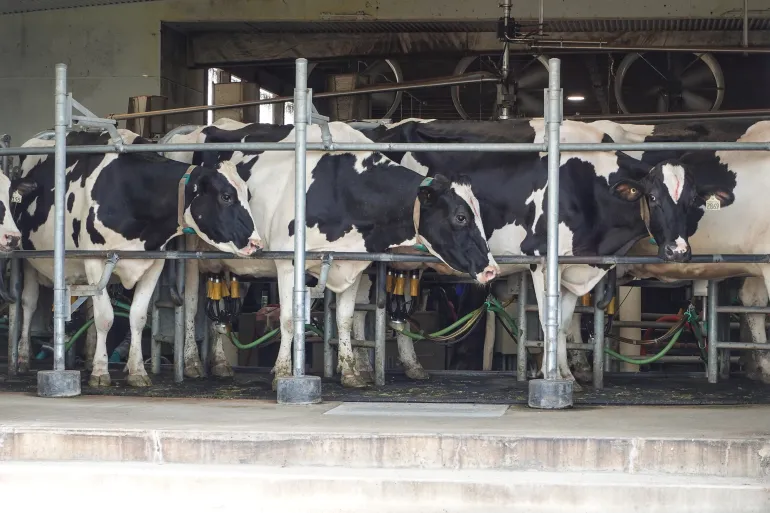
New Zealand dairy giant Fonterra warned on September 24 that developing El Niño conditions could affect milk volume growth later in the 2026/27 season.
The warning matters far beyond New Zealand.
New Zealand is one of the world’s most important dairy exporters, meaning changes in its milk production can affect international markets for milk powders, butter, cheese and other dairy products.
Fonterra said extreme weather associated with El Niño could affect production, while also warning that global crop output could face additional pressure.
That creates a chain reaction worth watching:
El Niño → weather changes → crops and pasture → animal feed → milk production → global dairy markets.
Why New Zealand Matters So Much
New Zealand has a population of only about five million people.
Yet its dairy industry plays an outsized role in global food markets.
The country exports enormous quantities of dairy products to customers around the world.
That means a weather event affecting New Zealand farmers can have consequences thousands of kilometres away.
Milk itself is difficult to transport long distances in fresh form.
Instead, much of New Zealand’s production enters international markets as processed dairy products.
That makes the country an important supplier to global food companies.
What Is El Niño?
El Niño is a recurring climate pattern involving unusually warm ocean temperatures in the central and eastern tropical Pacific Ocean.
It can influence atmospheric circulation far beyond the Pacific.
The result can be changes in rainfall, temperature and weather patterns across different regions.
However, El Niño does not produce the same weather everywhere.
Some regions can become wetter.
Others can become hotter or drier.
That variation is precisely why farmers and food companies watch the phenomenon closely.
Why Cows Care About Climate Patterns
Cows need food and water.
That sounds simple, but both depend heavily on weather.
Dairy farms rely on pasture, hay, silage and other feed.
If drought damages grass, farmers may need to purchase additional feed.
If heavy rain damages pasture, animals may have less usable grazing land.
Heat can also affect livestock.
Therefore, climate conditions can influence how much milk a herd produces.
The effect may be gradual rather than dramatic.
But across millions of cows, small changes can add up.
The Fonterra Warning
Fonterra said El Niño could affect milk-volume growth toward the end of the 2026/27 season.
The company also warned that extreme weather associated with the climate pattern could affect global crop production.
That second point is particularly important.
Dairy production does not exist separately from the agricultural system.
Cows require feed.
Feed depends on crops and pasture.
Crops depend on weather.
That means a climate shock can travel through several layers of the food system.
This Is Bigger Than Milk
A reduction in milk production would not necessarily create empty supermarket shelves.
Global dairy markets are complicated.
Farmers in other countries could increase production.
Inventories could absorb some shortages.
Importers could switch suppliers.
Consumers could also change purchasing patterns.
However, a major weather disruption can still affect prices.
The more important issue is that dairy is one part of a much wider food system.
Butter, Cheese and Milk Powder Could Feel It
Milk does not simply become drinking milk.
It can be transformed into many products.
These include:
- Butter
- Cheese
- Milk powder
- Whey products
- Infant-nutrition ingredients
- Food-processing ingredients
A disruption in milk production can therefore affect several international markets simultaneously.
Food manufacturers may have to adjust procurement.
Importers may search for alternative suppliers.
Prices can move depending on available inventories and demand.
Why Crop Production Matters
Fonterra’s warning also points toward a wider agricultural concern.
El Niño can alter rainfall and temperatures in major crop-producing regions.
That can affect crops used for human food as well as livestock feed.
If feed becomes more expensive, dairy production costs can increase.
The impact does not have to begin inside a dairy farm.
It can start with a grain field thousands of kilometres away.
A Global Food Chain With Many Weak Points
Modern food production is highly interconnected.
A cow in New Zealand may depend on feed influenced by international commodity markets.
The milk can be processed locally.
The finished product can be shipped to Asia, the Middle East or another region.
A food manufacturer can then use it as an ingredient.
That means a weather event in one country can eventually affect products sold somewhere else.
The global food system works efficiently when conditions are stable.
Extreme weather tests that efficiency.
Could This Become a Dairy Shortage?
A true global dairy shortage would require a much larger disruption than the current warning.
Fonterra’s statement is a risk warning, not a prediction that the world will run out of milk.
That distinction matters.
The current information suggests potential pressure on milk-volume growth rather than a confirmed global shortage.
However, food markets react to expectations as well as actual shortages.
Traders and buyers may adjust purchasing decisions if they believe supplies could tighten.
Why 2026 Is Different
Farmers are already dealing with a world where extreme weather is becoming an increasingly important business risk.
Droughts, floods, heat waves and storms can damage agricultural production.
That means El Niño arrives on top of existing pressures.
The result is not necessarily a single catastrophic event.
It can instead become a series of smaller disruptions that collectively increase food costs.
Asia Could Be Particularly Important
Asia is a major destination for internationally traded dairy products.
Changes in New Zealand production can therefore affect buyers across the region.
If supplies tighten, importers may compete more aggressively for available products.
That could influence international prices.
The final impact would depend on production elsewhere and the strength of demand.
The Hidden Connection Between Weather and Grocery Bills
Consumers often see food prices as a supermarket issue.
But the real chain begins much earlier.
Weather affects crops.
Crops affect feed.
Feed affects livestock.
Livestock affects milk.
Milk affects processing.
Processing affects transportation.
Transportation affects retail prices.
A climate pattern thousands of kilometres away can therefore eventually become part of a family’s grocery bill.
Climate Forecasts Are Becoming Economic Data
For food companies, weather forecasts are no longer simply environmental information.
They are business information.
Companies use climate forecasts to plan purchasing, inventory and transportation.
Farmers use them to decide when and what to plant.
Commodity traders use them to assess potential supply risks.
The growing importance of El Niño demonstrates how climate information is becoming part of everyday economic planning.
What Happens If El Niño Strengthens?
If El Niño conditions strengthen, farmers and food companies will watch several indicators.
- Forecasters will monitor rainfall.
- Farmers will monitor pasture conditions.
- Experts will monitor crop yields.
- Producers will track milk production.
- Analysts will also watch international dairy inventories and prices.
The impact will depend on how severe the weather becomes and how long it lasts.
Other Countries Could Offset Some of the Risk
New Zealand is not the world’s only dairy producer.
Europe, the United States, Australia and other countries also produce significant amounts of milk.
If New Zealand production slows, other exporters may provide some additional supply.
However, increasing dairy production is not an instant process.
Cows cannot simply be switched to maximum production overnight.
Farm capacity, feed availability and weather all matter.
Why Food Security Is Becoming More Complicated
The dairy warning highlights a broader problem.
Food security depends on more than producing enough food globally.
It also depends on where that food is produced, how it is transported and whether weather allows production to remain stable.
A highly interconnected food system can move supplies efficiently.
But it can also transmit disruptions.
That makes climate patterns such as El Niño increasingly important to international food markets.
What Consumers Should Watch
Consumers do not need to panic over the latest warning.
The current information does not indicate that supermarkets are about to run out of dairy products.
Instead, the warning is useful because it identifies a potential risk before it becomes a major supply problem.
The indicators to watch are:
- Global milk production
- Dairy export volumes
- Butter prices
- Cheese prices
- Milk-powder prices
- Feed costs
- El Niño intensity
- Weather conditions in major agricultural regions
Together, these indicators will provide a clearer picture of where the market is heading.
The Bigger Story
The El Niño milk supply warning is really a story about how climate and food markets are becoming increasingly connected.
A weather pattern in the Pacific can influence rainfall.
Rainfall affects crops and pasture.
Those changes affect livestock.
Livestock affects milk.
And milk enters an international market worth billions of dollars.
That chain is why a warning from a New Zealand dairy company deserves global attention.
Conclusion
The new El Niño milk supply warning does not mean the world is facing an immediate .
But it does reveal another potential pressure point in the global food system, and global dairy shortage 2026.
Fonterra, one of the world’s biggest dairy exporters, has warned that El Niño could affect milk-volume growth later in the 2026/27 season and could also increase risks to global crop production.
That matters because New Zealand is deeply connected to international dairy markets.
If weather conditions deteriorate, the effects could move from farms to feed markets, processing companies, exporters and eventually consumers.
The biggest lesson is not about milk alone.
It is about how quickly a climate pattern can travel through the global economy.
The next time shoppers notice a change in the price of butter, cheese or milk powder, the cause may not be sitting inside a supermarket.
It could have started thousands of kilometres away, in the Pacific Ocean.
Frequently Asked Questions
What is the El Niño milk supply risk?
It refers to concerns that El Niño-related weather conditions could affect milk production and growth in New Zealand and potentially influence global dairy markets.
Why is New Zealand important to global dairy markets?
New Zealand is one of the world’s major dairy exporters, so changes in its production can affect international supplies.
Does El Niño mean there will be a global dairy shortage?
Not necessarily. Fonterra’s warning concerns potential production pressure. A global shortage would depend on weather conditions, production in other countries, inventories and demand.
Could butter and cheese prices rise?
They could face upward pressure if international dairy supplies tighten, although prices depend on many other factors.
How does El Niño affect dairy farms?
Weather associated with El Niño can affect pasture, feed availability, water supplies and livestock conditions.
When could the impact become clearer?
Fonterra specifically warned about potential effects on milk-volume growth toward the end of the 2026/27 season.