The Iran war Red Sea crisis is becoming one of the most important developments in the Middle East conflict.
The war began as a confrontation involving the United States, Israel and Iran.
It has now spread into a wider regional struggle involving Saudi Arabia, Yemen’s Houthis, Gulf shipping and European naval forces.
The latest developments show just how quickly that expansion is happening.
On September 22, the G7 foreign ministers called on Iran to stop supporting the Houthis and urged the group to end attacks and threats against civilian shipping. At the same time, the European Union said its Red Sea naval operation needs more ships because the threat to maritime traffic has increased.
Meanwhile, U.S. officials have held previously undisclosed talks with Houthi representatives in Oman.
That combination creates an unusual situation.
Diplomacy is happening in parallel with military escalation.
The War Has Opened a Second Maritime Front
The Strait of Hormuz remains the central shipping problem in the Gulf.
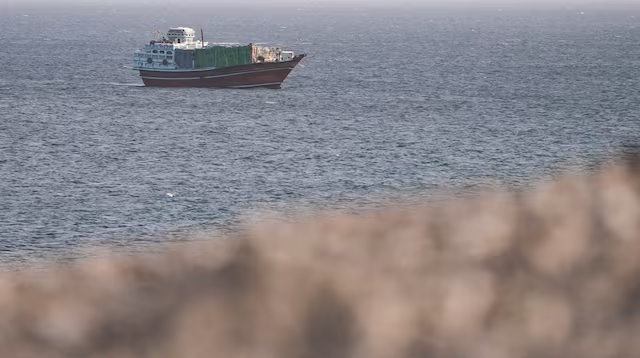
But the Red Sea has developed into a second major pressure point.
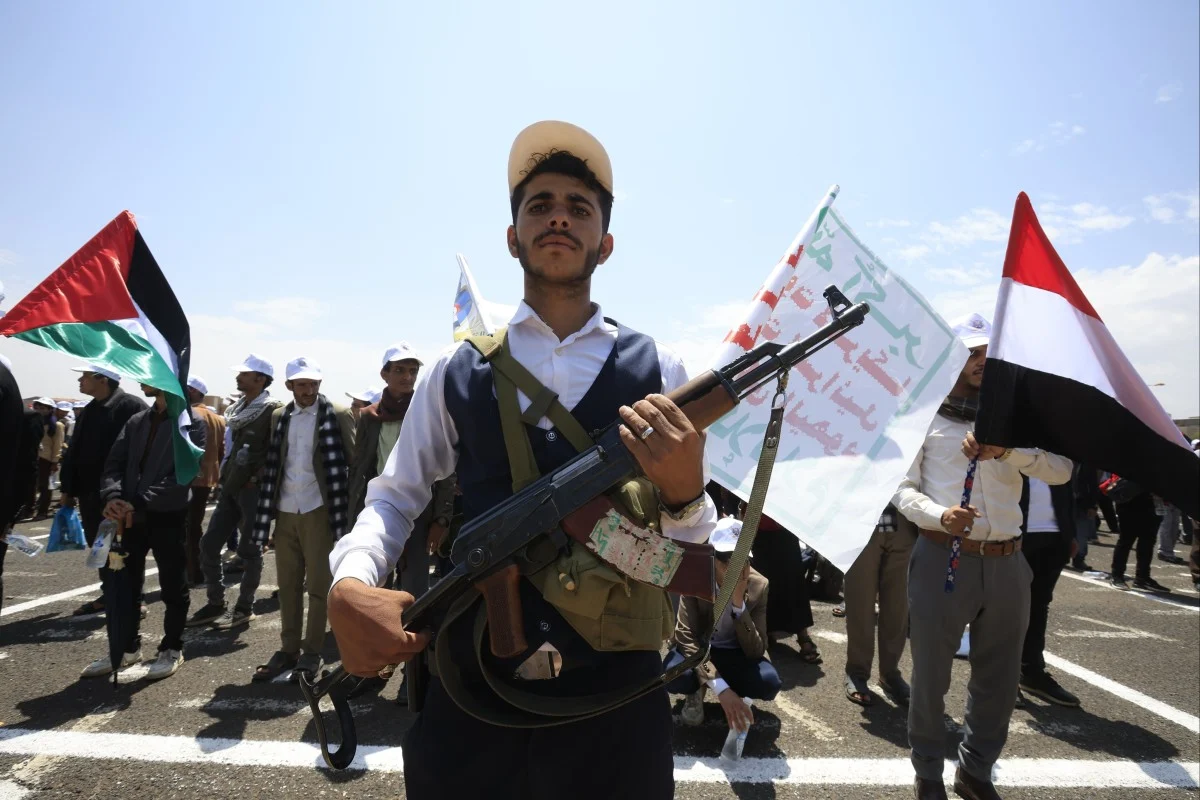
The Houthis have expanded their control along Yemen’s western coast and captured the strategic port of Mocha and positions around the Bab el-Mandeb area.
Bab el-Mandeb connects the Red Sea with the Gulf of Aden.
That makes it an important route for vessels traveling between Europe and Asia.
If insecurity continues, shipping companies face pressure to avoid the route or accept higher risks and insurance costs.
Saudi Arabia Is Now Directly Exposed
Saudi Arabia has become one of the most important targets in the expanding conflict.
Houthi forces have claimed attacks against Saudi targets as fighting between the group and Saudi-backed Yemeni forces has intensified.
The wider conflict has also affected Saudi oil infrastructure.
The East-West Pipeline was attacked earlier in September, disrupting shipments through Yanbu and forcing Saudi Arabia to redirect more exports through Gulf terminals.
This creates a dangerous connection between the Red Sea conflict and the global oil market.
A military development in Yemen can now affect Saudi exports.
A disruption to Saudi exports can then affect global energy prices.
The G7 Is Putting Pressure on Iran
The diplomatic response has also changed.
On September 21, G7 foreign ministers called on Iran to stop arming and supporting the Houthis.
The group described the continued Houthi attacks as a dangerous escalation and urged the Houthis to stop military actions and attacks against civilian shipping.
That statement matters because it links the Houthi conflict more directly to the wider Iran war.
The G7 is not treating the Red Sea crisis as an isolated Yemen problem.
Instead, its statement places Iranian support for the Houthis within the broader regional conflict.
Europe Wants More Warships
The European Union is also preparing for a more difficult maritime environment.
EU foreign-policy chief Kaja Kallas said on September 21 that the Aspides naval mission needs more than 10 warships.
The mission currently has about six ships operating in the area, according to Reuters.
Kallas said the threat has become more serious as the Houthis expand along the Red Sea coast and uncertainty grows about which vessels could be targeted.
The issue matters far beyond Europe.
Ships traveling between Asia and Europe rely heavily on secure maritime routes.
Any prolonged disruption can affect delivery times, insurance costs, fuel consumption and supply chains.
The United States Is Talking to the Houthis
Perhaps the most unexpected development is happening away from the battlefield.
Reuters reported that U.S. officials secretly met Houthi representatives in Oman in September.
The discussions were reportedly facilitated by Oman, which has previously played a mediation role in regional conflicts.
According to sources cited by Reuters, Houthi representatives told U.S. officials they did not intend to attack American vessels and remained committed to an earlier ceasefire arrangement with Washington.
The reported meeting has not been presented as a peace agreement.
However, it demonstrates that Washington is maintaining communication with a group it has designated as a foreign terrorist organization.
Why Would Washington Talk to the Houthis?
The strategic calculation is straightforward.
The United States is already fighting Iran.
Opening another direct military confrontation with the Houthis could create another major front.
Direct communication could therefore provide a way to reduce risks to American ships while Washington focuses on the larger Iran conflict.
The Houthi leadership may also have reasons to avoid direct confrontation with the United States.
That does not mean the wider conflict has ended.
Instead, it shows how governments and armed groups can maintain communication even while fighting continues elsewhere.
Saudi Arabia Faces a Difficult Choice
Saudi Arabia now faces pressure from several directions.
Its forces and allies are fighting the Houthis in Yemen.
Its oil infrastructure has come under attack.
Its Red Sea export route has been disrupted.
At the same time, Saudi Arabia has increased oil shipments through Gulf terminals and Hormuz.
The kingdom therefore needs to protect both land-based infrastructure and maritime exports.
That makes the Red Sea conflict an economic security problem as much as a military one.
The Shipping Risk Is Larger Than the Number of Attacks
The biggest danger may not be the number of ships actually hit.
Shipping companies make decisions based on risk.
If insurers raise premiums sharply, companies can decide that a route is no longer commercially attractive.
If vessels need military escorts, the cost rises again.
If ships must take longer routes around Africa, fuel consumption and delivery times increase.
The global economy can therefore feel the effects of a maritime conflict even when most ships remain untouched.
Hormuz and Bab el-Mandeb Create a Dangerous Combination
The current conflict is unusual because two major maritime chokepoints face pressure at the same time.
Hormuz connects the Gulf with the Arabian Sea.
Bab el-Mandeb connects the Red Sea with the Gulf of Aden.
They serve different trade routes.
But disruptions at both locations can reinforce one another.
If Gulf oil exporters struggle to move crude through Hormuz while Red Sea routes remain dangerous, shipping companies have fewer easy alternatives.
That is one reason the current conflict has attracted attention from energy markets and Western governments.
Oil Markets Are Watching Diplomacy
Despite the military escalation, oil markets are also responding to possible negotiations.
On September 22, Brent crude rose about 1.1% to around $101.48 per barrel in early trading after several sessions of declines.
Reuters said investors were watching for possible U.S.-Iran diplomatic developments around the United Nations General Assembly.
That shows the market is balancing two opposing forces.
Military escalation pushes supply risks higher.
Diplomatic progress could reduce those risks.
For now, neither side has produced a settlement that would restore normal shipping.
What Happens If the Red Sea Front Expands?
Several outcomes remain possible.
The fighting could remain concentrated around Yemen and Saudi Arabia.
Houthi forces could increase pressure on Saudi-linked shipping.
Western navies could expand their presence.
Or diplomatic contacts could reduce attacks even while the wider Iran war continues.
The uncertainty is what makes the situation difficult for governments and businesses.
The War Is Becoming a Network of Conflicts
The most important change may be structural.
The Iran war is no longer confined to one battlefield.
Iran is involved in the wider regional confrontation.
The United States is fighting Iran while pursuing diplomatic contacts with the Houthis.
Saudi Arabia is fighting the Houthis and protecting critical energy infrastructure.
European navies are trying to protect shipping.
Gulf states are attempting to maintain oil exports.
China is also pressing Iran to help reduce Houthi attacks, according to Reuters reporting.
Each development affects another part of the conflict.
That makes the war increasingly difficult to separate into individual fronts.
Conclusion
The Iran war Red Sea crisis has become a major new dimension of the conflict.
The Houthis have expanded their position along Yemen’s Red Sea coast while Saudi Arabia has faced attacks on its territory and energy infrastructure.
At the same time, Western governments are increasing diplomatic and naval attention.
The G7 is demanding that Iran stop supporting the Houthis.
The European Union says its Red Sea naval mission needs additional ships.
And Washington has quietly maintained direct communication with Houthi representatives in Oman.
These developments do not prove that the war will spread indefinitely.
They do show that the conflict has become increasingly regional.
For global businesses, the concern is not only missiles and drones.
It is the possibility that two of the world’s important maritime chokepoints could remain under pressure at the same time.
If that happens, the consequences could extend far beyond the Middle East.
Frequently Asked Questions
What is the Iran war Red Sea crisis?
It describes the expansion of the wider Iran conflict into Yemen and the Red Sea, where Houthi forces have increased military activity and threatened shipping routes.
Why is Saudi Arabia involved?
Saudi Arabia supports forces fighting the Houthis in Yemen and has faced attacks on its territory and energy infrastructure.
What is the Houthi threat to shipping?
The Houthis control strategic areas along Yemen’s Red Sea coast and have threatened or attacked shipping connected to their regional conflict.
Why is the EU sending warships?
The EU’s Aspides mission was created to protect commercial shipping in the Red Sea. EU officials now say additional naval assets are needed because the threat has increased.
Did the United States secretly meet the Houthis?
Reuters reported that U.S. officials met Houthi representatives in Oman in September. Sources said the Houthis indicated they did not intend to attack American vessels.
Is Iran directly controlling the Houthis?
The G7 has accused Iran of arming and supporting the Houthis and called on Tehran to stop that support. Iran has disputed various allegations concerning its role in Yemen.
Could the Red Sea crisis affect oil prices?
Yes. Disruptions to shipping and Saudi energy infrastructure can increase supply and transportation risks. However, oil prices are also responding to possible U.S.-Iran diplomacy, so the direction remains uncertain.