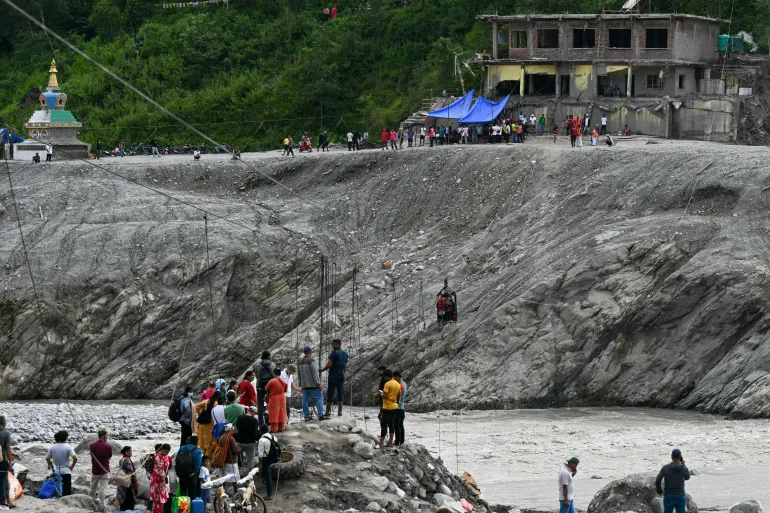
The India Nepal floods 2026 have become a major South Asian disaster after heavy rain and storms triggered deadly floods and landslides across both countries.
As of September 28, Reuters reported that 56 people had died in India and 14 in Nepal, while another 11 people remained missing in Nepal. Authorities were continuing rescue operations while warning that additional flash floods were possible.
The disaster has damaged homes, roads, telecommunications and energy infrastructure.
In India, authorities are monitoring rivers that have risen above danger levels. In Nepal, officials have warned of flash-flood risks across dozens of districts.
The situation remains fluid because heavy rain can quickly turn swollen rivers and unstable hillsides into dangerous flood zones.
India and Nepal Face the Same Weather Threat
The geography of the region makes both countries particularly vulnerable.
Northern India contains enormous river systems that carry water from the Himalayas toward densely populated plains.
Nepal sits directly in the Himalayan watershed, where steep mountains can send enormous volumes of water downstream within a short period.
When intense rainfall combines with saturated soil and already-high rivers, the risk of flooding and landslides increases rapidly.
That combination is now creating a serious South Asia flood disaster.
India’s Death Toll Reaches 56
In India, heavy rain has caused flooding and landslides across several areas.
Uttar Pradesh has been particularly affected.
According to the state’s relief commissioner, the region recorded 66.5 millimetres of rain between September 25 and the morning of September 27, compared with a normal amount of only 7.6 millimetres for that period.
Authorities reported that:
- 56 people had died.
- 46 people had been injured.
- More than 1,000 houses had been damaged.
- Rescue operations were continuing.
- Officials were assessing crop damage.
- Compensation measures were being prepared.
The combination of flooding and agricultural damage could create additional pressure for affected communities after the immediate emergency ends.
Major Indian Rivers Are Above Danger Levels
India’s Central Water Commission reported a severe situation at 30 river-monitoring stations across seven states.
Several major rivers, including the Ganga, Gandak, Kosi, Bagmati and Narmada, were reported above danger levels.
That creates another risk.
Even if rainfall decreases temporarily, rivers can remain dangerously high because water continues flowing downstream from upstream areas.
Flood conditions can therefore persist after the heaviest rain has passed.
Nepal Warns of Flash Floods Across 49 Districts
Nepal is facing its own serious emergency.
Authorities warned that possible flash floods threatened 49 of Nepal’s 77 districts.
More than half of the country’s districts were facing high flood or flash-flood risks as water levels continued rising in major rivers and tributaries.
Officials have urged communities in vulnerable areas to remain alert.
The warning is particularly important in mountainous regions where rainfall can rapidly trigger landslides and sudden river surges.
Nepal’s Power Infrastructure Has Been Hit
Flooding has already disrupted Nepal’s electricity infrastructure.
Power supplies were completely disrupted in Manang, Mustang, Myagdi and Baglung, according to energy ministry officials.
Flooding of the Rahuganga River also damaged structures and transmission-line towers belonging to a 40 megawatt hydropower project.
These disruptions can make emergency operations more difficult.
Hospitals, communications systems, water facilities and rescue teams depend heavily on reliable electricity.
Telecommunications Are Also Being Disrupted
Floodwater and landslides have damaged telecommunications infrastructure in parts of Nepal.
Officials reported damage to optical fibres and power supplies, affecting communications.
That creates a serious problem during a disaster.
When communications fail, authorities have more difficulty warning residents, coordinating rescue teams and locating missing people.
For communities in mountainous areas, losing communications can also delay information about changing river levels and landslide risks.
An Avalanche Adds Another Emergency
Nepal is also dealing with a separate mountain emergency.
An avalanche buried the base camp of Himlung Himal, a 7,126-metre mountain in Manang district.
Ten local workers were reported missing after the avalanche struck.
Officials said the workers had been preparing tents for foreign climbers, who were not present at the time.
The incident highlights how unstable conditions are affecting several parts of Nepal simultaneously.
The Disaster Comes After an Earlier Nepal Catastrophe
The latest flooding is particularly concerning because Nepal is still dealing with the aftermath of a much larger disaster earlier in the year.
Areas including Rasuwa and Nuwakot were badly affected by previous floods.
According to Reuters, those earlier floods killed more than 1,450 people and left thousands still missing.
Officials have therefore urged people in previously affected areas to remain alert, even though some of those locations were not considered the highest-risk areas during the latest warning.
Why the Himalayas Make Flooding So Dangerous
The Himalayas create a unique combination of hazards.
Rainfall can occur at high elevations before water rapidly moves toward lower valleys.
At the same time, steep slopes can become unstable.
Heavy rain can saturate soil and trigger landslides.
Those landslides can block rivers temporarily and then release large amounts of water when barriers collapse.
As a result, communities can face several hazards at once:
Heavy rain → rising rivers → landslides → flash floods → infrastructure damage.
Agriculture Is Another Major Concern
Flooding does not only threaten lives and homes.
It can destroy crops, livestock, farmland and irrigation systems.
Indian authorities have already instructed officials to assess crop damage and prepare compensation for affected farmers.
For rural families, losing a harvest can create financial problems long after floodwater disappears.
Damage to roads and bridges can also prevent farmers from transporting surviving crops to markets.
Roads and Bridges Can Become Lifelines
During a flood emergency, roads are essential for rescue operations.
They allow emergency teams to move food, medicine, fuel and equipment into affected communities.
But landslides and floodwater can quickly cut roads.
Nepal’s mountainous terrain makes this especially challenging.
A single damaged bridge can isolate entire communities.
That means infrastructure damage can turn a severe weather event into a prolonged humanitarian emergency.
Why Early Warnings Matter
The latest disaster also highlights the importance of early-warning systems.
Authorities need accurate information about rainfall, river levels and landslide risks.
Residents need enough time to move to safer areas.
Emergency teams need reliable communication networks.
The effectiveness of an early-warning system therefore depends on more than weather forecasting.
It also requires monitoring stations, communications infrastructure, emergency planning and public cooperation.
The China Nepal Warning Challenge
Nepal’s vulnerability to Himalayan disasters has also raised questions about cross-border monitoring.
Earlier Reuters reporting found that Nepal had sought greater access to information from China about glacier risks, water levels and other hazards in the Himalayan region.
Officials from the two countries have discussed stronger cooperation on flood, weather and glacier-related risks.
However, experts cautioned that limited data sharing was not identified as a significant cause of the earlier disaster.
The broader issue is that many major river systems begin in the high Himalayas and cross national borders.
Effective disaster monitoring therefore requires cooperation between neighboring countries.
Climate Change Adds Another Layer of Risk
Scientists have increasingly examined how warming temperatures can affect Himalayan glaciers, snow cover and rainfall patterns.
Changes in temperature can influence snow and ice melt.
Changing precipitation patterns can also affect river flows and landslide risks.
However, it is important not to attribute every individual flood directly to climate change without specific scientific analysis.
The immediate cause of the current disaster is heavy rain and associated flooding and landslides.
The larger climate question concerns whether changing environmental conditions are altering the frequency or severity of such hazards over time.
What Happens if More Rain Arrives?
The biggest immediate concern is additional rainfall.
If more heavy rain falls while rivers remain high, communities could face another rapid increase in water levels.
Saturated ground can also make additional landslides more likely.
That is why authorities are maintaining flood warnings rather than treating the current disaster as finished.
The next several days will be particularly important for vulnerable communities.
What Residents Are Being Asked to Watch
People in flood-prone areas should follow instructions from local authorities and emergency services.
The most important warning signs include:
- Rapidly rising rivers
- Sudden changes in river color or flow
- Cracks appearing on hillsides
- Falling rocks or debris
- Water entering roads or homes
- Damaged bridges
- Loss of electricity or telecommunications
- Official evacuation warnings
Floodwater can also hide deep holes, damaged roads and electrical hazards.
Why This Is a Regional Story
The India Nepal floods 2026 are not an isolated weather event.
India and Nepal share major river systems, Himalayan geography and interconnected weather patterns.
When extreme rainfall affects the region, the consequences can cross borders.
The disaster also affects agriculture, electricity, transportation, telecommunications and tourism.
That makes the current situation important for the entire South Asian region.
The Human Cost Is Still Rising
The reported death toll provides only part of the picture.
Thousands of people may be dealing with damaged homes, disrupted electricity, destroyed crops and interrupted communications.
Families may also be searching for missing relatives.
Communities that were already recovering from earlier disasters now face another emergency.
For them, recovery will not end when the rain stops.
What Happens Next?
Authorities will continue monitoring rivers and rainfall while rescue teams work in flooded areas.
India will assess damage to homes and crops.
Nepal will focus on flood warnings, infrastructure restoration and search operations.
The immediate priority is protecting communities in areas where rivers remain high or additional rain could trigger flash floods.
Longer term efforts will likely include rebuilding damaged infrastructure and improving disaster monitoring.
Conclusion
The India Nepal floods 2026 have developed into a major South Asia flood disaster, with dozens of deaths, missing people and widespread infrastructure damage.
As of September 28, Reuters reported 56 deaths in India and 14 in Nepal, with 11 people still missing in Nepal. Authorities were warning that further flash floods remained possible.
India is dealing with dangerous river levels across several states, while Nepal faces flood risks across 49 districts.
Power infrastructure, telecommunications, homes and roads have already suffered damage.
The situation demonstrates why Himalayan disasters can become complicated so quickly.
Heavy rain can trigger flooding.
Flooding can damage infrastructure.
Landslides can isolate communities.
And further rain can restart the cycle.
For now, the most important question is not simply how many people have already been affected.
It is whether the region can prevent the next wave of rain from turning an already serious disaster into an even larger emergency.
Frequently Asked Questions
What is the India Nepal floods 2026 situation?
Heavy rain and storms have triggered floods and landslides across India and Nepal. As of September 28, Reuters reported 56 deaths in India and 14 in Nepal, with 11 people missing in Nepal.
How many people have died in the floods?
The latest Reuters report said 56 people had died in India and 14 in Nepal. The figures may change as rescue teams reach more affected areas.
Which Indian rivers are above danger levels?
The Ganga, Gandak, Kosi, Bagmati and Narmada were among the rivers reported above danger levels, according to India’s Central Water Commission.
How many districts in Nepal are at risk?
Nepalese authorities warned of possible flash floods in 49 of the country’s 77 districts.
Has the flooding affected electricity?
Yes. Power supplies were disrupted in several Nepali districts, while flooding also damaged structures and transmission-line towers associated with a 40-megawatt hydropower project.
Is more rain expected?
Authorities have warned that further flash floods are possible. The risk remains particularly important while rivers are already elevated and the ground is saturated.
India Nepal floods 2026, South Asia flood disaster, India floods 2026, Nepal floods 2026, Nepal flash floods, India landslides, South Asia floods, Himalayan floods, Ganga river flood, Kosi river flood, Nepal disaster, India rain disaster, monsoon floods, flood warning, flash flood news, extreme rainfall, Himalayan disaster,