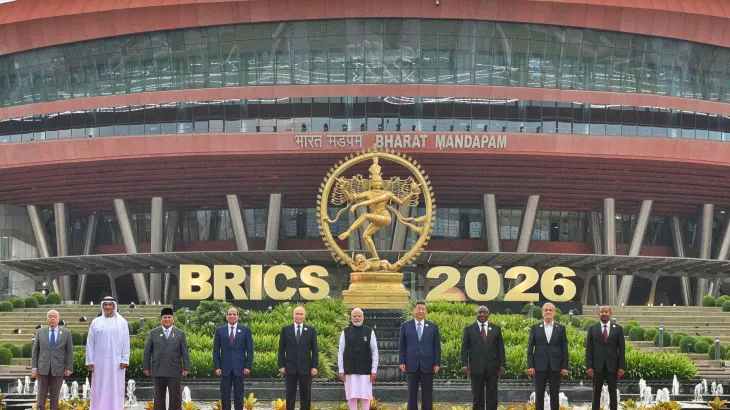
The BRICS Summit 2026 has taken on greater importance as leaders from major emerging economies meet in New Delhi amid wars, trade tensions and uncertainty over the global economic order. The summit is also highlighting a significant improvement in relations between India and China, with both countries seeking stronger business and transportation links.
Chinese President Xi Jinping and Indian Prime Minister Narendra Modi met during the summit, with discussions focusing on improving bilateral relations and expanding economic cooperation. Reuters reported that the two countries pledged to strengthen business and transport links as their relationship continues to recover from years of tension.
For BRICS, the developments are important because India and China are two of the group’s most influential economies.
Why the BRICS Summit 2026 Matters
The BRICS Summit 2026 comes at a time when the global economy is facing multiple challenges.
Wars in the Middle East and Ukraine are disrupting energy and trade flows, while major economies are dealing with tariffs, inflation and changing supply chains.
BRICS has increasingly presented itself as a platform for countries seeking a larger role in global decision-making.
The expanded group now includes Brazil, Russia, India, China, South Africa, Egypt, Ethiopia, Indonesia, Iran and the United Arab Emirates, among others. The bloc represents a substantial share of the world’s population and economy.
India and China Seek Better Relations
One of the most important developments from the summit is the renewed engagement between India and China.
Relations between the two Asian powers deteriorated sharply after a deadly border confrontation in 2020.
Since then, both governments have worked to reduce tensions and restore diplomatic and economic communication.
Xi’s visit to India for the summit represents another important step in that process.
The two countries have significant economic interests in maintaining stable relations.
Trade Could Be a Major Beneficiary
Improved India China relations could create opportunities for businesses in both countries.
India has become increasingly important to global manufacturers seeking alternatives and additional production locations.
China remains one of the world’s largest manufacturing centers.
Better relations could make trade and transportation between the two economies easier.
That could benefit companies involved in manufacturing, logistics, technology and consumer goods.
China Wants a Stronger BRICS Role
China is also seeking to strengthen BRICS as an influential international platform.
Xi called for the bloc to play a greater role in addressing global conflicts and promoting cooperation among developing countries.
He also announced that China will chair BRICS and host the group’s next summit in 2027.
The move gives Beijing another opportunity to influence the direction of the group.
BRICS Calls for Restraint in the Middle East
The Middle East conflict has become a major issue at the summit.
BRICS members have called for restraint and expressed concern about the impact of war on civilians, energy markets and international trade.
Iran and the United Arab Emirates also joined a joint statement calling for restraint, highlighting the complicated diplomatic environment surrounding the conflict.
The bloc’s position shows how geopolitical crises are increasingly becoming part of its broader economic agenda.
Energy Security Becomes More Important
Energy security is another major concern for BRICS countries.
Several members are major energy producers or consumers.
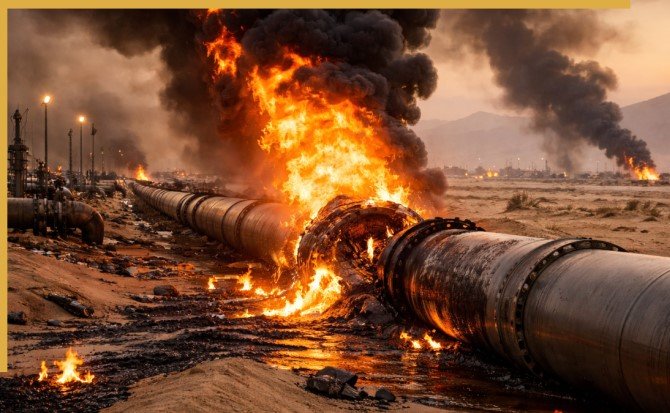
The ongoing instability around the Middle East has created additional risks for oil and gas markets.
Disruptions to the Strait of Hormuz and Red Sea shipping routes could affect countries far beyond the region.
For large emerging economies, stable energy supplies are essential for maintaining industrial growth.
BRICS Wants More Influence Over Global Trade
The summit also reflects a wider debate over the future of international trade.
BRICS countries have increasingly discussed reducing dependence on traditional Western financial systems and increasing trade using national currencies.
Such changes would not happen overnight.
However, even gradual movement toward alternative payment arrangements could have long-term consequences for international finance.
The group has also called for greater representation for developing countries in international institutions.
India Balances Relations With Major Powers
India’s position makes the summit particularly significant.
New Delhi maintains relationships with the United States and other Western countries while also maintaining major economic and strategic ties with Russia and China.
That balancing strategy gives India considerable diplomatic flexibility.
The improvement in India China relations does not necessarily mean India is moving away from the West.
Instead, India appears to be pursuing a broader foreign policy designed to protect its economic and strategic interests.
Could India China Trade Expand?
If relations continue improving, trade could become one of the biggest areas of opportunity.
Both countries have huge consumer markets.
China has deep manufacturing capabilities, while India is expanding its industrial and technology sectors.
Greater cooperation could create opportunities in areas such as:
- Manufacturing
- Electronics
- Automotive components
- Pharmaceuticals
- Transportation
- Technology
- Infrastructure
- Renewable energy
However, significant obstacles remain.
Border Tensions Have Not Disappeared
Despite improving diplomatic relations, the long-running border dispute between India and China remains an important issue.
Trust between the two countries has not completely recovered.
Security concerns could therefore continue limiting how quickly economic cooperation develops.
Businesses are likely to watch government policy closely before making major long-term investments.
BRICS Faces Internal Challenges
The BRICS Summit 2026 also demonstrates that the group is not a completely unified political bloc.
Its members have different economic systems, foreign-policy priorities and strategic relationships.
India and China, for example, have competing interests despite their renewed diplomatic engagement.
Russia and Iran have their own security priorities, while countries such as Brazil and South Africa have different economic concerns.
Reaching agreement among such a diverse group can be difficult.
Can BRICS Change the Global Economic Order?
BRICS supporters believe the expanded organization can help create a more balanced international system.
Critics argue that the differences among its members make deep integration difficult.
The truth may lie somewhere between the two.
BRICS does not need to become a single political or economic alliance to influence global affairs.
Greater cooperation in trade, finance, energy and diplomacy could gradually increase its importance.
Why Businesses Are Watching
Companies around the world are paying attention because geopolitical relationships increasingly affect business decisions.
Manufacturers are redesigning supply chains.
Energy companies are evaluating new transportation risks.
Financial institutions are watching currency and payment-system developments.
Technology companies are looking at new markets.
If India and China successfully improve economic relations while BRICS expands cooperation, businesses could gain new opportunities across emerging markets.
What Comes Next?
The biggest test will be whether the diplomatic messages from the summit translate into concrete agreements.
Improved political relations are one thing.
Actual increases in trade, investment and transportation connectivity require sustained cooperation.
India and China will therefore face pressure to demonstrate that their relationship can move beyond diplomatic meetings and produce practical economic results.
Final Takeaway
The BRICS Summit 2026 is taking place at a critical moment for the global economy.
Wars, energy disruptions, trade disputes and changing alliances are forcing emerging economies to rethink their international relationships.
The renewed engagement between India and China is one of the most important developments to watch.
If India China relations continue improving, the economic impact could extend beyond the two countries and strengthen BRICS’ role in global trade.
For now, the New Delhi summit shows that the world’s emerging economies want a larger voice in shaping the international system—and India and China will be central to that effort.