That is the premise behind this fictional story about a mysterious billionaire who secretly purchases an entire private island and announces plans to create the world’s first no-phone city.
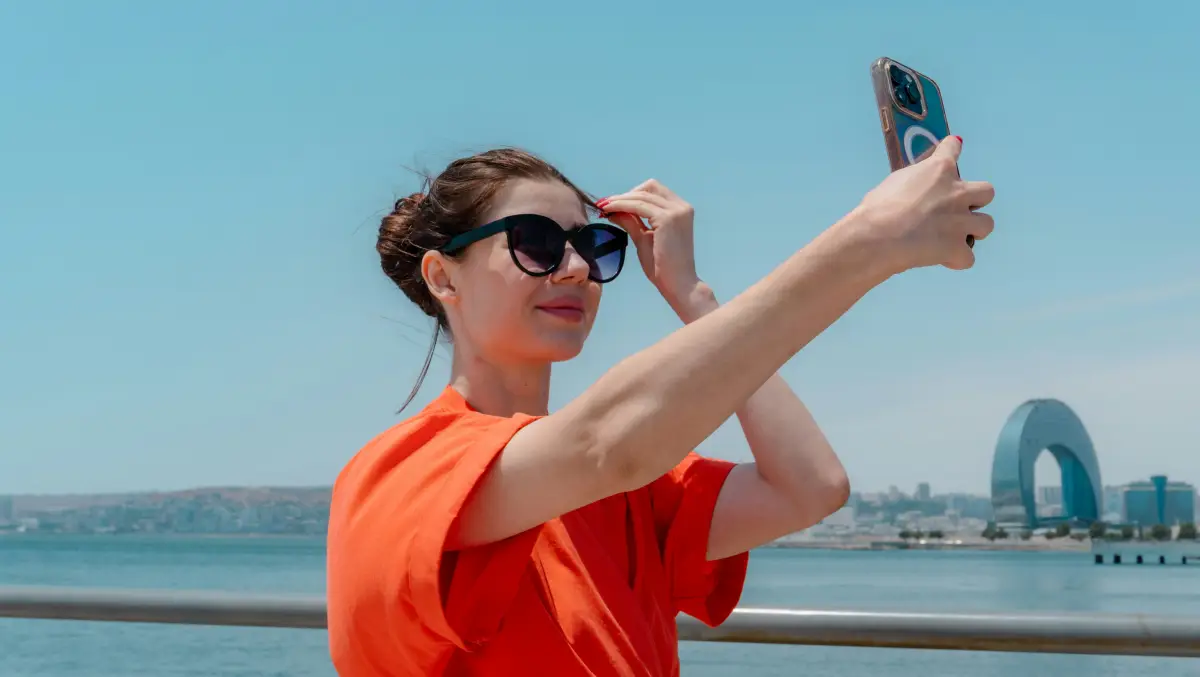
Imagine entering a city where nobody is staring at a smartphone.
There are no people filming dinner.
1.No Endless social-media scrolling while walking.
2.No Phones ringing during conversations.
3.No Notification sounds interrupting meetings.
And perhaps most surprisingly, there are no smartphones for sale anywhere on the island.
The fictional development quickly becomes one of the most controversial urban experiments on the planet.
Supporters call it a return to real life.
Critics call it an extreme form of digital control.
The billionaire behind the project says he wants to build something the modern world has forgotten how to create:
A place where people can be completely present.
The Island Nobody Could Buy
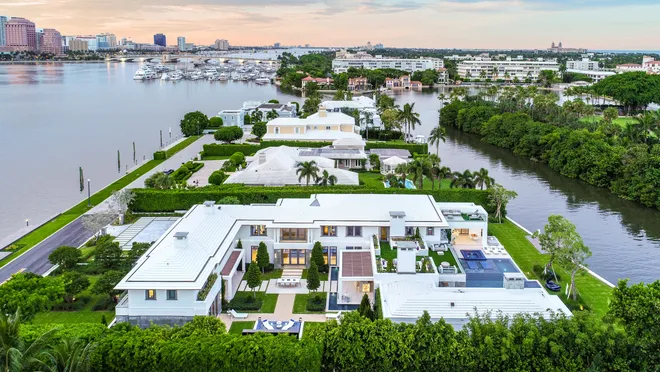
For years, the fictional island had remained largely undeveloped.
It was surrounded by clear blue water, thick vegetation and several small beaches.
Property records showed that ownership had changed repeatedly through a series of investment companies.
Nobody initially realized that all of those companies were connected to the same billionaire.
Only after the final transaction was completed did journalists discover the larger plan.
The island had effectively been purchased for the creation of an experimental city.
The billionaire reportedly wanted complete control over the development process so that the entire community could be designed around one principle:
Technology should serve people instead of controlling them.
Welcome to the No-Phone City
The proposed no-phone city would contain homes, restaurants, schools, parks, shops and workplaces.
But it would have one extraordinary rule.
Personal smartphones would not be permitted.
Residents would have to leave their phones in secure storage before entering the city.
Visitors would receive a simple alternative communication device capable of making emergency calls and accessing essential services.
There would be no social-media applications.
1. No Personalized advertising.
2. No Endless notifications.
3. NoPortable cameras constantly pointed toward strangers.
Instead, the city would encourage face-to-face interaction.
Why Ban Smartphones?
According to the fictional billionaire, modern technology has created an attention crisis.
People spend hours looking at screens even when they are physically surrounded by family, friends or colleagues.
Restaurants are full of people sitting together while staring at different devices.
Children sometimes learn to communicate through screens before developing strong face-to-face habits.
Workers may answer messages late at night because they never truly leave the office.
The billionaire believes the problem is not technology itself.
The problem is constant accessibility.
His fictional philosophy is simple:
“A city should not compete with a notification.”
The Rules Would Be Strict
Visitors entering the island would have to agree to several unusual rules.
Rule One: No Personal Smartphones
Phones would be locked away at designated entry points.
Rule Two: No Social Media
Residents could access social platforms only outside the city.
Rule Three: No Public Recording
Photography and video recording would require permission in most public areas.
Rule Four: No Digital Advertising
Billboards would not use facial recognition or personalized advertising systems.
Rule Five: Technology Must Be Invisible
Smart systems could operate behind the scenes, but residents would not constantly interact with screens.
The purpose would be to make technology feel like infrastructure rather than entertainment.
How Would People Communicate?
The city would not completely disconnect people.
Instead, it would use an alternative communication system.
Residents would receive lightweight devices that could make calls and send basic messages.
Emergency services would remain accessible.
Maps would be available through public information stations.
Transportation information would be displayed on physical signs.
The fictional developers would also build thousands of public telephones throughout the island.
The goal would not be to eliminate communication.
It would be to remove the addictive elements of modern smartphone culture.
Life Without Constant Notifications
One of the biggest experiments would involve everyday life Imagine:-
Eating breakfast without checking messages.
Attending a meeting without someone secretly reading notifications under the table.
Watching a concert without hundreds of glowing screens held above people’s heads.
Children playing outside without parents constantly recording them.
The island’s designers believe these small differences could fundamentally change social behavior.
Residents would be encouraged to spend more time outdoors, talk to neighbors and participate in community events.
What Would Replace Social Media?
This is where the fictional project becomes particularly interesting.
Instead of social-media feeds, the city would encourage physical community networks.
Residents could attend neighborhood events.
Local notice boards would display announcements.
Community radio stations would broadcast news and entertainment.
Public libraries would become major gathering places.
Restaurants might host discussion nights.
Schools could organize outdoor activities.
The idea would be to replace digital participation with physical participation.
A City Built Around Conversation
Architects working on the project would redesign public spaces to encourage interaction.
Giant screens, plazas would contain shaded seating areas.
Digital advertisements, local artists would create murals.
Shopping centers designed around online checkouts, stores would emphasize personal service.
Even public transportation would be designed to encourage people to interact.
The city would essentially become a giant experiment in human connection.
The Billionaire’s Most Controversial Idea
The most controversial proposal would involve schools.
Students would not be permitted to use personal smartphones during school hours.
Instead, classrooms would rely on traditional books, physical experiments, discussion and hands-on activities.
Teachers could use computers when necessary.
But students would not carry personal social-media devices.
The billionaire argues that childhood should not be dominated by digital notifications.
Critics, however, would question whether such an education system could adequately prepare students for the modern economy.
Businesses Are Curious
Despite the restrictions, some companies would reportedly want offices on the island.
The reason is surprising.
Executives might believe that employees become more productive when they are not constantly checking notifications.
Meetings could become shorter.
Conversations could become more focused.
Workers could leave the office without feeling compelled to answer messages all evening.
The fictional project therefore becomes an unexpected test of workplace productivity.
The Tourism Opportunity
The private island could also become a major tourist destination.
Hotels would market the location as a digital detox experience.
Visitors might spend several days without checking social media.
They could swim, hike, read books, practice sports or simply talk to other people.
Luxury travel companies could charge premium prices for the experience.
The island might even create different packages:
Weekend Without Screens
Seven-Day Digital Reset
Family Disconnect Retreat
Corporate Focus Week
Suddenly, the absence of technology becomes the luxury product.
The Privacy Advantage
The fictional development would also promise something increasingly valuable:
privacy.
Modern smartphones collect enormous amounts of information through applications and online services.
A city that banned personal smartphones could dramatically reduce the amount of personal data generated through everyday activity.
There would be fewer location histories.
Advertising profiles.
Photographs uploaded without permission.
Opportunities for strangers to record people.
For privacy advocates, this could be one of the project’s biggest attractions.
But Critics Have Serious Questions
Not everyone would support the idea.
Critics would argue that a no-phone city could become restrictive.
Who decides what counts as a smartphone?
What happens during emergencies?
How would people contact relatives?
Could residents secretly use hidden devices?
Would businesses lose access to digital payment systems?
Would tourists feel isolated?
And perhaps the biggest question:
Can a modern city function without smartphones?
The Emergency Problem
Emergency situations create one of the strongest arguments against a complete smartphone ban.
If someone becomes separated from family during a disaster, they normally expect immediate communication.
The fictional city would therefore need an extremely strong emergency communication network.
Every home would have emergency communication equipment.
Public communication centers would be available 24 hours a day.
Emergency vehicles would carry advanced communication systems.
The city would essentially replace smartphones with a universal public infrastructure.
That would require enormous investment.
Digital Payments Would Have to Change
Another major challenge would be money.
Modern consumers increasingly use smartphones for payments.
The fictional city would therefore introduce physical payment cards and biometric alternatives.
Residents could still pay digitally.
They simply would not need a smartphone to do it.
This would allow businesses to operate normally while maintaining the city’s central technology restrictions.
Could People Actually Live There?
This would ultimately depend on the residents.
Some people might find the restrictions refreshing.
Others could feel trapped within days.
A young social-media creator might hate the concept.
A retired couple might love it.
A business executive might appreciate the concentration.
A teenager might consider it unbearable.
The city would therefore attract people who actively want a different lifestyle.
That could become its biggest strength.
A New Luxury: Being Unreachable
The fictional billionaire believes modern society has created a strange problem.
People can now be contacted almost anywhere at any time.
The result is that being unreachable has become a luxury.
A vacation where nobody can call you.
A dinner where nobody can message you.
A weekend where nobody expects an immediate response.
The no-phone city would turn that luxury into a permanent lifestyle.
Residents would voluntarily exchange constant connectivity for peace and privacy.
Could the Idea Spread?
If the fictional experiment succeeded, other developers might copy it.
Hotels could create phone-free floors.
Universities could establish smartphone-free campuses.
Restaurants might offer device-free dining rooms.
Corporate retreats could prohibit phones.
Even entire neighborhoods could experiment with digital-free hours.
The island could therefore become the beginning of a larger social movement.
The Strange Future of Technology
The irony is that the city would actually require enormous amounts of technology to remain functional.
Artificial intelligence could manage energy consumption.
Sensors could monitor traffic.
Automated systems could provide healthcare support.
Robots could assist with maintenance.
The difference would be that residents would not constantly interact with those systems through personal screens.
Technology would become invisible.
That may be the most interesting part of the fictional experiment.
A City Designed Around Humans
The billionaire’s ultimate goal would not be to destroy technology.
It would be to redesign the relationship between humans and technology.
Instead of asking:
“How can we connect everyone?”
the city asks:
“When should we disconnect?”
That question could become increasingly important as artificial intelligence and digital devices become more deeply integrated into everyday life.
What Happens to the Island?
In the fictional story, construction begins quietly.
The first buildings rise along the coast.
Workers install public communication systems.
Restaurants open.
Schools prepare their classrooms.
A giant sign appears at the entrance:
WELCOME. LOOK UP.
There are no advertising screens.
No scrolling feeds.
No phone notifications.
Only people walking, talking and looking around.
Within months, the island becomes one of the most talked-about places in the world.
Conclusion
The fictional story of a billionaire purchasing a private island to create a no-phone city explores an increasingly relevant question:
Are modern humans too connected?
Smartphones have transformed communication, entertainment, education and business.
They have also changed the way people interact with one another.
A city designed around disconnecting from personal devices could therefore become either a fascinating social experiment or an impossible dream.
Supporters would see it as an escape from notification overload.
Critics would see it as an unnecessary restriction.
But perhaps the most interesting possibility is somewhere between the two.
The future may not require people to abandon technology.
Instead, it may require people to decide when technology should stay out of the room.
And if a private island can prove that people can live better by occasionally putting their phones away, the fictional no-phone city might inspire a very real global conversation.
Frequently Asked Questions
Is this billionaire private island story real?
No. This article is explicitly a fictional/satirical concept created for entertainment and discussion.
What is the fictional no-phone city?
It is an imagined city where personal smartphones and social-media use are prohibited while essential communication and digital infrastructure remain available.
Why would someone want a no-phone city?
The fictional concept is based on concerns about screen addiction, constant notifications, reduced face-to-face communication and privacy.
Would residents have any technology?
Yes. The fictional city would still use technology for healthcare, transportation, energy and communication. Personal smartphone use would simply be restricted.
Could such a city exist in real life?
A completely phone-free city would present significant legal, economic and practical challenges, but smaller phone-free communities, schools, retreats and workplaces are conceivable.