Coral reef bleaching is once again appearing across vulnerable regions in 2026, even though NOAA says the record fourth global mass bleaching event likely ended in 2025. The new warning is not that another worldwide bleaching event has already been declared. Instead, scientists are watching a more complicated problem: individual reef regions continue to experience dangerous heat stress, while some corals may not have enough time to achieve full coral reef recovery before the next marine heatwave arrives.
That distinction matters.
NOAA reported in June that the fourth global bleaching event, which began in 2023, likely ended in mid-2025 after bleaching-level heat stress affected about 84% of the world’s coral reef area and mass bleaching was documented across at least 83 countries and territories.
However, the end of a global event does not mean coral reefs suddenly returned to normal.
In fact, NOAA scientists have warned that reefs may now be entering an era in which bleaching occurs on an almost annual basis.
That raises a difficult question:
What happens when coral reefs are repeatedly damaged faster than they can rebuild?
2026 Is Already Bringing New Coral Stress
Current monitoring shows that the problem has not disappeared.
NOAA’s Coral Reef Watch data from August recorded elevated bleaching alerts in several parts of the world, including southeastern Cuba, the Marshall Islands, Ogasawara Islands, Saudi Arabia and other locations. Some areas reached Alert Level 2, indicating significant accumulated heat stress.
At Cheeca Rocks in the Florida Keys, NOAA scientists observed the first visible signs of bleaching in early July 2026.
The timing concerned researchers because the reef experienced heat stress earlier than it did during 2023, a year associated with severe bleaching and widespread mortality of some soft corals.
Therefore, the current story is not simply about one giant bleaching event.
It is about frequency.
The ocean does not need to remain dangerously hot everywhere at once for reefs to suffer.
Different regions can experience heatwaves at different times, creating a rolling series of ecological emergencies.
What Actually Happens During Coral Bleaching?
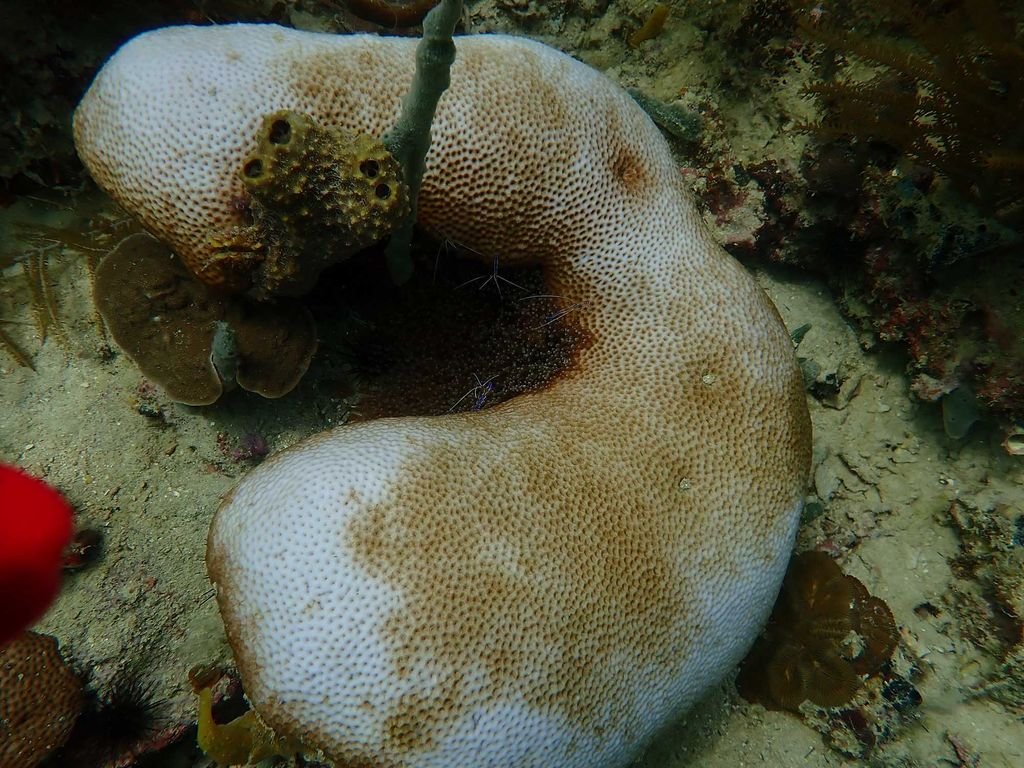
Healthy corals contain microscopic photosynthetic algae living inside their tissues.
These algae provide much of the energy the coral needs while also helping produce its familiar colors.
When corals experience severe environmental stress, particularly unusually warm water, they can expel these algae.
The coral then becomes pale or almost completely white.
That process is known as coral reef bleaching.
Bleaching does not automatically mean a coral has died.
That is an important point.
If temperatures return to safer levels quickly enough, some corals can regain their symbiotic algae and survive.
However, prolonged heat stress makes survival much harder.
If the stressful conditions continue, corals can eventually die.
So the real danger is not simply seeing white coral.
The danger is how long the stress lasts and whether another heatwave arrives before the reef has recovered.
Recovery Is Slower Than Many People Realize
The phrase coral reef recovery can create the impression that a damaged reef simply turns colorful again once temperatures fall.
Reality is much more complicated.
Some corals can recover their pigmentation after bleaching.
However, recovery of color does not necessarily mean complete biological recovery.
Research has shown that surviving corals can experience reduced growth, impaired reproduction and increased vulnerability to disease after major heat stress. NOAA notes that some recovered corals can remain physiologically affected for years.
That creates a hidden problem.
A reef may look better from the surface while still carrying the biological consequences of the previous heatwave.
In other words, recovery is not always the same as returning to normal.
Repeated Heatwaves Can Change the Outcome
Scientists have been studying what happens when corals experience multiple marine heatwaves.
Research conducted over a decade in Hawaii found that different coral species showed dramatically different responses to repeated heat stress.
Some corals became more tolerant.
Others repeatedly bleached and experienced substantial mortality.
One species in the study showed only partial recovery of important biological characteristics even 35 months after a major heatwave, while another recovered across many physiological measures within about two years.
That finding reveals why the future of coral reefs cannot be predicted by looking at one bleaching event.
A coral that survives one heatwave may not necessarily have the same ability to survive the next one.
Likewise, one species may recover while another disappears.
Over time, repeated heatwaves can therefore change which species dominate a reef.
Japan Has Provided Another Warning
A recent study published in Scientific Reports adds another piece to the puzzle.
Researchers examined coral communities across Japan following extreme marine heat stress in 2024.
They found widespread bleaching across both subtropical and temperate areas.
At many temperate sites, bleaching prevalence reached 55% to 95%, while accumulated heat stress exceeded 8 Degree Heating Weeks at all studied locations and reached 17–19 Degree Heating Weeks at some higher-latitude sites.
The study also reported consecutive bleaching events at locations that had previously experienced little or no bleaching.
That matters because coral species expanding toward higher latitudes are not necessarily escaping climate stress.
They may simply be moving into environments that have not historically exposed them to such extreme heat.
Why Frequency May Be More Dangerous Than One Massive Event
Imagine a reef experiences one severe heatwave.
A percentage of the coral bleaches.
Temperatures then decline.
Some coral survives.
Over time, damaged colonies begin rebuilding.
Now imagine another severe heatwave arrives before that process finishes.
The reef has less biological capacity to absorb the second shock.
A third event could arrive before the ecosystem has fully recovered again.
This creates a cycle:
Heatwave → bleaching → partial recovery → another heatwave → more bleaching → reduced resilience.
Scientists are increasingly interested in this cycle because the intervals between major heat events appear to be becoming shorter in many regions.
NOAA now describes severe bleaching as increasingly extensive, frequent and intense.
The Reef Can Look Alive While Losing Its Strength
One of the most deceptive aspects of coral damage is appearance.
A coral colony may regain its color after bleaching.
To a diver, that could look like a complete recovery.
But the underlying biology may tell a different story.
Previous research has found that heatwaves can alter coral-associated algae and microbial communities.
A 2026 research highlight in Nature Ecology & Evolution described persistent changes in coral-associated communities even after visible bleaching recovery.
The study showed that heatwave effects could remain after temperatures returned to normal, potentially reducing resilience against future stress.
Consequently, measuring only whether coral has regained its color may underestimate the true damage.
Scientists increasingly need to examine growth, reproduction, tissue condition, symbiotic algae and microbial communities as well.
Not Every Coral Responds the Same Way
There is another reason the crisis is complicated.
Coral reefs are not made up of one type of coral.
They contain many species, populations and genetic lineages.
Some can tolerate warmer conditions better than others.
Some bleach rapidly.
Others remain relatively resistant.
Even within the same species, individual colonies can respond differently.
The Japanese research demonstrated this clearly, finding major differences in bleaching susceptibility between species and locations.
That means the future may not involve every coral disappearing at the same speed.
Instead, reefs could gradually change composition.
Heat-tolerant species may become more common.
Sensitive species may decline.
Eventually, the reef could still exist but look dramatically different from the ecosystem that existed decades earlier.
Local Pollution Can Make a Bad Situation Worse
Ocean temperature is not the only problem.
Corals also face pollution, sedimentation, disease, overfishing and coastal development.
A reef already under local stress may have less capacity to withstand a major marine heatwave.
Research published in Nature Communications in March 2026 examined two decades of data from coral reefs in the northern South China Sea.
The researchers found that local human pressures including overfishing, nutrient pollution and coastal urbanization explained a substantial share of changes in live coral cover in the region.
That finding offers an important conservation lesson.
Communities cannot control global ocean temperatures by themselves.
However, they can reduce local pressures.
And healthier reefs may have a better chance of surviving the next climate-related shock.
Why Coral Reefs Matter to More Than Divers
It is easy to view coral bleaching as an underwater beauty problem.
It is much larger than that.
Coral reefs provide habitat for enormous numbers of marine organisms.
They support fisheries.
They contribute to tourism.
They help protect coastlines from waves and storms.
They also support communities that depend on healthy coastal ecosystems.
When coral structures die and gradually erode, the consequences can extend far beyond the individual colonies that first experienced bleaching.
NOAA notes that severe coral mortality can contribute to habitat loss and affect fishing, food supplies, tourism, biodiversity and coastal protection.
Therefore, coral health is also an economic and social issue.
The Fourth Global Bleaching Event Was a Record
The scale of the previous global event explains why scientists remain concerned.
NOAA’s analysis found that approximately 84.4% of the world’s coral reef area experienced bleaching-level heat stress during the 2023 – 2025 period.
Mass bleaching was documented in at least 83 countries and territories.
NOAA describes it as the largest global bleaching event recorded so far.
That does not mean every reef died.
It means an extraordinary proportion of the world’s reef area experienced heat stress severe enough to create bleaching conditions.
The recovery process from such a massive event can take years.
And now, some regions are already experiencing new heat stress.
Scientists Are Watching the Next Ocean Temperature Shift
The next major concern involves future warming patterns.
NOAA says the expected emergence of El Niño in the coming months could increase ocean temperatures and potentially bring a return to widespread coral bleaching.
That does not guarantee that another global mass bleaching event will occur.
Scientists cannot simply look at an El Niño forecast and declare that every reef will bleach.
Local ocean conditions matter.
So do species, water depth, currents and the duration of heat exposure.
Nevertheless, the possibility of another major warming period adds urgency to the monitoring effort.
Satellites Are Becoming Coral Reef Watchdogs
Scientists cannot send divers to every reef every day.
That is where satellite monitoring becomes crucial.
NOAA’s Coral Reef Watch system uses satellite observations and modeled information to track sea-surface temperature, accumulated heat stress and bleaching alerts across reef regions worldwide.
One important measurement is Degree Heating Weeks, or DHW.
It combines the intensity and duration of heat stress.
That is useful because a brief temperature spike may not have the same biological effect as weeks of elevated temperatures.
The longer a reef remains under thermal stress, the greater the risk of bleaching and mortality.
Can Coral Reef Recovery Still Happen?
Yes.
That is the hopeful part.
Bleached corals can survive.
Some reefs have demonstrated remarkable resilience.
NOAA says reducing local stressors can improve a reef’s ability to withstand major climate events.
That means protecting herbivorous fish, reducing pollution, managing coastal development and preventing destructive fishing practices can all matter.
These actions will not stop ocean warming.
However, they can remove additional pressures from an already stressed ecosystem.
And that could give surviving corals more opportunities to recover.
What Would Give Reefs More Time?
The biggest long-term solution remains reducing greenhouse-gas emissions and limiting further ocean warming.
There is no local conservation strategy that can completely replace that.
However, reef managers can work on multiple fronts.
They can establish marine protected areas.
They can reduce polluted runoff.
They can protect fish populations.
They can restore damaged reef habitats.
They can monitor bleaching early.
They can also identify naturally heat-tolerant coral populations that may help guide future restoration efforts.
The goal is not simply to save coral today.
It is to create conditions in which reefs have enough time to adapt and recover between major disturbances.
The Real Clock Is the Recovery Window
The phrase “running out of time” is therefore more complicated than it first appears.
The issue is not that every coral reef has a fixed deadline.
Instead, the ecological clock is connected to the time between heatwaves.
If a reef receives several years of relatively stable conditions, some corals may recover, reproduce and rebuild.
If severe heat returns repeatedly, that recovery window becomes smaller.
Eventually, the ecosystem may lose sensitive species faster than new colonies can replace them.
That is when resilience begins to erode.
A Future Reef May Not Look Like Today’s Reef
Even if some coral survives future warming, tomorrow’s reefs may not resemble today’s reefs.
Species composition could change.
Some large colonies could disappear.
More heat-tolerant species could dominate.
Fish populations could shift as habitat changes.
The reef could become structurally simpler.
That would affect the wider ecosystem.
So the question is not simply:
“Will coral reefs disappear?”
A better question may be:
“How much of their biodiversity, structure and ecological function can reefs retain as warming continues?”
The Next Few Years Could Be Critical
The scientific evidence does not suggest that every coral reef is doomed.
It does suggest that the margin for recovery is becoming more important.
The fourth global bleaching event was extraordinary.
Regional heat stress continues.
Some corals recover.
Others die.
Some species show signs of resilience.
Others carry biological damage for years.
And the next major marine heatwave could arrive before some ecosystems have completely recovered.
That combination makes the future uncertain but extremely important.
Conclusion
Coral reef bleaching is no longer an occasional environmental spectacle limited to a handful of tropical locations.
The 2023 – 2025 global event demonstrated how enormous the scale of ocean heat stress can become, affecting about 84% of the world’s coral reef area according to NOAA.
Although NOAA says that global event likely ended in 2025, 2026 monitoring shows that individual regions are still experiencing significant bleaching-level heat stress.
The biggest concern may therefore be the shrinking opportunity for coral reef recovery.
A coral can survive bleaching.
A reef can recover.
But recovery takes time.
When marine heatwaves return repeatedly, that time becomes increasingly valuable.
Recent research from Japan and long-term studies of Hawaiian and Caribbean corals show that repeated heat stress can produce different recovery trajectories, lasting biological effects and significant mortality in vulnerable populations.
There is still hope.
Some corals demonstrate resilience, and reducing local pollution, overfishing and other pressures can improve a reef’s ability to withstand climate stress.
But the message from scientists is becoming harder to ignore:
The future of coral reefs may depend not only on how hot the ocean becomes, but on whether reefs are given enough time between heatwaves to recover.
Frequently Asked Questions
What causes coral reef bleaching?
Corals can bleach when environmental stress especially unusually warm seawater causes them to expel the microscopic algae living inside their tissues. Prolonged stress can lead to coral death.
Does coral bleaching mean the coral is dead?
No. Bleaching does not automatically mean death. Some corals can recover when stressful conditions end, although severe or prolonged bleaching increases the risk of mortality.
How long does coral reef recovery take?
Recovery varies considerably by species and conditions. Some physiological characteristics can recover within years, while other corals can experience partial recovery and lingering effects for several years after repeated heatwaves.
Has the current global coral bleaching event ended?
NOAA says the fourth global mass bleaching event likely ended in mid-2025. However, regional bleaching and heat stress continue to occur in 2026.
Is another global bleaching event possible?
Yes, it is possible, but it is not currently accurate to say that another global event has already been declared. NOAA has warned that expected future ocean warming, including possible El Niño conditions, could increase the risk of widespread bleaching.
coral reef bleaching, coral reef recovery, coral bleaching 2026, ocean warming, marine heatwaves, coral reefs, climate change, ocean temperatures, marine ecosystems, coral mortality, reef conservation, NOAA Coral Reef Watch, environmental news, ocean crisis, coral healt