The latest developments in the Middle East have once again placed the region at the center of global attention. The future of the US-Iran talks remains uncertain after reports confirmed that a ship struck in Hormuz, adding another layer of complexity to an already fragile diplomatic situation.
The Strait of Hormuz is one of the world’s most strategically important waterways. Any incident in this narrow shipping lane immediately attracts international concern because nearly one-fifth of the world’s oil supply passes through it. When a commercial vessel was reportedly struck by an unidentified projectile, governments, shipping companies, and financial markets reacted with renewed caution. At the same time, conflicting statements from Washington and Tehran regarding diplomatic negotiations have made it increasingly difficult to predict what comes next.
Why the US-Iran Talks Matter
Diplomatic relations between the United States and Iran have remained tense for years. Recent military confrontations and disputes over sanctions, regional security, and maritime navigation have only widened the gap between both sides.
In recent days, U.S. President Donald Trump stated that negotiations with Iran were underway and described them as a final opportunity for Tehran to reach an agreement. However, Iranian officials strongly denied that any direct negotiations were taking place or scheduled.
This contradiction has left international observers uncertain about whether diplomacy is genuinely progressing or whether both countries are simply using public statements as part of broader political strategy.
Ship Struck in Hormuz Raises Security Concerns
The latest maritime incident has intensified fears across global shipping industries.
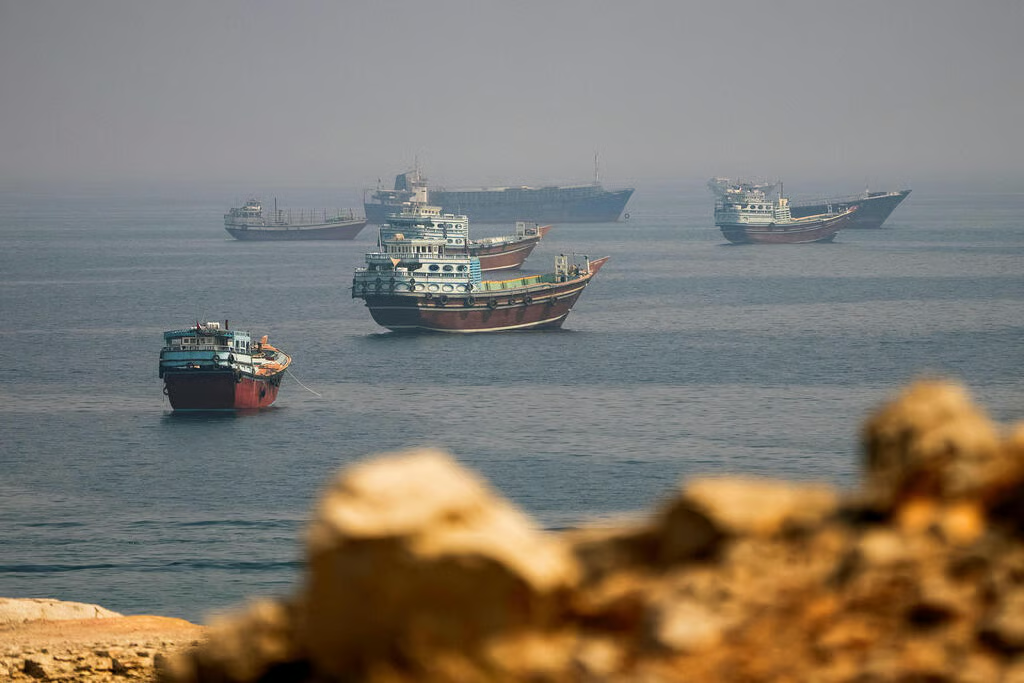
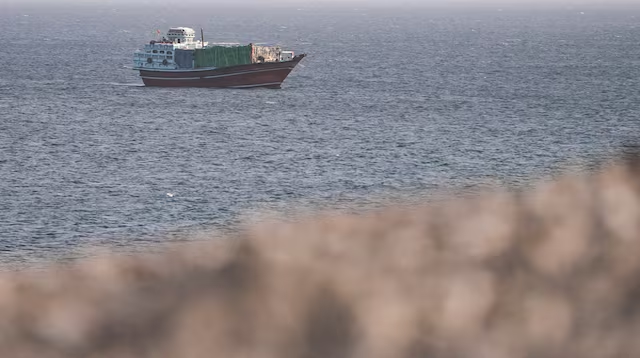
According to reports, a cargo vessel was struck by an unidentified projectile while navigating the Strait of Hormuz. Although investigations are continuing, the attack highlights the persistent risks faced by commercial ships operating in one of the world’s busiest maritime corridors.
Shipping companies have already been operating cautiously due to months of regional conflict. The latest incident may encourage additional vessels to delay voyages, adjust routes, or increase security measures.
Why the Strait of Hormuz Is So Important
The Strait of Hormuz connects the Persian Gulf with the Gulf of Oman and the Arabian Sea.
Its importance includes:
- Around 20% of global oil trade passes through the waterway.
- It serves as a major export route for Gulf oil producers.
- Global LNG shipments also depend heavily on this passage.
- Any disruption affects energy prices worldwide.
Because of this importance, even a single security incident can influence international markets within hours.
Mixed Signals from Washington and Tehran
One of the biggest reasons for uncertainty is the conflicting messaging coming from both governments.
United States Position
President Trump indicated that discussions with Iran were ongoing and suggested diplomacy remained possible despite recent military tensions.
Iran’s Position
Iran’s Foreign Ministry rejected those claims, insisting that no negotiations were taking place and that no Iranian delegation had been sent abroad for talks, apart from routine diplomatic travel.
These contradictory statements have left analysts questioning whether behind-the-scenes negotiations exist or whether both governments are attempting to shape public perception.
Impact on Global Oil Markets
Financial markets closely monitor every development involving the Strait of Hormuz.
Initially, optimism surrounding possible negotiations caused oil prices to decline. However, uncertainty surrounding the latest shipping incident has renewed concerns over supply disruptions.
Oil traders continue balancing two competing possibilities:
- Successful diplomacy could stabilize shipping routes and lower energy prices.
- Renewed conflict could reduce oil exports and drive prices higher.
Reuters reported that crude oil prices rebounded as investors reassessed the likelihood of a diplomatic breakthrough following the conflicting statements from Washington and Tehran.
Shipping Industry Faces Difficult Decisions
International shipping companies are increasingly forced to weigh operational risks against commercial needs.
Many vessels continue using the Strait of Hormuz, but operators are:
- Monitoring military activity closely.
- Increasing insurance coverage.
- Adjusting sailing schedules.
- Following naval security advisories.
Shipping data indicates that traffic through Hormuz remains lower than normal, reflecting ongoing caution among ship operators.
Regional Implications
The uncertainty surrounding the US-Iran talks extends well beyond the two countries.
Neighboring Gulf states are closely watching developments because regional stability directly affects:
- Oil exports
- Maritime trade
- Tourism
- Foreign investment
- National security
Any prolonged instability could impact economic growth across the Middle East.
International Diplomatic Efforts
Several regional countries continue encouraging dialogue.
Previous indirect negotiations have often involved mediators from countries such as Oman, which has historically played an important role in facilitating communication between Washington and Tehran.
Despite current disagreements, many diplomatic observers believe communication channels remain open, even if formal negotiations have not yet resumed.
Risks if Diplomacy Fails
If negotiations fail to restart, several scenarios become possible:
Increased Military Activity
Military operations could expand around strategic waterways.
More Shipping Incidents
Commercial vessels may remain vulnerable to attacks or accidental escalation.
Higher Energy Prices
Any disruption to oil exports could push global crude prices upward.
Greater Market Volatility
Investors typically react quickly to geopolitical instability, affecting stocks, currencies, and commodity markets.
What Analysts Are Watching
Experts are focusing on several key developments:
- Whether official negotiations are confirmed.
- Additional statements from Washington and Tehran.
- Maritime security updates.
- Oil price movements.
- Naval deployments in the Gulf region.
- Future shipping traffic through Hormuz.
Each of these indicators will help determine whether the region moves toward diplomacy or renewed confrontation.
Can Diplomacy Still Succeed?
History shows that negotiations between the United States and Iran have often experienced periods of optimism followed by setbacks.
Although public statements currently conflict, diplomatic discussions sometimes continue privately before being officially announced.
For this reason, analysts caution against assuming negotiations have completely collapsed. Instead, they suggest that both governments may still be evaluating possible next steps while managing domestic political pressures.
Global Economic Consequences
The consequences extend far beyond the Middle East.
Countries dependent on imported oil are watching events closely because prolonged instability could increase transportation costs, inflation, and fuel prices.
Energy markets, airlines, shipping companies, and manufacturers all have significant financial exposure to disruptions in the Strait of Hormuz.
This explains why even a single report of a ship struck in Hormuz receives worldwide attention.
Conclusion
The future of the US-Iran talks remains uncertain following conflicting official statements and the latest report of a ship struck in Hormuz. While Washington suggests negotiations may still be possible, Tehran insists no talks are taking place, leaving the international community searching for clarity.
Meanwhile, the maritime incident has once again highlighted the strategic importance of the Strait of Hormuz and the fragile security environment surrounding one of the world’s most vital energy corridors. Whether diplomacy resumes or tensions continue to rise will likely shape regional stability, global shipping, and energy markets in the weeks ahead.