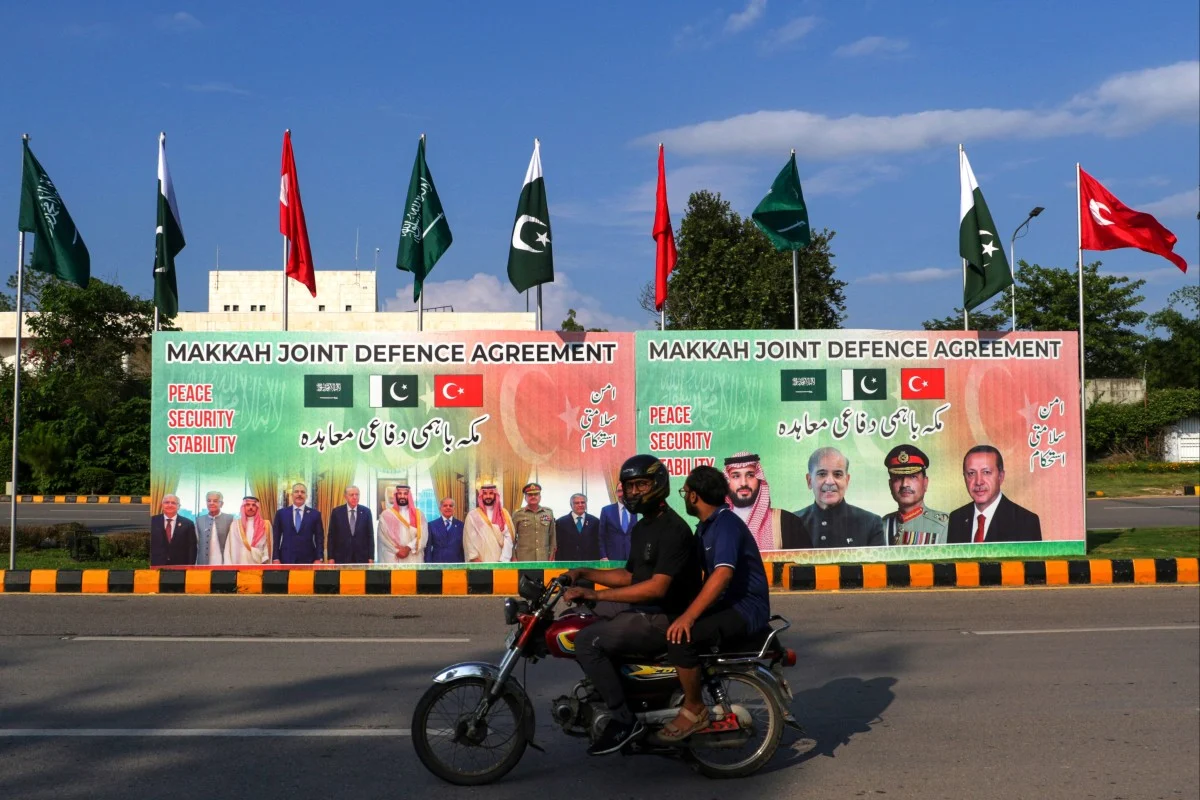
A new security agreement involving Gulf countries has raised questions about the future of America’s long-standing role in Middle Eastern security. The Mecca pact signals a potentially important shift in regional thinking, as Gulf states increasingly explore ways to strengthen their own security relationships rather than relying exclusively on the traditional US security umbrella.
The development is also attracting attention in Beijing.
China has spent years expanding its economic and diplomatic influence across the Gulf. While Washington remains a major military and security power in the region, Beijing has increasingly positioned itself as a partner capable of supporting dialogue, trade and political cooperation.
The emerging situation does not necessarily mean that Gulf countries are abandoning the United States. Instead, it could represent a more flexible regional strategy in which countries maintain relations with Washington while simultaneously developing stronger ties with China and other major powers.
What Is the Mecca Pact?
The Mecca agreement has become a symbol of changing security calculations in the Gulf.
The agreement reflects a broader desire among regional countries to improve cooperation and reduce the risk of conflicts that could threaten political stability, trade routes and energy supplies.
For decades, Gulf states have depended heavily on American military capabilities.
The United States has maintained military bases, naval forces, air assets and extensive security partnerships across the region.
However, recent geopolitical developments have encouraged Gulf governments to reconsider how they approach national and regional security.
The Mecca pact signals that regional countries may increasingly want to take greater responsibility for their own security while maintaining relationships with external powers.
The Long-Standing US Security Umbrella
The US security umbrella has played a central role in Gulf politics for decades.
Washington has built close relationships with Saudi Arabia, the United Arab Emirates, Qatar, Bahrain, Kuwait and other regional partners.
American forces have helped protect strategic waterways, deter threats and respond to regional conflicts.
The U.S. Navy’s presence in the Gulf and nearby waters has also been important for protecting international shipping and energy transportation.
For Gulf governments, the American relationship has traditionally provided military deterrence and access to advanced weapons systems.
But the relationship has never been completely without uncertainty.
Why Gulf States Are Rethinking Security
Several developments have encouraged Gulf countries to reconsider their dependence on Washington.
The United States has increasingly focused on strategic competition with China in the Indo-Pacific while attempting to reduce the scale of its involvement in some Middle Eastern conflicts.
At the same time, regional governments have experienced uncertainty over American policy changes from one administration to another.
The result is a desire for greater strategic flexibility.
Gulf states may still value American military technology and security partnerships, but they also want alternative relationships that can protect their interests if U.S. priorities change.
China’s Growing Role
China enters this environment from a position of considerable economic strength.
Beijing is already one of the Gulf’s most important trading partners.
China purchases large quantities of energy from the region and has developed extensive commercial relationships with Saudi Arabia, the UAE and other Gulf countries.
Its Belt and Road Initiative has also increased China’s economic presence across the Middle East.
Unlike the United States, China has generally emphasized economic cooperation and diplomatic engagement rather than maintaining a large regional military footprint.
That approach can make Beijing attractive to governments looking for another major partner without replacing their existing relationships with Washington.
China’s Diplomatic Advantage
One of China’s biggest advantages is its ability to maintain relationships with countries that sometimes have difficult relations with one another.
Beijing has cultivated ties with Saudi Arabia and Iran, two countries that have historically competed for regional influence.
China also helped facilitate the restoration of diplomatic relations between Riyadh and Tehran in 2023.
That diplomatic role demonstrated that Beijing could contribute to regional stability without relying on traditional American security structures.
The development increased China’s political credibility across the Gulf.
Economic Interests Come First
China’s interest in the Gulf is closely connected to economics.
The region remains critical to global energy markets.
China is the world’s largest importer of crude oil, making stable energy supplies extremely important to its economy.
The Gulf is also a major market for Chinese technology, construction companies, telecommunications equipment and infrastructure projects.
Greater political stability therefore benefits China even if Beijing does not become the region’s primary military power.
Does This Mean the Gulf Is Abandoning America?
Not necessarily.
This is an important distinction.
The emergence of stronger relationships with China does not automatically mean Gulf countries want to end their partnerships with the United States.
American military capabilities remain difficult to replace.
The United States operates advanced aircraft, naval forces, missile-defense systems and intelligence networks that Gulf states continue to value.
American weapons systems are also deeply integrated into the military structures of several regional countries.
Replacing those capabilities would be extremely difficult and expensive.
Instead, Gulf governments appear increasingly interested in diversification.
A Multipolar Gulf
The Gulf is becoming more multipolar.
Rather than choosing one major power, regional governments can develop relationships with several.
A country can maintain military cooperation with the United States while buying technology from China and strengthening diplomatic ties with other countries.
This strategy gives Gulf governments greater flexibility.
It also reduces their dependence on a single external partner.
The Mecca pact signals this broader transformation in regional diplomacy.
Energy Security Remains Central
Energy security remains one of the biggest reasons Washington and Beijing both care deeply about the Gulf.
The region contains some of the world’s largest oil and gas reserves.
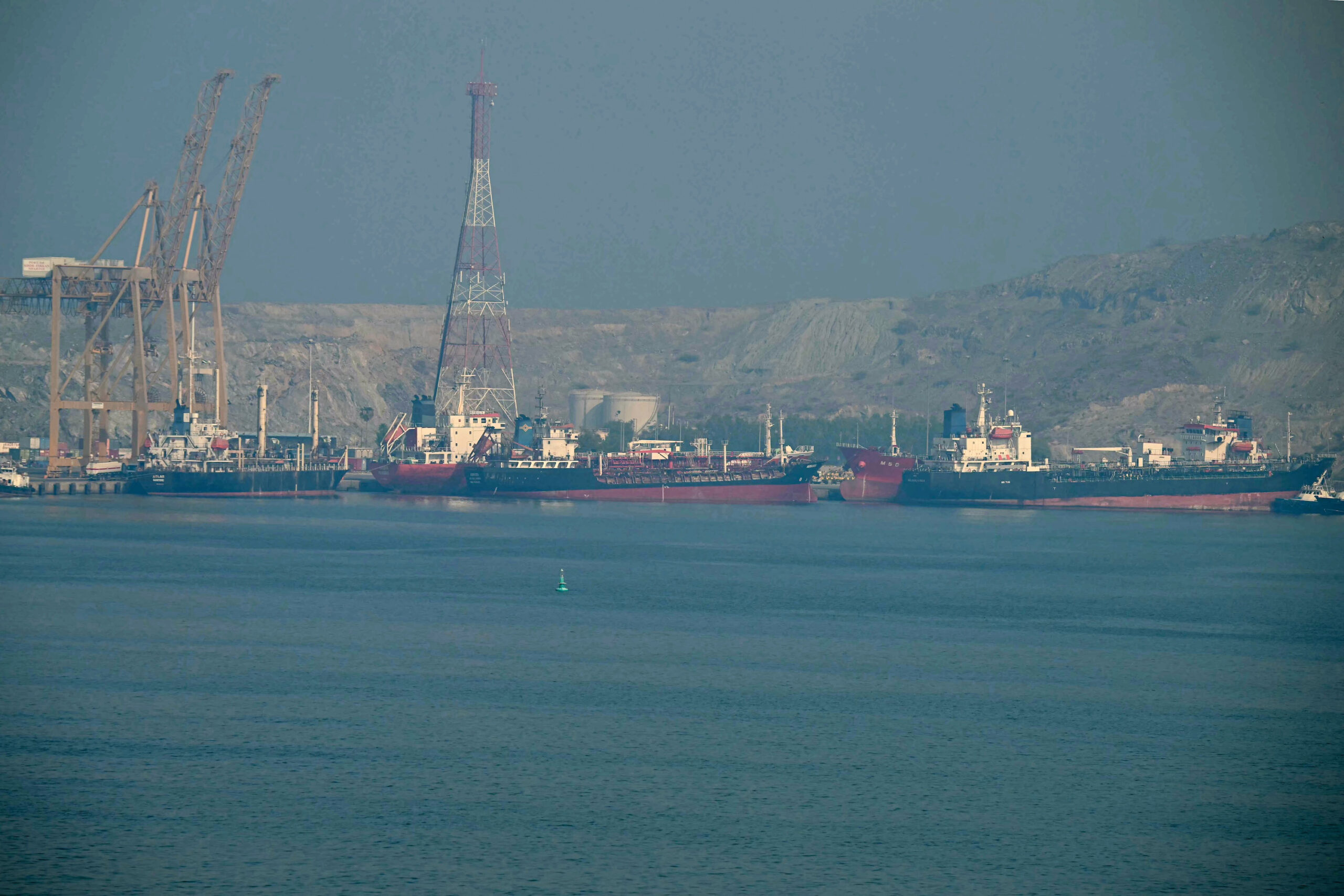
The Strait of Hormuz is particularly important because enormous volumes of global energy supplies pass through the narrow waterway.
Any major conflict in the region could disrupt energy markets worldwide.
That makes security cooperation extremely important for both Gulf states and external powers.
The Strait of Hormuz Factor
The Strait of Hormuz demonstrates why the Gulf’s relationship with the United States remains strategically important.
American naval forces have historically helped protect freedom of navigation and commercial shipping.
At the same time, Gulf countries have sought to improve their own capabilities and develop alternative transportation routes.
China also has a strong interest in keeping the waterway open because disruptions could affect its energy supplies.
This creates an unusual situation in which Washington and Beijing share an interest in regional stability despite their wider strategic competition.
Saudi Arabia’s Strategic Balancing
Saudi Arabia is particularly important to the emerging regional order.
Riyadh maintains a long-standing relationship with Washington while also deepening economic and diplomatic ties with Beijing.
Saudi leaders have increasingly emphasized national development and economic diversification through projects associated with Vision 2030.
China can contribute to these ambitions through investment, technology and infrastructure cooperation.
At the same time, the United States remains important for Saudi defense and advanced military capabilities.
This balancing strategy illustrates how Gulf countries may approach the changing international system.
The UAE’s Independent Approach
The United Arab Emirates has also pursued a flexible foreign policy.
Abu Dhabi maintains close economic relationships with China while continuing its defense partnership with Washington.
The UAE has demonstrated that smaller Gulf states can pursue independent diplomatic strategies while remaining connected to multiple major powers.
This approach could become increasingly common across the region.
America’s Challenge
The biggest challenge for Washington is maintaining influence without assuming that Gulf governments will remain permanently dependent on the United States.
Regional leaders now have more alternatives.
China, Russia, India and European countries all have economic and diplomatic interests in the Gulf.
This gives Gulf states greater bargaining power.
Washington may therefore need to demonstrate why its security partnership remains valuable in a changing regional environment.
China’s Limits
Although China’s influence is growing, Beijing still faces significant limitations.
China does not currently provide the same level of military protection that the United States offers to many Gulf countries.
Its military presence in the region remains relatively limited.
China also has limited experience managing the complex security challenges that involve competing regional powers, non-state armed groups and military conflicts.
For these reasons, Beijing is unlikely to replace Washington overnight.
A Gradual Transformation
The most likely outcome is not a sudden end to the US security umbrella.
Instead, the region may gradually move toward a more balanced system.
Gulf states could maintain American defense partnerships while expanding economic and diplomatic relationships with China.
This would create a form of strategic hedging.
Governments would avoid becoming completely dependent on any single major power.
The result could be a Gulf region that is more independent, more multipolar and more willing to make decisions based on national interests rather than traditional alliances.
What the Mecca Pact Could Mean
The significance of the agreement goes beyond its immediate security provisions.
The Mecca pact signals a broader willingness among regional governments to explore collective approaches to security.
If Gulf countries increasingly cooperate among themselves, their dependence on outside powers could gradually decline.
That does not mean external powers will disappear.
Instead, their roles could change.
The United States may remain the most important military partner, while China becomes increasingly important economically and diplomatically.
Conclusion
The Mecca pact signals an important moment in the evolution of Gulf diplomacy.
The agreement does not necessarily mean that Gulf states are abandoning the US security umbrella. Instead, it reflects a growing desire for greater strategic autonomy and a wider network of international partnerships.
China is well positioned to benefit from this transformation.
Beijing already has strong economic relationships throughout the Gulf and has demonstrated its ability to engage countries that Washington sometimes struggles to bring together.
However, China’s growing influence should not be confused with an immediate replacement of the United States.
American military capabilities, defense partnerships and regional alliances remain deeply embedded in the Gulf’s security architecture.
The future is therefore more likely to involve competition and cooperation between Washington and Beijing rather than a simple transfer of influence from one power to another.
For Gulf states, the emerging strategy is increasingly clear: keep strong relationships with traditional partners while developing new ones.
That approach gives regional governments more choices and greater strategic flexibility.
If this trend continues, the Gulf could become one of the clearest examples of the world’s transition toward a multipolar international system.