The strategic Strait of Hormuz has once again become the center of global attention as Iran, Oman Draft Waterway negotiations move forward while U.S. President Donald Trump has publicly opposed any proposal that would allow Iran to impose transit fees on international shipping. The discussions involve one of the world’s most important maritime trade routes, through which nearly one-fifth of global oil supplies pass every day.
Although negotiators have reportedly made progress toward reopening shipping lanes, significant disagreements remain over who should manage vessel traffic, whether service charges should be introduced, and how international maritime law should apply to the proposed arrangement. Trump has rejected any system that would give Iran control over international shipping or permit mandatory transit fees, arguing that the Strait of Hormuz must remain open to free navigation.
Understanding the Strait of Hormuz
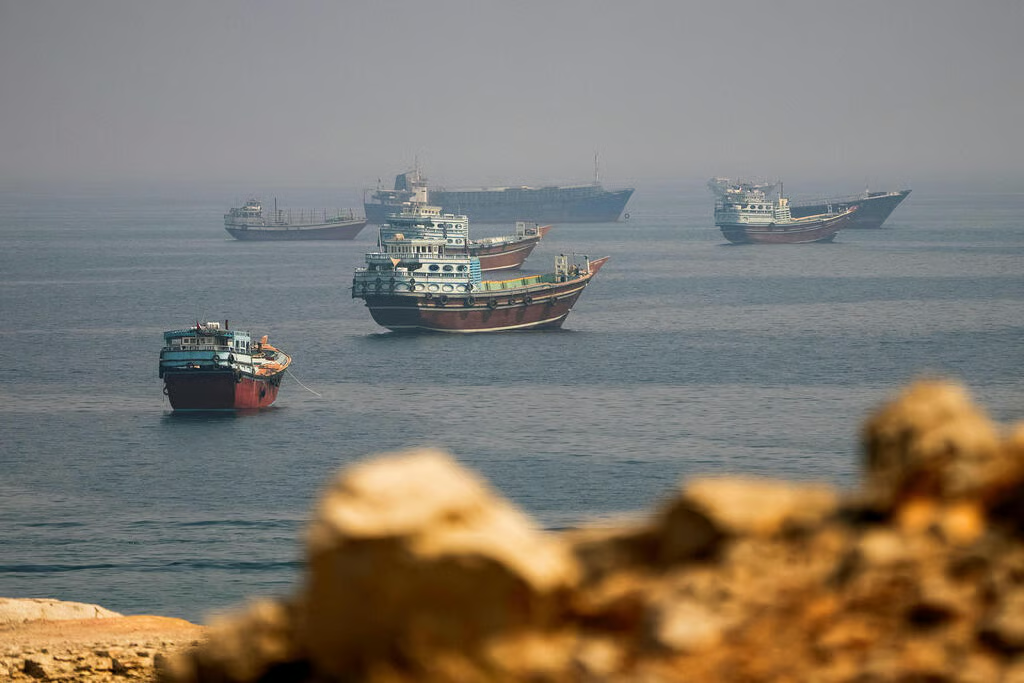
The Strait of Hormuz connects the Persian Gulf to the Gulf of Oman and the Arabian Sea. It is one of the world’s busiest shipping corridors, carrying around 20% of globally traded crude oil.
Any disruption in this narrow waterway has immediate consequences for:
- Global oil prices
- International shipping
- Energy security
- Inflation
- Supply chains
Because of its strategic location, the Strait has long been a focal point of geopolitical tensions.
Iran, Oman Draft Waterway Proposal Explained
Reports indicate that Iran and Oman are discussing a framework to reopen shipping through the Strait after months of regional instability.
According to reports, the emerging proposal would divide responsibilities between the two neighboring countries:
- Iran would oversee inbound shipping traffic.
- Oman would coordinate outbound vessel movements.
- Discussions have also included possible service charges related to security and environmental protection. However, the exact structure of any fees remains under negotiation.
The negotiations remain confidential, and officials have emphasized that no final agreement has yet been reached.
Why Trump Rejects Fee Proposal
President Donald Trump has strongly opposed any arrangement that would require commercial vessels to pay mandatory transit fees simply to pass through the Strait of Hormuz.
According to U.S. officials, freedom of navigation is a long-standing principle under international maritime law, and international waterways should remain accessible without discriminatory tolls. Trump has argued that allowing Iran to collect such fees could set an unwanted precedent for other strategic waterways around the world.
The U.S. position also reflects concerns that additional shipping costs could increase energy prices and place further pressure on global trade.
Why Transit Fees Matter
Even relatively small charges on thousands of ships could have widespread economic effects.
Possible consequences include:
- Higher shipping costs
- Increased insurance premiums
- Rising fuel prices
- More expensive imports
- Inflation in energy-dependent economies
Shipping companies closely monitor negotiations because any new operating costs would likely be passed on to consumers worldwide.
International Maritime Law
The Strait of Hormuz has traditionally been regarded as an international transit route governed by international maritime law.
Legal experts note that while coastal states may charge for specific services such as pilotage, tug assistance, or environmental protection mandatory tolls for simple passage through an international strait are far more contentious under established legal frameworks.
This legal debate is one reason the negotiations remain complex.
Oman’s Role as Mediator
Oman has long maintained balanced diplomatic relations with both Iran and the United States.
Rather than taking sides, Muscat has frequently served as a neutral mediator during regional crises.
Its involvement in the current negotiations reflects its broader strategy of promoting regional stability while ensuring uninterrupted maritime trade.
Analysts believe Oman hopes any eventual agreement will reduce tensions and restore confidence among international shipping companies.
Impact on Global Energy Markets
Markets respond quickly to developments in the Strait of Hormuz because so much of the world’s oil passes through it.
Energy analysts say uncertainty surrounding the negotiations has contributed to fluctuations in oil prices and shipping costs. Any durable agreement that restores safe navigation could help stabilize energy markets, while prolonged disputes or renewed attacks on vessels could have the opposite effect.
Remaining Challenges
Despite reports of progress, several issues remain unresolved:
- Final management of shipping lanes
- Whether any service fees would be voluntary or mandatory
- Security guarantees for commercial vessels
- Compliance with international maritime law
- Long-term monitoring arrangements
Negotiators continue working toward a compromise acceptable to all parties.
Global Reactions
Governments, shipping companies, and energy traders are following developments closely.
Many countries support reopening the Strait of Hormuz while emphasizing the importance of maintaining free and secure navigation.
International organizations are also expected to monitor any future agreement to ensure it aligns with established maritime rules.
What Happens Next?
Officials have indicated that discussions are ongoing, but no final agreement has been announced.
Several outcomes remain possible:
- A temporary maritime arrangement
- A revised fee structure limited to optional services
- Continued negotiations without an immediate agreement
- Additional diplomatic talks involving regional stakeholders
Until a formal agreement is signed, uncertainty is likely to continue.
Conclusion
The Iran, Oman Draft Waterway negotiations represent an important diplomatic effort to restore stability in one of the world’s most critical maritime corridors. At the same time, Trump Rejects Fee proposals that he believes could undermine free navigation and increase costs for international shipping.
As negotiations continue, governments, energy markets, and shipping companies will closely monitor every development. The outcome will influence not only regional diplomacy but also global trade, oil prices, and maritime security for months to come.