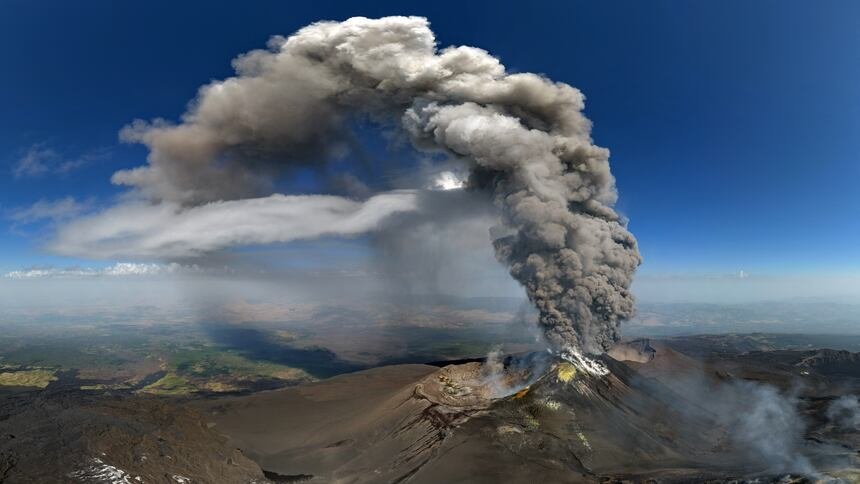
The Mount Etna eruption 2026 is once again disrupting travel across Sicily after volcanic ash from Europe’s tallest active volcano forced restrictions at Catania Airport. The disruption highlights an unusual problem for one of Italy’s busiest tourist gateways: the airport sits only about 40 kilometres from a volcano that frequently produces ash and lava.
Catania International Airport temporarily suspended flights after renewed activity at Mount Etna produced an ash plume that affected aviation operations.
For travelers, the eruption creates a familiar problem. Sicily remains one of Europe’s most popular summer destinations, yet one of its main airports is located close enough to Etna that volcanic activity can quickly affect aircraft operations.
The latest disruption also follows another major closure during the summer, showing why Catania airport flights can become vulnerable whenever Etna’s activity increases.
Why Mount Etna Is Causing Flight Problems
Volcanic eruptions can create serious risks for aircraft even when the volcano is nowhere near an airport.
The main problem is volcanic ash.
Unlike ordinary smoke, volcanic ash contains tiny particles of rock and minerals that can be extremely dangerous for aircraft engines.
If an aircraft flies through a dense ash cloud, the particles can enter its engines and potentially melt inside the hot engine sections.
The material can then harden on engine components and interfere with airflow.
Ash can also reduce visibility and damage aircraft surfaces.
Because of these risks, aviation authorities closely monitor volcanic eruptions and can restrict or suspend flights when ash enters areas used by aircraft.
That is what happened again around Catania.
Catania Airport Sits Close to Etna
Catania Airport is one of Italy’s major passenger airports and an important gateway to eastern Sicily.
The airport normally handles around 12 million passengers each year, making disruptions particularly significant during the busy tourist season.
Mount Etna stands approximately 3,324 metres above sea level.
The volcano is around 40 kilometres from Catania Airport.
That relatively short distance creates an unusual aviation challenge.
An eruption does not have to send lava anywhere near the airport to disrupt flights.
An ash plume carried by atmospheric conditions can be enough to trigger aviation restrictions.
Flights Were Suspended After Ash Reached the Area
During the latest incident, airport authorities suspended incoming flights after renewed volcanic activity generated an ash plume.
The aviation situation became serious enough for authorities to issue a red aviation warning.
The affected airspace sector was subsequently closed to aircraft operations.
Before the complete suspension, Catania Airport had already reduced its operating capacity.
The airport normally handles significantly more arrivals per hour, but the restrictions reduced capacity to just four landings per hour during the disruption.
That reduction can quickly create delays because aircraft arriving from different European cities have to wait, divert or change their schedules.
Airlines Had to Divert Flights
Several aircraft were diverted away from Catania as the situation developed.
According to aviation reporting, at least 10 ITA Airways flights were diverted before the full suspension.
Five were redirected to Palermo, while three went to Trapani and two to Comiso.
A Volotea flight was also rerouted to Comiso.
For passengers, diversions can create a chain reaction.
A traveler may land at an alternative airport but still face a long road journey before reaching a hotel, cruise terminal or holiday destination.
Baggage arrangements can also become more complicated.
Why Volcanic Ash Is So Dangerous to Planes
The connection between volcanic eruptions and aviation may seem surprising.
After all, modern aircraft regularly fly through clouds, storms and other atmospheric conditions.
Volcanic ash is different.
The particles can contain abrasive material and volcanic glass.
At high temperatures inside a jet engine, some particles can melt and stick to engine components.
This can interfere with engine performance.
Ash can also damage windshields, sensors and other aircraft systems.
As a result, aviation authorities generally take volcanic ash warnings seriously.
A temporary airport closure may inconvenience thousands of passengers, but the purpose is to reduce the risk of aircraft encountering dangerous ash concentrations.
Etna Is Europe’s Tallest Active Volcano
Mount Etna is not an unusual volcano.
It has been active for centuries and remains one of the most closely watched volcanic systems in Europe.
Its frequent activity has become part of Sicily’s identity.
The volcano also attracts large numbers of visitors.
Around 1.5 million people visit Etna each year, according to the BBC report.
That creates an interesting contrast.
The same geological activity that attracts tourists can also disrupt the transportation network serving those tourists.
Visitors may travel to Sicily specifically to see lava flows and volcanic landscapes, while airlines and airport authorities are monitoring the same volcano for aviation hazards.
This Is Not the First Major Airport Closure
The latest disruption is particularly important because it follows another significant Etna-related airport closure.
Catania Airport was closed for almost a week during the peak summer period because of volcanic activity.
That earlier disruption demonstrated how quickly an eruption can affect Sicily’s tourism infrastructure.
The airport is not simply handling local passengers.
It connects Sicily with destinations across Italy and Europe.
When flights stop, the effects can spread through airline schedules well beyond Catania itself.
Aircraft may be in the wrong location.
Crews can become unavailable.
Passengers can miss connecting flights.
Hotels and transport operators can also be affected.
Why Sicily Has a Difficult Aviation Problem
Catania’s proximity to Mount Etna has been debated for years.
The airport is extremely valuable to eastern Sicily because of its location and extensive network of domestic and international routes.
However, the same location creates vulnerability whenever Etna produces significant ash.
There have been calls for other airport facilities in Sicily to be expanded so the region has greater capacity when Catania is affected.
Palermo, Trapani and Comiso can provide alternatives during disruptions, but they cannot always absorb the entire passenger load from Catania.
That makes contingency planning important.
What Does This Mean for Travelers?
Passengers planning to fly from Catania should pay close attention to airline and airport updates during periods of volcanic activity.
Travelers should not assume that a flight will operate simply because the weather around the airport looks clear.
Volcanic ash can exist at higher altitudes and may move with the wind.
The airport itself advises passengers to check with their airline for the latest information before traveling to the terminal.
Travelers affected by cancellations or diversions should also check their airline’s rebooking and baggage procedures.
The situation can change rapidly as volcanic activity and ash concentrations change.
Could Etna Disrupt More Flights?
That depends on the volcano’s activity and atmospheric conditions.
Volcanic eruptions can fluctuate.
An ash plume may weaken, shift direction or disappear from an important aviation corridor.
However, renewed activity can also produce additional ash.
This means aviation restrictions can change quickly.
The latest incident demonstrates why authorities monitor Etna continuously rather than treating an eruption as a single event with a fixed beginning and ending.
The Tourism Problem Behind the Headlines
The impact of Etna goes beyond aviation.
Sicily’s economy depends heavily on tourism.
Hotels, restaurants, tour operators, rental-car companies and local attractions all depend on visitors arriving reliably.
When flights are disrupted during the tourist season, the consequences can spread throughout the local economy.
At the same time, Etna itself is one of Sicily’s major attractions.
Millions of people travel to the region partly because of its volcanic landscape.
That creates a difficult balance.
The volcano contributes to Sicily’s tourism appeal while occasionally disrupting the infrastructure that brings tourists there.
Why Catania Remains So Important
Catania Airport is more than an airport for the city of Catania.
It serves a large part of eastern Sicily and provides connections to major Italian and European destinations.
That makes its operational status important to the wider regional economy.
When Catania airport flights are disrupted, passengers may have to use airports much farther away.
Road transportation then becomes part of the problem.
A traveler who expected to arrive in Catania may instead land in Palermo, Trapani or Comiso and face additional transportation costs and hours of travel.
A Reminder That Volcanoes Can Affect Modern Europe
The Etna situation also demonstrates that natural hazards remain capable of disrupting highly developed transportation systems.
Modern aviation depends on advanced aircraft, satellites, weather forecasting and sophisticated air-traffic management.
Yet a plume of volcanic ash can still force authorities to ground aircraft.
The technology cannot eliminate the hazard.
Instead, it helps authorities detect and respond to it more quickly.
That makes monitoring systems, aviation warnings and communication between volcanic observatories and airports especially important.
What Happens Next?
The immediate priority remains monitoring Mount Etna and the movement of volcanic ash.
Aviation restrictions can be adjusted as conditions change.
If ash concentrations fall to safe levels, airport operations can gradually return to normal.
If activity increases again, further restrictions may become necessary.
Passengers therefore need to rely on current airline and airport information rather than assuming that a previous reopening means all flights will operate normally.
The situation is particularly important during the busy European travel season, when even relatively short interruptions can affect thousands of passengers.
Conclusion
The Mount Etna eruption 2026 story is about more than lava and volcanic scenery.
It is also a reminder of how closely natural hazards can interact with modern transportation.
Catania Airport sits roughly 40 kilometres from Mount Etna, Europe’s tallest active volcano. When ash enters the aviation environment, authorities can quickly restrict aircraft movements to protect passengers and crews.
The latest disruption forced flights to be suspended and aircraft diverted, while authorities monitored the volcano and the affected airspace.
For Sicily, the challenge is complicated.
Etna attracts millions of visitors every year, yet the same volcano can disrupt the airport that brings many of those visitors to the island.
As volcanic activity continues to be monitored, airlines and passengers will need to remain prepared for further changes.
The latest eruption is another example of how one of Europe’s most spectacular natural landmarks can also become a major challenge for European aviation.
Frequently Asked Questions
What happened at Mount Etna in 2026?
Renewed volcanic activity at Mount Etna produced an ash plume that affected aviation operations around Sicily and resulted in restrictions at Catania Airport.
Why were Catania airport flights suspended?
Flights were restricted because volcanic ash from Mount Etna created an aviation safety risk.
How close is Catania Airport to Mount Etna?
Catania Airport is approximately 40 kilometres (25 miles) from Mount Etna.
Is Mount Etna Europe’s tallest active volcano?
Yes. Mount Etna is generally recognized as Europe’s tallest active volcano and stands about 3,324 metres high.
Is it safe to fly near volcanic ash?
Volcanic ash can damage aircraft engines and other components, so aviation authorities impose restrictions when ash threatens flight paths.
How many people visit Mount Etna?
The BBC report says approximately 1.5 million people visit Etna each year.
What should Catania passengers do during an eruption?
Passengers should check directly with their airline and Catania Airport for the latest flight status before traveling to the airport.