A 13800 year old Alaska dwelling is giving archaeologists an extraordinary glimpse into the lives of some of the earliest people who settled in North America. At a site in interior Alaska, researchers have uncovered traces of a possible prehistoric shelter, cooking areas, stone tools, bone needles and a pendant made from animal antler. Together, these discoveries suggest that ancient inhabitants were doing much more than passing through the region in search of food.
The archaeological site, known as Shég’ Xdaltth’í’, dates to a period when the landscape was still shaped by the final stages of the last Ice Age. Its discoveries are helping scientists investigate how people established camps, prepared meals, manufactured tools and maintained connections across vast distances.
The research, published in Science Advances on October 14, 2026, adds important evidence to the growing field of early American archaeology 2026. Although the researchers cannot prove every detail of how the shelter was built or used, the remains offer an unusually rich record of life in ancient Beringia.
Where Did Archaeologists Discover the 13,800 Year Old Alaska Dwelling?
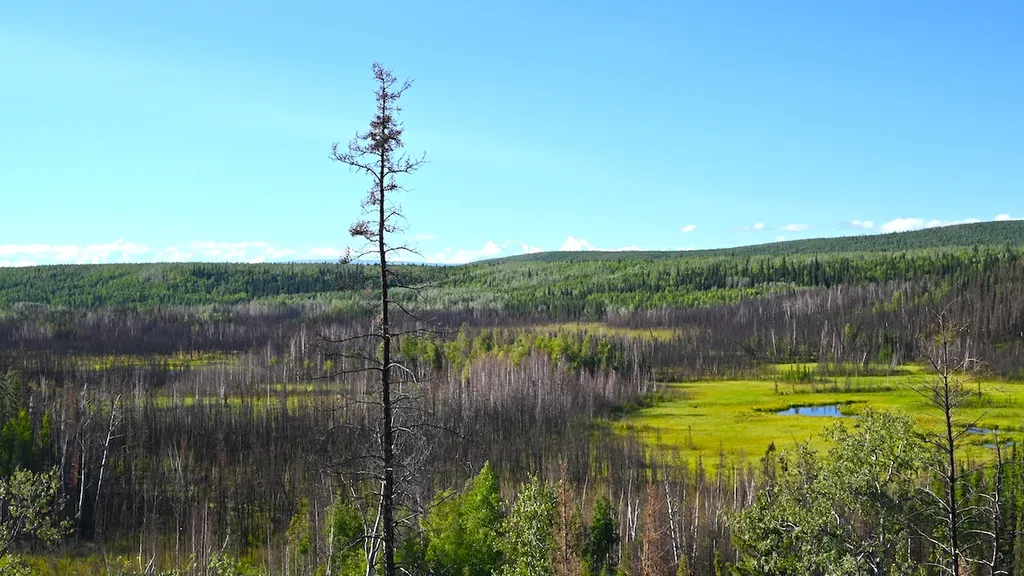
The discovery comes from Shég’ Xdaltth’í’, an archaeological site located approximately 55 kilometres southeast of Fairbanks in Alaska.
Its name, given with the involvement of local Alaska Native elders, means “They Were There.” The name reflects the site’s importance as a place where people lived thousands of years before modern communities developed in the region.
During the last Ice Age, the area formed part of Beringia, a vast region that connected northeastern Asia and northwestern North America when sea levels were lower. This landscape played an important role in the movement and settlement of ancient populations.
Researchers have identified several periods of human activity at Shég’ Xdaltth’í’. The earliest dates to approximately 13,800 years ago, while later occupations occurred around 13,000 and 12,700 years ago.
The repeated visits suggest that people returned to this landscape over many generations. Instead of representing a single brief encounter with the area, the site preserves evidence of a much longer relationship between humans and their surroundings.
The discovery is especially valuable because archaeologists have investigated only a relatively small number of early sites across the enormous region of Beringia.
What Did the Ancient Shelter Look Like?
One of the most intriguing findings is a small group of features that may represent the remains of an early dwelling.
Researchers identified a hearth, a small pit and a stain in the soil where a wooden post may once have stood. These features appeared together in an area containing other traces of human activity.
The post stain is particularly interesting. Although the wood itself has disappeared, a mark left in the ground can preserve evidence of where a structural support once stood.
Combined with the other features, it raises the possibility that ancient inhabitants constructed a simple shelter, perhaps resembling a lean-to or an early tent-like dwelling.
Such a structure would have been useful in Alaska’s demanding environment. Even during periods when the climate was warmer than during the coldest phases of the Ice Age, people living in the region had to contend with seasonal changes, cold conditions and limited resources.
A basic shelter could provide protection from wind and weather while giving a family or small group a place to rest, prepare food and manufacture tools.
However, archaeologists have not recovered a complete house. The interpretation depends on the arrangement of surviving features and their relationship to nearby artefacts. Further investigation may help clarify the structure’s design and purpose.
An Ancient Earth Oven Reveals How People Prepared Food
The shelter is only part of the story. Archaeologists also uncovered an earth oven filled with charcoal and animal bones.
An earth oven is a cooking feature in which people use a pit, heated materials and surrounding earth to cook food. Depending on its design, this method can maintain heat for an extended period, allowing meat to cook slowly.
At Shég’ Xdaltth’í’, the remains suggest that inhabitants used a substantial cooking area rather than relying exclusively on small, temporary fires.
The researchers propose that the oven may have helped prepare meat for a large family group or community gathering. Although the exact number of people who ate there is unknown, the feature points towards organised food preparation.
Animal remains provide additional evidence of the resources available to these early Alaskans. Studying the bones can help researchers reconstruct what animals people encountered and how their activities fitted into the surrounding ecosystem.
Together, the cooking features and discarded remains show how archaeological evidence can reveal everyday activities that rarely appear in historical records.
A charcoal-filled pit may seem unremarkable at first glance. Yet its position, contents and age can help scientists reconstruct how ancient people heated food and organised their living space.
Thousands of Stone Tools Reveal an Ancient Workshop
The 13,800-year-old Alaska dwelling site also produced a remarkable collection of stone artefacts.
Researchers recovered tens of thousands of archaeological objects and fragments across the site, including evidence of stone-tool manufacture. Some deposits contained huge numbers of small flakes created when toolmakers shaped or sharpened stone.
These fragments matter because they can reveal where and how tools were produced. A finished stone tool might have travelled a long distance before reaching an archaeological site, but tiny flakes often remain near the place where someone worked on it.
The researchers identified distinctive diamond-shaped stone tools, known as hafted bifaces. These tools were made from materials including rhyolite and basalt and may have been attached to handles or shafts for particular tasks.
The team also found obsidian artefacts. The volcanic glass came from a source hundreds of miles away, indicating that the people who used the site had access to material that was not available immediately nearby.
That does not necessarily mean the inhabitants personally travelled the entire distance. The obsidian could have moved through exchanges, repeated journeys or networks involving different groups.
Whatever the precise route, the material shows that these early inhabitants were connected to a much wider geographical world than the immediate area around their camp.
Bone Needles and an Antler Pendant Suggest More Than Survival
Among the most revealing discoveries were eight fragments of bone needles and a pendant made from animal antler.
The needles are particularly significant because they provide evidence of sophisticated bone-tool technology in ancient Alaska. Eyed needles allow thread or other fibres to pass through a small opening, making them useful for sewing.
People living in cold environments would have benefited from clothing that fitted closely and helped retain body heat. However, researchers cannot determine exactly what garments were made at this site or whether the recovered needle fragments were used for a particular type of clothing.
Even so, the objects demonstrate that inhabitants possessed the knowledge and skills needed to manufacture specialised tools from animal materials.
The antler pendant provides another clue about their lives. It had a hole drilled at one end and was shaped to a point at the other.
Unlike a tool used only for cutting or scraping, a pendant may have served as personal decoration or carried social meaning. Archaeologists cannot know precisely what it meant to its owner, but its careful shaping suggests that objects could have purposes beyond immediate survival.
The combination of needles, stone tools and personal adornment makes Shég’ Xdaltth’í’ especially valuable for understanding the range of activities performed at an early North American camp.
Did These Ancient Alaskans Have Dogs?
Another intriguing question concerns animal remains recovered from the site.
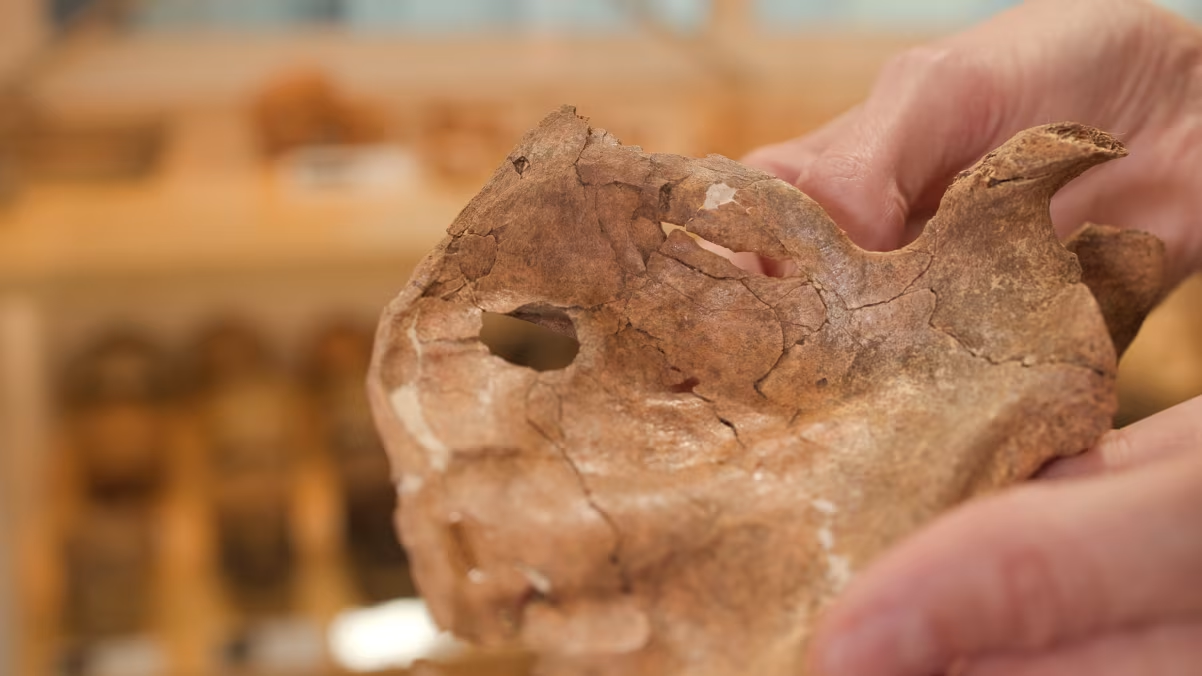
Researchers identified bones from more than a dozen wolf-like animals. An analysis of one animal’s jaw suggested that it belonged to a population distinct from familiar dire wolves and other recognised wolf groups in the region.
Because the site dates to a period when the ancestors of domesticated dogs were associated with human populations in northeastern Asia, the researchers considered whether these animals might offer clues about early relationships between people and canids.
The geographical setting and timing are interesting, but the discovery does not prove that the people at Shég’ Xdaltth’í’ kept domesticated dogs.
The animal remains could represent wild canids that lived in the area. Establishing domestication requires stronger evidence, potentially including detailed genetic analysis, anatomical comparisons and evidence of a close relationship with humans.
The possibility remains worth investigating because dogs eventually became important companions and working animals for many human societies. For now, however, the site’s canid bones are a research clue, not a confirmed record of America’s earliest dogs.
What Does the Discovery Reveal About the First Americans?
Shég’ Xdaltth’í’ contributes to a continuing debate about how ancient populations moved into and across the Americas.
Beringia connected northeastern Asia with northwestern North America during periods of lower sea levels. Researchers use archaeological discoveries, ancient DNA, geology and climate evidence to investigate when people entered the continent and how they spread into different environments.
The stone tools at Shég’ Xdaltth’í’ have similarities to objects found at sites farther west in Beringia. Meanwhile, the bone needles and antler pendant resemble forms of personal technology known from early sites farther south in North America.
These similarities suggest that ancient communities shared technological ideas or maintained connections across a broad region.
Scientists cannot yet determine whether individuals travelled repeatedly between these places, whether objects moved through exchange networks or whether related traditions developed across different communities. The evidence nevertheless points towards cultural connections that crossed substantial distances.
The discovery also helps move the discussion beyond a simple picture of small groups travelling constantly in search of prey.
At Shég’ Xdaltth’í’, the combination of a possible shelter, food preparation areas and extensive toolmaking debris suggests that people were establishing organised living spaces and adapting to the landscape over time.
The site’s significance lies not in proving a single migration route, but in revealing how early inhabitants lived after reaching this part of North America.
Why This Discovery Matters for Early American Archaeology 2026
The latest findings are important because well-preserved evidence of early domestic spaces is rare across much of the Americas.
Stone tools can survive for thousands of years, but structures made from wood, animal materials and other organic resources often disappear. Their traces may be limited to soil stains, postholes, charcoal or small changes in the surrounding sediment.
When archaeologists find these features together, they can reconstruct a more detailed picture of an ancient camp.
Shég’ Xdaltth’í’ brings several kinds of evidence into one setting: a possible dwelling, a hearth, an earth oven, tools, animal remains and objects that may have served personal purposes.
The site also highlights the importance of collaboration with Alaska Native communities. Local elders helped name the location and contributed knowledge to the research process. Such collaboration recognises that archaeological investigations concern places with enduring cultural significance, not simply scientific specimens.
Researchers hope that future fieldwork will uncover more evidence about the people who occupied the region and the relationships they maintained with the land.
Conclusion: What Did the First Residents Leave Behind?
The discovery of a 13,800-year-old Alaska dwelling offers a rare window into the lives of people who inhabited North America near the end of the last Ice Age.
A possible shelter, an earth oven, stone-tool workshops, bone needles and an antler pendant reveal a community capable of adapting to its environment and making specialised objects from available materials. Obsidian from a distant source suggests connections that extended beyond the immediate landscape, while animal remains provide further clues about the world these people inhabited.
Important questions remain unanswered. Scientists have not reconstructed the shelter completely, confirmed that the inhabitants owned domesticated dogs or established exactly how goods and ideas travelled across Beringia.
Nevertheless, the site shows why archaeological discoveries matter. Small traces left in the ground can reveal how people organised their lives, prepared meals, made tools and established relationships with a challenging environment.
The residents of Shég’ Xdaltth’í’ left no written accounts. Instead, they left the remains of their everyday activities—and those remains are helping researchers bring an ancient chapter of American history into sharper focus.