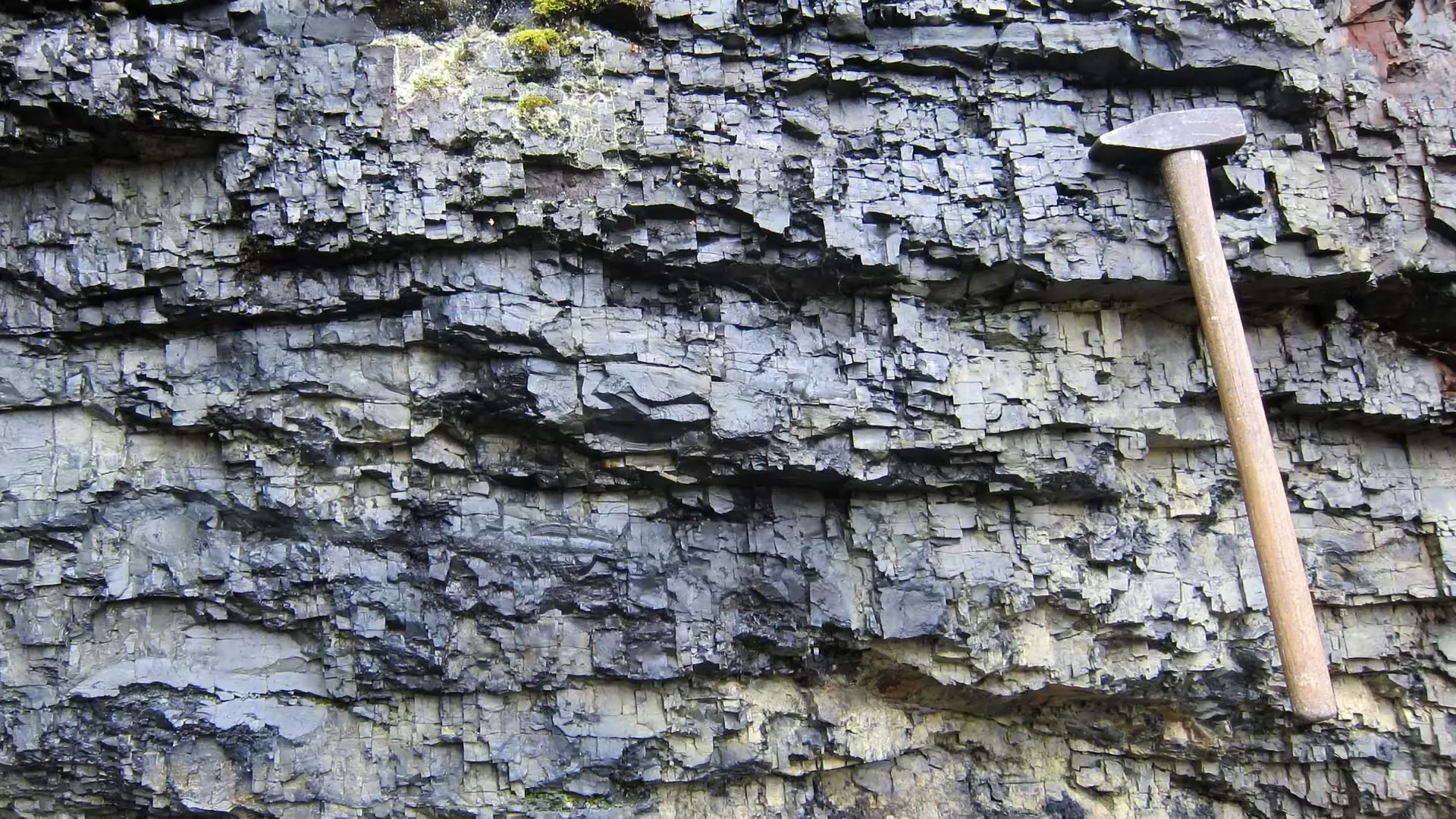
The Earth oxygen mystery 2.3 billion years old has puzzled scientists for decades: after oxygen began accumulating in the atmosphere, what kept it there long enough for life to evolve? New research points to an unexpected answer beneath the ancient seas. Phosphorus, a nutrient essential for living organisms, may have helped create a natural cycle that sustained oxygen in Earth’s atmosphere.
The findings, led by researchers including geologists from the University of California, Riverside, offer a new explanation for how our planet maintained conditions suitable for life after the Great Oxidation Event. By studying ancient rocks from South Africa, scientists investigated how ocean chemistry influenced the availability of phosphorus and the activity of early microorganisms.
The research, published in Nature Communications, does not mean scientists have solved every question about Earth’s early atmosphere. Instead, it provides evidence for a mechanism that may explain how ancient Earth oxygen levels remained elevated after oxygen first became a lasting part of the atmosphere.
Earth Was Once Almost Without Atmospheric Oxygen
Today, oxygen makes up roughly 21% of Earth’s atmosphere. Humans and many other animals depend on it for respiration, while oxygen also plays a major role in Earth’s surface chemistry.
However, the planet did not always have an oxygen-rich atmosphere.
Early Earth had extremely little free oxygen in its atmosphere. Microorganisms eventually developed oxygen-producing photosynthesis, releasing oxygen as they used sunlight to obtain energy. Yet oxygen did not immediately accumulate in the air because it reacted with other substances, including minerals and gases.
Around 2.4–2.3 billion years ago, atmospheric oxygen began rising during a major transition known as the Great Oxidation Event.
This transformation changed the chemistry of Earth’s surface and created new opportunities for biological evolution. Nevertheless, the transition was neither simple nor perfectly understood. Scientists continue to debate how high oxygen concentrations rose, how quickly they changed and how conditions differed between the atmosphere and the oceans.
The Earth oxygen mystery 2.3 billion years old is therefore about more than when oxygen appeared. Researchers also want to understand how Earth’s environment maintained the right balance of chemical processes to keep oxygen available.
The Unexpected Role of Phosphorus
The new research focuses on phosphorus, an element essential to life.
Living organisms use phosphorus in DNA, RNA, cell membranes and molecules involved in energy transfer. In oceans, phosphorus availability can influence how much biological activity takes place.
When microorganisms have access to sufficient phosphorus and other essential nutrients, they can grow and produce more organic matter. Some of that material sinks to the seafloor. If it becomes buried in sediments rather than decomposing, its carbon remains stored away from processes that would otherwise consume oxygen.
This creates an important connection between ocean nutrients and atmospheric chemistry.
Researchers propose that phosphorus recycling helped sustain biological productivity after oxygen began accumulating in the atmosphere. The resulting increase in organic carbon burial could, in turn, favour the continued presence of oxygen.
In simple terms, the process connected tiny microorganisms, ocean chemistry and the atmosphere in a cycle that may have helped keep Earth habitable.
How Ancient Oceans Created a Self-Sustaining Cycle
The research suggests that oxygen itself helped change the ocean environment in ways that supported further oxygen accumulation.
Here is how the proposed feedback loop worked:
- Oxygen began accumulating. During the Great Oxidation Event, oxygen became a lasting component of Earth’s atmosphere.
- Ocean chemistry changed. Greater oxygen availability altered chemical reactions in seawater, including processes that affected sulfur and sulfate.
- Microbes recycled phosphorus. Certain microorganisms used sulfate in their metabolism and helped release phosphorus from organic material back into the water.
- Biological productivity increased. More available phosphorus supported the growth of organisms that produced organic matter.
- More carbon could be buried. When organic carbon became buried in seafloor sediments, less of it was decomposed in ways that consumed oxygen.
This feedback could help explain why oxygen persisted rather than disappearing as quickly as some processes might otherwise have allowed.
The mechanism is important because it links geology, microbial life and atmospheric change. It also illustrates how a nutrient cycle can influence a planet’s long-term habitability.
However, the research does not establish that phosphorus was the only factor involved. Oxygen levels depended on several interacting sources and sinks, including biological production, chemical reactions and geological processes.
How Scientists Investigated Rocks Billions of Years Old
Researchers cannot directly observe ancient oceans, so they rely on geological evidence preserved in rocks.
For this study, scientists examined ancient rocks from South Africa. Such formations can preserve chemical clues about the environments in which their sediments accumulated.
One challenge is that measuring the total amount of phosphorus in an ancient rock does not necessarily reveal how much phosphorus was available to living organisms. Some phosphorus can become locked into minerals, making it difficult for microbes to use.
The researchers applied a method that separates phosphorus according to the minerals holding it. This allowed them to distinguish more clearly between phosphorus that could have been biologically available and phosphorus that was effectively locked away.
That distinction matters because the availability of a nutrient can influence microbial growth even when the total amount present appears substantial.
By combining geological evidence with an understanding of microbial processes, the team reconstructed aspects of the chemical environment in which early life operated.
The results support the idea that changing ocean chemistry enabled phosphorus recycling to play a role in sustaining oxygen.
Why Oxygen Did Not Immediately Lead to Complex Life
The story of oxygen also raises another question: if oxygen became established billions of years ago, why did complex life take so long to flourish?
The answer is complicated.
The Great Oxidation Event did not instantly produce today’s atmospheric conditions. Oxygen concentrations remained far below modern levels for much of Earth’s history, and different parts of the planet could experience very different chemical environments.
Even when oxygen was present, many other factors influenced evolution. Organisms needed suitable nutrients, stable habitats and biological adaptations that allowed them to survive and diversify.
The ancient Earth oxygen levels that existed after the Great Oxidation Event may have created opportunities for some organisms while still limiting others.
Scientists also continue to investigate whether oxygen levels rose steadily or fluctuated over long periods. Geological records suggest that Earth’s oxygenation was a drawn-out process rather than a single event that immediately produced a modern atmosphere.
The new phosphorus research adds one possible explanation for how the planet maintained oxygen during this complicated transition.
What This Means for the Search for Life Beyond Earth
The findings could also help scientists search for life on other planets.
Astronomers increasingly study distant worlds to determine whether their atmospheres contain gases that might indicate biological activity. Oxygen attracts particular attention because life on Earth has played a major role in producing and maintaining it.
However, detecting oxygen does not automatically prove that a planet hosts life. Scientists must understand how geological and chemical processes can produce, remove or maintain atmospheric gases.
Earth’s history provides an important natural case study. The planet experienced major changes in oxygen availability long before animals and plants populated the world in their modern forms.
Understanding the relationship between phosphorus, microorganisms and atmospheric oxygen may help researchers build better models of how habitable environments develop.
It could also help them identify the conditions that allow oxygen to persist on a planet over geological timescales.
This does not mean the research has discovered life beyond Earth. Instead, it offers a more detailed framework for understanding the chemical and biological processes that can make a planet suitable for life.
What Scientists Still Do Not Know
Despite the encouraging findings, major questions remain.
Scientists continue to debate how much oxygen was present in Earth’s atmosphere during different stages of the Great Oxidation Event. Ancient rocks preserve valuable evidence, but they do not provide a perfectly complete record of every environment or time period.
Researchers must also distinguish between local conditions and changes that affected the wider planet. An ocean region could have experienced oxygenation even when much of the atmosphere or deeper ocean remained oxygen-poor.
The timing of changes in phosphorus availability, microbial activity and organic carbon burial also requires further investigation.
A broader scientific review published in Communications Earth & Environment in April 2026 highlighted the wide range of defensible estimates for atmospheric oxygen during the Great Oxidation Event. The review emphasised that understanding oxygen’s history remains an active research challenge.
Therefore, the phosphorus feedback is a significant proposed mechanism, not a final answer to every aspect of Earth’s oxygen history.
Conclusion: A Tiny Nutrient May Have Helped Change the Planet
The Earth oxygen mystery 2.3 billion years old offers a reminder that planetary survival can depend on relationships that are easy to overlook.
Phosphorus may seem like a small part of Earth’s chemistry, but its availability can influence microbial growth, organic carbon burial and the balance of oxygen in the atmosphere.
By studying ancient South African rocks, researchers have identified evidence for a feedback loop in which ocean chemistry and microbial activity may have helped maintain oxygen after the Great Oxidation Event.
The discovery does not prove that phosphorus alone kept Earth habitable, nor does it resolve every uncertainty about ancient Earth oxygen levels. It does, however, offer a valuable explanation for how biological and geological processes may have worked together to sustain conditions that eventually allowed complex life to emerge.
The lesson is striking: Earth’s atmosphere did not develop in isolation. It evolved through a long interaction between oceans, rocks, nutrients and living organisms.
That interaction may also guide scientists as they investigate whether distant planets could develop and maintain the conditions needed for life.
Frequently Asked Questions
What was the Earth oxygen mystery 2.3 billion years ago?
Scientists wanted to understand how oxygen remained in Earth’s atmosphere after the Great Oxidation Event, rather than being consumed by chemical reactions and disappearing.
What role did phosphorus play?
Phosphorus supported biological productivity in ancient oceans. The research suggests that phosphorus recycling helped organisms produce more organic matter, some of which became buried in sediments and helped favour oxygen accumulation.
What was the Great Oxidation Event?
It was a major period around 2.4–2.3 billion years ago when free oxygen began accumulating persistently in Earth’s atmosphere, transforming the planet’s surface chemistry.
How did scientists study ancient Earth oxygen levels?
Researchers examined chemical evidence preserved in ancient rocks, including phosphorus associated with different minerals, to investigate how nutrients were available to early microorganisms.
Does this discovery prove how complex life began?
No. It offers a possible explanation for how oxygen was sustained, but the emergence of complex life depended on many biological, geological and environmental factors.
Could this research help scientists find life on other planets?
Potentially. A better understanding of how oxygen and nutrients interact on Earth may improve models used to evaluate whether distant planets can maintain habitable conditions. However, oxygen alone is not proof of life.