A remarkable Neanderthal spear wound discovery 2026 is giving scientists a rare glimpse into violence, survival and possible compassion among our ancient human relatives. Archaeologists studying a 75,000-year-old skeleton from Shanidar Cave in Iraqi Kurdistan have identified a circular hole in the individual’s shoulder blade that may have been caused by a wooden spear.
The discovery is significant because direct evidence of lethal violence among ancient human ancestors remains rare. The injury appears to have occurred around the time of death, while the individual’s teeth reveal signs of a serious facial injury that they survived earlier in life.
Published in the journal Scientific Reports on October 15, 2026, the research raises fascinating questions about how Neanderthals died, how they cared for injured members of their communities and whether the remains represent evidence of deliberate violence. Yet one mystery remains unresolved: scientists cannot say for certain whether the fatal wound resulted from an intentional attack or an accident during hunting.
What Did Scientists Discover in Shanidar Cave?
The discovery centres on Shanidar A, a Neanderthal whose partial remains were recovered from Shanidar Cave in northern Iraq. Researchers estimate that the individual lived approximately 75,000 years ago and was around 45 years old at death.
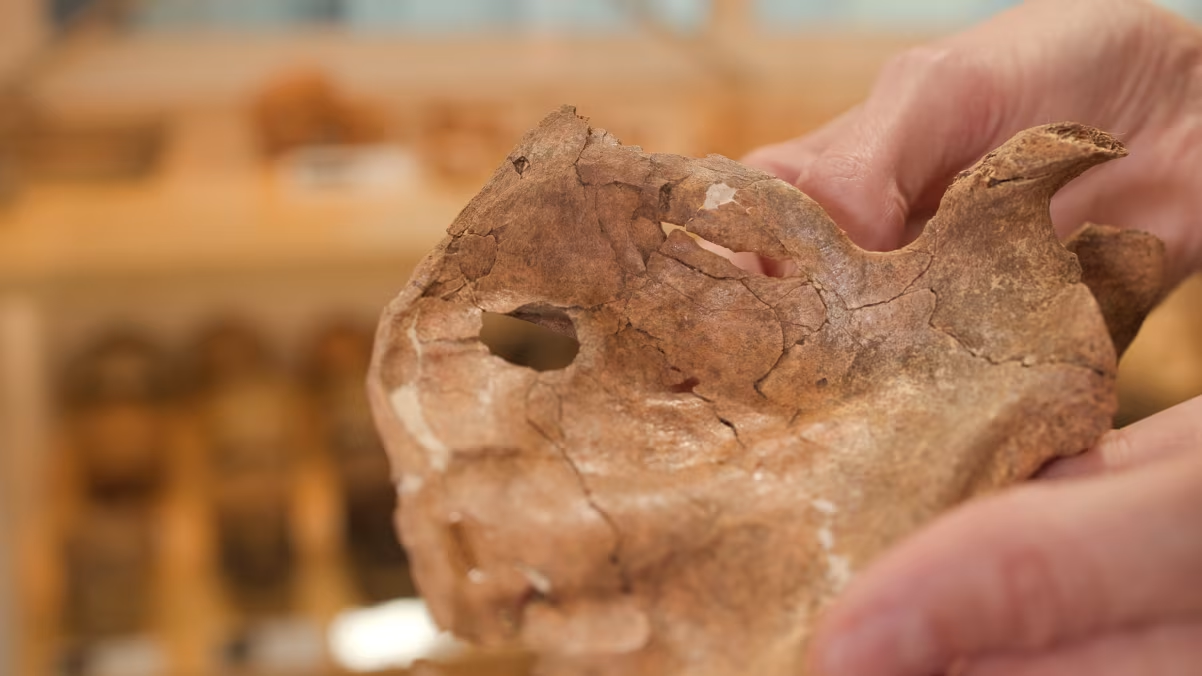
The preserved remains include a largely complete right hand, several ribs, seven teeth and the left shoulder blade, also known as the scapula.
The most striking feature is a nearly circular hole measuring approximately 15 millimetres across. Researchers identified radiating fractures around the opening and small bone fragments embedded in the sediment beneath it.
Detailed examination suggested that the damage occurred around the time of death rather than during a later stage of fossilisation. The bone showed no signs of healing around the hole, supporting the interpretation that the injury was fatal or occurred too close to death for healing to begin.
Researchers used microscopic analysis and micro-computed tomography to examine the bone and surrounding fragments. These techniques helped them investigate the shape of the wound and rule out several possible explanations for how the hole formed.
The findings point towards a penetrating injury caused by a weapon or similar implement.
Could a Wooden Spear Have Killed This Neanderthal?
The shape of the shoulder wound offers an important clue.
According to the research team, the circular outline, fractures and bevelled edges are consistent with a pointed wooden implement penetrating the body. A wooden spear is therefore a leading explanation for the injury.
The researchers suggest that a spear entered the body from the front and passed through the chest, potentially damaging the lungs or major blood vessels before reaching the shoulder blade.
Such an injury could have caused rapid death.
The proposed weapon is especially interesting because wooden tools rarely survive for tens of thousands of years. Wood normally decomposes unless environmental conditions preserve it, leaving archaeologists with limited direct evidence of ancient wooden weapons.
If the interpretation is correct, Shanidar A provides rare evidence that a wooden spear may have been used in a lethal encounter involving a Neanderthal around 75,000 years ago.
However, scientists cannot recover the missing weapon itself from the wound. The conclusion rests on the bone’s physical characteristics and comparisons with injuries produced by different types of projectiles and spears.
The evidence is compelling, but it does not establish exactly what happened.
Was It Murder, Conflict or a Hunting Accident?
One of the biggest questions raised by the Neanderthal spear wound discovery 2026 is whether Shanidar A was deliberately attacked.
The wound’s location and characteristics are consistent with a potentially lethal spear strike. But the skeleton cannot reveal the circumstances behind the injury.
The individual might have been attacked by another Neanderthal, injured during a confrontation between groups or struck in an accident involving a hunting weapon. The researchers cannot confidently distinguish between these possibilities.
It would therefore be premature to describe the discovery as definitive proof of murder or warfare.
Nevertheless, the findings add to a small collection of prehistoric remains showing evidence of potentially lethal violence. Another Neanderthal from Shanidar Cave, known as Shanidar 3, had a penetrating injury to a rib that researchers have previously associated with a possible projectile wound.
That earlier injury has also prompted debate about whether Neanderthals sometimes encountered violence from other Neanderthals or from modern humans. Neither case provides enough evidence to identify an attacker.
Together, these discoveries demonstrate that serious interpersonal injury was part of life in the distant human past, although its frequency and causes remain difficult to establish.
The Earlier Injury That Shanidar A Survived
The shoulder wound is not the only important clue in the skeleton.
Researchers also examined the individual’s teeth and found evidence of substantial facial trauma. One lower front tooth had split lengthwise, while neighbouring teeth showed unusual positioning and damage.
The damaged tooth displayed hardened plaque, known as dental calculus, along the exposed root area. This suggests that the individual continued living after the injury for a considerable period.
The researchers interpret the dental evidence as indicating that Shanidar A survived the facial trauma for at least a year, and possibly longer.
Such an injury could have caused significant pain and made eating more difficult. Depending on the full extent of the damage, it may also have affected other everyday activities.
The survival is important because it suggests that the individual was able to continue living despite a serious injury.
But how did that happen?
Did Other Neanderthals Care for the Injured Individual?
The researchers suggest that Shanidar A may have received help from other members of their community after the facial injury.
An individual with painful or damaged front teeth might have struggled to bite and process some foods. Assistance from others could have helped them obtain food or manage daily activities during recovery.
The evidence cannot prove exactly what kind of care occurred, or whether other Neanderthals directly treated the injury. It does, however, raise the possibility that social support contributed to the individual’s survival.
Shanidar Cave has long played an important role in debates about Neanderthal behaviour. Other remains from the site show that some individuals lived with significant physical impairments, including injuries and conditions that may have limited their mobility or senses.
Such findings have challenged older stereotypes portraying Neanderthals as unintelligent or incapable of complex social relationships.
The new evidence adds another layer to that discussion. Shanidar A may have experienced a painful injury, survived with it for an extended period and later died from a separate traumatic event.
The combination offers a striking reminder that ancient human lives could include both vulnerability and resilience.
Why Are the Shanidar Cave Neanderthal Bones So Important?
The Shanidar Cave Neanderthal bones are important not only because of the injuries they preserve but also because of where the remains were found.
Shanidar Cave has produced several Neanderthal skeletons dating to different periods. Shanidar A was found in a cluster of remains that now includes at least five individuals, including adults and an infant.
The researchers argue that the placement of these bodies supports the possibility of meaningful funerary behaviour. The remains appear to have been deposited in a restricted area behind a prominent rock, with some individuals placed above earlier remains.
The arrangement raises the possibility that Neanderthals returned to the same location to place their dead.
However, scientists continue to debate the extent to which the pattern demonstrates deliberate burial, symbolic practices or other forms of intentional behaviour. Natural processes also affected the site: researchers found evidence that a flash flood disturbed some skeletal remains after deposition.
The careful study of bone positions, sediment and geological changes helps researchers distinguish ancient human actions from later environmental effects.
Shanidar Cave is therefore valuable because it preserves evidence relevant to several major questions: how Neanderthals treated their dead, how they responded to injury and how they interacted with one another.
What Does This Discovery Tell Us About Neanderthal Life?
The findings reveal a world in which serious injuries could occur, some individuals survived major trauma and wooden weapons may have played a role in hunting or conflict.
They also underline the limits of archaeological evidence. A skeleton can preserve the physical consequences of an event, but it rarely records the full story behind it.
Scientists can examine the direction of a wound, look for healing and compare damage with experimentally produced injuries. They cannot always determine the intentions of the people involved.
That distinction matters when discussing violence in prehistoric societies. One potentially fatal injury does not establish that warfare was widespread, just as evidence of survival after trauma does not prove that every injured Neanderthal received care.
Instead, Shanidar A adds another carefully documented case to a growing body of research into Neanderthal behaviour.
The discovery also demonstrates why scientific advances in imaging and forensic analysis matter. Techniques that reveal tiny bone fragments and microscopic fractures can help researchers extract information from remains that might otherwise appear to tell very little.
Conclusion: A 75,000-Year-Old Mystery of Violence and Survival
The Neanderthal spear wound discovery 2026 provides an extraordinary look into the final moments and earlier life of an ancient human relative.
A circular hole in Shanidar A’s shoulder blade suggests a potentially fatal penetrating injury, possibly caused by a wooden spear. Earlier damage to the individual’s teeth indicates survival after a serious facial injury, raising questions about the role of social support among Neanderthals.
Yet the research does not solve every mystery. Scientists cannot determine whether the fatal wound resulted from deliberate violence or a hunting accident, and the precise nature of the care the individual may have received remains uncertain.
What the evidence does show is that Neanderthal lives were more complex than old stereotypes suggest. They faced serious dangers, survived major injuries and may have depended on others in ways that helped them endure.
After approximately 75,000 years beneath the ground, Shanidar A’s bones are offering a rare glimpse into that complicated human story.