What if one of the biggest clues to a longer life came from a tortoise that was already alive before Queen Victoria became queen? The story of Jonathan tortoise longevity has fascinated people for years, but scientists now have new genetic evidence that may help explain his extraordinary survival.
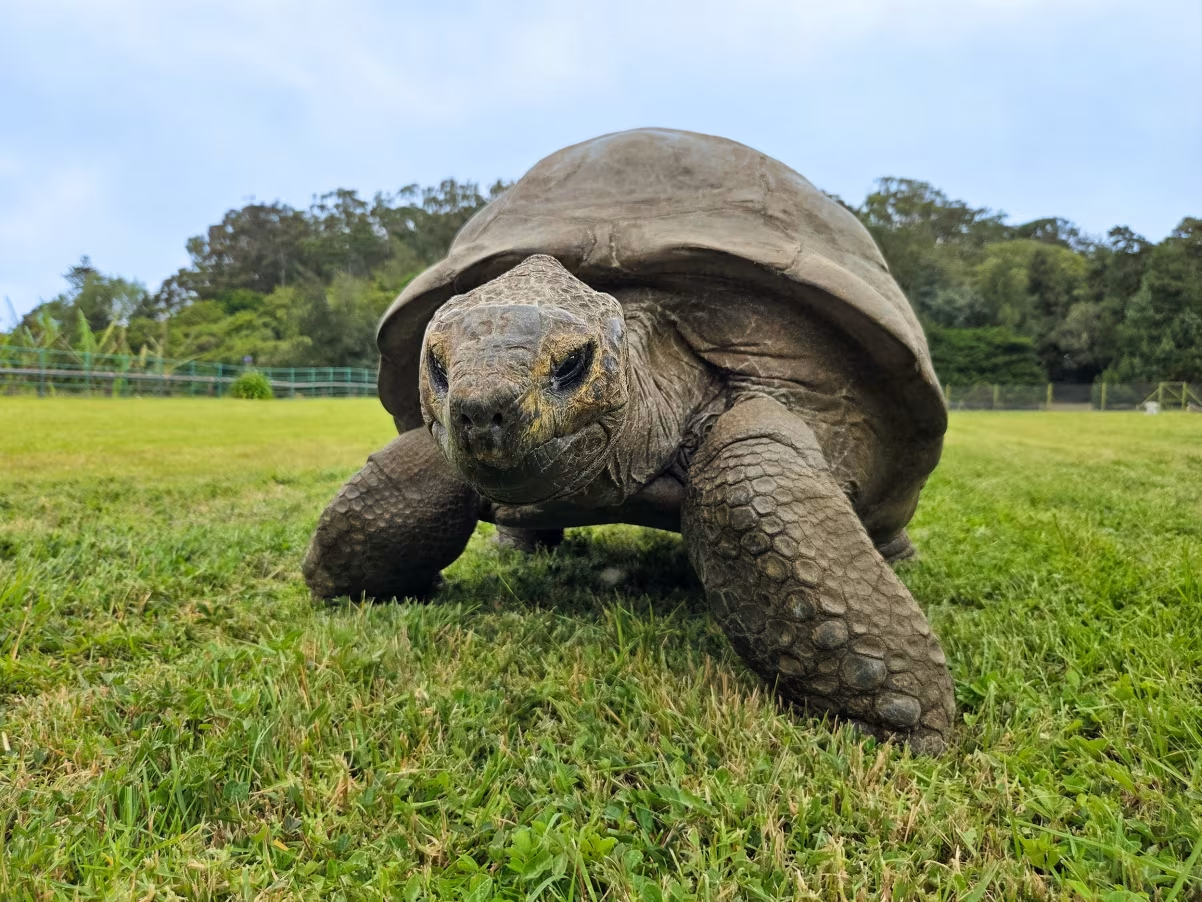
Jonathan, an Aldabra giant tortoise living on the South Atlantic island of Saint Helena, is estimated to be around 194 years old. Researchers believe he hatched around 1832, although his exact birth date remains unknown.
A study published in Science Advances on October 7, 2026, examined Jonathan’s genetic material and the chemical switches that regulate his genes. The findings revealed unusual patterns involving DNA repair, cellular energy production and other biological processes associated with ageing.
The discovery does not mean scientists have found a formula for immortality. However, this remarkable 194-year-old tortoise may help researchers understand why some animals resist the effects of ageing far better than others.
Meet Jonathan, the Tortoise That Has Outlived Generations
Jonathan has spent most of his known life at Plantation House, the official residence of Saint Helena’s governor. He arrived on the island in 1882, already fully grown, after being brought from the Seychelles.
That means Jonathan was living on Saint Helena before many technologies and institutions that shape modern life existed. He has survived world wars, major political transformations and generations of scientific discoveries.
Guinness World Records recognises him as the oldest known living land animal. His age is an estimate based on historical evidence, including records describing him as fully mature when he arrived on Saint Helena.
Jonathan is not a mammal, and his biology differs considerably from ours. Yet that difference makes him particularly interesting to ageing researchers.
Many animals age rapidly compared with humans. Giant tortoises, by contrast, can live for well over a century. Jonathan’s extraordinary age offers scientists an opportunity to investigate the biological mechanisms that may allow some animals to maintain their health for so long.
What Did Scientists Discover About Jonathan’s DNA?
The research team examined Jonathan’s genome and epigenome to investigate possible explanations for his exceptional lifespan.
The genome contains an organism’s DNA sequence. The epigenome consists of chemical marks and regulatory mechanisms that influence how genes behave without changing the underlying DNA sequence.
These regulatory marks can change as an organism ages. In many cases, the changes become less orderly over time, affecting how cells function.
Researchers found that Jonathan possessed genetic variants associated with biological processes involved in ageing, including DNA repair, immune function, metabolism and protection against cellular damage.
The study identified 287 distinctive genetic variants of interest. Some were associated with pathways that help cells repair damage, regulate inflammation and control other processes linked to long-term health.
The researchers also examined patterns of DNA methylation, a process that helps regulate whether particular genes are active or suppressed.
One especially interesting finding involved genes linked to mitochondria, the structures that produce much of a cell’s usable energy.
In these regions, Jonathan showed unusually stable regulatory patterns compared with younger tortoises of the same species.
That stability may help explain why some important cellular functions remain effective over a remarkably long life.
The Mitochondria Connection: Why Cellular Energy Matters
Mitochondria are often described as the power stations of cells. They help convert nutrients into energy that cells can use to perform their functions.
As organisms age, mitochondrial function can deteriorate. Damaged mitochondria may contribute to cellular stress and other changes associated with ageing.
Researchers studying Jonathan tortoise longevity found patterns suggesting that the regulation of genes involved in mitochondrial function has remained unusually stable in this individual.
That observation matters because stable cellular energy production may help tissues continue functioning over long periods.
However, scientists still need to determine whether these patterns directly contribute to Jonathan’s longevity or simply accompany other protective biological features.
The distinction is important. Researchers have identified a promising association, not proven a single cause of his age.
If future studies confirm the relationship, giant tortoises could help scientists investigate how biological systems maintain energy production and resist age-related decline.
DNA Repair Could Be Another Important Clue
Every living organism experiences damage to its DNA.
Normal cellular activity, environmental exposure and the passage of time can all contribute to DNA damage. Cells possess repair mechanisms that identify and correct many of these problems.
When repair becomes less effective, errors can accumulate and interfere with normal biological functions.
The researchers identified genetic features in Jonathan associated with DNA repair and the maintenance of cellular stability. These findings suggest that his biology may contain protective mechanisms that help limit some consequences of ageing.
The study also examined genes associated with telomere maintenance. Telomeres are protective structures at the ends of chromosomes, and their behaviour can influence how cells divide and age.
Jonathan’s genetic profile provides clues about how several biological systems may work together to support a long life.
Nevertheless, no single gene or mechanism can currently explain his entire lifespan. His longevity may result from a combination of inherited characteristics, cellular processes, environmental conditions and individual variation.
Could Jonathan’s Genes Help Humans Live Longer?
This is the question that makes the research particularly exciting.
Scientists want to understand why some organisms remain healthy for extraordinary periods while others experience age-related decline much earlier.
The biological processes highlighted in Jonathan’s study overlap with areas of human ageing research. DNA repair, mitochondrial function, inflammation and metabolic regulation all influence human health.
Researchers could use these findings to identify promising questions for future laboratory studies.
For example, scientists may investigate whether particular gene-regulation patterns help preserve mitochondrial function or whether specific genetic variants improve cellular responses to damage.
If researchers can establish how these mechanisms work, they may eventually identify new approaches for preventing or treating some age-related diseases.
But there is a major limitation: Jonathan’s results do not prove that changing human genes or copying tortoise biology will extend human life.
The study focused on one exceptionally old tortoise. Scientists need further evidence from other long-lived animals and carefully designed experiments before they can establish which mechanisms are protective and whether any findings can be applied to people.
The research offers a starting point, not a ready-made anti-ageing treatment.
Why Tortoises Age Differently From Humans
Tortoises provide a valuable opportunity to study longevity because some species live for many decades or even centuries.
Their slow growth, distinctive metabolism and other biological characteristics may contribute to their long lifespans. However, different tortoise species have different lifespans, and scientists cannot assume that every giant tortoise shares Jonathan’s particular genetic features.
Researchers are interested in whether long-lived animals have evolved mechanisms that help them maintain cellular function, control inflammation or reduce the effects of accumulated damage.
Comparisons between species can reveal which biological pathways appear repeatedly in animals with exceptional lifespans.
Jonathan’s case is particularly valuable because of his estimated age and the availability of historical information about his life.
Even so, scientists must separate characteristics that cause longevity from those that simply appear in an animal that has lived a very long time.
Future research involving other giant tortoises could help determine whether Jonathan’s genetic patterns are common among his species or unusually distinctive.
His Long Life Is Not Just About Genetics
Jonathan’s genes are only one part of the story.
His environment and daily care also matter. The tortoise receives attention from his caregivers and veterinary professionals on Saint Helena.
In 2009, Jonathan was reportedly in poor condition. He had serious eyesight problems, a reduced sense of smell and difficulty finding food. His former veterinary caregiver, Joe Hollins, introduced a more closely managed feeding routine that helped improve his condition.
Today, Jonathan continues to receive care suited to his needs. His diet includes appropriate fruits and vegetables alongside the other foods provided as part of his care.
Scientists cannot determine how much these factors contributed to his lifespan, but they illustrate why genetics should not be treated as the only explanation.
For humans, the lesson is also not that copying a tortoise’s lifestyle will produce a century of extra life. Human longevity depends on many interacting factors, including genetics, healthcare, environment and chance.
Jonathan’s story demonstrates the value of combining genetic research with careful observation of an animal’s life history.
What Happens Next in Longevity Research?
The new findings give researchers several directions to explore.
First, scientists can compare Jonathan’s genetic and epigenetic patterns with those of other giant tortoises. That could help identify which features are common to the species and which may be associated with exceptional longevity.
Second, researchers can investigate the biological effects of particular genetic variants and regulatory patterns. Laboratory studies may help determine whether these features influence DNA repair, mitochondrial activity or other cellular processes.
Third, scientists can compare long-lived tortoises with other animals known for unusual longevity. Such comparisons may reveal common mechanisms that help organisms maintain their health over time.
The biggest challenge will be proving cause and effect. Finding a genetic feature in a long-lived animal does not automatically mean that the feature made the animal live longer.
The researchers will need additional evidence to establish how these mechanisms work and whether they have practical relevance to human health.
Jonathan may be nearly two centuries old, but his cells could still provide new questions for modern science.
Conclusion: Is Jonathan’s Secret to Longevity Finally Revealed?
The story of Jonathan tortoise longevity has entered a new chapter. Scientists have identified genetic variants and unusually stable patterns of gene regulation that may help explain how the world’s oldest known living land animal has survived for so long.
His DNA offers clues involving cellular energy production, DNA repair, metabolism and other biological processes associated with ageing.
Yet the findings do not establish one definitive secret. Researchers still need to test whether these features directly protect Jonathan from age-related decline and whether similar mechanisms could help other animals or humans.
For now, the 194-year-old tortoise stands as an extraordinary example of the diversity of life and the possibilities hidden within evolutionary biology.
His greatest scientific contribution may not be a recipe for living to 200. Instead, it may be helping researchers understand why ageing happens, why its effects differ between species and how cells can maintain their functions for such a remarkably long time.
Jonathan cannot tell us how to live forever. But his extraordinary life may help scientists ask better questions about how to live healthier for longer.
Frequently Asked Questions
How old is Jonathan the tortoise in 2026?
Jonathan is estimated to be around 194 years old in 2026. Researchers believe he hatched around 1832, but his exact birth date is unknown.
What is the secret behind Jonathan tortoise longevity?
A 2026 study identified genetic variants and unusually stable epigenetic patterns associated with DNA repair, mitochondrial function and other biological processes linked to ageing. Researchers have not established one definitive cause of his longevity.
Where does Jonathan the tortoise live?
Jonathan lives at Plantation House, the official residence of the governor of Saint Helena, a British Overseas Territory in the South Atlantic Ocean.
Can scientists use Jonathan’s DNA to help humans live longer?
His DNA may help researchers investigate ageing mechanisms, but the findings do not prove that his genetic characteristics can be copied or safely applied to humans.
What did scientists find in Jonathan’s genes?
Researchers identified 287 genetic variants of interest and observed unusually stable patterns in some gene-regulation regions linked to mitochondrial function. These findings provide clues rather than definitive proof of why he has lived so long.
Is Jonathan the oldest animal in the world?
Jonathan is recognised as the oldest known living land animal. Some aquatic animals may also live for exceptionally long periods, but their ages and records are not always directly comparable.