For centuries, the dodo has represented one of the most famous examples of extinction caused by humans. Now, dodo de-extinction 2026 is back in the spotlight after scientists announced new progress toward recreating the iconic flightless bird with the help of artificial intelligence and genetic engineering. The ambitious project could eventually produce a bird with important dodo-like characteristics, but a major challenge remains: creating a bird that resembles an extinct species is not the same as bringing the original animal back to life.
US biotechnology company Colossal Biosciences announced its latest developments on October 14, 2026. The company says its researchers have used a new AI platform to identify potential genetic changes linked to the dodo’s distinctive facial and skull features. Its genome analysis is reportedly about 95% complete.
However, no living dodo has been produced. Scientists still need to test their genetic predictions, develop a viable reproductive pathway and address the difficult questions surrounding animal welfare and conservation.
What Is the Latest Breakthrough in Dodo De-Extinction 2026?
The newest development centres on GenoMorph, an artificial intelligence platform developed by Colossal Biosciences. The system combines comparative genomics, developmental biology and three-dimensional anatomical information to help researchers identify genetic regions that may influence physical traits.
This matters because scientists have limited genetic material from the extinct dodo. Unlike species whose remains have survived in cold environments, the dodo lived on the tropical island of Mauritius, where heat and humidity make long-term DNA preservation more difficult.
According to the company, GenoMorph has identified approximately 2,300 promising DNA-editing targets associated with the dodo’s craniofacial features. These findings could help researchers narrow down which genetic changes deserve further investigation.
The technology does not independently create an extinct animal. Instead, it helps scientists identify candidate genetic changes that they must still test in the laboratory.
That distinction is important. A computer prediction can guide an experiment, but it cannot guarantee that changing particular genes will produce the expected physical traits in a living bird.
How Do Scientists Plan to Bring Back the Dodo?
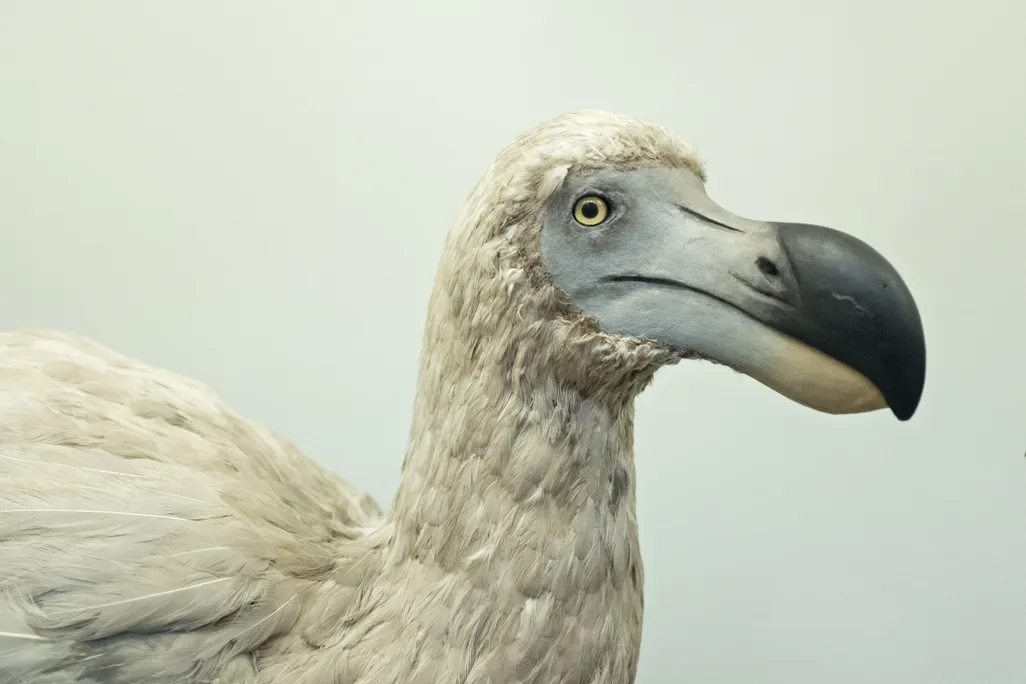
The dodo, scientifically known as Raphus cucullatus, was a flightless bird native to Mauritius in the Indian Ocean. It disappeared during the 17th century after human arrival, hunting, habitat disruption and the introduction of animals that threatened its survival.
Researchers cannot simply clone a dodo from an intact living cell because no living dodo cells are available. Instead, Colossal’s proposed approach involves combining information from ancient dodo DNA with genetic engineering techniques and the biology of living relatives.
The Nicobar pigeon is central to this strategy. Scientists consider it the dodo’s closest living relative, making it a useful starting point for investigating the genetic differences between the extinct bird and living pigeons.
The proposed process involves several challenging stages:
- Reconstruct the dodo genome: Researchers assemble and analyse available ancient DNA to understand the bird’s genetic blueprint.
- Identify important genetic differences: Scientists compare the dodo’s genetic information with that of living birds to identify changes potentially associated with its appearance and development.
- Modify living bird cells: Researchers aim to introduce selected dodo-related traits into the cells of a living relative.
- Develop a reproductive pathway: Scientists must determine how modified cells could contribute to viable eggs and healthy offspring.
- Evaluate the resulting birds: Any future animals would require extensive health, genetic and behavioural assessments before conservationists could consider releasing them.
Every stage presents technical difficulties. A successful genetic edit does not automatically lead to a healthy embryo, and a healthy hatchling does not guarantee that the animal will develop the intended traits.
The Biggest Catch: Would It Really Be a Dodo?
This is the central question behind the entire project.
Even if scientists eventually produce a bird with a dodo-like body, large beak and other characteristic features, it may not be genetically identical to the original species.
The proposed strategy relies on modifying cells from a living pigeon rather than recovering a complete, functional dodo genome inside a living cell. As a result, the eventual animal would be better described as a genetically engineered dodo-like bird, or a de-extinction proxy, unless scientists could establish a stronger basis for calling it the original species.
Appearance is only one part of an animal’s identity. Genetics influences development, but behaviour, physiology, immune function, reproduction and ecological relationships also matter.
For example, a bird that resembles a dodo might not automatically reproduce in the same way, eat the same foods or behave like the extinct animal. Scientists would need to investigate these characteristics rather than assume that genetic edits could recreate the entire species.
This is why experts and conservationists often distinguish between restoring an extinct species and engineering a living relative to reproduce selected traits.
Why Is the Nicobar Pigeon So Important?
The Nicobar pigeon provides researchers with a living biological starting point for their work. It shares evolutionary ancestry with the dodo and offers cells that scientists can study and potentially modify.
Colossal reported in its October 2026 announcement that its Nicobar pigeon colony had reached 36 birds and that it had developed the essential primordial germ cells involved in producing eggs and sperm.
These cells are important because they can contribute genetic material to the next generation. Researchers hope to use this type of cellular technology to help create birds carrying selected dodo-like characteristics.
However, producing and maintaining these cells is not the same as successfully producing an engineered bird. Scientists must still demonstrate that their proposed genetic modifications work as intended and can be passed through a viable reproductive process.
The company has also reported advances in bird embryo research, including methods intended to help researchers study the effects of genetic changes during development.
Together, these efforts could improve the tools available for avian genetic engineering. They do not yet prove that a dodo-like bird can be born, survive to adulthood and reproduce.
Can AI Make Bringing Extinct Species Back Easier?
Artificial intelligence could help researchers work more efficiently with incomplete genetic information.
Normally, scientists compare many genomes to identify genetic differences associated with particular traits. For an extinct animal such as the dodo, researchers have far less information to work with.
GenoMorph aims to address this limitation by combining genetic information with developmental data and three-dimensional measurements from living bird species. This approach can help scientists prioritise candidate DNA regions for further testing.
In principle, the technology could reduce the time researchers spend investigating genetic changes that have little relevance to their goals.
But AI also has limitations. A predicted relationship between a genetic region and a physical trait does not prove that changing that region will produce the desired result. Genes can interact with one another, and the same genetic change may have different effects depending on the animal’s developmental biology.
Laboratory experiments and careful validation remain essential.
The platform may also have applications beyond the dodo project. Better tools for understanding bird development could eventually contribute to research involving threatened species, reproductive biology and conservation genetics.
Why Did the Dodo Become Extinct?
The dodo evolved on Mauritius, an island where it lived without many of the land-based predators found in other environments. Over time, it became flightless and adapted to its island habitat.
That isolation also made it vulnerable when humans arrived.
Historical accounts and scientific research point to several pressures, including hunting, habitat changes and invasive animals introduced by people. Rats, pigs and other animals could threaten eggs and nesting sites, placing additional pressure on a bird that reproduced on the ground.
The dodo disappeared within decades of human arrival on Mauritius, making it a powerful example of how quickly an isolated species can be lost.
Its extinction also raises an important question for modern conservation: if biotechnology eventually allows scientists to recreate some traits of a lost species, can that technology help repair the damage caused by human activity?
The answer depends on more than the ability to engineer an animal. Scientists must also consider whether its original habitat can support it and whether the threats that caused its extinction have been addressed.
Could a Future Dodo Survive on Mauritius?
Returning a dodo-like bird to Mauritius would involve major ecological challenges.
The island has changed significantly since the original dodo disappeared. Vegetation, animal populations, human settlements and ecological relationships may differ from those that existed centuries ago.
Before considering a release, conservationists would need to determine whether suitable habitat remains available, how an engineered bird might interact with native wildlife and whether it could survive without intensive human intervention.
Researchers would also need to assess disease risks, food availability, reproduction and the potential effects of releasing a new organism into an existing ecosystem.
Introducing an animal without sufficient preparation could create new conservation problems rather than solve old ones.
Colossal has said it is working with Mauritian scientists and conservation groups as it explores the possibility of restoring dodo-like birds to their historical home. However, planning for a potential reintroduction is not evidence that a release is imminent or that it would be environmentally safe.
Any future plan would require transparent scientific evaluation and cooperation with local conservation authorities.
Could De-Extinction Help Save Endangered Species?
The technologies being developed for dodo de-extinction could eventually benefit living animals facing extinction.
Scientists may be able to apply improvements in genome analysis, cell culture, reproductive biology and genetic engineering to conservation projects involving threatened species. These methods could help researchers understand genetic diversity, investigate reproductive barriers or explore ways to preserve vulnerable populations.
Nevertheless, the benefits remain dependent on the technology, species and conservation problem involved.
Critics warn that highly publicised de-extinction projects could draw money and attention away from protecting animals that still exist. Habitat destruction, illegal hunting, invasive species and climate change continue to threaten biodiversity around the world.
Preventing an extinction is generally more straightforward than trying to recreate an animal after its genetic diversity, living population and ecological relationships have disappeared.
A responsible approach would therefore treat de-extinction research as a possible complement to conservation, not a replacement for protecting living species and their habitats.
When Could the Dodo Return?
There is no confirmed date for the birth of a genetically engineered dodo-like bird.
The October 2026 announcement describes progress in genome analysis, AI-assisted identification of genetic targets and avian cell research. These developments may help researchers move toward experimental genetic edits, but several important milestones remain unproven.
Scientists still need to establish that the proposed edits can produce the intended traits, that the reproductive process can work successfully and that any resulting animals can develop in good health.
The company has previously discussed a multiyear path toward producing a dodo-like bird, but such projections should not be treated as guaranteed deadlines. Biological research often encounters unexpected technical obstacles.
For now, the most accurate conclusion is that researchers are advancing the tools needed to attempt dodo de-extinction. They have not yet demonstrated that they can produce a living dodo or an animal that fully recreates the extinct species.
Conclusion: Dodo De-Extinction Is Advancing, but the Hardest Work Remains
The latest dodo de-extinction 2026 announcement marks another step in an ambitious scientific effort. Colossal Biosciences says its AI platform has identified thousands of potential genetic targets, while its genome analysis and pigeon-cell research are moving forward.
Yet the gap between identifying genetic changes and producing a healthy, viable animal remains substantial.
Even if scientists eventually create a bird with recognisable dodo traits, questions about its genetic identity, welfare, ecological role and long-term survival will remain. Bringing extinct species back is not simply a matter of rewriting DNA; it also requires understanding the biology and environment that allow animals to live and reproduce.
The dodo may one day inspire a new chapter in conservation science. For now, however, its return remains a research goal rather than a completed scientific achievement.
The real breakthrough will not be an AI prediction or a promising laboratory result. It will be independently verified evidence that the technology can produce healthy animals and support responsible conservation outcomes.