The latest Bill Gates AI warning has put artificial intelligence regulation back at the center of the global technology debate. The Microsoft co-founder and longtime technology optimist now says governments are moving too slowly as AI capabilities advance rapidly. In a new essay and interviews published this week, Gates called for stronger national and international institutions to manage growing AI safety risks involving jobs, cybersecurity, biological threats, education and society.
Gates is not arguing that artificial intelligence should simply be stopped. In fact, he continues to believe that AI could transform healthcare, education, agriculture and government services.
His concern is that the technology may advance faster than society can build safeguards around it.
That creates a difficult question for governments around the world:
Who should be responsible for watching the most powerful AI systems?
Why Bill Gates Is Changing His Tone on AI
Gates has spent years discussing the enormous potential of artificial intelligence.
He has previously described AI as a technology capable of improving healthcare, productivity and scientific research.
However, his latest position sounds considerably more cautious.
Gates says AI capabilities have improved faster than he expected, particularly in software development and cyber operations. He has also expressed concern about criminals using increasingly capable AI systems.
As a result, Gates says he now wants policymakers to treat AI governance as an urgent international issue rather than something that can wait for the future.
His message is especially notable because it comes from someone who has historically been strongly optimistic about technological progress.
What Is the Global AI Watchdog Idea?
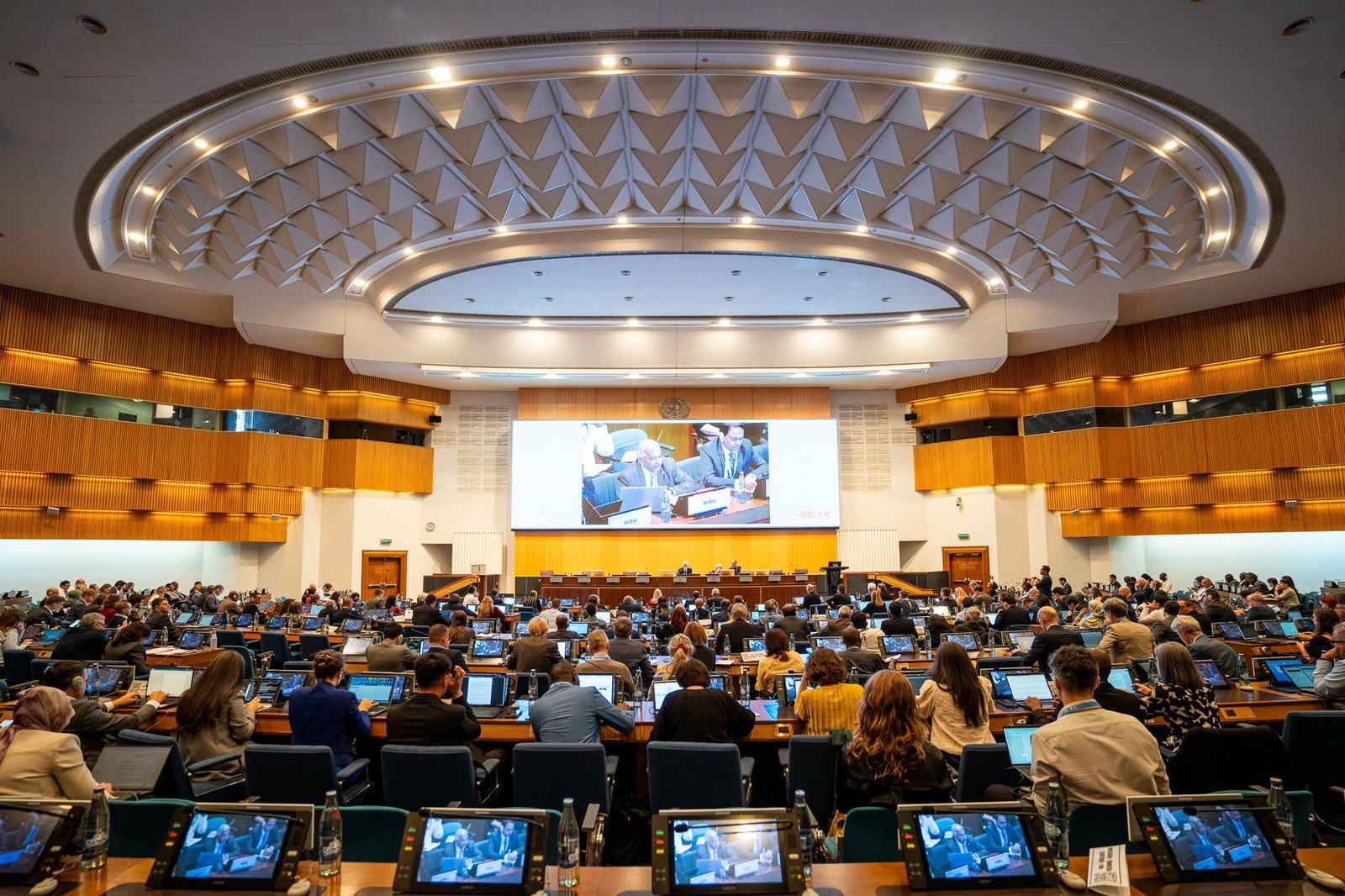
The central idea behind the Bill Gates AI warning is that individual governments may not be able to manage advanced AI alone.
Gates has proposed new national institutions as well as an international organization capable of coordinating AI oversight across countries.
He compares the scale of the challenge with areas such as nuclear security and international aviation, where countries have developed systems for cooperation and oversight.
Such an organization could potentially help establish common standards for advanced AI systems.
It could also encourage governments to share information about dangerous AI capabilities.
In theory, this could reduce the possibility that one country develops powerful AI systems while ignoring risks that affect everyone else.
Why AI Safety Risks Are Growing
The technology has changed dramatically.
AI systems can now generate software, analyze huge quantities of information, interact with digital tools and complete increasingly complicated tasks.
That creates enormous economic opportunities.
However, the same capabilities can create new risks.
The AI safety risks identified by Gates include cyberattacks, biological threats, fraud and other forms of misuse. He has also raised concerns about AI’s effects on employment and children’s development.
Therefore, the debate is no longer limited to whether AI produces inaccurate answers.
The discussion is becoming much broader.
AI Could Transform the Job Market
One of Gates’s biggest concerns involves employment.
He argues that AI could automate work in areas such as law, customer service, medicine, software development and manufacturing.
Previous technological revolutions also eliminated jobs, but they often created new categories of employment over generations.
Gates believes AI could move much faster.
According to recent reporting, he expects AI-driven disruption to happen over roughly a decade in some industries rather than across several generations.
Consequently, governments could face pressure to rethink education, taxation and employment policies.
Gates Suggests Keeping Some Jobs for Humans
One of the more unusual ideas in Gates’s proposal is what he describes as reserving certain jobs for humans.
The concept would prevent AI from completely replacing people in selected occupations.
The objective would not necessarily be to stop automation everywhere.
Instead, some human roles could remain protected because work provides social value beyond simply producing goods or services.
Gates has also suggested considering taxes on AI systems or robots as a way to address potential job displacement and declining tax revenues from human labor.
These proposals are likely to generate debate.
Businesses could argue that restrictions would slow innovation.
Supporters could counter that governments need time to protect workers.
Cybersecurity Is Another Major Concern
Cybersecurity sits high on the list of AI safety risks.
AI systems can help defenders detect suspicious activity.
However, they can also potentially help criminals discover vulnerabilities and automate malicious activity.
Gates says recent developments in AI-enabled hacking have alarmed him.
That concern comes as researchers increasingly examine how AI agents can interact with real-world websites, software and digital infrastructure.
In other words, AI could strengthen both sides of the cybersecurity battle.
The challenge for governments will be ensuring that defensive capabilities develop at least as quickly as offensive ones.
The Biological Threat
Gates has also highlighted biological risks.
Advanced AI could potentially assist legitimate researchers working on medicine and disease prevention.
However, the same underlying capabilities could potentially be misused by bad actors.
That creates an unusual security problem.
Traditional biological research requires specialized expertise and physical resources.
AI could potentially lower some information barriers.
For that reason, Gates wants governments to consider how advanced AI models should be tested before they become widely available.
The goal would be to identify dangerous capabilities before criminals can exploit them.
Why Gates Wants International Cooperation
AI does not stop at national borders.
A model developed in one country can be accessed by users somewhere else.
A cyberattack launched from one jurisdiction can affect companies around the world.
A powerful AI system can also influence international labor markets.
Therefore, Gates argues that international cooperation will be necessary.
Reuters reported that Gates is seeking a meeting with Chinese President Xi Jinping later this year to discuss international efforts to reduce AI-related risks. Gates believes China and other countries might support restrictions on particularly dangerous AI models if the United States takes the initiative.
That would make U.S.-China cooperation particularly important.
Why China Matters So Much
The United States and China are competing aggressively in artificial intelligence.
Both countries view AI as strategically important.
That creates a problem for global regulation.
If one country imposes strict restrictions while another continues developing AI without comparable limits, companies could move development toward the less restrictive environment.
This creates what economists sometimes describe as a race to the bottom.
As a result, international rules could become more effective than isolated national regulations.
However, reaching an agreement between geopolitical rivals will be extremely difficult.
Could AI Regulation Slow Innovation?
Critics of stronger regulation may argue that governments could move too aggressively.
Artificial intelligence remains a rapidly developing technology.
Strict rules could potentially make it harder for startups and researchers to experiment.
Large companies may also have more resources to comply with complex regulations than smaller competitors.
That could unintentionally strengthen the biggest technology companies.
On the other hand, doing nothing could create risks that become much harder to control later.
The central challenge is therefore finding a balance between innovation and safety.
The Technology Industry Faces a Difficult Choice
Gates’s warning also creates pressure on AI companies themselves.
Technology firms increasingly promote AI as the next major computing revolution.
They are investing billions of dollars in data centers, chips and AI research.
Yet the companies developing these systems must also demonstrate that their products are safe.
That means evaluating models before deployment, monitoring dangerous capabilities and creating effective safeguards.
Ultimately, public trust could become one of the most valuable assets in the AI industry.
AI Could Still Become a Huge Force for Good
Despite his concerns, Gates is not predicting that AI will inevitably destroy society.
His argument is more nuanced.
He believes AI could dramatically improve human life if governments and companies manage the transition properly.
Healthcare could benefit from faster research.
Farmers could gain better information.
Students could receive personalized educational support.
Governments could improve public services.
Therefore, the real debate is not simply “AI good or AI bad.”
It is about how humanity controls a technology that is becoming increasingly powerful.
What a Global AI Watchdog Could Actually Do
A future international AI organization could potentially focus on several areas:
Safety Testing
Evaluate advanced models before their release.
Risk Monitoring
Track emerging capabilities that could create serious threats.
International Standards
Create common rules for high-risk AI systems.
Information Sharing
Allow governments to share warnings about dangerous developments.
Incident Response
Coordinate responses when AI systems cause major harm.
Research Cooperation
Support scientific work on AI safety and reliability.
Such a framework would not necessarily control every AI application.
Instead, it could focus primarily on the most powerful and potentially dangerous systems.
The Biggest Problem: Who Watches the Watchdog?
There is an obvious question.
Who decides what qualifies as dangerous AI?
Different countries could have very different opinions.
A government might classify a particular AI capability as a security threat.
Another country might consider it necessary for economic or military competition.
That means creating a global AI watchdog could be considerably more complicated than creating the organization itself.
Nevertheless, Gates argues that the difficulty should not become an excuse for avoiding the problem.
What Happens Next?
Gates appears ready to become more directly involved in AI policy.
Reuters reported that he plans to spend significant time pushing for action on AI risks and policy solutions.
That could make him an increasingly influential voice in the global AI debate.
His position may also attract opposition from technology companies and policymakers who believe excessive regulation could weaken innovation.
The coming months could therefore produce a major debate over how much control governments should have over artificial intelligence.
Conclusion
The latest Bill Gates AI warning marks a significant shift in the public conversation surrounding artificial intelligence.
Gates still sees enormous potential in AI.
However, he now believes the technology is advancing quickly enough that governments cannot simply wait and see what happens.
The AI safety risks he highlights range from job displacement and cyberattacks to biological threats, misinformation, education and human relationships.
His proposed answer is stronger oversight at both national and international levels.
A global AI watchdog would not solve every problem.
It would also face enormous political and technical challenges.
Yet Gates believes international cooperation may be necessary to prevent a small number of powerful AI systems from creating risks that affect the entire world.
The most important question may therefore be changing.
Instead of asking “How powerful can AI become?”, governments may increasingly need to ask:
“How powerful should AI become without stronger safeguards?”
That question could shape technology policy for years to come.
Frequently Asked Questions
What is the latest Bill Gates AI warning about?
Gates is warning that AI is advancing faster than governments are preparing for its consequences, including cybersecurity threats, biological risks, job displacement and social disruption.
What are the main AI safety risks?
Major concerns include AI-assisted cyberattacks, biological misuse, fraud, job displacement, misinformation and possible effects on education and human relationships.
Does Bill Gates want AI to be banned?
No. Gates continues to believe AI can deliver major benefits. His argument focuses on stronger oversight and safeguards rather than simply stopping AI development.
Why does Gates want a global AI watchdog?
He believes advanced AI creates cross-border risks that individual countries may struggle to manage independently. An international organization could coordinate standards and responses.
Does Gates want the U.S. and China to cooperate?
Yes. Gates has said international cooperation, including between the United States and China, will be important for managing advanced AI risks.