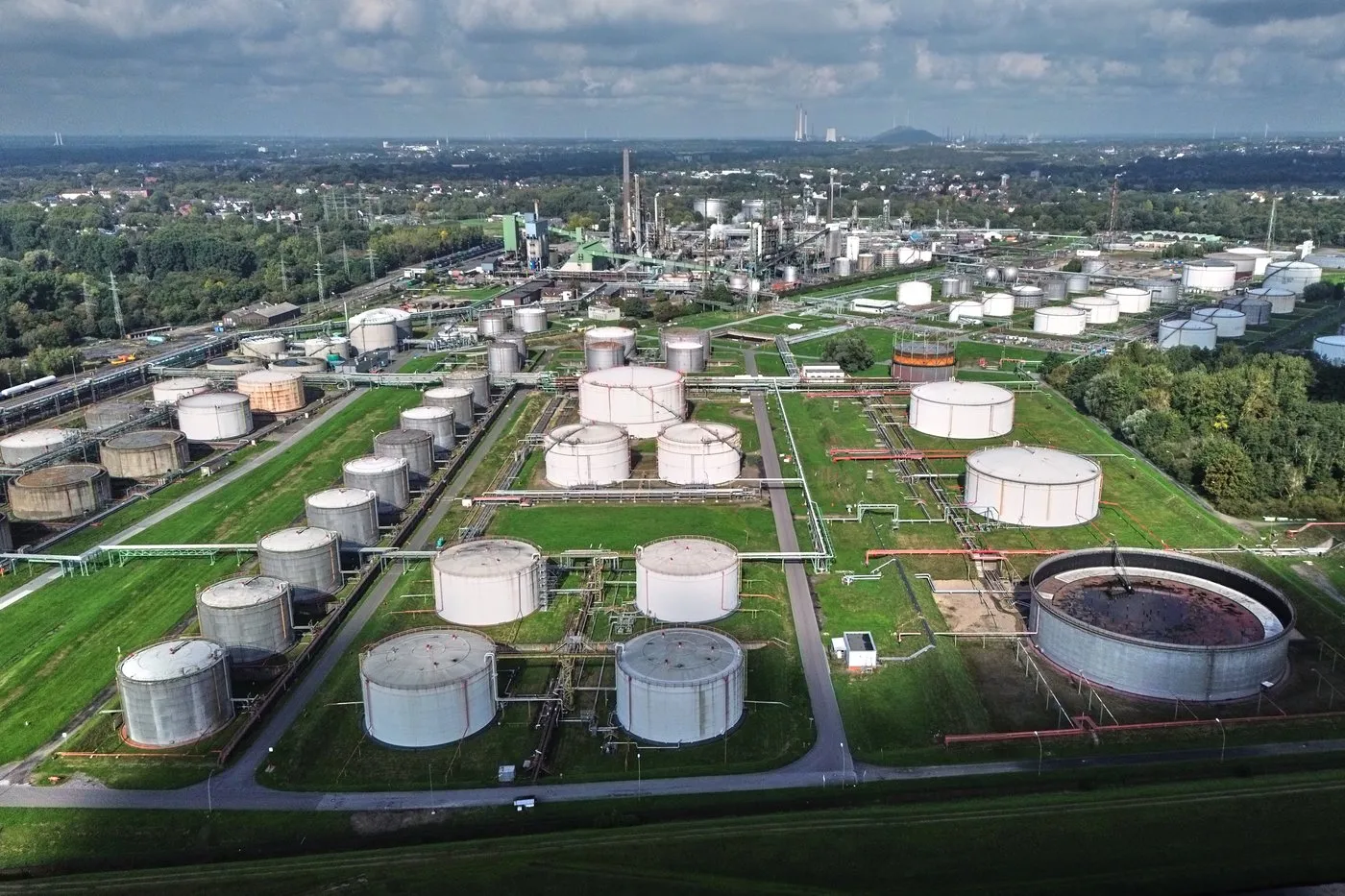
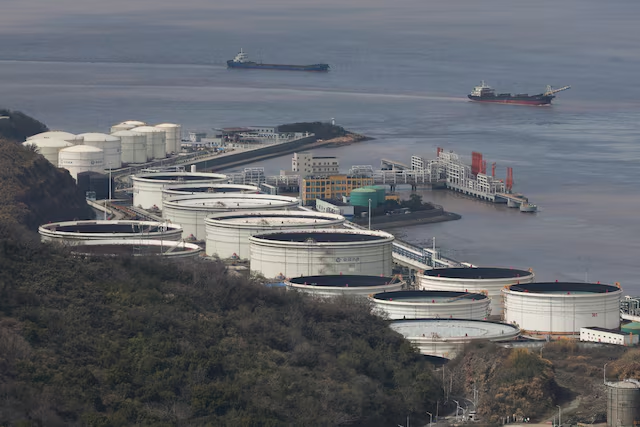
The China fuel export suspension 2026 decision has suddenly added another layer of pressure to already fragile global fuel markets. Chinese refiners have suspended exports of oil products to destinations beyond Hong Kong and Macau for October, according to people familiar with the situation cited by Reuters.
The move matters because China has one of the world’s largest refining industries. When Chinese refiners reduce the amount of gasoline, diesel and jet fuel available to international buyers, other countries have fewer supplies to choose from.
Oil markets reacted quickly.
On October 1, Brent crude rose by about $3, reaching around $101 a barrel, while U.S. West Texas Intermediate crude also gained. The reaction reflected concerns that China’s decision could further tighten fuel supplies already affected by disruptions in the Middle East and Ukraine.
However, the situation is more complicated than simply saying China has caused another permanent oil-price shock.
By October 5, oil prices had eased as increased Middle Eastern crude exports and the G7 decision to release emergency oil and diesel stocks helped offset some supply concerns. Brent was around $101.52 a barrel and WTI around $90.11.
So the bigger question is this:
Could China’s fuel-export suspension push oil prices higher again if the restrictions continue?
The answer is yes, but the size and duration of the effect will depend on several factors.
What China Actually Suspended
China has not stopped exporting crude oil.
The issue is refined petroleum products.
Chinese refiners have suspended exports of oil products to destinations outside Hong Kong and Macau until Beijing provides further guidance.
That includes important products such as:
- Diesel
- Gasoline
- Jet fuel
The restrictions apply during October, although it remains unclear whether Beijing will allow exports to resume after the Golden Week holiday ends on October 7.
That uncertainty is one of the biggest reasons energy traders are paying attention.
If exports restart quickly, the market impact could be temporary.
If restrictions continue for weeks or longer, international fuel markets could become considerably tighter.
Why Did China Suspend Fuel Exports?
The main reason appears to be domestic supply security.
China began restricting fuel exports earlier in 2026 after disruptions to Middle Eastern crude supplies affected global energy markets.
The country later relaxed some restrictions during the summer.
Now, however, Chinese fuel inventories have come under pressure again.
Reuters reported that Beijing is making exports dependent on domestic stocks returning to pre-war levels. Analysis cited by Kpler estimated that commercial gasoil and diesel inventories were around 20 million barrels below that threshold, while gasoline inventories were roughly 9 million barrels short.
That gives China a strong reason to keep more refined fuel at home.
From Beijing’s perspective, protecting domestic supply is more important than maintaining maximum export volumes.
PetroChina Has Already Cancelled Cargoes
The decision is not merely theoretical.
PetroChina reportedly cancelled a number of gasoline and jet-fuel shipments scheduled for October.
Another major refiner, Zhejiang Petrochemical Corp, did not schedule oil-product shipments during the holiday week.
That means some international buyers may suddenly need to find alternative suppliers.
The timing is particularly important because the restrictions arrived as China’s week-long National Day holiday began.
The market therefore does not yet know exactly what will happen after October 7.
Why the Move Matters to Asia
China is a major refining power.
Although Chinese fuel exports have typically been lower than those of major Asian exporters such as India and South Korea, China still supplies important markets across the region.
Reuters reported that Singapore, Malaysia, Australia, Vietnam, Bangladesh and the Philippines were among destinations for Chinese fuel exports in September.
Bangladesh is particularly exposed because a significant share of its refined-fuel imports comes from Chinese suppliers.
If Chinese cargoes disappear, buyers must search for replacement supplies.
They could turn to South Korea, India, Singapore or Middle Eastern suppliers.
But replacement fuel may come with higher transportation costs or limited availability.
The Diesel Market Could Feel the Impact First
The biggest immediate concern may not be crude oil.
It could be diesel.
Diesel is essential for:
- Trucks
- Agriculture
- Construction
- Mining
- Manufacturing
- Shipping
- Backup power
- Commercial transportation
A shortage of diesel can quickly increase transportation and production costs.
That can eventually affect food prices, industrial goods and consumer inflation.
Reuters reported that October-November Asian diesel price spreads reached a two-week high as traders anticipated the absence of Chinese export supplies.
This is an important signal.
It suggests traders are already pricing in tighter refined-fuel availability.
What Does This Mean for China Oil Prices 2026?
The China oil prices 2026 story is complicated because China’s decision affects refined products more directly than crude.
China could actually increase crude imports if domestic refiners need more crude to produce gasoline and diesel for local consumers.
However, there is another possibility.
If Chinese refiners reduce production because crude availability or margins become less attractive, international crude demand could weaken.
That could put downward pressure on crude prices.
Therefore, China’s fuel-export suspension does not automatically mean crude oil prices must rise.
The impact depends on how refiners respond.
Why Oil Initially Jumped
Markets tend to react to changes in expected supply.
When China removes refined fuel from international markets, traders immediately consider what that means for global inventories.
On October 1, Brent crude jumped about $3 after reports of China’s export suspension.
Reuters said the move potentially tightened fuel markets that were already dealing with global supply shortages.
That initial reaction demonstrates how sensitive the market has become.
Even a policy decision that mainly affects refined products can influence crude prices because traders expect tighter fuel markets to increase demand for alternative supplies.
But Oil Prices Have Not Moved in One Direction
This is where the story becomes more interesting.
China’s export suspension pushed prices higher initially.
But other developments have moved in the opposite direction.
On October 2, G7 countries agreed to release 100 million barrels of crude and diesel from emergency reserves.
At the same time, Middle Eastern crude exports increased.
Those developments added supply to the market and helped offset some of the pressure created by China’s decision.
By October 5, Brent crude had slipped to around $101.52 per barrel.
So China’s move has not created a one-way oil-price rally.
Instead, the market is balancing several competing supply forces.
The G7 Is Trying to Counter the Supply Shock
The G7 stock release is significant because it directly addresses the shortage problem.
Emergency reserves exist specifically for periods when supply disruptions threaten markets.
Releasing crude and diesel can temporarily increase available supply.
That can reduce the immediate pressure on prices.
However, strategic reserves are not unlimited.
Once governments release emergency stocks, inventories become smaller.
If supply disruptions continue for months, governments could eventually face difficult decisions about whether to release more.
That is why traders will continue watching China’s export policy as well as the Middle East.
Saudi Arabia Is Adding Another Twist
Saudi Arabia has also changed its pricing strategy.
Saudi Aramco unexpectedly cut its November selling price for Arab Light crude to Asian buyers by $3 per barrel.
The discount reached $5 below the Oman-Dubai benchmark average, the widest discount since June 2020.
Reuters reported that the move appears aimed partly at compensating Asian buyers for extremely high shipping costs and protecting Saudi market share.
This could help Asian buyers.
But it also shows how complicated the oil market has become.
Some producers are trying to protect supply and market share while others are restricting exports.
Shipping Costs Are Making Oil More Expensive
The price of crude is only part of the problem.
Transporting oil has become significantly more expensive.
Reuters reported that the cost of booking a very large crude carrier capable of transporting 2 million barrels from the Gulf to China had reached around $1.2 million per day, compared with roughly $80,000 a year earlier.
That is an enormous increase.
Even when crude is physically available, transportation costs can make the final delivered price much higher.
Asian refiners therefore have to consider not only the cost of crude but also shipping routes, insurance, delays and security risks.
China Could Keep More Fuel at Home
The most important question now is whether China’s restrictions continue after October 7.
Beijing has not clearly indicated when broader exports will resume.
According to sources cited by Reuters, the decision could depend on domestic fuel inventories and refining output.
If inventories recover quickly, China could gradually restore exports.
If stocks remain below the government’s preferred levels, restrictions could continue.
That would remove Chinese supplies from the international market for longer.
What Happens If China Extends the Suspension?
An extended suspension would create several possible effects.
First, Asian buyers would compete for replacement diesel and gasoline.
Second, regional fuel prices could rise.
Third, refiners in countries such as India and South Korea could receive stronger demand.
Fourth, shipping costs could increase as buyers source fuel from farther away.
Finally, higher fuel prices could feed into inflation.
That last point is particularly important for central banks.
Could This Push Inflation Higher?
Yes.
Fuel is embedded in almost every modern economy.
Higher diesel prices can increase the cost of transporting food and manufactured goods.
Higher jet-fuel prices can raise airline operating costs.
Higher gasoline prices can increase household transportation expenses.
Businesses may then pass some of those costs to consumers.
That creates another potential inflationary pressure.
The effect would be especially significant if the Chinese restrictions occur alongside continuing disruptions in the Middle East and Russian refining infrastructure.
Why the World Is Watching China
China is the world’s largest oil importer and one of its largest refining centers.
That makes its energy policy important far beyond its borders.
When China imports more crude, international crude demand can increase.
When China exports refined fuel, Asian markets receive additional supply.
When China keeps fuel at home, international markets lose some of that supply.
That is why a domestic Chinese inventory decision can quickly become a global energy story.
The Russia Factor
China’s move comes at a time when Russian refining infrastructure is also facing disruption.
Ukraine has targeted Russian oil refineries, and President Volodymyr Zelenskiy told Reuters that Kyiv plans to intensify such attacks.
That creates another source of uncertainty for global refined-fuel markets.
If Chinese exports remain restricted while Russian refinery disruptions continue, the international diesel market could become even tighter.
The Middle East Remains the Biggest Wild Card
The Middle East remains central to the outlook.
Oil markets are still dealing with disruptions connected to the conflict involving Iran.
The Strait of Hormuz remains strategically important for global energy transportation.
At the same time, Middle Eastern crude exports have recently increased.
Reuters reported that Middle Eastern crude exports rose above pre-war levels on four of the seven days in the final week of September, despite continued shipping risks.
That increase has helped offset some of the supply pressure.
However, any major new disruption could quickly change the balance.
Three Possible Scenarios
The next stage of the crisis could develop in several ways.
Scenario 1: China Restarts Exports
If Beijing allows exports to resume after October 7, the current supply shock could fade.
Asian fuel markets could stabilize.
Oil prices could also come under downward pressure if other supplies remain strong.
Scenario 2: China Extends Restrictions
If exports remain restricted throughout October, Asian diesel and gasoline markets could become tighter.
Buyers would need alternative suppliers.
That could support refined-product prices and potentially push crude prices higher.
Scenario 3: Multiple Supply Problems Hit Together
The most serious scenario would involve continued Chinese export restrictions alongside disruptions in the Middle East and Russian refining capacity.
That combination could create a much larger global fuel shortage.
In that case, oil prices could move significantly higher.
However, the scale would depend on how quickly other producers and governments could add replacement supply.
What Consumers Should Watch
Consumers do not need to follow every oil-market statistic.
A few indicators matter most:
- Brent crude prices
- Diesel prices
- Gasoline prices
- Chinese fuel inventories
- Chinese export policy after October 7
- Middle Eastern crude exports
- Russian refinery disruptions
- G7 emergency-stock releases
- Global shipping costs
Together, these numbers will show whether the current fuel squeeze is getting better or worse.
What This Means for Asia
Asian economies could be particularly exposed.
Countries that depend heavily on imported diesel and gasoline may face higher costs if Chinese exports remain restricted.
Manufacturers could see transportation expenses rise.
Airlines could face higher fuel costs.
Shipping companies could pay more for fuel and transportation.
In developing economies, higher fuel prices can also increase food and electricity costs.
That makes China’s decision especially important for countries that have limited domestic refining capacity.
China May Be Protecting Its Economy First
There is another way to understand the decision.
Beijing may not be trying to influence international oil prices.
It may simply be protecting its own economy.
If Chinese authorities believe domestic fuel stocks are too low, restricting exports is a straightforward way to preserve supply.
The international consequences are secondary.
But because China’s refining industry is so large, a domestic supply decision can have global consequences anyway.
The Bigger Energy Story
The China fuel export suspension 2026 decision highlights a major change in the global energy market.
Countries are increasingly prioritizing domestic energy security.
Governments want to ensure that their own citizens and industries have enough fuel before supplying international customers.
That creates a more fragmented energy market.
Instead of assuming that fuel will always flow to whoever is willing to pay the highest price, buyers may increasingly have to consider government policy, strategic reserves and geopolitical relationships.
Will Oil Prices Rise Again?
They could.
But there is no guarantee.
The October 1 price jump showed that markets are concerned about China’s decision.
Yet the October 5 decline demonstrates that other supply developments can offset that pressure.
G7 reserve releases, increased Middle Eastern exports and Saudi Arabia’s pricing decisions are all working in the opposite direction.
Therefore, the most important factor may be duration.
A short Chinese export pause could have a limited effect.
A prolonged suspension could have a much larger impact.
Conclusion
The China fuel export suspension 2026 decision has added another major uncertainty to global energy markets.
Chinese refiners have suspended oil-product exports to destinations beyond Hong Kong and Macau while Beijing focuses on protecting domestic fuel supplies. PetroChina has cancelled some October gasoline and jet-fuel shipments, while another major refiner has also held back export scheduling.
The decision initially pushed oil prices higher, with Brent gaining around $3 on October 1.
But the global market is responding to several competing forces.
G7 countries are releasing emergency stocks.
Middle Eastern crude exports have increased.
Saudi Arabia has cut November crude prices for Asian buyers.
At the same time, Russian refining disruptions and Middle East shipping risks continue to threaten fuel supplies.
That leaves the market in a delicate position.
The key date to watch is October 7, when China’s Golden Week holiday ends.
If Beijing restores fuel exports, some of the pressure could disappear.
If China extends the restrictions, Asian fuel markets could become tighter and oil prices could face renewed upward pressure.
For consumers, businesses and governments around the world, the message is simple:
The next oil-price shock may not come from a single country or conflict. It could come from several smaller supply disruptions happening at the same time.
China’s decision shows just how quickly a domestic fuel-policy change can become a global energy problem.
Frequently Asked Questions
What is the China fuel export suspension 2026?
Chinese refiners have suspended exports of oil products to destinations beyond Hong Kong and Macau during October while Beijing focuses on protecting domestic fuel supplies. The suspension affects refined products rather than crude oil exports.
Why did China suspend fuel exports?
The main reported reason is concern about domestic fuel inventories and supply security. Chinese authorities have been managing fuel exports according to domestic inventory levels.
Will China’s fuel export suspension increase oil prices?
It could, particularly if the restrictions continue for an extended period. However, other factors such as G7 reserve releases and increased Middle Eastern exports can offset some of the upward pressure.
Which fuels are affected?
The restrictions concern refined petroleum products including diesel, gasoline and jet fuel.
When could China resume fuel exports?
It remains uncertain. Sources cited by Reuters said the decision could depend on domestic inventories and refining output after the Golden Week holiday ends on October 7.
Why does China’s decision matter globally?
China is both the world’s largest oil importer and a major refining power. Changes in its refined-fuel exports can affect supply availability and prices across Asian and international markets.
Could diesel prices rise?
Yes. Diesel markets are already under pressure, and the removal of Chinese export supplies could increase competition among Asian buyers for replacement fuel.
What should investors watch next?
The most important indicators include China’s export policy after October 7, Chinese fuel inventories, Brent crude prices, Asian diesel prices, Middle Eastern exports, Russian refinery disruptions and G7 emergency-stock releases.