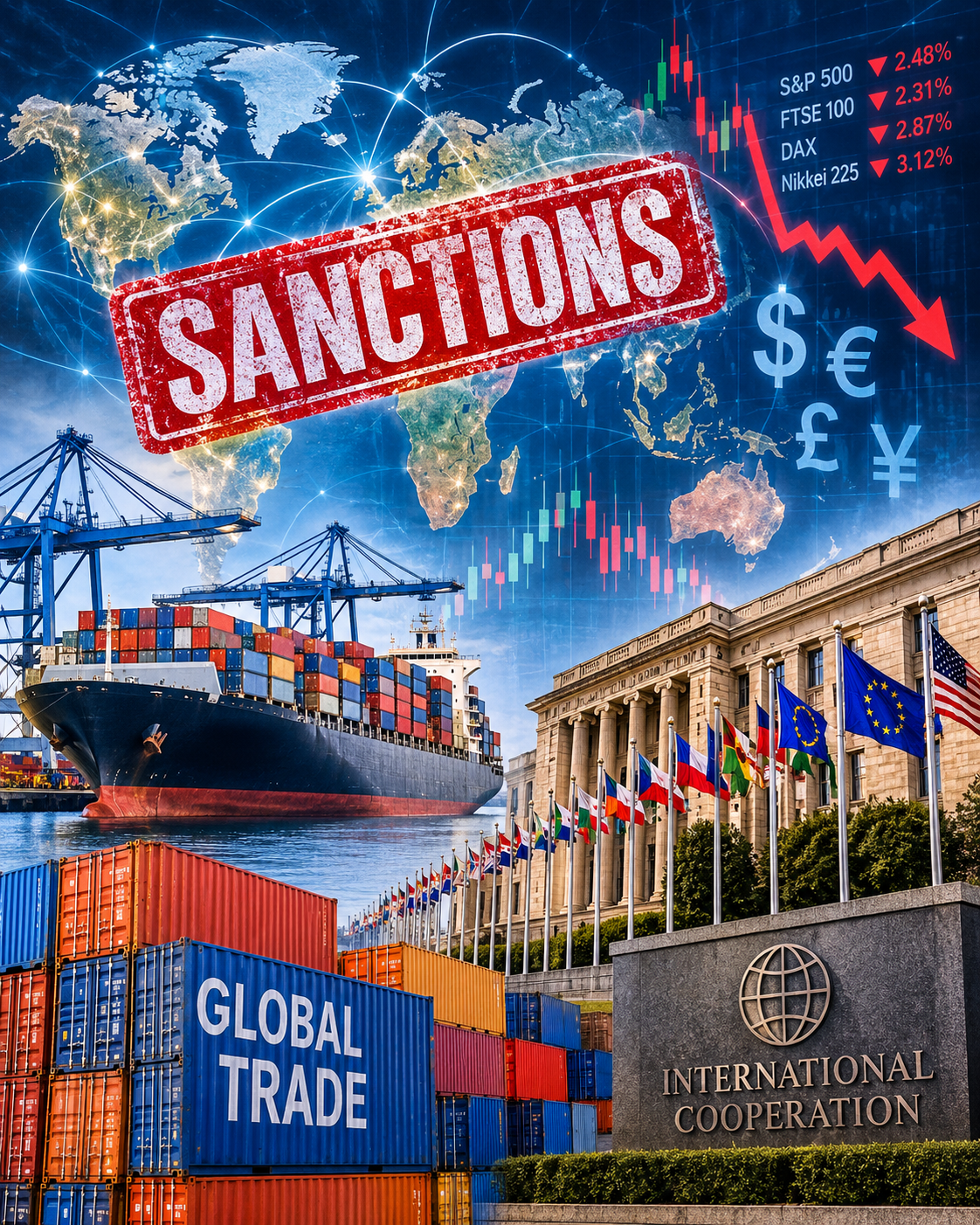
International Economic Sanctions have become one of the most powerful tools governments use to influence foreign policy without relying directly on military force. Countries and international organisations impose restrictions on trade, banking, investment, technology and financial transactions to pressure governments, businesses or individuals over issues such as armed conflict, nuclear programmes, terrorism and human rights.
In 2026, sanctions remain a major force in international relations. Restrictions involving Russia, Iran, North Korea and other countries demonstrate how economic pressure can reshape trade routes, financial relationships and diplomatic alliances. These measures also affect companies, investors, workers and ordinary consumers far beyond the countries directly targeted.
Understanding sanctions is therefore essential to understanding the Global Political Economy. Economic restrictions can weaken targeted industries, limit access to international finance and influence political negotiations. However, their success is not guaranteed. Sanctions can also create humanitarian problems, encourage alternative trading networks and impose costs on countries that introduce them.
1. What Are International Economic Sanctions?
International economic sanctions are restrictions imposed by one country, a group of countries or an international organisation to influence another government’s behaviour.
Unlike ordinary trade policies, sanctions usually serve a specific political, diplomatic or security objective. Governments may use them to respond to military aggression, restrict weapons development, combat terrorism or pressure authorities accused of serious human rights violations.
Sanctions can take several forms:
- Trade restrictions: Prohibitions or limits on importing and exporting selected products.
- Financial sanctions: Restrictions on banking transactions, loans, investments and access to financial markets.
- Asset freezes: Blocking money and property belonging to designated individuals, companies or organisations.
- Technology restrictions: Limiting access to advanced computer chips, industrial equipment, software and military-related technologies.
- Travel bans: Preventing designated officials or individuals from entering certain countries.
- Investment restrictions: Limiting foreign investment in particular industries or businesses.
Some sanctions target specific individuals or companies, while others affect entire industries or significant parts of a national economy. The design determines how much economic pressure they create and which groups experience the consequences.
2. Why Do Governments Impose Economic Sanctions?
Governments use sanctions because economic pressure can offer an alternative to military confrontation. They can restrict a target’s access to international markets, reduce financial resources and increase the economic costs of certain political decisions.
Common reasons include:
Responding to military aggression: Countries may restrict trade, finance and technology to increase the costs of military action.
Preventing nuclear proliferation: Sanctions can limit access to materials, technology and financial resources associated with nuclear weapons programmes.
Addressing human rights concerns: Governments may freeze the assets of officials or organisations accused of serious abuses.
Combating terrorism: Financial restrictions can target individuals, organisations and networks suspected of financing terrorist activities.
Supporting diplomatic negotiations: Sanctions may be introduced or eased as part of negotiations over security, trade or political agreements.
However, imposing sanctions does not automatically change government policy. Their impact depends on the target’s economic structure, international relationships, political leadership and ability to find alternative sources of finance and trade.
3. How Sanctions Affect International Trade
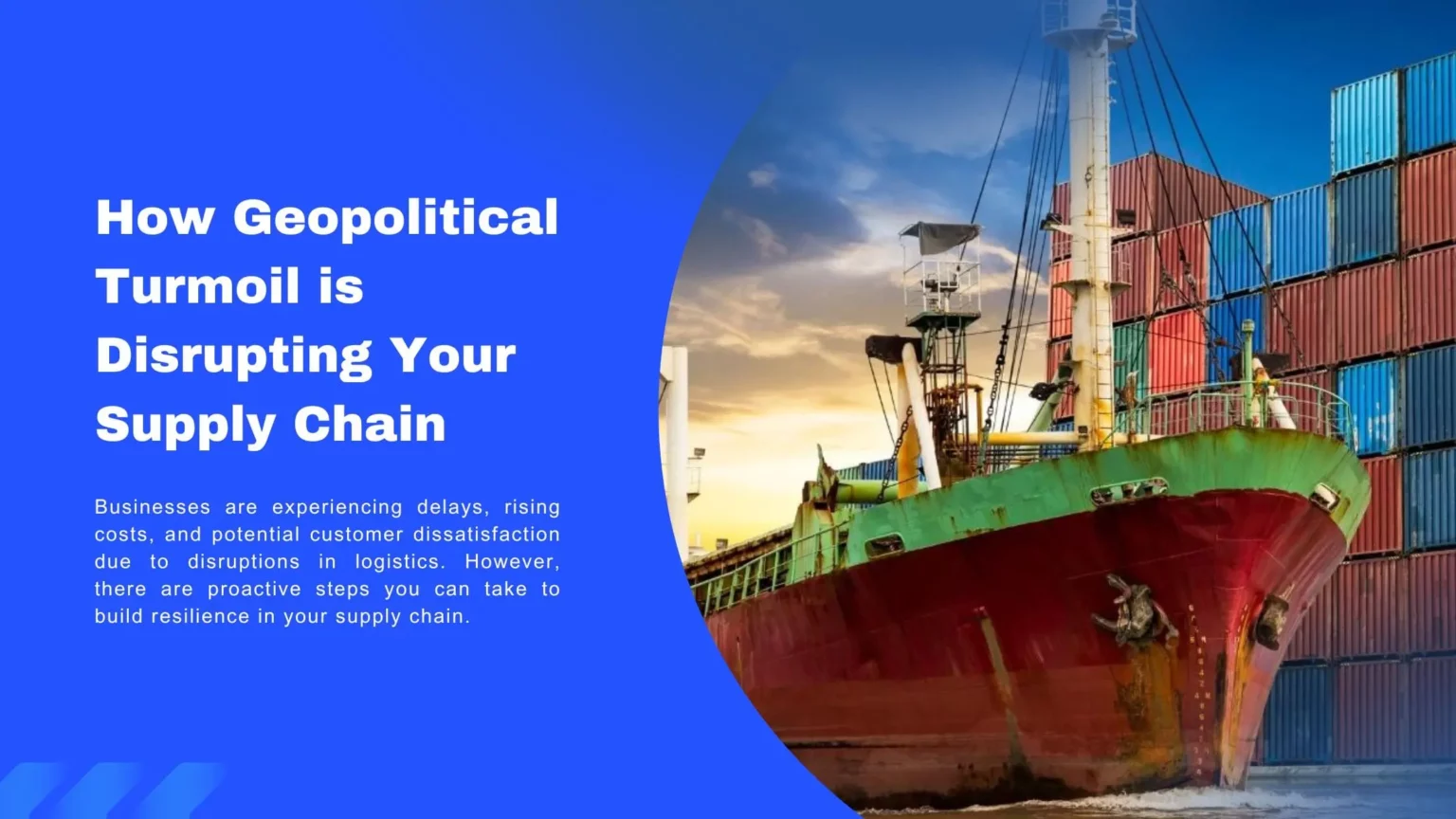
Trade restrictions can change the movement of goods between countries. When governments prohibit exports or imports, businesses must find alternative suppliers, customers and transportation routes.
These changes can influence international supply chains for years.
A company that previously purchased raw materials from a sanctioned country may need to switch suppliers. This can increase production costs, delay deliveries and create uncertainty for manufacturers.
A July 2026 research brief from Germany’s central bank, the Bundesbank, examined the effects of complete trade sanctions using historical data covering 795 country pairs. Its analysis estimated that bilateral trade fell by just under 60% on average while complete sanctions were in force. The research also found that trade recovery depended partly on how long restrictions remained in place. Long-lasting sanctions could leave persistent damage to commercial relationships even after they were lifted.
This finding demonstrates an important economic reality: sanctions can change more than immediate trade volumes. They can encourage businesses to establish new partnerships and permanently reorganise their supply chains.
4. Financial Sanctions Can Isolate Countries From Global Markets
Financial restrictions are among the most significant instruments of modern economic pressure.
International businesses depend on banks, payment networks, credit facilities and investment markets to operate across borders. When a country or financial institution faces sanctions, these relationships can become difficult or legally restricted.
Financial sanctions may prevent designated banks from accessing certain international services. They can also freeze overseas assets, restrict lending and limit the ability of businesses to complete transactions with sanctioned entities.
These restrictions can affect several sectors:
- International trade and payments
- Foreign investment
- Energy and commodity transactions
- Insurance and shipping finance
- Government borrowing
- Technology imports
The consequences can spread beyond directly targeted organisations. International banks may become cautious about transactions involving sanctioned markets because of compliance obligations and the risk of penalties.
This behaviour is sometimes described as de-risking. Even transactions that might be legally permitted can become difficult when financial institutions decide that the compliance risks are too high.
A September 2026 IMF working paper examined how trade-payment restrictions and capital controls influence external economic balances. It found that tighter payment restrictions can affect imports, domestic demand and exchange-rate conditions.
5. Russia: How Sanctions Have Reshaped Economic Relationships
Russia provides one of the most significant modern examples of large-scale international sanctions.
Following Russia’s full-scale invasion of Ukraine in February 2022, the United States, European Union, United Kingdom and other partners introduced extensive restrictions. These measures targeted financial institutions, trade, technology, designated individuals and businesses connected to strategic industries.
The objective has included limiting Russia’s access to resources and technologies relevant to its military capabilities and increasing the economic costs of the invasion.
A November 2026 European Court of Auditors report provides a useful assessment of the results. It found that EU sanctions significantly reduced direct trade with Russia and restricted exports of important military-related goods. According to the report, EU-Russia trade in goods fell from approximately €253 billion in 2021 to €58 billion in 2025.
However, the auditors also identified uneven enforcement, legal ambiguities and circumvention through third countries as continuing problems. They concluded that differences in implementation among EU member states limit the overall impact of the restrictions.
The Russian case demonstrates that sanctions can significantly change trade relationships without necessarily achieving every political objective behind them.
6. Iran and the Influence of Sanctions on Energy Markets
Iran has faced various international sanctions over several decades, including restrictions connected to its nuclear programme and other security concerns.
These measures have affected parts of its banking system, energy sector, trade relationships and access to international finance. Restrictions on oil exports and financial transactions can influence government revenue and the country’s ability to conduct international business.
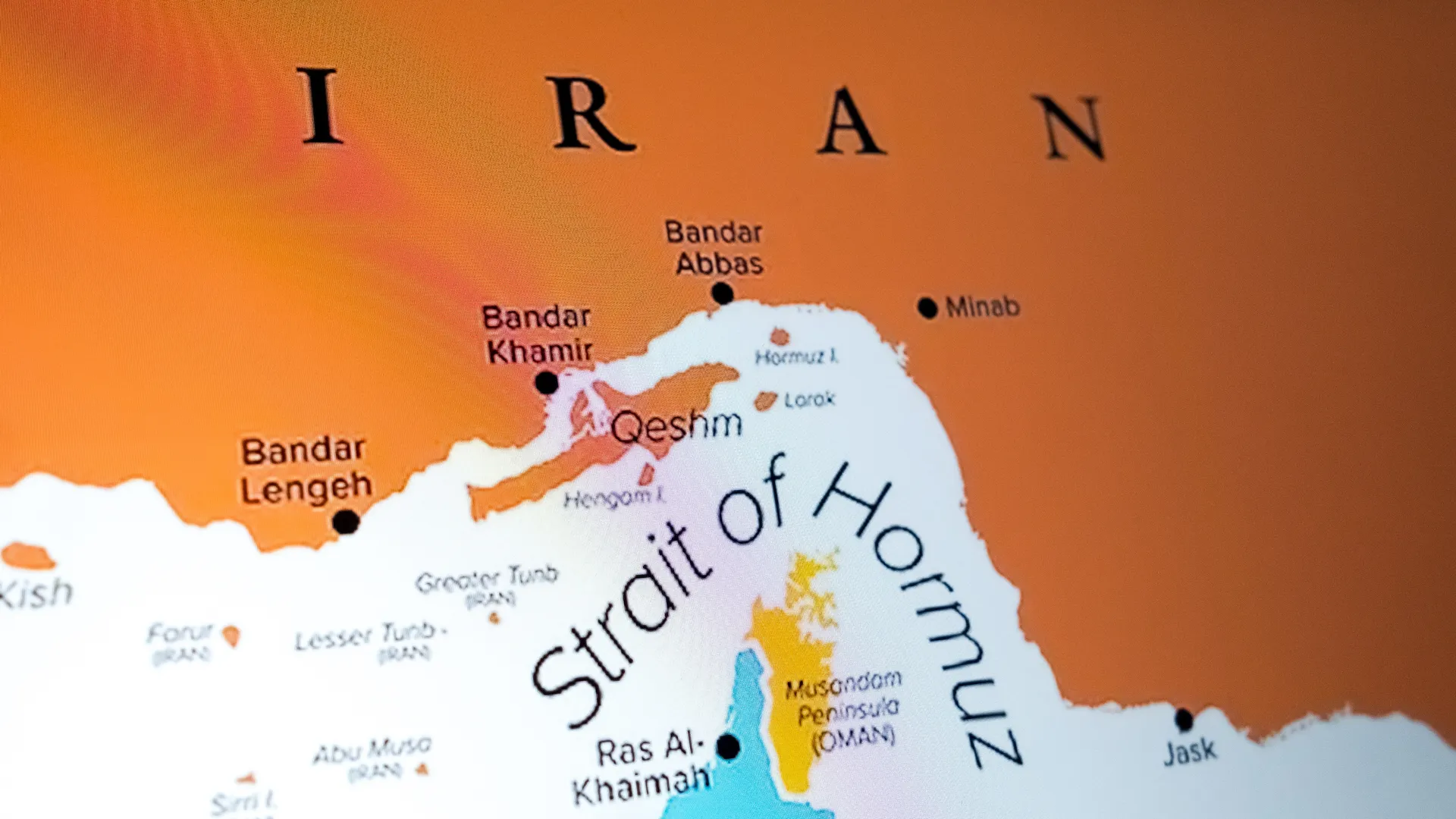
The impact also extends to global energy markets. Iran occupies an important geographical position near the Strait of Hormuz, a major route for international oil and gas shipments.
When geopolitical tensions increase around the Gulf, energy traders, shipping companies and governments assess the possibility of supply disruptions. Higher uncertainty can influence oil prices, insurance costs and transportation decisions.
Sanctions and military conflict are different policy instruments, but they can interact. Economic restrictions may contribute to diplomatic tensions, while regional insecurity can create additional costs for international businesses.
For energy-importing countries, including many developing economies, these developments matter because higher oil prices can increase transport, electricity and manufacturing expenses.
7. China, Technology Restrictions and the Global Economy
Technology restrictions have become an increasingly important part of international economic competition.
Advanced semiconductors, artificial intelligence equipment, telecommunications systems and specialised manufacturing tools have strategic and commercial value. Governments may restrict access to selected technologies when they believe these products could support military capabilities or create national security risks.
The United States has introduced export controls affecting certain advanced computing chips and semiconductor manufacturing technologies destined for China. These restrictions form part of a broader debate about technology security, industrial competition and international trade.
Such measures can influence global technology companies in several ways.
First, manufacturers may need to redesign products for different markets. Second, companies can face additional licensing and compliance requirements. Third, countries may increase investment in domestic semiconductor production to reduce dependence on foreign suppliers.
However, restrictions can also encourage the development of alternative technology ecosystems. Companies and governments may invest in local research, equipment and supply chains when access to international suppliers becomes uncertain.
The result is a more complicated global technology market in which national security considerations increasingly influence commercial decisions.
8. Do Economic Sanctions Actually Work?
One of the biggest questions in international relations is whether sanctions achieve their political objectives.
The answer depends on what governments want to accomplish.
Sanctions may successfully reduce trade, restrict access to technology or freeze financial assets. However, these economic effects do not necessarily translate into political concessions.
A target government may accept economic losses rather than change a policy it considers essential to national security or political survival. It may also redirect trade, develop domestic alternatives or strengthen relationships with countries that do not participate in the restrictions.
Research published in 2026 highlights the complexity of measuring success. A study in the Journal of Economic Behavior & Organization examined sanctions and their stated objectives using historical cross-country data. Its authors reported that sanctions did not produce significant improvements across the outcomes they tested. This is one research finding, not a universal conclusion about every sanctions programme.
The US Government Accountability Office has also identified factors associated with greater effectiveness, including international coordination and the targeted country’s existing economic or institutional relationships with sanctioning states.
Sanctions are therefore more likely to influence behaviour when their objectives are clear, their implementation is coordinated and the targeted government has limited alternatives.
9. The Humanitarian Consequences of Economic Restrictions
Economic sanctions are generally designed to pressure governments, organisations or specific individuals. However, their effects can reach ordinary people.
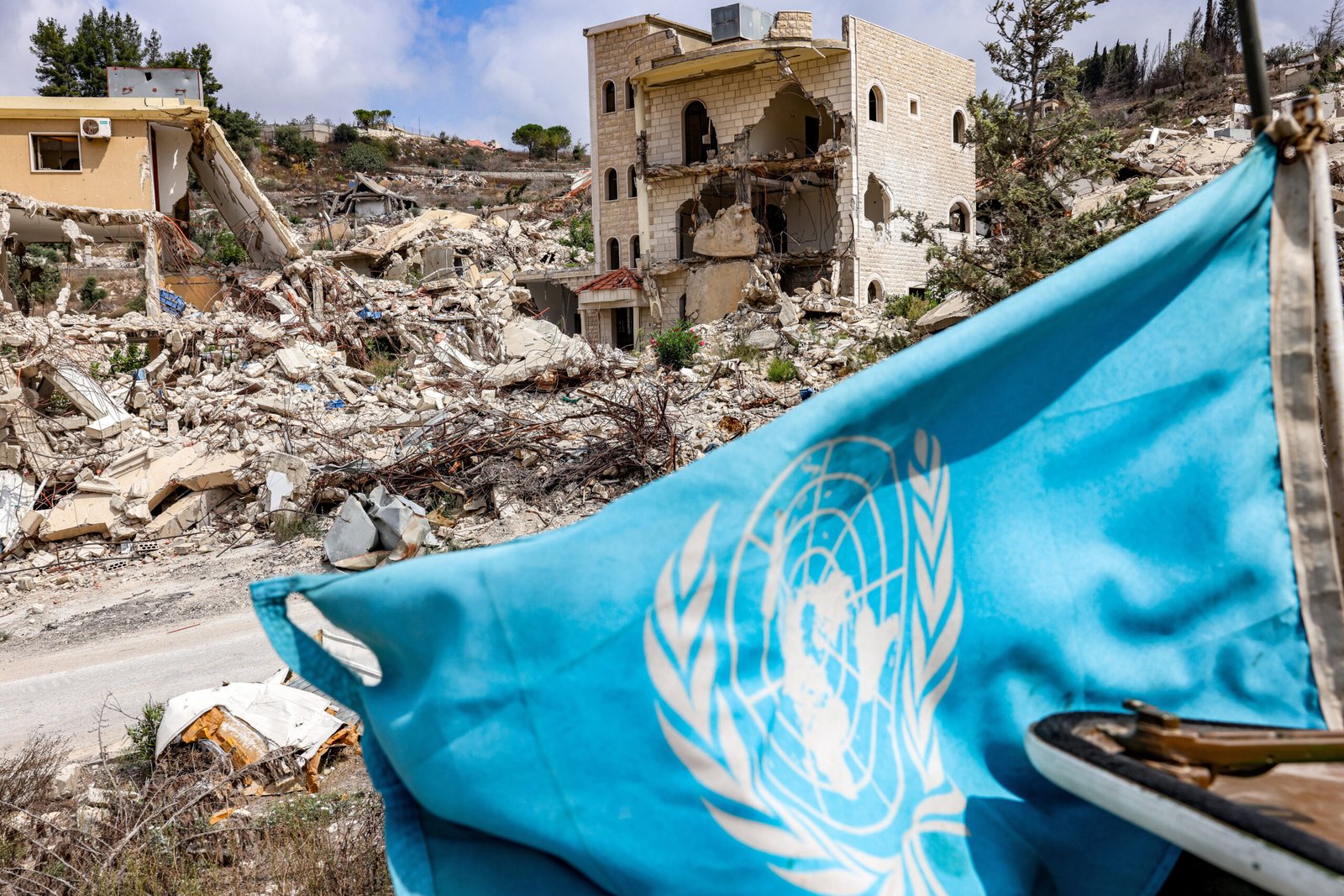
Restrictions on finance and trade may complicate the import of essential goods, including medicines, agricultural equipment and industrial supplies. Even when humanitarian exemptions exist, companies and banks may avoid transactions because they fear legal or compliance risks.
A research article published in October 2026 in Global Health examined the relationship between sanctions and humanitarian conditions. It argued that humanitarian exemptions can fail in practice when financial institutions, suppliers and aid organisations encounter significant operational barriers.
A separate 2026 study in World Development, using data from 183 countries covering 2000–2022, found an association between different forms of sanctions and higher food insecurity. It also identified foreign direct investment as a potential source of resilience in affected economies.
These findings underline the importance of protecting civilian populations. Governments imposing sanctions need effective humanitarian safeguards, clear exemptions and reliable procedures for legitimate food, medicine and aid transactions.
10. How Sanctions Are Changing the Global Political Economy
The growing use of economic restrictions is changing the way countries manage international relationships.
Governments increasingly consider financial access, technology supply chains, energy resources and trade routes as strategic assets. This means that economic policy and national security are becoming more closely connected.
Several developments are shaping the Global Political Economy:
Diversification of trade partners: Countries may seek additional suppliers and markets to reduce exposure to sanctions and geopolitical disruptions.
Alternative payment arrangements: Some governments and businesses explore different payment channels and currency arrangements when access to traditional financial services becomes restricted.
Domestic industrial investment: Technology restrictions can encourage countries to develop local production capacity in strategic industries.
Stronger geopolitical partnerships: Countries facing similar restrictions may increase economic and diplomatic cooperation.
Greater compliance requirements: International businesses must monitor sanctions lists, ownership structures, transactions and export-control rules.
These developments do not mean that traditional global trade is disappearing. Instead, companies increasingly have to consider political risk alongside price, quality and efficiency when choosing suppliers and markets.
11. What Should Developing Countries Learn From Sanctions?
Developing countries can be especially vulnerable to international economic restrictions because many depend on imported fuel, machinery, technology, food and foreign investment.
A sudden disruption in trade or financial access can create pressure on national currencies, government budgets and private businesses.
Countries such as Pakistan need to consider these risks when developing trade and investment strategies. Diversifying export markets, strengthening foreign-exchange management, improving domestic production and maintaining transparent financial systems can help build resilience.
Businesses also need to understand international compliance requirements. A company operating across borders may encounter restrictions even when it is not directly located in a sanctioned country.
Governments can reduce uncertainty by providing clear regulations, improving customs procedures and maintaining communication with international financial institutions and trading partners.
Economic resilience does not mean avoiding all international relationships. It means building an economy that can manage external shocks without suffering severe disruption.
Conclusion: Economic Power Is Reshaping International Politics
International Economic Sanctions have become a central instrument of modern foreign policy. Governments use them to restrict trade, freeze assets, limit technology transfers and influence political decisions without immediately resorting to military action.
However, their effectiveness depends on coordination, enforcement, the economic strength of the targeted country and the availability of alternative international partners. Sanctions can create substantial economic pressure, but they may also damage trade relationships, increase humanitarian difficulties and encourage new geopolitical divisions.
The changing Global Political Economy shows that economic power is no longer separate from international security. Financial networks, energy supplies, technology and trade routes increasingly influence diplomatic relationships and strategic decisions.
For governments, businesses and investors, understanding sanctions is essential. The countries best prepared for an increasingly fragmented global economy will be those that understand geopolitical risks, maintain diversified economic relationships and protect the stability of international trade.