Saudi Arabia is undergoing one of the most ambitious economic transformations in the modern Middle East. For decades, oil dominated the Kingdom’s exports, government revenues and international economic influence. However, changing global energy markets, technological developments and the need for long-term economic stability have encouraged the country to build a more diversified economy.
At the centre of this transformation is Saudi Vision 2030, a national development strategy launched in 2016 to reduce dependence on oil, expand private-sector investment, create employment and establish new industries. The programme aims to transform Saudi Arabia into a stronger global business, tourism, technology and investment destination.
Ten years after its launch, the results are becoming increasingly visible. According to the 2025 Vision 2030 Annual Report, non-oil activities accounted for approximately 55% of Saudi GDP, while the non-oil economy grew by 4.9% during 2025. Tourism also reached 123 million domestic and international visitors, generating approximately $81 billion in spending.
These developments demonstrate that the Saudi Arabia Economy is becoming more diversified. Nevertheless, the Kingdom still faces important challenges involving oil-market volatility, investment costs, regional security and the long-term sustainability of its development projects.
1. Saudi Vision 2030: Why Was the Transformation Necessary?
Saudi Vision 2030 was introduced in April 2016 under the leadership of Crown Prince Mohammed bin Salman. Its central objective is to prepare the country for a future in which economic prosperity does not depend overwhelmingly on oil revenues.
Oil has provided Saudi Arabia with substantial financial resources and international influence. However, relying heavily on one major export creates vulnerabilities.
For example, a decline in global oil prices can reduce government revenue, affect public spending and create uncertainty for businesses. Meanwhile, the global energy industry is gradually changing as countries invest in renewable electricity, electric vehicles and alternative technologies.
Vision 2030 therefore focuses on three broad pillars:
- A Vibrant Society: Improving quality of life, cultural opportunities, healthcare and tourism.
- A Thriving Economy: Expanding investment, private businesses, employment and non-oil industries.
- An Ambitious Nation: Improving government efficiency, transparency and institutional performance.
The strategy is not simply about replacing oil with another industry. It aims to create several sources of economic growth so that Saudi Arabia can remain competitive in a changing global economy.
2. Saudi Arabia Economy: Non-Oil Industries Are Expanding
One of the most important achievements of Saudi Vision 2030 is the increasing contribution of non-oil activities to the national economy.
According to the Kingdom’s 2025 Vision 2030 Annual Report, non-oil activities represented approximately 55% of GDP and recorded 4.9% growth during the year.
This expansion reflects investment in industries that were previously less developed or played a smaller role in the national economy.
Important sectors include:
Tourism and hospitality: Hotels, entertainment destinations, restaurants and cultural attractions are creating new business opportunities.
Financial services: Banking, investment management, insurance and financial technology are expanding as the Kingdom develops its financial markets.
Manufacturing: Industrial development is supporting local production and reducing dependence on selected imported products.
Mining: Saudi Arabia is investing in mineral exploration and processing to develop resources beyond oil and gas.
Technology: Artificial intelligence, cloud computing, cybersecurity and digital services are becoming increasingly important to the country’s economic strategy.
Logistics: Saudi Arabia’s geographical position between Asia, Europe and Africa creates opportunities to become a major transportation and trade centre.
These industries can create employment, attract foreign investment and strengthen the country’s economic resilience.
However, oil remains strategically important. Saudi Arabia’s transformation should be understood as diversification rather than the disappearance of the petroleum industry.
3. Tourism Is Becoming a Major Economic Growth Engine
Tourism is one of the most visible parts of Saudi Arabia’s economic transformation.
For many years, international travel to the Kingdom was largely associated with religious pilgrimage. Although Hajj and Umrah remain central to Saudi Arabia’s identity, the government is now developing a wider tourism industry.
The 2025 Vision 2030 Annual Report recorded:
- 123 million total domestic and international tourists.
- More than 30 million international visitors.
- Approximately $81 billion in tourism spending.
- The original target of 100 million annual visitors achieved ahead of schedule.
- A new ambition of 150 million visitors by 2030.
These figures demonstrate the scale of the tourism sector’s expansion.
Several major destinations are supporting this strategy.
“AlUla” called “Historic and cultural destination in northwestern Saudi Arabia” is being developed as an international destination featuring archaeological heritage, luxury hospitality and cultural experiences.
“Diriyah” called “Historic birthplace of the Saudi state near Riyadh” is receiving major investment in heritage tourism, hospitality, shopping and cultural attractions.
“The Red Sea” called “Saudi Arabian coastal tourism development on the Red Sea” is being developed around luxury resorts, marine tourism and environmental conservation.
“Riyadh” called “Capital of Saudi Arabia” is expanding its position as a destination for business events, entertainment, international conferences and major sporting activities.
Tourism can also support smaller businesses, including transport operators, restaurants, retailers and local service providers.
The long-term challenge will be to maintain visitor growth while ensuring that infrastructure, workforce skills and environmental protection keep pace with investment.
4. NEOM and Mega Projects: Can Saudi Arabia Build New Global Cities?
Saudi Arabia’s ambitious development projects have attracted international attention. These investments are intended to create new economic centres, attract foreign companies and strengthen the country’s position in global industries.
“NEOM” and”Saudi Arabia’s large-scale regional development project” is among the most prominent initiatives. Located in northwestern Saudi Arabia, it was announced as a technology-focused development involving tourism, industry, renewable energy and advanced urban planning.
“The Line” and “Proposed linear urban development within NEOM” attracted worldwide attention because of its unusual vision for a highly connected, compact urban environment. However, its original scale and development timetable have faced significant reassessment. Investors should distinguish between announced ambitions, construction progress and completed facilities.
“Qiddiya” and “Entertainment and sports development near Riyadh, Saudi Arabia” intended to expand entertainment, sports and leisure opportunities.
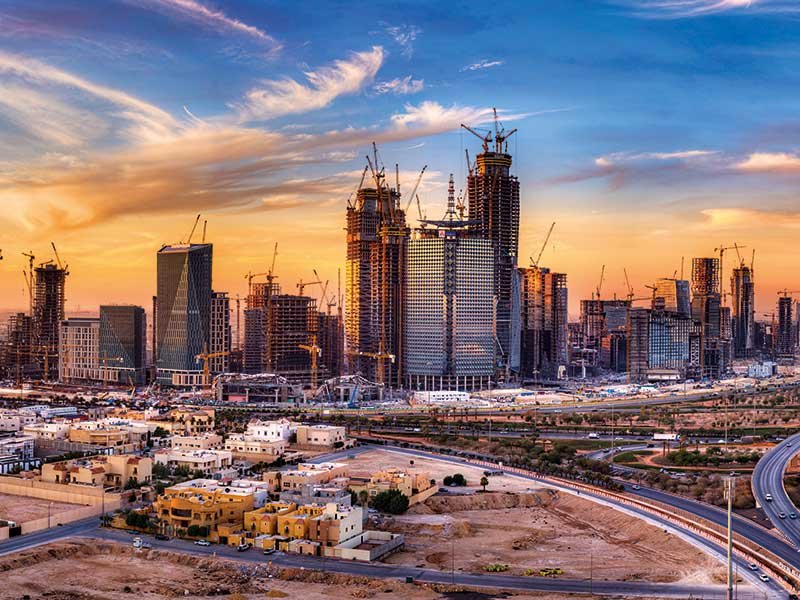
“King Abdullah Financial District” and “Business and financial district in Riyadh, Saudi Arabia” supporting Riyadh’s ambition to become a stronger international financial and business centre.
These projects can generate construction activity, employment and demand for professional services. However, their success depends on commercial demand, realistic financing, efficient management and long-term operating performance.
Large projects also create financial risks if costs rise or expected revenues fail to materialise. For that reason, investment priorities and project sequencing will remain important to the future of Vision 2030.
5. Foreign Investment Is Reshaping Saudi Arabia’s Global Economic Position
Foreign direct investment is an important part of Saudi Arabia’s diversification strategy.
International companies can bring capital, technology, management expertise and access to global markets. These contributions can help develop industries that require specialised knowledge and significant investment.
The Kingdom is seeking investment in several areas:
- Tourism and hospitality.
- Manufacturing and industrial technology.
- Renewable energy.
- Mining and mineral processing.
- Financial services.
- Artificial intelligence and digital infrastructure.
- Logistics and transportation.
- Healthcare and education.
The Public Investment Fund (PIF) plays a major role in this strategy. It invests in domestic and international businesses and supports projects considered important to national economic development.
However, the investment strategy is evolving. The IMF’s July 2026 assessment welcomed a more selective approach to PIF capital allocation and greater efforts to encourage private-sector participation.
This change is significant. Long-term economic diversification cannot rely entirely on government funding. Private businesses must become increasingly capable of financing projects, creating jobs and competing internationally.
6. Employment, Women and the Changing Saudi Workforce
Economic transformation also requires changes in the labour market.
Saudi Arabia needs a workforce capable of supporting tourism, technology, manufacturing, finance and other expanding industries.
Vision 2030 has therefore placed considerable emphasis on education, professional training, employment opportunities and women’s participation in the economy.
The IMF has recognised improvements in labour-market outcomes, including increased female labour-force participation.
Greater participation can provide several economic benefits:
- A larger available workforce.
- Higher household earning potential.
- Greater consumer spending.
- More business creation.
- Improved access to skilled professionals.
- Stronger productivity over time.
Small and medium-sized enterprises are also important. According to the 2025 Vision 2030 indicators, SMEs contributed approximately 23% of GDP in 2024, compared with the programme’s 35% target for 2030. Employment in SMEs reached 8.88 million people in 2025.
These businesses are essential because large government-backed projects alone cannot create a sufficiently diverse employment base. Sustainable growth requires competitive private companies that can operate beyond the initial investment phase.
7. Renewable Energy and Saudi Arabia’s Changing Energy Strategy
Although oil remains central to the Saudi economy, renewable energy is becoming an increasingly important investment area.
Saudi Arabia has substantial solar resources and is developing projects intended to increase domestic renewable electricity generation.
The strategy has two economic objectives.
First, producing more electricity from renewable sources can reduce the amount of liquid fuel required for domestic power generation. This can allow more hydrocarbons to be available for export or other higher-value uses.
Second, developing renewable-energy industries can attract investment in manufacturing, engineering, construction and energy technology.
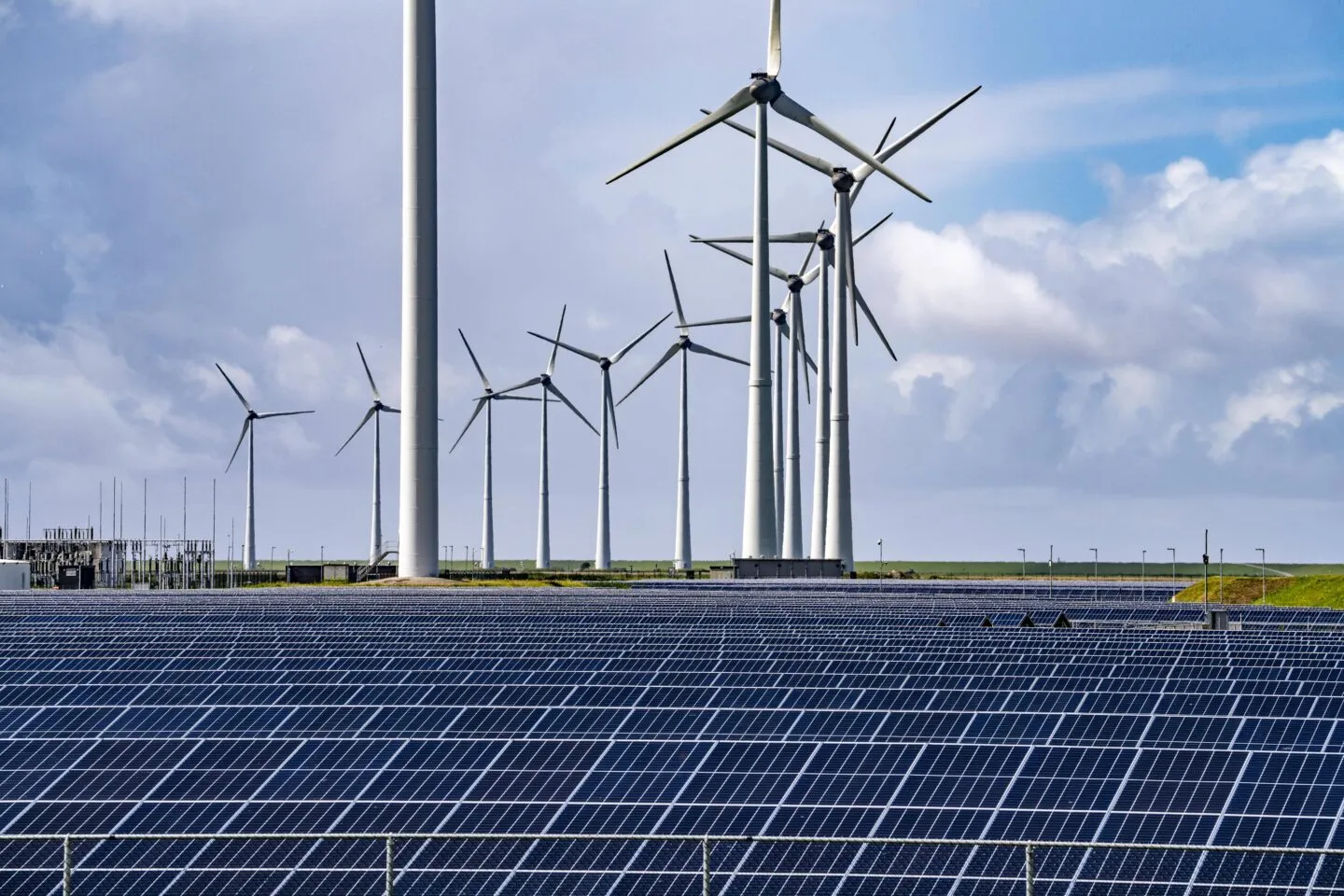
According to the Saudi government’s 2025 Vision 2030 progress review, renewable energy generation capacity increased from effectively zero in 2016 to approximately 64 GW by the end of 2025, reflecting the expansion of the country’s energy ambitions.
Saudi Arabia is also investing in hydrogen and other emerging technologies, although large-scale commercial development will require substantial infrastructure and competitive production costs.
The broader objective is to build an energy system that combines traditional resources with new technologies.
8. How Saudi Vision 2030 Could Influence the Global Economy
Saudi Arabia’s economic transformation has implications beyond its borders.
The Kingdom is one of the world’s most important oil producers and a major member of OPEC+. Changes in its energy strategy can influence global markets, international investment and geopolitical relationships.
Global investment: Large Saudi investment programmes create opportunities for international construction companies, financial institutions, technology providers and engineering businesses.
Tourism: New destinations and international events can strengthen travel links between Saudi Arabia, Asia, Europe and other regions.
Energy markets: Investment in renewable electricity and domestic energy efficiency could influence future oil-export capacity and regional energy development.
Trade and logistics: Saudi Arabia’s location gives it opportunities to strengthen commercial connections between three continents.
Technology partnerships: International cooperation in artificial intelligence, advanced manufacturing and digital infrastructure could support new business relationships.
The Kingdom is also strengthening economic partnerships with countries such as China, India, the United States and members of the European Union.
For developing countries, including Pakistan, Saudi Arabia’s transformation could create opportunities in construction, skilled employment, tourism, logistics, technology and professional services.
However, these opportunities will depend on investment conditions, workforce requirements and the ability of businesses to meet Saudi market standards.
9. Challenges Facing Saudi Arabia’s Economic Transformation
Despite significant progress, Vision 2030 faces important economic and practical challenges.
Oil-price volatility: Oil continues to influence government revenue and the country’s external economic position. A prolonged decline in prices could place pressure on public finances.
High investment costs: Mega projects, transport networks, tourism developments and industrial facilities require substantial capital.
Private-sector development: Government investment must increasingly encourage commercially sustainable businesses rather than create long-term dependence on public spending.
Employment and skills: The expanding economy requires skilled workers in engineering, technology, healthcare, hospitality and financial services.
Regional instability: Conflicts and shipping disruptions can affect trade, tourism, investment confidence and energy exports.
Project execution: Large developments must meet realistic budgets, deadlines and commercial expectations.
The IMF’s July 2026 Article IV assessment projected Saudi real GDP growth of 1.7% in 2026, followed by a forecast recovery to 5.5% in 2027. It also projected non-oil GDP growth of 2.6% in 2026 and 4.5% in 2027.
These projections reflect the economic effects of regional disruption and uncertainty. They also demonstrate why diversification and strong economic management remain essential.
10. What Comes Next? Saudi Arabia’s Economic Ambitions for 2030
Saudi Vision 2030 is entering its final years, making the period between 2026 and 2030 especially important.
The Kingdom has already achieved several targets ahead of schedule, including its original goal of attracting 100 million annual tourists. However, other ambitions require continued investment and structural reform.
The next stage will focus increasingly on productivity, private-sector participation, technological development and the commercial performance of major investments.
Important priorities include:
- Increasing the contribution of non-oil industries.
- Expanding private-sector investment and employment.
- Developing international tourism and cultural destinations.
- Strengthening financial markets and foreign investment.
- Improving education and workforce skills.
- Expanding renewable energy and advanced manufacturing.
- Developing mining, logistics and digital industries.
- Maintaining sustainable public finances.
The success of these priorities will determine whether Saudi Arabia can transform its economic structure permanently rather than simply expand government-funded development activity.
Conclusion: Saudi Arabia Is Building an Economy Beyond Oil
Saudi Vision 2030 represents a major turning point in the Kingdom’s economic history. Its efforts to develop tourism, manufacturing, mining, financial services, renewable energy and technology are changing how Saudi Arabia participates in the global economy.
The latest figures show meaningful progress. Non-oil activities now account for more than half of GDP, tourism has reached record levels, and private-sector participation has expanded.
Nevertheless, oil remains a major source of national income, while large development projects require careful financial management and realistic commercial planning.
The future of the Saudi Arabia Economy will depend on whether the Kingdom can convert investment into productive businesses, skilled employment and sustainable sources of revenue.
If these reforms continue successfully, Saudi Arabia could become a more diversified economic power and an increasingly influential destination for international investment, trade and tourism.
The transformation is not yet complete, but the progress achieved during the first decade of Vision 2030 has already changed the Kingdom’s economic direction.