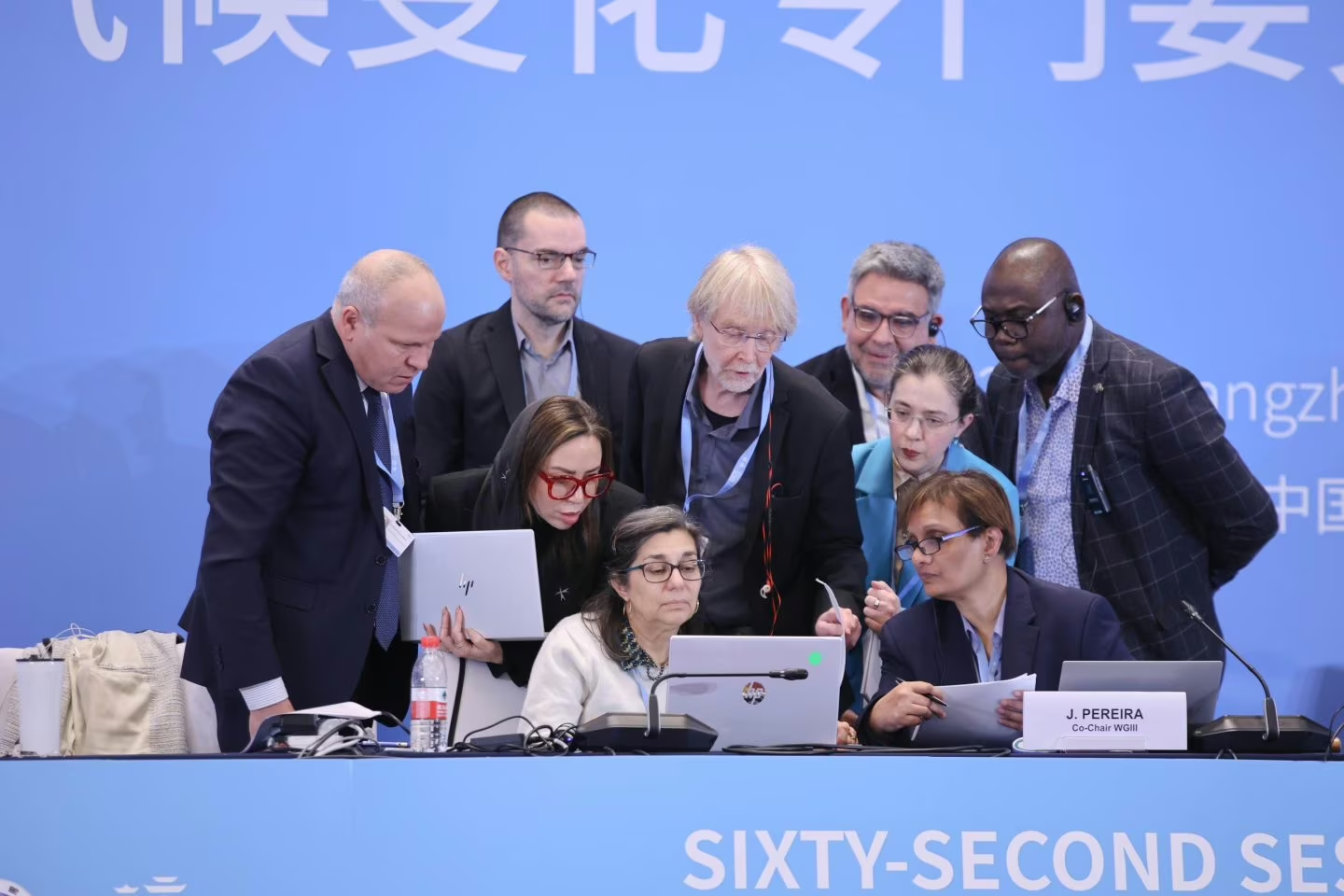
The world’s leading climate science body is facing a growing international dispute over when to publish its next major assessment of global warming. The IPCC climate report delay 2026 has become a major issue in international climate diplomacy after governments failed to agree on a publication schedule during October’s meeting in Addis Ababa, Ethiopia.
The Intergovernmental Panel on Climate Change (IPCC) is responsible for reviewing scientific research and producing assessments that governments use to understand climate risks and evaluate possible responses. Its next major assessment, known as the Seventh Assessment Report (AR7), is particularly important because countries are preparing for another major review of progress under the Paris Agreement in 2028.
Some governments want the scientific reports completed in time to inform those negotiations. Others argue that scientists and governments need more time to prepare, review and approve the findings, particularly in countries with limited research resources.
The disagreement has now exposed deeper questions about scientific independence, fairness between wealthy and developing nations, and the relationship between climate science and international policy.
What Is the IPCC Climate Report Delay in 2026?
The IPCC is an international body established by the United Nations Environment Programme and the World Meteorological Organization. It assesses existing research on climate change rather than conducting most of the original scientific experiments itself.
Its assessment reports bring together thousands of scientific studies to explain how the climate is changing, what risks communities face and which approaches could reduce greenhouse gas emissions.
The seventh assessment cycle includes three major working-group reports:
- Working Group I: The physical science of climate change, including global warming, atmospheric changes and climate projections.
- Working Group II: Climate impacts, vulnerability and adaptation, covering the consequences for people, ecosystems and economies.
- Working Group III: Options for reducing greenhouse gas emissions and limiting further warming.
A synthesis report will bring the findings together after the three working-group contributions are completed.
The IPCC has already agreed that its synthesis report should be finalised by late 2029. However, governments have struggled to agree on the precise delivery dates for the three main reports.
During the October 2026 meeting, delegates again failed to settle the timetable. This means uncertainty remains over whether the major assessments will be available before the 2028 United Nations climate negotiations.
Why Do Some Countries Want the Reports Published in 2028?
Countries supporting the earlier schedule argue that climate negotiations need the most recent comprehensive scientific evidence available.
The 2028 global stocktake under the Paris Agreement is expected to assess collective progress towards the agreement’s goals. Governments will need to consider whether existing national commitments are sufficient and what additional measures might be required.
An updated IPCC assessment could help policymakers evaluate emissions pathways, climate risks, adaptation needs and the economic consequences of different decisions.
More than 30 countries associated with the High Ambition Coalition have supported a timetable designed to make the reports available before the 2028 process concludes.
Supporters of this approach argue that waiting until 2029 could leave governments relying on earlier comprehensive assessments during a critical period for climate policy.
The argument is not simply about publishing a document earlier. It concerns whether the scientific assessment can inform decisions while governments are still evaluating their collective progress and considering their next steps.
However, the timetable must also allow authors to assess a large body of research, respond to expert reviews and complete the IPCC’s formal approval procedures.
Why Are India, China, Russia and Other Countries Calling for More Time?
Several countries, including India, Russia, Saudi Arabia and Kenya, have been among those advocating a longer preparation schedule for at least some of the reports. China has also been involved in the wider debate.
Their arguments include the need to provide adequate time for scientists and government representatives from developing countries to participate in drafting, reviewing and approving the assessments.
Producing an IPCC report is a complex international process. Authors must evaluate thousands of studies, resolve technical questions and respond to extensive comments from experts and governments.
Countries with fewer research institutions, smaller scientific budgets or limited numbers of specialist researchers may face additional obstacles to participating effectively.
Supporters of a slower timetable argue that rushing the process could increase pressure on researchers and make it more difficult for less-resourced countries to contribute meaningfully.
There are also concerns about overlapping review periods and the practical demands of arranging meetings involving hundreds of international experts.
These arguments reflect a broader issue in climate diplomacy: how can the international community produce authoritative scientific assessments quickly while ensuring that researchers from different regions have a fair opportunity to contribute?
The disagreement therefore involves both scheduling and the credibility of the process used to produce the reports.
The Global Climate Science Dispute Has Political Implications
Although the immediate disagreement concerns deadlines, the wider debate has political consequences.
Climate assessments influence discussions about national emissions targets, renewable energy, fossil fuels, adaptation funding and international responsibility for global warming.
Countries have different economic circumstances and priorities. Wealthier industrialised economies, emerging economies and vulnerable developing nations do not always agree on how quickly emissions should fall or how the costs of climate action should be distributed.
Many developing countries argue that wealthy nations bear a greater historical responsibility for greenhouse gas emissions and should provide greater financial support for climate adaptation and the transition to cleaner energy.
Some emerging economies also emphasise their development needs and the importance of ensuring affordable energy supplies while reducing emissions.
Other governments stress that all major emitters must contribute to reducing global emissions because future climate risks depend on worldwide greenhouse gas concentrations.
The IPCC’s role is to assess scientific evidence, not to decide how countries should distribute political or financial responsibilities. Nevertheless, its findings inform the negotiations in which those decisions are debated.
The global climate science dispute illustrates how scientific schedules can become entangled with wider disagreements about fairness, economic development and the direction of international climate policy.
Could a Delay Affect the Fight Against Climate Change?
A later publication date would not stop climate research or automatically halt international climate action. Scientists continue to publish studies, governments can use existing evidence, and the IPCC’s assessment work is already underway.
However, a delayed assessment could reduce the amount of time policymakers have to consider the latest comprehensive findings before major negotiations.
This matters because climate science continues to develop. Researchers are studying extreme heat, sea-level rise, changes in rainfall, ecosystem damage and the effectiveness of different emissions-reduction strategies.
A comprehensive assessment helps policymakers understand how individual findings fit into the wider scientific picture. It also provides a common reference point for countries that might otherwise select different studies to support competing positions.
If the working-group reports arrive after the 2028 global stocktake, negotiators could have to rely more heavily on previous assessments and newer individual studies rather than a completed, internationally reviewed synthesis of the latest evidence.
That would not make the earlier research invalid. It would mean that the newest comprehensive assessment might arrive too late to inform some decisions at the intended moment.
The precise impact will depend on the final timetable, the progress of the scientific work and how governments use other available evidence in the meantime.
Does the IPCC Need to Choose Between Speed and Fairness?
The debate highlights a difficult question for international science: should an assessment be prioritised for a major political deadline, or should the process receive additional time to ensure broad participation and thorough review?
Supporters of the earlier schedule argue that a shared scientific assessment is most useful when governments can incorporate it into upcoming decisions. They warn that postponing the reports could weaken the connection between climate science and international policy.
Advocates of a longer schedule argue that the credibility of the findings depends on sufficient review time and meaningful participation by researchers and governments with fewer resources.
Both concerns relate to the integrity of the assessment process, although governments disagree over the best way to balance them.
A possible compromise would need to provide clear publication milestones, protect scientific review procedures and address barriers that prevent less-resourced countries from participating fully.
Additional support for researchers, more efficient review arrangements and predictable meeting schedules could also help reduce pressure on the process.
However, any compromise would require agreement among the IPCC’s member governments. The October meeting’s failure to reach consensus shows that this remains a diplomatic challenge.
What Happens Next?
The IPCC’s seventh assessment cycle will continue, but the disagreement over its timetable remains unresolved.
The organisation’s member governments must continue discussions to establish a schedule for the three working-group reports. The decision will affect how much time authors have for drafting and review, when governments can approve the findings, and whether the reports will be available before the 2028 climate negotiations.
The synthesis report is scheduled for finalisation by late 2029, following the completion of the working-group assessments. The remaining uncertainty concerns the detailed timetable for those contributions and their relationship to the 2028 policy process.
The IPCC’s work on other products within the assessment cycle is also continuing, including reports and technical guidance scheduled for 2027.
The next steps will therefore involve both completing the scientific assessments and reaching an agreement that governments can support.
For countries facing rising climate risks, the outcome matters because reliable scientific evidence can help guide long-term planning, infrastructure investment, disaster preparedness and emissions policy.
Conclusion: Why the Next Climate Report Matters
The IPCC climate report delay 2026 reveals a growing challenge at the intersection of science and international diplomacy. Countries broadly recognise the importance of climate assessments, but they disagree over how quickly the next reports should be completed and how to ensure that all participants can contribute effectively.
An earlier publication could give governments a more recent common scientific reference before the 2028 climate negotiations. A longer timetable could provide additional opportunities for review and participation, particularly for less-resourced countries.
The task is to find a schedule that protects scientific quality while making the findings available when policymakers need them.
The decision will not determine the future of climate action by itself. However, it will influence the information available to governments as they assess progress under the Paris Agreement and consider their next commitments.
As negotiations continue, the central question remains whether countries can agree on a timetable that balances scientific rigour, international inclusion and the need for timely climate decisions.
Follow TopTenDose for more climate news, global policy developments, science reports and international affairs.