A powerful Panama earthquake October 2026 struck southern Panama on Friday, October 9, shaking buildings, damaging infrastructure and sending residents rushing into the streets. The earthquake measured magnitude 7.7, according to the United States Geological Survey (USGS). Its relatively shallow depth intensified concerns about structural damage and aftershocks.
The earthquake’s epicentre was near Pitaloza Arriba in Herrera province, approximately 200 kilometres from Panama City. The USGS recorded a depth of about 12.6 kilometres. Although the capital experienced strong shaking, the worst reported structural damage occurred in parts of central Panama.
Authorities launched emergency assessments as reports emerged of damaged homes, collapsed structures, disrupted electricity supplies and temporary transport interruptions. Despite the powerful tremor, initial reports indicated that the country had avoided widespread destruction.
The most important development for international trade was that the Panama Canal continued operating normally following the earthquake, according to initial reports from authorities and news agencies. However, emergency inspections and continuing aftershocks remained important considerations for public safety and infrastructure monitoring.
How Severe Was the 7.7 Magnitude Earthquake?
The earthquake struck at approximately 12:56 p.m. local time on October 9. Its magnitude and shallow depth made it a major seismic event for a country where earthquakes of this strength are relatively uncommon.
The USGS initially estimated a higher magnitude before revising its assessment to 7.7. The epicentre lay near a rural area in southern Panama, but the shaking reached major population centres, including Panama City.
Residents described prolonged shaking that caused furniture and household objects to move. In the capital, people evacuated office towers and apartment buildings as a precaution. Videos circulated showing residents gathering in streets, parks and open spaces while authorities assessed possible damage.
The earthquake also generated concern across the wider Pacific region. Officials issued a tsunami warning after the tremor, but the warning was subsequently lifted. Authorities continued to monitor the situation as aftershocks rattled the region.
According to the USGS, approximately 43,000 people experienced severe shaking. This figure describes exposure to strong ground motion rather than the number of people injured or left homeless.
Damage Reports: Buildings, Roads and Public Infrastructure
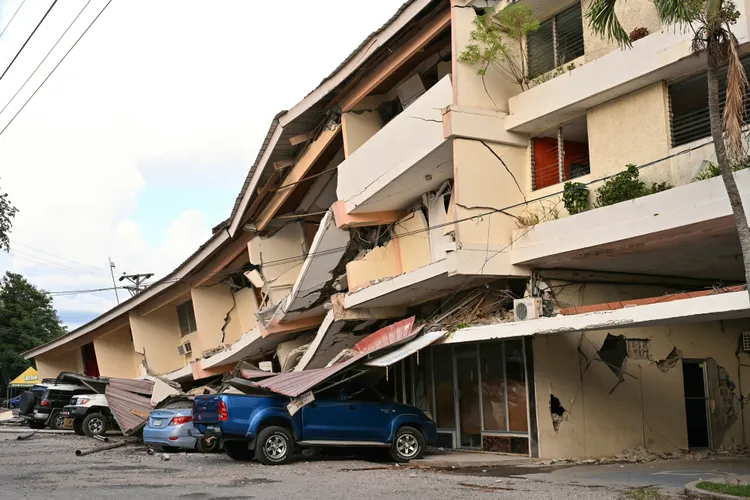
The earthquake caused visible structural damage in several parts of Panama, particularly in the central provinces of Herrera, Coclé and Los Santos.
In Penonomé, images showed serious damage to public buildings and historic structures. Reports described the collapse of a church tower, damage to a hotel and structural problems affecting government facilities. Falling masonry and debris also damaged vehicles.
Some residential properties developed cracks, raising concerns about whether occupants could safely return. Authorities needed to inspect buildings before determining which properties required evacuation, repair or more extensive reconstruction.
Road damage created another challenge for emergency teams. Some routes became difficult or impossible to use, complicating access to affected communities. Officials reported that parts of the country needed further assessment to establish the full extent of the damage.
Electricity outages were reported in six provinces. Transport services also faced temporary interruptions as operators carried out precautionary checks.
The situation remained fluid on October 10, with assessments continuing and the possibility of additional damage emerging as inspectors reached more locations.
Were There Any Deaths or Injuries?
Initial reports offered some reassurance, but the emergency response was still developing.
Early coverage from Reuters reported no immediate deaths or injuries. Later reports from AFP identified at least two injured people associated with collapsed structures. As a result, it would be inaccurate to conclude that nobody was hurt.
Authorities continued checking damaged buildings and affected communities for people who might need medical assistance or rescue.
The absence of an immediately confirmed large death toll was encouraging given the earthquake’s magnitude. However, emergency services still faced serious challenges, particularly in communities where roads were damaged or access was restricted.
Residents were advised to follow official instructions and avoid entering visibly damaged buildings. Even after the main earthquake, strong aftershocks can weaken already damaged walls, balconies and other structural elements.
Panama Canal Earthquake Impact: Was Global Shipping Disrupted?
The Panama Canal earthquake impact quickly became an international concern because the canal is one of the world’s most important maritime trade routes.
The canal connects the Atlantic and Pacific oceans through Panama, allowing ships to avoid the much longer journey around the southern tip of South America. It carries commercial vessels transporting containers, fuel, agricultural products, industrial materials and other goods.
Any prolonged closure could affect shipping schedules, freight costs and supply chains. Delays could also force some operators to consider alternative routes, increasing transit times and fuel expenses.
However, the initial reports following the October 9 earthquake were reassuring. The Panama Canal Authority reported that canal operations were unaffected and that vessels could continue transiting the waterway.
Images shared after the earthquake showed a bridge over the canal shaking while remaining upright. The footage highlighted the intensity of the tremor but did not establish that the canal itself had suffered operational damage.
The distinction matters: shaking near a major shipping route does not automatically mean that its locks, channels, navigation systems or supporting infrastructure have failed.
As inspections continued, the operational status of the canal remained a key point for shipping companies and international businesses to monitor.
Could the Earthquake Affect Global Trade and Oil Prices?
The canal’s continued operation reduced the immediate risk of a major trade disruption. Nevertheless, the earthquake demonstrated how a natural disaster can threaten infrastructure that supports international commerce.
A prolonged closure could force some ships to reroute, increasing voyage distances and delivery times. Businesses dependent on time-sensitive shipments might face higher logistics costs, while shipping companies could need to revise schedules.
Energy markets could also watch developments closely because tankers carrying petroleum products and other energy-related cargoes use the canal. However, an earthquake does not automatically cause oil prices to rise. Any market effect would depend on actual disruption, the duration of interruptions, alternative transport options and broader supply-and-demand conditions.
For now, the reported continuation of normal canal operations suggests that a major shipping crisis had not been established by the initial assessments.
Companies should distinguish between the potential consequences of a canal closure and the confirmed effects of this particular earthquake.
Why Is Panama Vulnerable to Earthquakes?
Panama sits within the seismically active region surrounding the Pacific Ocean, commonly known as the Ring of Fire. This broad zone contains numerous active faults and tectonic plate boundaries associated with earthquakes and volcanic activity.
Panama’s geological setting makes seismic monitoring and emergency preparedness important even though earthquakes of magnitude 7 or greater are uncommon in the country.
Local geoscience officials attributed the October 9 event to the Azuero-Soná fault system, where accumulated geological stress can be released through movement along faults.
The earthquake also demonstrated why magnitude alone does not determine the final level of destruction. Depth, distance from populated areas, local ground conditions, construction quality and the vulnerability of individual buildings all influence the impact.
A powerful earthquake beneath a sparsely populated area may cause less overall damage than a smaller earthquake directly beneath a densely populated city.
Aftershocks and the Risk of Further Damage
Aftershocks remained a major concern following the initial earthquake. Reports on October 10 described dozens of subsequent tremors, with AFP reporting that more than 80 had been recorded by the local geosciences institute.
Aftershocks can occur as the Earth’s crust adjusts to changes caused by the main earthquake. Some are too small to cause additional damage, while stronger events can further weaken buildings and infrastructure already affected by the initial shaking.
Emergency authorities therefore need to inspect damaged properties, assess transport routes and determine whether public facilities are safe to reopen.
Residents should avoid damaged structures, stay away from loose masonry and follow local emergency instructions. Anyone near the coast should rely on official tsunami and evacuation alerts rather than unverified social media messages.
The lifting of the initial tsunami warning was an important development, but it did not remove the need for caution around unstable buildings and other earthquake-related hazards.
What Happens Next?
The next phase will focus on detailed damage assessments, infrastructure inspections and recovery planning.
Authorities must establish which buildings need repairs, whether damaged roads can safely reopen and what assistance affected residents require. Utility operators also need to assess electricity and water systems, while transport authorities must confirm that their facilities remain safe.
International shipping companies will continue monitoring announcements from the Panama Canal Authority. The canal’s reported normal operation is reassuring, but businesses should rely on updated official notices for any subsequent changes.
The final economic cost will depend on the extent of structural damage, service interruptions and the resources required for repairs. Early estimates of potential economic losses should not be confused with a confirmed final bill.
The earthquake also offers an opportunity to review emergency planning, building inspections and public evacuation procedures before another major seismic event occurs.
Conclusion: Panama Faces a Major Test, but the Canal Remains Operational
The Panama earthquake October 2026 was a powerful reminder of the risks posed by seismic activity. The magnitude 7.7 tremor damaged buildings and roads, disrupted some services and prompted evacuations across the country.
Although initial reports indicated that Panama had avoided widespread destruction, injuries were reported and the full scale of the damage required further assessment. Aftershocks added to the challenges facing emergency services and residents.
For global businesses, the central question was whether the earthquake would interrupt the Panama Canal. Initial reports indicated that the waterway remained operational, limiting the immediate threat to international shipping.
The coming days will be important as officials complete inspections, confirm the condition of critical infrastructure and determine the support needed by affected communities.
Follow TopTenDose for more global news, international developments, science updates and breaking stories.
Editorial note: This article reflects reports available on October 10, 2026. Damage assessments and casualty figures may change as authorities release further information.