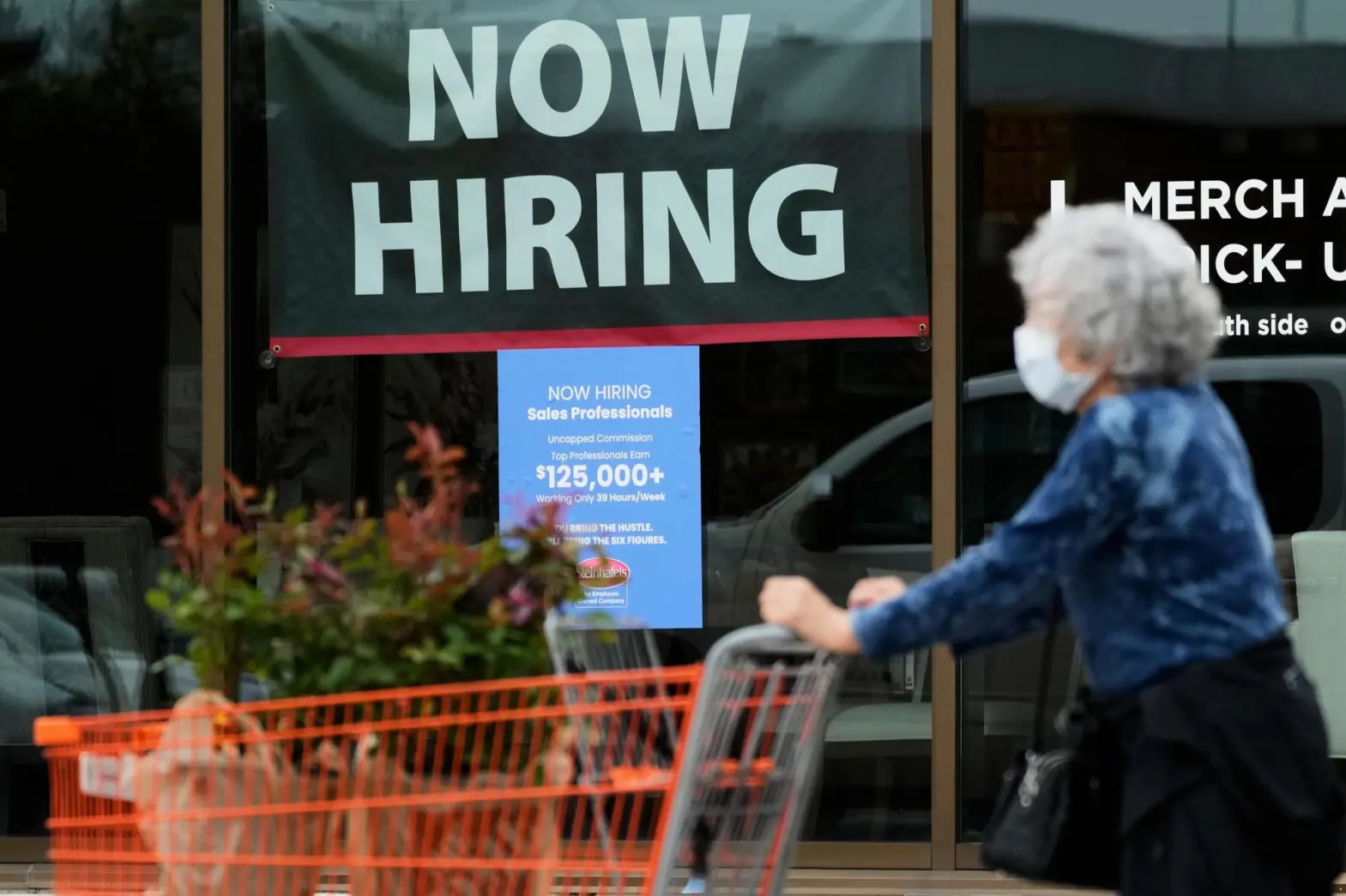
The American job market is showing signs of slower growth, raising questions about employment opportunities, wage increases, and the direction of the economy. The latest employment figures suggest that businesses are adding workers at a much slower pace than many economists expected, even though the overall unemployment rate remains relatively low.
According to the US Bureau of Labor Statistics (BLS), employers added just 29,000 nonfarm payroll jobs in September 2026. The unemployment rate stood at 4.2%, changing little from the previous month. The report, released on October 2, also included downward revisions to earlier employment figures.
The US jobs report September 2026 provides an important snapshot of the country’s economic conditions as workers, businesses, investors, and policymakers assess the months ahead.
Although the figures do not establish that the United States is entering a recession, they highlight a labor market in which finding a new job may be becoming more difficult for some people. Understanding the difference between slower hiring and widespread job losses is essential to interpreting the latest developments.
What Does the September Jobs Report Reveal?
The September employment report showed that nonfarm payroll employment increased by 29,000. This was considerably lower than the revised gain of 133,000 recorded in August.
The unemployment rate remained at 4.2%, while the number of unemployed people was approximately 7.1 million, according to the BLS.
Another important detail was the revision to previous employment figures. Job growth for July was revised downward by 31,000, changing the earlier estimate from an increase of 21,000 to a decline of 10,000. August employment growth was revised downward by 29,000, from 162,000 to 133,000.
Together, these revisions meant that employment gains for July and August were 60,000 lower than previously reported.
These figures suggest that the labor market had less momentum than earlier estimates indicated. However, one monthly report cannot establish the direction of the economy for the remainder of the year.
Employment statistics are regularly revised as additional information becomes available. Economists therefore examine several months of data, wage trends, unemployment claims, and business conditions before drawing broader conclusions.
Why Is Hiring Slowing Across the US Economy?
Businesses make hiring decisions based on demand, operating costs, expected profits, access to credit, and confidence in future economic conditions.
When companies are uncertain about sales or future expenses, they may delay recruitment rather than immediately reduce their existing workforce. This can result in fewer job openings even when large numbers of employees are not being laid off.
Businesses may also reconsider expansion plans when borrowing costs are high or when changes in trade policy create uncertainty about future expenses.
Technology is another factor influencing recruitment. Some employers are adopting automation and artificial intelligence tools to improve productivity, potentially changing the number and types of workers they need. However, the effects differ by industry and occupation, and technology alone cannot explain the overall slowdown.
The September figures showed limited employment changes across major industries. Healthcare continued to add jobs, although its growth was slower than its average over the preceding year.
The broader picture suggests that employers are becoming more cautious about expanding their workforces. For workers, that caution can translate into fewer vacancies, longer recruitment processes, and greater competition for available positions.
What Does a 4.2% Unemployment Rate Mean?
The unemployment rate is one of the most widely reported indicators of economic health, but it does not describe every aspect of the job market.
The BLS calculates the rate using people who are unemployed and actively looking for work as a share of the civilian labor force. People who want a job but have not recently searched for one are generally not counted as unemployed under this measure.
A rate of 4.2% indicates that the overall share of unemployed people in the labor force remains relatively limited. However, it does not mean that every job seeker can quickly find suitable employment.
Some workers may have the qualifications employers need but struggle to find openings in their locations. Others may need to change careers, acquire additional skills, or accept positions that do not match their experience.
The September report also showed that unemployment conditions differed across demographic groups. The unemployment rate for Black workers increased to 7.0%, while the rate for teenagers reached 14.5%. These differences illustrate why national averages do not fully capture the experiences of every group.
For policymakers, the challenge is to understand not only how many people are unemployed but also who is struggling to find work and why.
What the Report Means for American Workers
For people who already have stable employment, slower hiring may not immediately change their daily working lives. Employers that are reluctant to recruit may also be reluctant to dismiss existing staff, particularly when replacing experienced workers would be expensive.
However, the situation can be more challenging for people seeking new positions.
Workers considering a career change may encounter fewer vacancies. Recent graduates may face greater competition for entry-level roles, while unemployed professionals may need more time to secure interviews and offers.
A slower job market can also reduce workers’ confidence when negotiating salary increases or changing employers for better pay.
The September report showed that average hourly earnings for private-sector employees increased by just 0.1% during the month, reaching $37.81. Over the previous 12 months, average hourly earnings increased by 3.0%.
These figures describe average earnings, not the wage changes experienced by every worker. Individual outcomes depend on occupation, industry, experience, hours worked, and location.
Workers should therefore pay attention to both employment opportunities and purchasing power. A salary increase does not necessarily improve living standards if the prices of essential goods and services rise at a faster rate.
How Could Slower Hiring Affect Recent Graduates?
Young people entering the workforce often depend on entry-level positions to gain experience and develop professional skills.
When businesses reduce recruitment, applicants with limited work experience may find it harder to compete against candidates who already have relevant skills. Some employers may also increase their expectations for entry-level positions, making the transition from education to employment more difficult.
Graduates can respond by building practical experience through internships, personal projects, professional certifications, and volunteer opportunities related to their intended careers.
Developing communication skills, analytical abilities, and familiarity with widely used workplace software can also help applicants demonstrate their value to employers.
Nevertheless, individual preparation cannot eliminate the effects of a weak hiring environment. The number of available positions and the overall demand for workers remain important factors.
Employers and educational institutions also have a role to play by providing realistic training, clearer career pathways, and opportunities to develop skills relevant to available jobs.
Which Industries Are Still Creating Jobs?
Employment trends differ across sectors, and the national total can hide important differences.
Healthcare continued to record employment growth in September, adding 17,000 jobs. However, this increase was below its average monthly gain over the preceding 12 months.
The healthcare sector includes hospitals, outpatient services, nursing facilities, and other providers. Demand for medical services, staffing requirements, and financial conditions can influence hiring across these different areas.
Other industries may experience different pressures. Construction, manufacturing, finance, hospitality, government, and technology are influenced by factors such as investment, consumer spending, public budgets, interest rates, and changing business models.
Job seekers should therefore avoid assuming that slower overall employment growth affects every occupation equally.
People considering a new career can review industry-specific employment statistics, employer recruitment announcements, and local job listings to identify where opportunities remain available.
The BLS publishes detailed employment information that allows readers to compare industries, occupations, wages, and regional conditions.
What Does Slower Job Growth Mean for the Federal Reserve?
The Federal Reserve considers employment conditions alongside inflation and other economic indicators when setting monetary policy.
When hiring weakens, policymakers may become more concerned about the risk of rising unemployment and reduced economic activity. At the same time, if inflation remains persistent, they may be cautious about easing monetary policy too quickly.
Interest-rate decisions affect borrowing costs throughout the economy. Higher rates can make mortgages, business loans, and certain consumer purchases more expensive, while lower rates can support borrowing and investment.
However, monetary policy works with a delay, and its effects are not always predictable. A change in interest rates does not immediately guarantee stronger hiring or lower inflation.
The September employment report provides additional information for policymakers, but it does not determine the next decision by itself. Inflation figures, consumer spending, wage growth, and subsequent employment reports will also matter.
For households and businesses, the practical implication is that uncertainty may continue while policymakers assess whether the slowdown is temporary or part of a broader trend.
Could the US Economy Be Heading Toward a Recession?
A sharp decline in monthly job creation can raise concerns about a possible economic downturn, but a single employment report is not enough to establish that a recession is beginning.
Economists typically examine several indicators, including employment, household income, consumer spending, industrial production, and overall economic activity.
The September report showed weak payroll growth, but the unemployment rate remained within a relatively narrow range. That combination suggests a labor market that is losing momentum without demonstrating an immediate collapse in employment.
Other data will be necessary to determine whether the slowdown continues.
If businesses repeatedly reduce hiring, household income growth weakens, and consumer spending falls, concerns about broader economic weakness could increase. Conversely, stronger hiring in subsequent months could suggest that September was an unusually weak period.
For now, it is more accurate to describe the report as evidence of slower employment growth than to treat it as proof of a recession.
What Should Job Seekers Do in a Slower Labor Market?
A cautious employment environment makes preparation and flexibility particularly valuable.
Job seekers can begin by reviewing their resumes and tailoring applications to the requirements of individual positions. Employers are more likely to understand an applicant’s suitability when applications clearly connect relevant skills and experience to the work being offered.
Networking can also help candidates learn about vacancies that may not receive widespread advertising. Maintaining professional relationships, attending industry events, and contacting former colleagues can provide useful information about recruitment opportunities.
Workers may also benefit from improving skills that are relevant to their fields. Depending on the occupation, this could include data analysis, technical writing, digital tools, project management, or customer communication.
It is equally important to maintain realistic expectations. A longer job search does not necessarily indicate a personal failure, particularly when employers across an industry are reducing recruitment.
Candidates should monitor hiring trends, consider related occupations, and evaluate opportunities carefully rather than relying on a single application strategy.
Conclusion
The September 2026 employment report presents a mixed picture of the American economy. The United States added only 29,000 jobs during the month, while unemployment remained at 4.2%. Revisions to earlier data also indicated that previous employment growth had been weaker than initially estimated.
These figures suggest that hiring has slowed, creating potential challenges for job seekers and people entering the workforce. At the same time, the data do not establish that the economy is in recession or that widespread layoffs are inevitable.
The US jobs report September 2026 is therefore an important reminder that employment conditions must be assessed through several indicators rather than a single headline figure.
The direction of the US labor market in the coming months will depend on hiring decisions, wage growth, business investment, consumer demand, and broader economic conditions.
For workers, employers, and policymakers, the next reports will help clarify whether the current slowdown continues or begins to reverse. Until then, understanding the available evidence and preparing for a range of possible outcomes remain sensible approaches to an uncertain employment environment.